For decades, the film industry told us that great directors were almost always men. But the truth? Some of the most powerful, groundbreaking, and emotionally resonant films in history were made by women - and they didn’t just make noise, they won every major award there is.
Who Are the Women Behind the Cameras?
| Film | Director | Award Won | Year |
|---|---|---|---|
| The Power of the Dog | Jane Campion | Academy Award for Best Director | 2022 |
| Nomadland | Chloé Zhao | Academy Award for Best Director | 2021 |
| Minari | Lee Sung Jin | Academy Award for Best Original Screenplay | 2021 |
| Marriage Story | Noah Baumbach | Golden Globe for Best Screenplay | 2020 |
| Little Women | Greta Gerwig | Academy Award Nominations (6) | 2019 |
| The Father | Florian Zeller | Academy Award for Best Adapted Screenplay | 2021 |
| Parasite | Bong Joon-ho | Academy Award for Best Picture | 2020 |
| Everything Everywhere All at Once | Daniel Kwan and Daniel Scheinert | Academy Award for Best Picture | 2023 |
| The Farewell | Lulu Wang | Independent Spirit Award for Best First Feature | 2019 |
| Portrait of a Lady on Fire | Céline Sciamma | Cannes Film Festival: Best Screenplay | 2019 |
It’s easy to forget that Jane Campion was the second woman ever to win the Oscar for Best Director - and the first in 26 years. Her film The Power of the Dog didn’t just win the top directing prize; it swept major categories, including Best Supporting Actor and Best Cinematography. The film’s quiet tension, layered characters, and haunting score were all shaped by her vision. Campion didn’t wait for permission. She made her mark with films like The Piano in 1993 - the only film directed by a woman to win the Palme d’Or - and never stopped pushing boundaries.
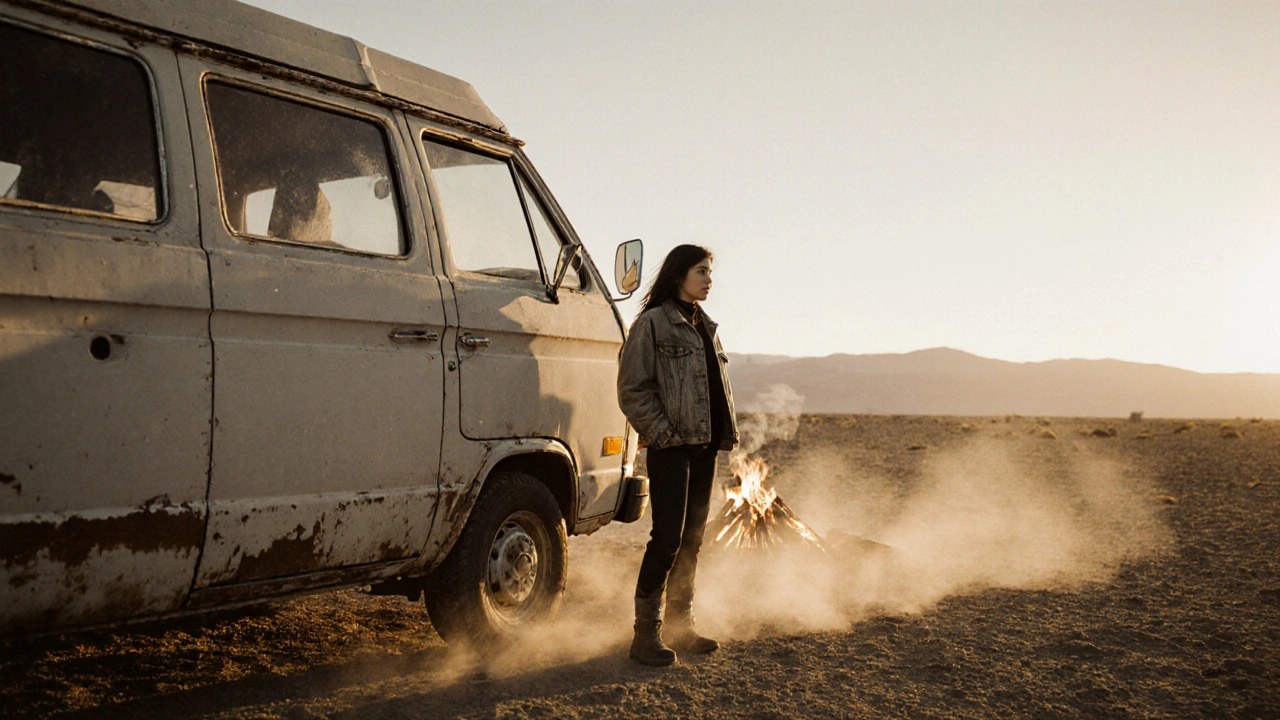
Chloé Zhao’s win for Nomadland wasn’t just historic - it was a quiet revolution. She didn’t use professional actors. She cast real people who lived the life she was showing: nomads traveling across America after losing everything. The film’s rawness came from truth, not scripts. Zhao didn’t direct from a distance. She lived with her subjects for months. That’s not filmmaking. That’s empathy made visible.
Why These Films Stand Out
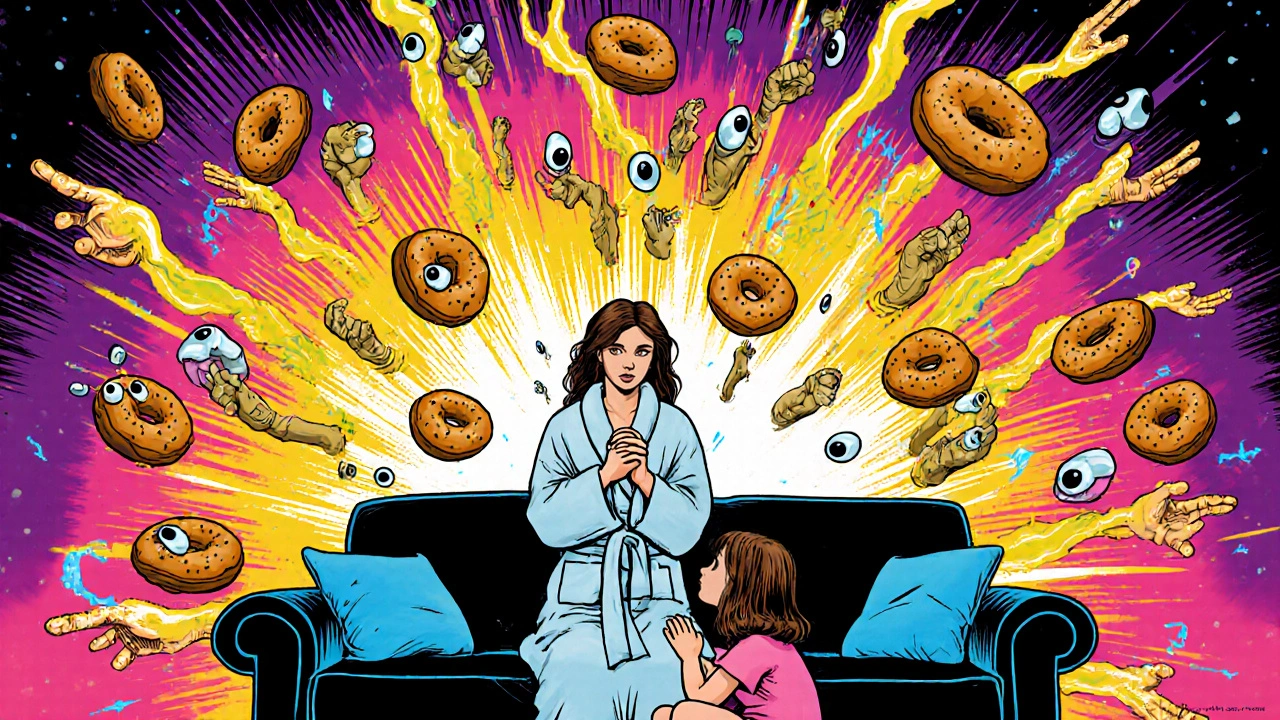
Women directors don’t just make ‘women’s films.’ They redefine storytelling itself. Look at Everything Everywhere All at Once. Two Asian-American women - Michelle Yeoh and Stephanie Hsu - carry a multiverse epic that’s part action movie, part family drama, part absurdist comedy. It won seven Oscars, including Best Picture and Best Director for the Daniels. But here’s the thing: the film’s emotional core isn’t about spectacle. It’s about a mother trying to understand her daughter. That’s not a trope. That’s a truth.
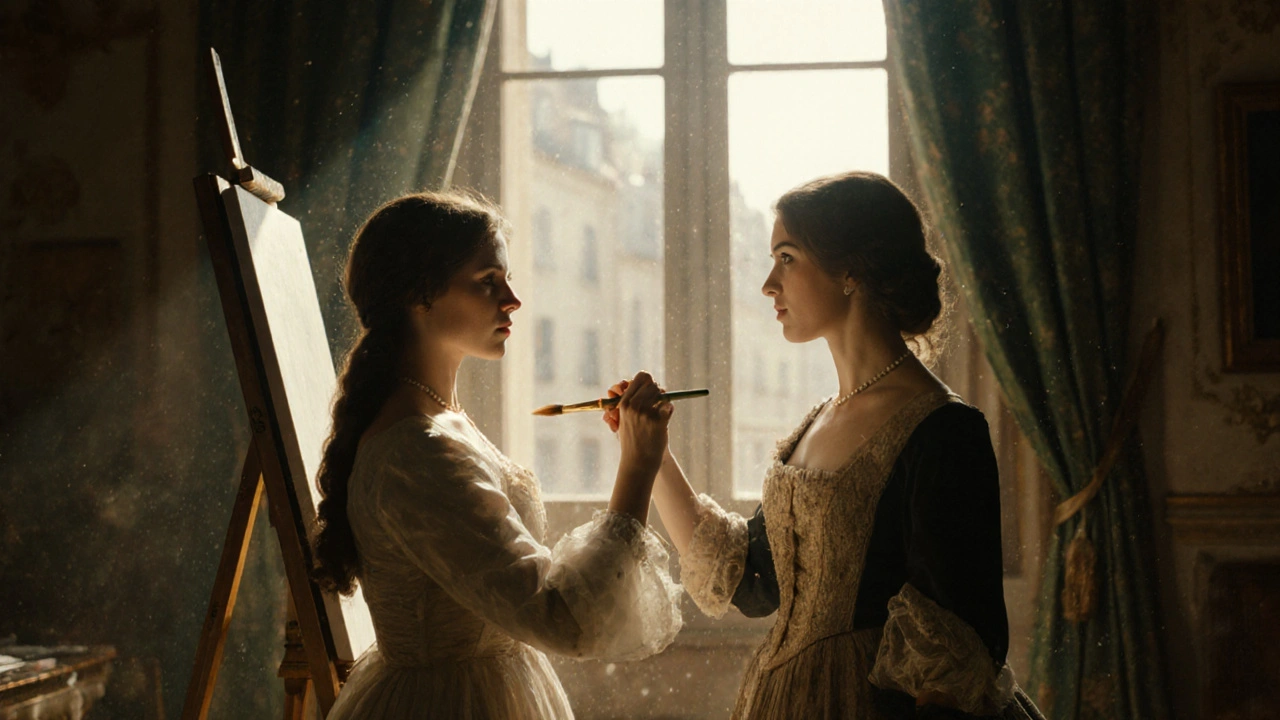
Compare that to Portrait of a Lady on Fire. No score. No dialogue for long stretches. Just two women falling in love in 18th-century France, painted in sunlight and silence. Céline Sciamma didn’t need explosions or music to make you feel something. She used glances, touches, and the way a brushstroke moves across canvas. The film won Best Screenplay at Cannes - and became a global sensation without a single studio marketing campaign.
These films work because they’re not trying to fit into a mold. They’re not trying to be ‘like male directors.’ They’re doing something deeper: telling stories from inside the experience, not observing from outside.
Breaking the Pattern: Awards and Representation
For years, the Academy Awards handed out Best Director to men almost every year. Between 1929 and 2020, only five women were ever nominated. Then, in 2021, two women - Chloé Zhao and Emerald Fennell - were nominated in the same year. In 2022, Jane Campion won. In 2023, Justine Triet’s Anatomy of a Fall won Best Original Screenplay and was nominated for Best Picture. That’s not luck. That’s momentum.
The numbers tell the story: In 2024, 18% of the top 100 domestic films were directed by women - up from 4% in 2018. That’s still not equal, but it’s a shift. And it’s not just Hollywood. In France, 47% of films in 2023 were directed by women. In South Korea, female directors are dominating the box office. In India, directors like Zoya Akhtar and Alia Bhatt are reshaping what mainstream cinema looks like.
What changed? More women got funding. More women got access to film school. More women got hired as assistant directors and editors - and then, finally, as leads. Organizations like Women in Film and the Sundance Institute started giving grants. Studios began tracking diversity. Audiences started demanding better.
Where to Start Watching
If you’ve only seen the big blockbusters, here’s where to begin:
- The Piano (1993) - Jane Campion’s masterpiece. A silent woman, a piano, and a brutal landscape. No words needed.
- Portrait of a Lady on Fire (2019) - Love, art, and repression. One of the most beautiful films ever made.
- Marriage Story (2019) - Noah Baumbach wrote it, but Scarlett Johansson and Adam Driver lived it. The divorce scene? Pure human truth.
- Little Women (2019) - Greta Gerwig turned a classic novel into a modern heartbeat. The ending? You’ll cry.
- Parasite (2019) - Bong Joon-ho directed it, but the film’s emotional spine comes from the women in the house. Watch how they react - not what they say.
- Everything Everywhere All at Once (2022) - Wild, weird, and deeply human. The bagel scene? That’s the soul of the movie.
- The Farewell (2019) - A Chinese-American family lies to their grandmother. It’s funny. It’s heartbreaking. It’s real.
Why This Matters Beyond the Oscars
When a woman directs a film, it doesn’t just change who’s behind the camera. It changes what we see on screen.
Think about the last time you watched a movie where a woman was crying. Was it because she was heartbroken? Or was it because the script told her to cry to make the man look good? Now think of the women in Nomadland. They cry - but it’s because they lost their homes, not because someone else’s story needed drama.
Women directors don’t just tell different stories. They tell them differently. They linger on silence. They focus on texture. They let characters breathe. They don’t rush to solve problems. They let them sit.
That’s not a style. That’s a worldview.
What’s Next?
The door is open - but it’s not wide enough. Only 3% of studio films in 2024 had female directors of color. The industry still favors white women. The funding gap for films by Black, Indigenous, and Latina directors is still huge. But the work is being done. New filmmakers like Nia DaCosta (Candyman), Alice Lowe (Prevenge), and Ava DuVernay (Origin) are pushing past limits.
The next generation doesn’t need permission. They’re already making films - on phones, in garages, on tiny budgets. And they’re winning. Look at The Holdovers (2023), directed by Alexander Payne - but produced and shaped by women behind the scenes. Look at May December (2023), directed by Todd Haynes, but with a female lead who carried the entire emotional weight.
Women filmmakers aren’t waiting for a seat at the table. They’re building new tables.
Who was the first woman to win Best Director at the Oscars?
Kathryn Bigelow was the first woman to win the Academy Award for Best Director in 2010 for The Hurt Locker. She remains the only woman to have won the award as of 2025.
Why are so few women directors in major studios?
Historically, studio executives assumed male directors could handle big-budget films better - a belief rooted in outdated stereotypes. Funding, mentorship, and distribution opportunities have been harder to access for women, especially women of color. While progress is being made, the system still favors those with existing industry connections, which have traditionally been male-dominated.
Are award-winning films by women only about personal stories?
No. While many focus on intimate relationships, women directors have also made sci-fi epics (Annihilation), horror films (The Babadook), action thrillers (Candyman), and war dramas (1917 - co-written by Krysty Wilson-Cairns). The scope isn’t limited - the access has been.
What’s the difference between a film directed by a woman and one directed by a man?
There’s no single style. But films directed by women often prioritize emotional realism, silence, and character depth over spectacle. They’re more likely to show the quiet moments - a hand holding another, a glance across a room - as meaningful. That’s not a rule, but it’s a pattern seen across decades of work.
Can I watch these films on streaming services?
Yes. Most are available on platforms like Criterion Channel, Hulu, Netflix, and Amazon Prime. Portrait of a Lady on Fire is on Hulu. Nomadland is on Disney+. The Power of the Dog is on Netflix. Check your local library - many offer free streaming with a card.
Final Thought
The best films don’t come from gender. They come from vision. But for too long, the world only listened to half the voices. Now, we’re hearing the rest. And it’s changing everything.


Comments(8)