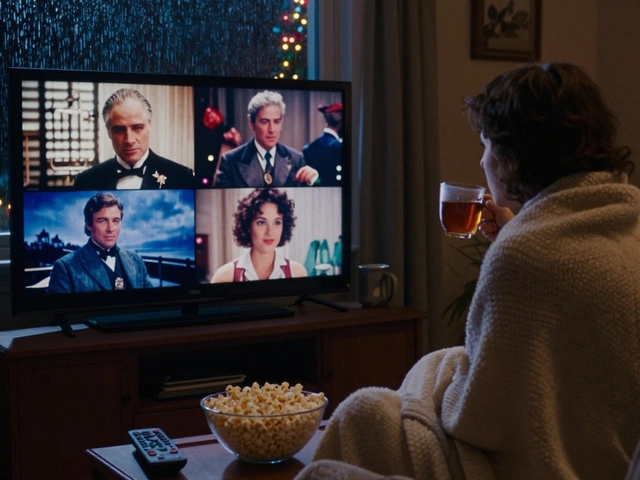
When you watch a film, do you judge it by the same ruler no matter where it was made? For decades, the answer has been yes. The dominant voice in Film Criticism is an analytical discipline that evaluates cinematic works based on narrative structure, visual style, and thematic depth, historically rooted in European intellectual traditions. This tradition relies heavily on Western Aesthetics, which prioritizes linear storytelling, individual heroism, and clear resolution. But what happens when a movie from Seoul, Lagos, or Mumbai doesn't fit that mold? It often gets labeled as "confusing" or "unpolished." That's not just a missed opportunity; it's a blind spot.
The core problem isn't the films themselves. It's the lens we use to view them. When critics apply Hollywood Conventions to every screen, they erase the unique cultural grammar of other regions. To truly understand cinema, we need to step outside the bubble. We need to look at how different cultures construct meaning, rhythm, and emotion on screen. This shift doesn't mean abandoning standards; it means expanding them.
The Western Standard: What We've Been Taught to Value
To break free from a norm, you first have to know exactly what it is. The standard model of film analysis in most English-speaking universities and publications is built on three pillars: Narrative Linearity, Character Arc, and Visual Clarity.
- Narrative Linearity: Stories should move forward in time with a clear beginning, middle, and end. Ambiguity is often seen as a flaw rather than a feature.
- Character Arc: The protagonist must change. If they don't grow or transform, the film feels incomplete.
- Visual Clarity: Shots should be easy to read. Complex editing or static long takes are sometimes criticized for being "boring" or "unfocused."
This framework works well for American Blockbusters. It fails, however, when applied to a Japanese Cinema piece like Yasujir Ozu’s work, where the camera stays low to the floor and scenes often lack traditional dramatic peaks. Critics used to call this "static." Now, we recognize it as a deliberate aesthetic choice reflecting Japanese concepts of stillness and observation.
Cultural Context Is Not a Bonus Feature
Many readers treat cultural background as optional reading. You can watch the movie, enjoy the plot, and skip the history. But in global cinema, context is the key to the lock. Without it, symbols become noise.
Consider Indian Cinema, specifically the Bollywood industry. A Western viewer might see a song-and-dance sequence and think, "Why is everyone singing in the middle of a serious drama?" They miss the concept of abhang or the theatrical roots of Indian performance art. The song isn't a distraction; it's a mechanism for externalizing internal emotion in a culture that values expressive release over stoic restraint.
Similarly, in African Cinema, particularly from West Africa, oral tradition plays a huge role. Films by directors like Ousmane Sembène or Souleymane Cissé often use cyclical structures rather than linear ones. This mirrors the oral storytelling traditions of the region, where time is not a straight line but a spiral. Judging these films by Hollywood's ticking clock misses their entire philosophical point.

Comparing Critical Frameworks
Let's look at how two major frameworks handle the same type of scene: a quiet moment of grief. This comparison highlights why one-size-fits-all criticism fails.
| Aspect | Western Critical Lens | Non-Western Critical Lens (e.g., East Asian) |
|---|---|---|
| Primary Focus | Individual emotional reaction | Collective social impact |
| Expected Pacing | Slow build to climax | Sudden cut or silence |
| Visual Style | Close-ups on face | Wide shots of environment |
| Interpretation of Silence | Potential awkwardness or tension | Respectful pause or shared understanding |
| Success Metric | Catharsis achieved | Harmony restored or acknowledged |
If you apply the Western lens to an East Asian film, you might criticize the lack of close-ups as "cold." But if you apply the Eastern lens, the wide shot emphasizes how small the individual is against the weight of fate or society. Both are valid. Neither is wrong. The error lies in assuming one is superior.
Common Pitfalls for Global Viewers
You don't need a PhD to start thinking differently. But there are traps that catch even well-meaning viewers. Here are three common mistakes to avoid.
- Exoticizing the Culture: Treating non-Western films as "anthropological documentaries" rather than art. The director is a filmmaker first, not a museum curator. Don't expect the film to explain its own culture for your benefit.
- Ignoring Local Genre Rules: Every country has its own genre conventions. In France, the comédie romantique often ends ambiguously. In Japan, the horror genre frequently focuses on social anxiety rather than jump scares. Knowing these rules helps you appreciate the craft.
- Conflating Budget with Quality: Low production value doesn't equal bad filmmaking. Many powerful films from emerging markets use limited resources to create raw, immediate experiences. Judge the intent, not just the polish.

How to Train Your Eye for Diversity
So, how do you actually do this? You practice. It’s like learning a new language. At first, it’s hard. Then, patterns emerge. Here is a simple method to start shifting your perspective.
First, pick a region you know little about. Maybe it's Latin America, Southeast Asia, or the Middle East. Watch one acclaimed film from that region. Don't just watch the story; watch the cuts. Notice when the editor chooses to stay in a shot versus cutting away. Ask yourself: Why did they keep us here? Is it uncomfortable? Is it peaceful? Is it chaotic?
Second, read one review written by a critic from that same region. Compare their take to yours. Did they notice things you missed? Did they praise elements you found slow? This contrast is where the learning happens. You aren't trying to agree with them; you're trying to expand your vocabulary.
Third, learn one specific cultural concept related to the film. If you watched an Iranian film, look up the concept of ta'arof (courtesy/formality). If you watched a Korean film, look up han (deep sorrow/resentment). These concepts act as keys that unlock layers of meaning you previously saw as random.
The Future of Global Dialogue
The film world is changing. Streaming platforms have made global content more accessible than ever before. But accessibility isn't the same as understanding. We have the movies in our pockets, but do we have the eyes to see them? The future of film criticism depends on building bridges between these different visual languages. It requires humility from the critic and patience from the viewer.
When we stop measuring every frame against a single standard, we open the door to richer, more nuanced discussions. We start seeing cinema not as a product to be consumed, but as a conversation to be joined. And in that conversation, every voice matters.
Do I need to speak the original language to appreciate non-Western films?
No, you do not need to speak the language. Subtitles can help, but many films rely heavily on visual storytelling, music, and physical acting. Focus on the emotions and actions on screen. If dialogue is crucial, try to find interviews with the director who explain the themes.
Is it fair to compare a Hollywood blockbuster to an indie film from another country?
It is fair only if you acknowledge the differences in budget, scale, and intent. Comparing them directly without context is like comparing a symphony orchestra to a solo guitar. Look at how each film achieves its specific goals within its own constraints and cultural framework.
What are some good starting points for learning about global film criticism?
Start with books or articles by critics from the regions you are interested in. Follow film festivals like Cannes, Berlin, or Sundance that highlight international cinema. Also, join online communities dedicated to specific regional cinemas, such as Korean or Nigerian film forums, to hear diverse opinions.
Does cultural context change the technical quality of a film?
Context changes how we interpret technical choices, but not necessarily their execution. A shaky camera might be seen as amateurish in one context but intentional and raw in another. Understanding the context helps you decide if the technique serves the story effectively.
How can I avoid being biased when reviewing a foreign film?
Acknowledge your biases upfront. Admit what you expect the film to be based on its origin. Then, actively look for evidence that contradicts those expectations. Ask yourself if you are judging the film by its own rules or by yours. Write down both perspectives to balance your view.