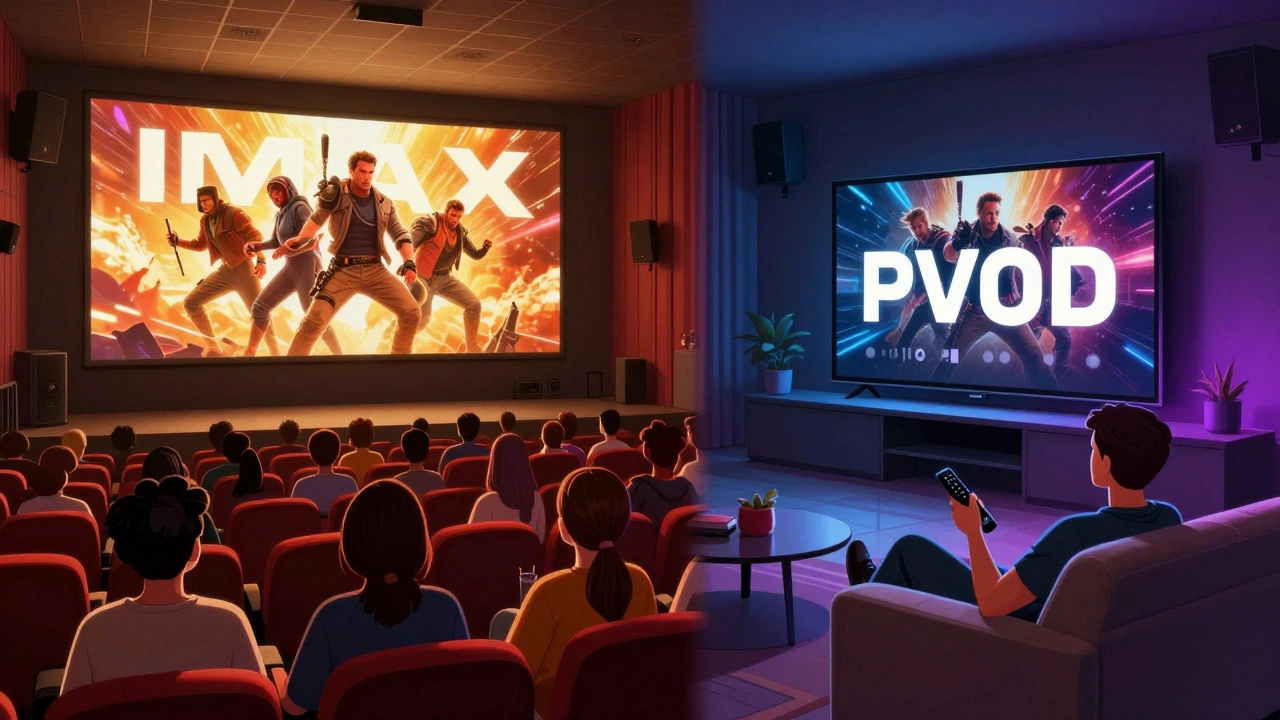
Imagine spending $100 million on a blockbuster. You want every dollar back, plus profit. So you do what feels logical in 2026: you release it in theaters and on premium video-on-demand (PVOD) or your streaming service on the exact same day. It’s called a day-and-date release. On paper, it looks like double the revenue streams. In reality, it often leads to a silent killer known as box office cannibalization.
Cannibalization isn’t just a buzzword; it’s a mathematical reality where one sales channel eats into the potential revenue of another. When you give viewers an easy, cheap, comfortable option at home, the expensive, inconvenient trip to the cinema loses its appeal. But how do you actually measure this? Studios don’t just guess. They use specific metrics, historical data, and complex modeling to decide if the risk is worth the reward.
The Mechanics of Audience Fragmentation
To measure cannibalization, you first have to understand what you are measuring. The core entity here is the Theatrical Window, which is the exclusive period during which a film is shown in cinemas before becoming available elsewhere. Historically, this window was roughly 90 days. Today, it can be zero days.
When a studio opts for a day-and-date strategy, they fragment their audience immediately. You aren't selling one product to one group. You are selling two different experiences to overlapping groups. The measurement starts by identifying the "captive" audience versus the "leaky" audience.
- The Captive Audience: These are the hardcore fans who will buy a ticket regardless of whether the movie is on Netflix that night. They drive the opening weekend numbers.
- The Leaky Audience: These are the casual viewers. If the movie is only in theaters, they might go. If it’s also at home for $20 less, they stay put. This group is the primary victim of cannibalization.
Measuring the shift requires looking at Ticket Price Elasticity, which is a metric showing how demand for tickets changes in response to price or convenience factors. In 2026, with average ticket prices hovering around $14-$16 in major US markets, the friction cost of going to the movies is high. Time, gas, parking, and concessions add up. A PVOD price of $19.99 removes all that friction. The measurement model calculates the probability of a viewer choosing Option B over Option A based on these friction costs.
Key Metrics for Calculating Cannibalization
You cannot measure cannibalization with a single number. It requires a composite score derived from several key performance indicators (KPIs). Here are the three most critical metrics studios analyze:
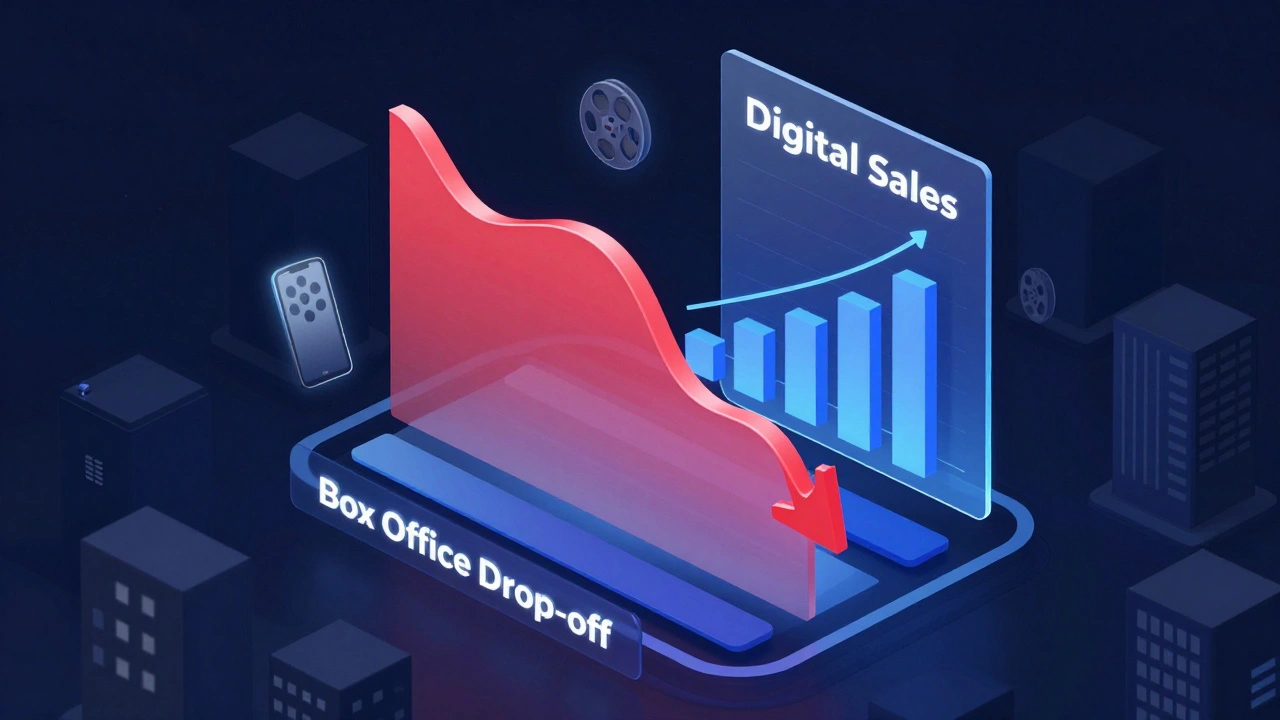
- Opening Weekend Drop-off Rate: Traditionally, blockbusters drop 50-60% from Friday-Sunday to their second weekend. With day-and-date releases, this drop often exceeds 70-80%. Why? Because the "curious" crowd consumed the content at home during the first week. Measuring this accelerated decay helps isolate the cannibalized volume.
- PVOD Conversion Ratio: This compares the number of digital rentals/purchases to the number of theater admissions. If a movie gets 5 million admissions but 3 million PVOD buys, the ratio suggests significant overlap. Studios look for a ratio closer to 1:10 or 1:20 for healthy non-cannibalized releases. A 1:1 ratio indicates severe cannibalization.
- Audience Overlap Index (AOI): Using survey data and credit card transaction analysis, studios estimate how many people who rented the film digitally would have bought a ticket if forced to choose. This is often estimated between 15% and 30% for general audiences, but can spike to 50%+ for mid-budget dramas.
| Release Strategy | Typical Window | Cannibalization Risk | Best For |
|---|---|---|---|
| Traditional Theatrical | 45-90 Days | Low | Blockbusters, Franchises |
| Hybrid (Shortened) | 17-30 Days | Medium | Mid-budget Dramas |
| Day-and-Date | 0 Days | High | Niche Films, Pandemic Era Titles |
The Role of Genre and Scale
Not all films suffer equally from cannibalization. The genre dictates the measurement baseline. An action spectacle like a superhero movie relies on Event Cinema, which is films designed to be experienced collectively in large formats like IMAX or Dolby Cinema. The social aspect drives attendance. Even if available at home, people go out to see explosions on a big screen. Cannibalization here is lower because the home experience is inferior.
Conversely, a dialogue-driven thriller or a comedy benefits less from the big screen. For these titles, the home viewing experience is equal to or better than the theater. Therefore, the cannibalization rate is much higher. When measuring, analysts apply a "Genre Multiplier." Action films might have a multiplier of 0.5 (meaning half the potential lost revenue is recovered via PVOD), while comedies might have a multiplier of 0.2.
Scale matters too. Wide releases (3,000+ screens) dilute the impact of cannibalization because the sheer volume of seats available captures more of the leaky audience. Limited releases (100-500 screens) paired with day-and-date strategies often fail because there isn't enough physical infrastructure to capture the initial hype, leading to immediate saturation in the digital market.
Data Sources and Modeling Techniques
How do studios get the hard numbers? They rely on a mix of proprietary data and third-party analytics firms like Comscore or Nielsen, which track both box office transactions and home entertainment consumption.
The standard approach involves A/B testing, though not in the traditional sense. Studios compare the performance of similar titles released under different windows. For example, they might compare the second-weekend hold of a horror film released traditionally in 2024 against a similar horror film released day-and-date in 2025. By controlling for variables like marketing spend and star power, they isolate the window effect.
Another technique is the "Shadow Market" analysis. In regions where the film is NOT available day-and-date (due to local licensing deals), studios measure the box office performance. They then compare this to regions where it IS available day-and-date. The difference in revenue per capita provides a direct measurement of cannibalization. This geographic arbitrage is one of the most accurate ways to quantify the loss.
Long-Tail Value vs. Short-Term Loss
Here is the counter-argument that keeps day-and-date releases alive: the long tail. While box office cannibalization reduces upfront theatrical revenue, it may increase total lifetime value (LTV) through subscription retention and merchandise sales.
If a film brings 1 million new subscribers to a streaming platform, and each subscriber stays for an average of 12 months paying $15/month, that’s $180 million in recurring revenue. Does the $50 million lost in box office matter? Not if the customer acquisition cost (CAC) is lower than the LTV. Measurement shifts from pure box office accounting to holistic P&L (Profit and Loss) analysis.
However, this model has flaws. It assumes that the viewers who would have gone to the theater are the ones subscribing. Often, they are not. Theater-goers are often older demographics with higher disposable income, while streamers skew younger. If you cannibalize your high-value theatrical audience without gaining equivalent high-value streaming subscribers, you lose on both ends.

Practical Steps for Analysts
If you are tasked with measuring cannibalization for a project, follow this checklist:
- Define the Baseline: Establish what the box office would have been with a traditional window using historical comps (comparable films).
- Track Early Digital Sales: Monitor PVOD sales in the first 72 hours. High early sales correlate strongly with lower subsequent theatrical legs.
- Analyze Social Sentiment: Use natural language processing (NLP) on social media to detect phrases like "watching at home" vs. "going to the movies." This qualitative data supports quantitative trends.
- Calculate Net Revenue Impact: Subtract the estimated lost box office share (after distributor cuts) from the gross PVOD/streaming revenue. Remember, studios keep ~50% of box office but ~70-80% of PVOD. The margin structure favors digital, even with volume loss.
Future Trends in Hybrid Distribution
By late 2026, the industry is moving away from binary choices (all theater vs. all digital) toward dynamic windows. Some studios are experimenting with "tiered access," where premium large format (PLF) screenings remain exclusive for 2 weeks, while standard screenings and digital options launch simultaneously. This attempts to minimize cannibalization among the most lucrative segment of the audience-the PLF buyers-while capturing the mass market digitally.
Measuring success in this hybrid model requires granular tracking. You need to know if the PLF exclusivity preserved the prestige and urgency of the event. If PLF ticket sales remain strong while standard admissions plummet, the strategy works. If both drop, the brand equity of the franchise is being eroded.
What is the formula for calculating box office cannibalization?
There is no single universal formula, but a common estimation is: Cannibalization Rate = (Actual Box Office / Projected Traditional Box Office) - 1. If the result is negative, it represents the percentage of revenue lost due to the alternative release method. Analysts also factor in the "Leakage Factor," estimating 20-40% of digital buyers would have attended theaters if forced.
Does day-and-date release always hurt box office?
Not always. For niche films, documentaries, or art-house titles with limited theatrical appeal, day-and-date releases can maximize total revenue by reaching audiences who never go to cinemas. However, for wide-release blockbusters, it almost always significantly reduces theatrical totals compared to exclusive windows.
How do studios track PVOD sales accurately?
Studios use data from platforms like Apple TV, Amazon Prime Video, and Vudu, often aggregated by firms like Comscore or Nielsen. These partners provide weekly reports on rental and purchase volumes, allowing studios to calculate gross digital revenue and compare it against box office performance in real-time.
Why do some franchises still use traditional windows?
Franchises like Marvel or Star Wars rely on cultural momentum and word-of-mouth. A traditional window builds hype over weeks, sustaining interest. Day-and-date releases can saturate the market instantly, causing the buzz to die out quickly. Additionally, exhibitors (theaters) often refuse to show films that are available at home, limiting screen count and reducing potential box office ceiling.
What is the impact of cannibalization on theater owners?
It is severely negative. Theaters operate on thin margins and rely on concession sales, which are tied to ticket volume. If audiences stay home, theaters lose revenue. This has led to negotiations where studios must offer shorter windows or revenue-sharing models to secure theatrical partnerships, creating tension between distributors and exhibitors.