Most directors rely on intuition or emotional flow to get a performance. David Fincher is a director known for his obsessive attention to detail, geometric framing, and rigorous control over every aspect of the filmmaking process. He doesn't just direct actors; he engineers scenes. If you've ever watched Zodiac or Gone Girl, you've seen the result: a visual language so consistent it feels like a mathematical equation rather than art.
His method isn't about perfectionism in the vain sense. It's about eliminating variables. By controlling lighting, camera movement, and actor positioning down to the millimeter, Fincher removes guesswork from the edit. This approach allows him to shoot fewer setups but ensures that when a take happens, it is exactly what he envisioned. For filmmakers and students of cinema, understanding this workflow offers a masterclass in how technical precision can serve narrative clarity.
The Architecture of a Shot: Pre-Visualization as Foundation
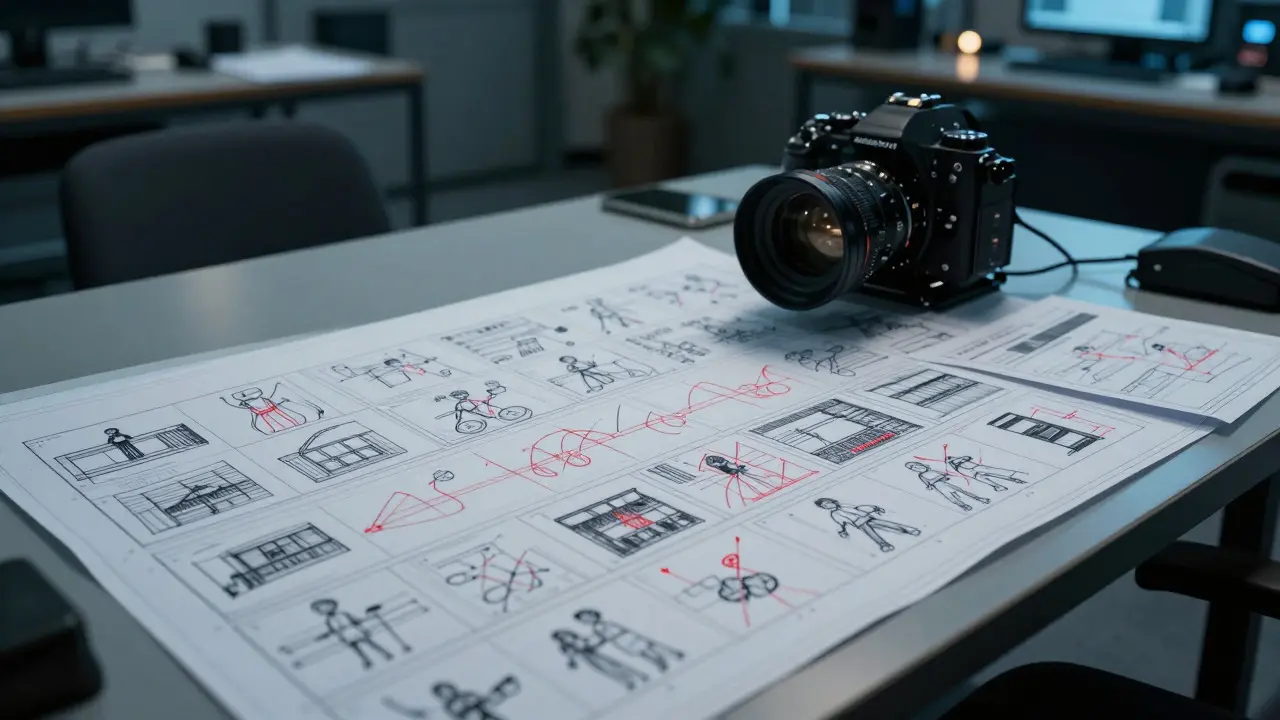
Before a single frame is captured, Fincher spends weeks in pre-production. This phase is where the real work begins. Unlike directors who might storyboard loosely or rely on improvisation on set, Fincher uses detailed storyboards and animatics to map out every angle. He treats the camera not as an observer, but as a character with its own personality and movement rules.
- Storyboarding: Every shot is drawn out. If a character moves left to right, the exact path is marked.
- Animatics: Rough cuts are assembled from stills to test pacing before shooting starts.
- Technical Rehearsals: Camera operators practice movements repeatedly until they are muscle memory.
This preparation means that when the call sheet goes out, everyone knows their role. The Director of Photography (DP) knows the lens choices. The gaffer knows the light ratios. The actors know their blocking. This reduces on-set chaos and allows the crew to focus on execution rather than problem-solving.
The Myth of the "Multiple Takes": Quality Over Quantity
A common misconception is that Fincher demands hundreds of takes because he's difficult. In reality, his use of multiple takes is a strategic tool used to capture subtle variations in performance within a tightly controlled framework. He often asks for three to five takes of a scene. The first is usually a safety take. The second is the "real" take. The third and fourth allow for slight adjustments in energy or timing.
Why not one? Because even in a highly controlled environment, human elements introduce variability. A micro-expression, a breath, or a shift in weight can change the meaning of a line. Fincher wants options. But unlike a chaotic director who might do twenty takes hoping one works, Fincher's takes are incremental. Each subsequent take builds on the last, refining specific details rather than starting from scratch.
Technical Precision: The Language of Geometry
Fincher's visual signature is defined by symmetry and geometry. He favors wide-angle lenses and deep focus, keeping both foreground and background sharp. This creates a sense of surveillance, as if the viewer is watching from a distance. The camera often moves in straight lines or smooth arcs, avoiding shaky cam effects unless narratively necessary.
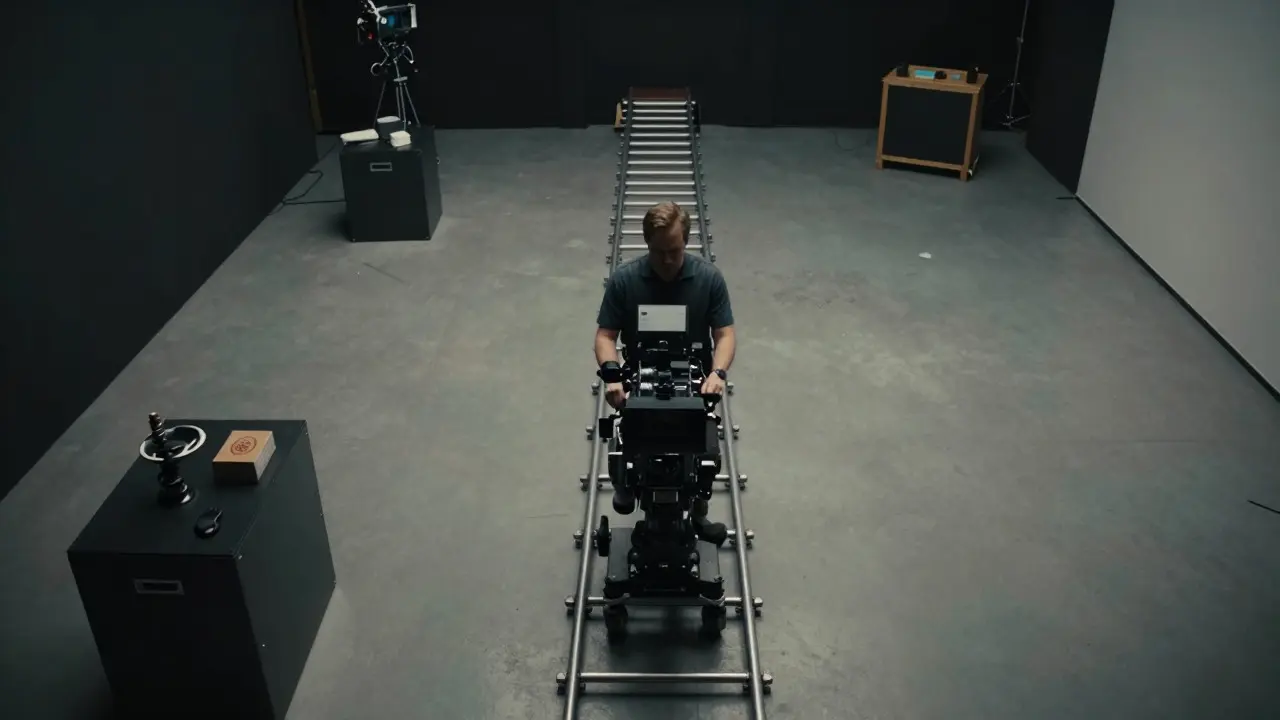
This style requires expensive equipment. Steadicams, cranes, and track systems are standard on his sets. The cost is higher, but the payoff is consistency. When you watch The Social Network, the rapid pans and split screens feel inevitable because they were planned to fit the rhythm of the dialogue. There is no wasted movement. Every pan serves a purpose: to reveal information, to isolate a character, or to transition between ideas.
For a filmmaker, this highlights a key lesson: technology is not just a tool; it's a collaborator. Understanding the capabilities of your camera system allows you to design shots that would be impossible with less gear. Fincher pushes the boundaries of what digital cinematography can do, often using high-resolution sensors to capture details that only become apparent in post-production color grading.
Collaboration with Key Crew Members
Fincher's method relies heavily on long-term relationships with key crew members. His DP, Jeff Cronenweth, has worked with him on nearly every major project. Their collaboration is seamless because they share a visual vocabulary. Similarly, editor Kirk Baxter and composer Trent Reznor have become extensions of Fincher's creative brain.
This stability allows for faster decision-making. When Fincher says "make it colder," Cronenweth knows exactly which color temperature and lens flare settings to adjust. There is no need for lengthy explanations. This efficiency is crucial in a production that values precision. Miscommunication is the enemy of control, and a tight-knit crew minimizes that risk.
The Impact on Actors: Freedom Within Constraints
Working with Fincher can be intimidating for actors. The level of detail required means there is little room for error. However, many actors, including Rosamund Pike and Casey Affleck, have praised the experience. Once the technical framework is set, actors find freedom within those constraints. They don't have to worry about hitting marks or worrying about lighting shifts. They can focus entirely on the emotional truth of the moment.
Fincher often rehearses scenes extensively before rolling camera. These rehearsals are not just for the actors; they are for the entire department. Everyone sees how the scene will look and sound. This shared understanding builds confidence. When the director calls "action," the energy on set is focused and efficient. The result is performances that feel natural despite being technically rigid.
Lessons for Aspiring Filmmakers
You don't need a $100 million budget to adopt Fincher's principles. The core idea is simple: plan more, improvise less. Here are actionable steps you can take on your next project:
- Storyboard Everything: Even for short films, draw out your shots. It forces you to think about composition before you shoot.
- Limit Your Takes: Challenge yourself to get the shot in three takes or fewer. This improves your ability to give clear direction.
- Master Your Gear: Learn your camera inside and out. Know how it handles low light, motion blur, and color.
- Build a Core Team: Work with the same DP and editor whenever possible. Familiarity breeds efficiency.
By applying these techniques, you can elevate your work from amateur to professional. Precision doesn't mean stiffness. It means intentionality. Every choice, from lens selection to actor placement, should serve the story. That is the heart of David Fincher's method.
Frequently Asked Questions
Does David Fincher actually demand hundreds of takes?
Not usually. While he is known for his rigor, he typically aims for three to five takes per setup. The goal is refinement, not repetition. He prefers to get the right performance quickly rather than fishing for a lucky break over dozens of attempts.
What camera does David Fincher prefer to use?
Fincher has historically favored large-format digital cameras, such as the ARRI Alexa and RED Epic, for their dynamic range and resolution. Recently, he has experimented with IMAX 70mm film for specific sequences to achieve a unique texture and scale.
How does his style affect the editing process?
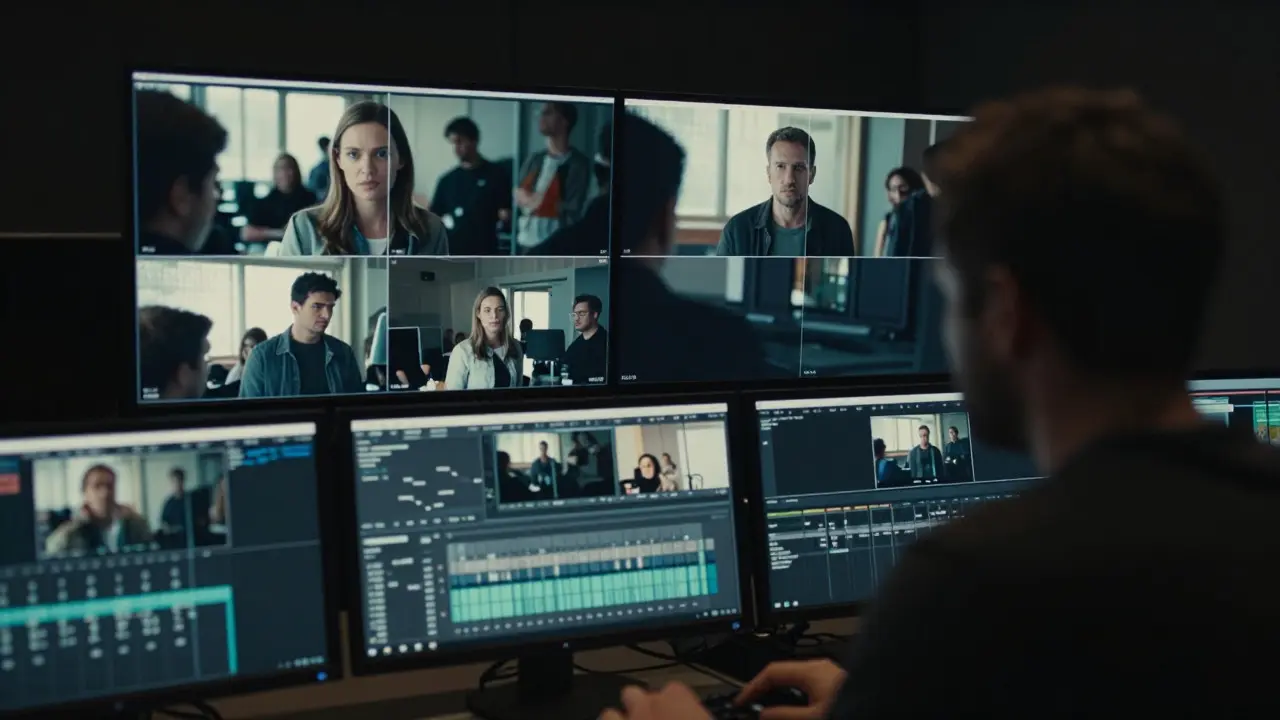
Because the shots are composed with such precision, the editing process is faster. Cuts are cleaner, and transitions are smoother. The editor doesn't have to fix bad framing or uneven lighting, allowing them to focus on pacing and narrative flow.
Is his method suitable for independent films?
Yes, but with adjustments. You may not have the budget for complex crane moves or extensive pre-vis, but the principle of planning and limiting takes applies to any scale. It helps manage time and resources effectively, which is critical for indie productions.
Who are the key collaborators in his production team?
Jeff Cronenweth (Director of Photography), Kirk Baxter (Editor), and Trent Reznor & Atticus Ross (Composers) are his most frequent partners. Their long-standing collaborations ensure a cohesive visual and auditory identity across his films.




Comments(7)