You know it the second you hear it. Three notes. That’s all John Williams needed for Jaws. Two notes for Superman. One rising phrase for Star Wars. Why do these tiny musical snippets burn into our brains while hundreds of other movie soundtracks fade away after the credits roll? It’s not just luck. It’s a specific craft.
We often think of film music as background noise-something to fill the silence so we don’t feel awkward during a quiet scene. But the most powerful scores aren’t background; they’re characters. They tell you who to trust before the actor speaks. They make you cry when nothing sad is actually happening on screen. If you’ve ever wondered why some melodies stick with you for decades while others vanish from memory by the time you leave the theater, you’re asking the right question. Let’s break down the mechanics of musical memory in cinema.
The Power of Simplicity and Repetition
Here’s a hard truth: complexity doesn’t equal quality in film scoring. In fact, the most iconic themes are usually deceptively simple. Think about the Imperial March from The Empire Strikes Back. It’s basically a military drumbeat followed by a brass fanfare that goes up and down a minor scale. A child could whistle it. Yet, it instantly signals danger, authority, and evil.
Why does this work? Our brains love patterns. When a composer introduces a short, distinct motif and repeats it with slight variations, our auditory cortex latches onto it. This is called the "earworm effect," but in film, it’s intentional engineering. Composers like Hans Zimmer understand that a theme needs to be sturdy enough to survive being played at different tempos, in different keys, or with different instruments.
- Short Motifs: The core idea should be playable in under five seconds.
- Distinct Intervals: Use wide jumps (like the fifth in Star Wars) or repeated notes (like Jaws) to create sonic landmarks.
- Consistent Identity: Even if the orchestration changes, the melody must remain recognizable.
If a theme is too long or complex, it becomes a piece of concert music, not a cinematic tool. Concert music demands your full attention. Film themes need to work even when you’re eating popcorn or checking your phone.
Leitmotifs: Assigning Sound to Character
The technique behind most memorable scores is the leitmotif. Originating with opera composer Richard Wagner, this method assigns a specific musical phrase to a character, place, or idea. In modern cinema, a leitmotif is a recurring musical theme associated with a particular person, place, or idea.
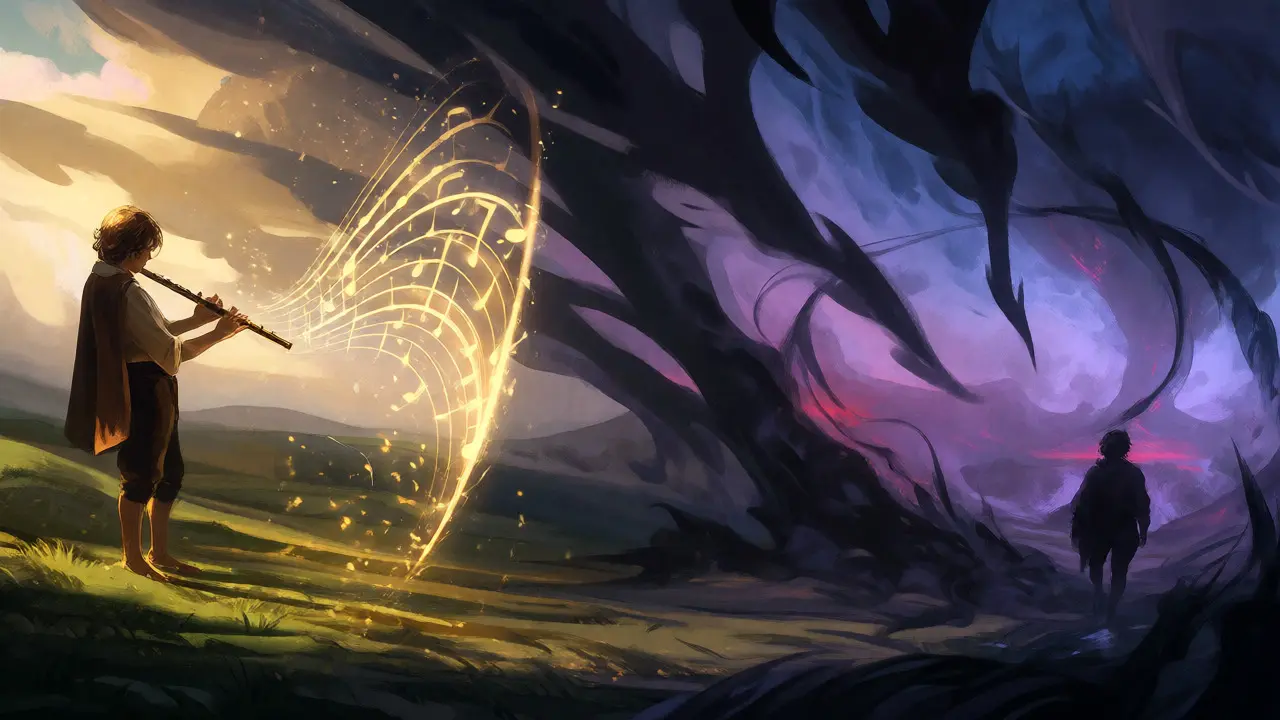
Consider Howard Shore’s work on The Lord of the Rings. He didn’t just write one song for Frodo. He created a suite of motifs that evolved as the story progressed. The "Shire" theme starts on a simple flute, sounding innocent and pastoral. As Frodo travels toward Mordor, that same melody gets distorted, played on lower strings, or harmonized with dissonant chords. You hear the corruption of innocence without seeing a single line of dialogue change.
This approach builds emotional continuity. When you hear a fragment of a villain’s theme in the background of a hero’s victory scene, it creates subconscious tension. It tells the audience, "This isn't over." Without leitmotifs, a score is just a collection of mood pieces. With them, it becomes a narrative map.
| Film Score | Composer | Primary Technique | Emotional Impact |
|---|---|---|---|
| Jaws | John Williams | Two-note ostinato | Primal fear, urgency |
| Inception | Hans Zimmer | Shepard tone & brass swells | Disorientation, grandeur |
| Pulp Fiction | Kool & The Gang / Others | Licensed pop juxtaposition | Coolness, irony |
| Schindler's List | John Williams | Violin solo melody | Grief, intimacy |
The Role of Instrumentation and Timbre
Melody matters, but how you play it matters more. The timbre-the unique color of an instrument-is what gives a theme its texture. Why does the James Bond theme feel dangerous yet sophisticated? Because of the surf guitar twang combined with lush orchestral strings. That mix is rare. It sounds retro but modern, cool but tense.
Compare this to the Harry Potter theme by John Williams. The opening celesta notes are delicate and magical. If you played those same notes on a heavy electric guitar, it would sound like horror, not wonder. Instrument choice dictates genre expectations.
Modern composers often use hybrid approaches. Hans Zimmer’s work on Dune mixes traditional orchestras with synthesized female vocals and unusual percussion. This breaks the brain’s prediction models. When you expect a standard string swell and get a guttural throat-singing chant instead, your attention spikes. Novelty creates memory.
Subverting Expectations and Silence
Not every iconic moment is loud. Sometimes, the absence of music makes the entrance of a theme unforgettable. In No Country for Old Men, there is almost no score. The tension comes from ambient sound. When music finally does appear, it hits harder because the audience has been deprived of it.
Similarly, subverting expectations works wonders. If a romantic scene is accompanied by upbeat jazz, it feels light. But if you pair a tender moment with a slow, mournful cello, you signal tragedy before the plot twist happens. Directors like Quentin Tarantino mastered this by using licensed tracks that contradicted the visual action. The "Misirlou" surf rock track in Pulp Fiction didn’t match the violence directly-it matched the attitude. This disconnect creates a stylistic signature that audiences remember.
How to Spot a Bad Score
It’s easier to identify good scores when you know what fails. A common pitfall is "mickey-mousing," where the music mimics every physical action on screen. If a character trips and the orchestra plays a slide-whistle sound, it’s cartoonish. Unless it’s a comedy, this cheapens the drama.
Another failure mode is generic temp love. Studios often cut trailers to famous songs or existing classical pieces. If the final score just copies the vibe of the trailer without adding originality, it feels hollow. Audiences can smell derivative work. An iconic score takes risks. It might use dissonance when harmony is expected, or silence when noise is demanded.
Why These Themes Last Decades
Think about Rocky. Bill Conti’s "Gonna Fly Now" isn’t musically profound. It’s a simple trumpet fanfare. But it became the anthem of underdogs everywhere. Why? Because it was tied to a universal human desire: triumph against odds.
Iconic themes survive because they transcend the film. They become cultural shorthand. You don’t need to see Darth Vader to know what the Imperial March means. You don’t need to watch Psycho to recognize the shrieking violins. The music detached itself from the visuals and entered the public consciousness. This happens when the emotion is pure and the execution is flawless.
If you’re analyzing films, listen for these elements next time. Does the theme repeat? Is it simple? Does it change when the character changes? Does the instrumentation surprise you? If you can answer yes to three of these, you’re likely hearing a future classic.
What is the difference between a score and a soundtrack?
A score refers to the original instrumental music composed specifically for the film, often orchestrated. A soundtrack typically includes popular songs, licensed tracks, and sometimes the score. Iconic themes usually come from the score, though licensed songs like "My Heart Will Go On" can also become iconic.
Why are two-note themes like Jaws so effective?
They mimic biological rhythms, like a heartbeat accelerating. The simplicity allows for rapid repetition, creating anxiety through pacing rather than melodic complexity. It bypasses intellectual processing and triggers a primal fight-or-flight response.
Can a bad movie have an iconic score?
Absolutely. Films like Battlefield Earth or Showgirls had scores that were decent, but rarely iconic. However, movies like The Room have cult status partly due to their unintentionally humorous music usage. Usually, however, iconic scores elevate mediocre films, such as how the music in Transformers added gravitas to otherwise thin plots.
Who is considered the greatest film composer?
While subjective, John Williams is widely regarded as the most influential living film composer due to his extensive catalog of iconic themes (Star Wars, Indiana Jones, Jurassic Park). Other top contenders include Ennio Morricone, Hans Zimmer, and Bernard Herrmann.
How do composers decide which instrument to use for a theme?
They choose based on the character’s personality and the scene’s emotional context. A solo violin suggests intimacy or grief. Brass suggests power or heroism. Woodwinds suggest whimsy or nature. Synthesizers suggest futurism or isolation.