Think about the last time a movie or TV show made you feel something just by the colors on screen. Maybe it was the cold blues of Manchester by the Sea that made your chest tighten. Or the sickly yellow glow of The White Lotus that screamed privilege and unease. That’s not luck. That’s production design-and color is its most powerful language.
Color Isn’t Just Decoration
Too many people think color in film is about making things look pretty. It’s not. It’s about controlling emotion, guiding attention, and whispering subtext without a single line of dialogue. A production designer doesn’t pick a red sofa because it matches the curtains. They pick it because red means danger, passion, or blood-and the scene is about to break open.
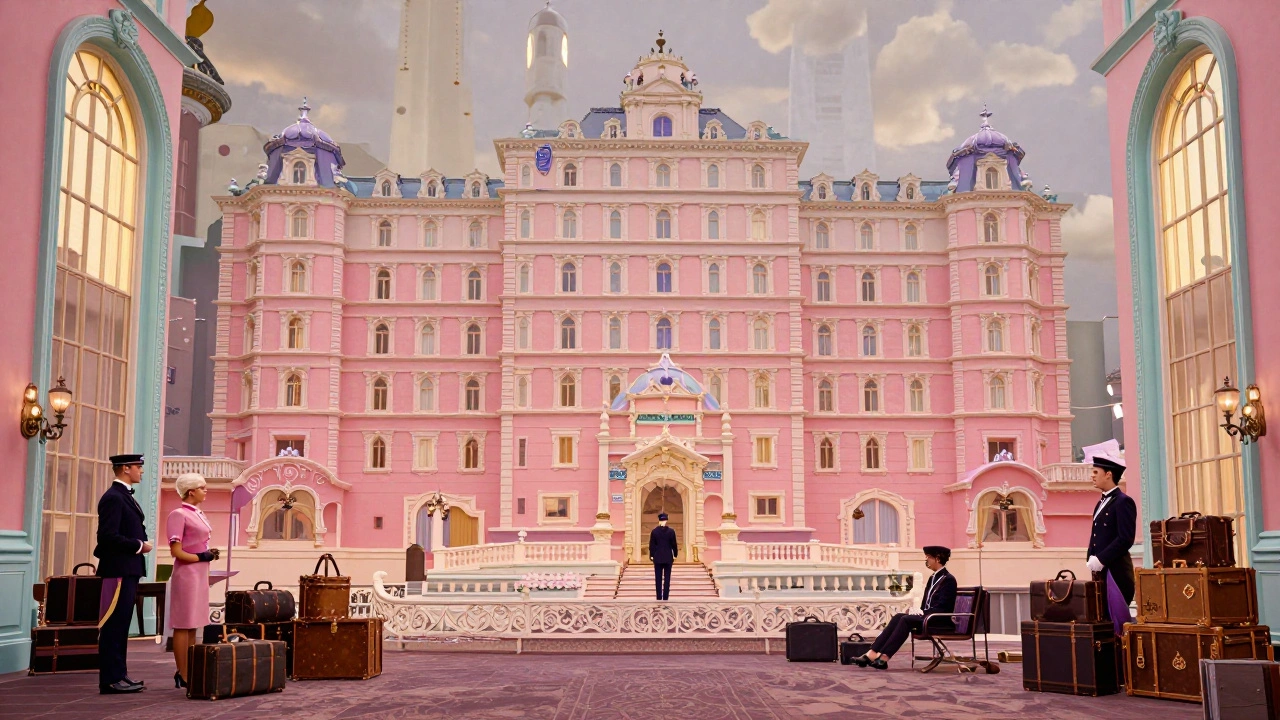
Take The Grand Budapest Hotel. Wes Anderson’s entire world is built on pastel pinks, mint greens, and lavender. It’s whimsical, yes-but it’s also a carefully constructed illusion. The color palette mimics old postcards, creating a fairy-tale version of Europe that never existed. The audience feels safe, nostalgic, even innocent… until violence happens. That contrast? That’s intentional. The color sets up the expectation, then shatters it.
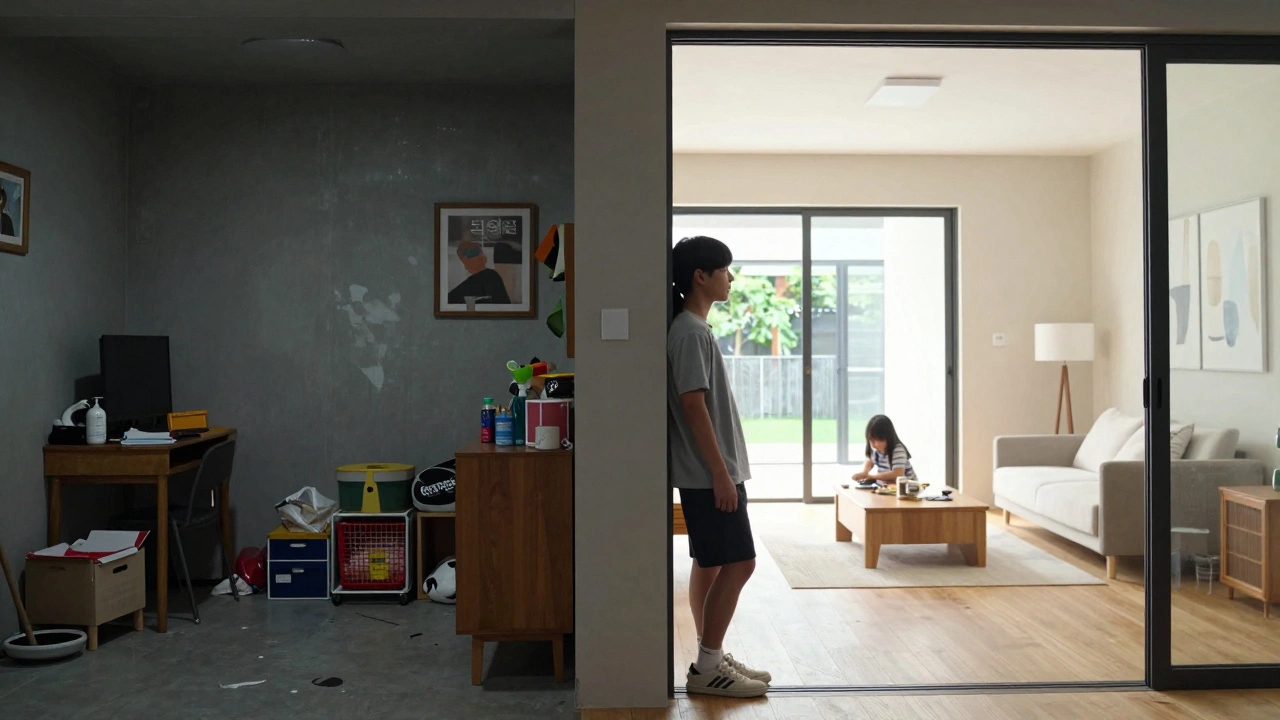
Color doesn’t just reflect mood-it predicts it. In Parasite, the Kim family’s semi-basement apartment is lit with dull grays and muddy browns. The Park family’s house? Clean whites, soft beiges, and natural wood tones. One feels cramped and worn down. The other feels airy and untouched. You don’t need to hear anyone say, “They’re rich,” because the color tells you everything.
How Color Palettes Are Built
There’s no magic formula, but every great production designer follows a process:
- Start with the script. What’s the emotional arc? Is it a descent into madness? A slow burn of repression? A joyful rediscovery?
- Define the core mood. Is this story hopeful? Claustrophobic? Surreal? That mood becomes the color compass.
- Choose 3-5 dominant colors. Too many colors create noise. Three is the sweet spot. One main, one secondary, one accent.
- Test with lighting. A color looks different under tungsten, LED, or natural sunlight. A blue wall can look icy or melancholic depending on the time of day the scene shoots.
- Coordinate with costume and grading. The color on set must survive post-production. If the director wants a cool tone in the final grade, the set can’t be full of warm oranges that fight it.
For Stranger Things, the Duffer Brothers and production designer Chris Trujillo didn’t just pick 80s colors-they picked 80s memory. The Hawkins Middle School is painted in institutional beige and lime green, the kind you’d find in a 1983 gymnasium. The Byers’ living room? Mustard yellow walls, burnt orange carpet, and wood paneling. These aren’t random retro choices. They’re emotional anchors. They make you feel like you’ve slipped into your own childhood basement.
Color as Character
Some shows use color to track a character’s inner journey. In Succession, the Roy family’s world is dominated by dark wood, charcoal suits, and deep burgundies. It’s cold. It’s heavy. It’s money that doesn’t feel like joy. But when Kendall tries to break free in Season 3, he starts wearing white shirts under his suit. Not just cleaner-lighter. The color shifts subtly, but the audience notices. His attempt at redemption is written in fabric and tone.
In Mad Men, Don Draper’s wardrobe evolves with his psyche. Early on, he wears navy and gray-controlled, professional. As he unravels, he starts wearing earth tones: olive, rust, tan. The color doesn’t scream “he’s falling apart.” It whispers it. And that’s more powerful.
Even in animation, color tells stories. In Spider-Man: Into the Spider-Verse, each universe has its own palette. Brooklyn’s Miles Morales is bathed in vibrant graffiti tones-electric blues, hot pinks, neon yellows. The animated world of Peter B. Parker? Muted grays and browns, like a faded photograph. The difference isn’t just style-it’s emotional distance. One world is alive. The other is tired.
Breaking the Rules on Purpose
Great color palettes aren’t just about harmony-they’re about tension. Sometimes, the most memorable moments come from a single wrong color.
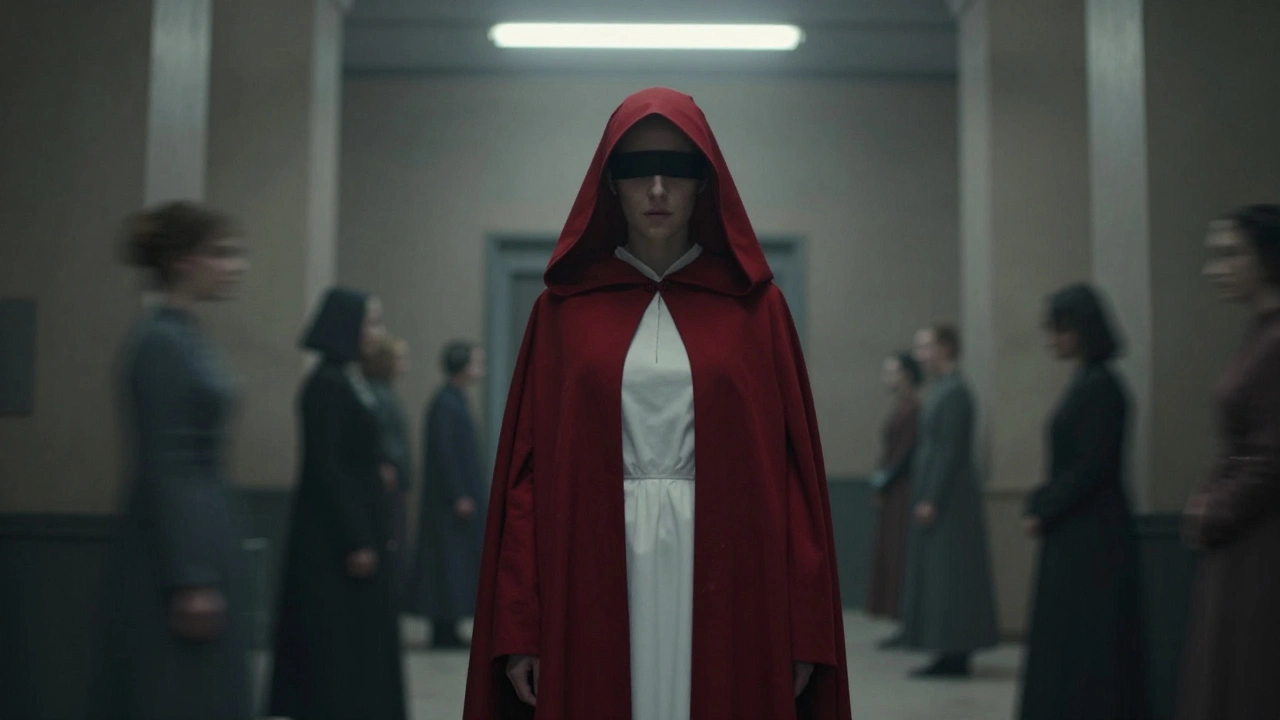
In The Handmaid’s Tale, the entire world is gray, beige, and red. The handmaids wear red robes. The commanders wear black. The wives wear blue. But in one chilling scene, a handmaid wears a white dress. It’s not a mistake. It’s a rebellion. That single white dress stands out like a scream in a library. The audience freezes. The color breaks the rule-and so does the character.
Similarly, in Her, the future is all soft pastels and warm lighting. But when Theodore’s loneliness peaks, the screen goes cold. A single blue light glows in his apartment. No other color. Just blue. It’s not just a lighting choice-it’s a visual sob.
Why This Matters Now
Streaming has changed everything. Viewers binge. They pause. They rewatch. They zoom in on the background. If your color palette is sloppy, they’ll notice. A mismatched pillow. A wall that doesn’t belong. A prop that glows too bright. In a world where every frame is scrutinized, color isn’t optional-it’s a precision tool.
Look at Severance. The office is all sterile whites, grays, and fluorescent lights. The outside world? Muted greens, browns, and soft shadows. The contrast isn’t just visual-it’s psychological. The audience feels the disconnect before the characters even name it. That’s color doing the heavy lifting.
And it’s not just for big-budget shows. Indie films use color even more deliberately. In The Lighthouse, the entire film is shot in black and white-but the contrast is so extreme, the grayscale feels like a color palette. The grays aren’t neutral. The shadows are thick and oily. The highlights are blinding. The film uses light and dark like a painter uses red and blue.
What to Avoid
Not every color choice works. Here are three common mistakes:
- Overloading with color. A set with ten different hues feels chaotic, not artistic. Less is more. Three colors, used consistently, create unity.
- Ignoring cultural context. Red means luck in China, danger in the West. If your story crosses cultures, color can misfire. A red door might feel welcoming to one audience and alarming to another.
- Forgetting the camera. Colors shift on screen. Bright yellow can become white. Deep purple can turn black. Always test your palette on camera before building sets.
Also, don’t rely on trends. Neon colors were big in 2018. Now they feel dated. Good production design doesn’t chase fashion-it builds timeless emotion.
How to Train Your Eye
You don’t need to be a designer to understand color. Start watching differently.
- Pause a scene. What’s the dominant color? What’s the second? What’s the outlier?
- Turn off the sound. Can you still feel the mood? That’s color working.
- Use a color picker app. Take screenshots of your favorite scenes and see what RGB values the production team used.
- Compare two scenes from the same show. How does the color change when the character changes?
Watch Barbie and Oppenheimer back to back. One is hyper-saturated pink. The other is washed-out beige. One is fantasy. The other is dread. Both are masterclasses in color as storytelling.
Color in production design isn’t about being pretty. It’s about being precise. Every hue is a word. Every shade is a sentence. And together, they don’t just build a world-they tell you how to feel inside it.
What’s the difference between color grading and production design color?
Production design color is what’s physically on set-the walls, props, costumes, and lighting during filming. Color grading happens in post-production, when editors adjust the tones, contrast, and saturation of the final footage. They work together: the set gives the raw material, and grading enhances or shifts it. But if the production design gets the color wrong, no amount of grading can fix it.
Can a single color define a whole show?
Yes. The Matrix is defined by green. Breaking Bad by teal and coral. Chernobyl by sickly yellow and gray. When a color becomes so tied to a show’s identity, it stops being a choice and starts being a signature. That’s when you know the production designer has succeeded.
Why do some shows use muted colors while others are bright?
Muted colors often signal realism, repression, or decay. Bright colors suggest fantasy, energy, or artificiality. It’s not about what’s trendy-it’s about what the story needs. Stranger Things uses bright colors to evoke nostalgia, but The Sopranos uses dull tones to reflect the numbness of its characters. The palette matches the psychology.
Do streaming platforms influence color choices?
Absolutely. On a phone screen, bright colors pop better. So shows made for mobile viewing-like Netflix’s originals-often use higher contrast and saturated tones. On a large TV, subtle gradients work better. Production designers now plan for both. A color that looks perfect on a 70-inch screen might vanish on a 5-inch phone. That’s why you’ll see more bold reds and deep blacks in modern shows-they’re optimized for every screen.
How do you choose a color palette for a period piece?
Start with historical accuracy, then bend it for emotion. For example, 1920s interiors were mostly earth tones, but if you’re making a film about a woman breaking free, you might add a single bold red curtain in her room. It’s not historically perfect-but it’s emotionally true. The goal isn’t to recreate the past. It’s to make the audience feel it.




Comments(9)