
The core problem isn't just memorizing lines; it's about how you communicate your instincts to a casting team in a tiny window of time. Whether you're a newcomer or a seasoned performer, the goal is the same: show that you can inhabit a character without looking like you're trying too hard.
Quick Takeaways for Your Next Audition
- Cold Reads: Focus on the "big picture" and your natural reaction rather than perfect delivery.
- Prepared Sides: Avoid over-rehearsing to the point of rigidity; leave room for a director's notes.
- The Goal: Casting directors aren't looking for a finished product-they want to see if you're directable.
- Key Skill: Active listening is more important than the words you speak.
The Chaos of the Cold Read
A Cold Read is an audition technique where an actor is given a script (sides) and asked to perform them with little to no preparation time. It's a litmus test for spontaneity. When a casting director asks for a cold read, they aren't checking to see if you can hit every beat perfectly. They want to see how you think on your feet. Can you find the emotional core of a scene in thirty seconds? Do you panic, or do you lean into the uncertainty?
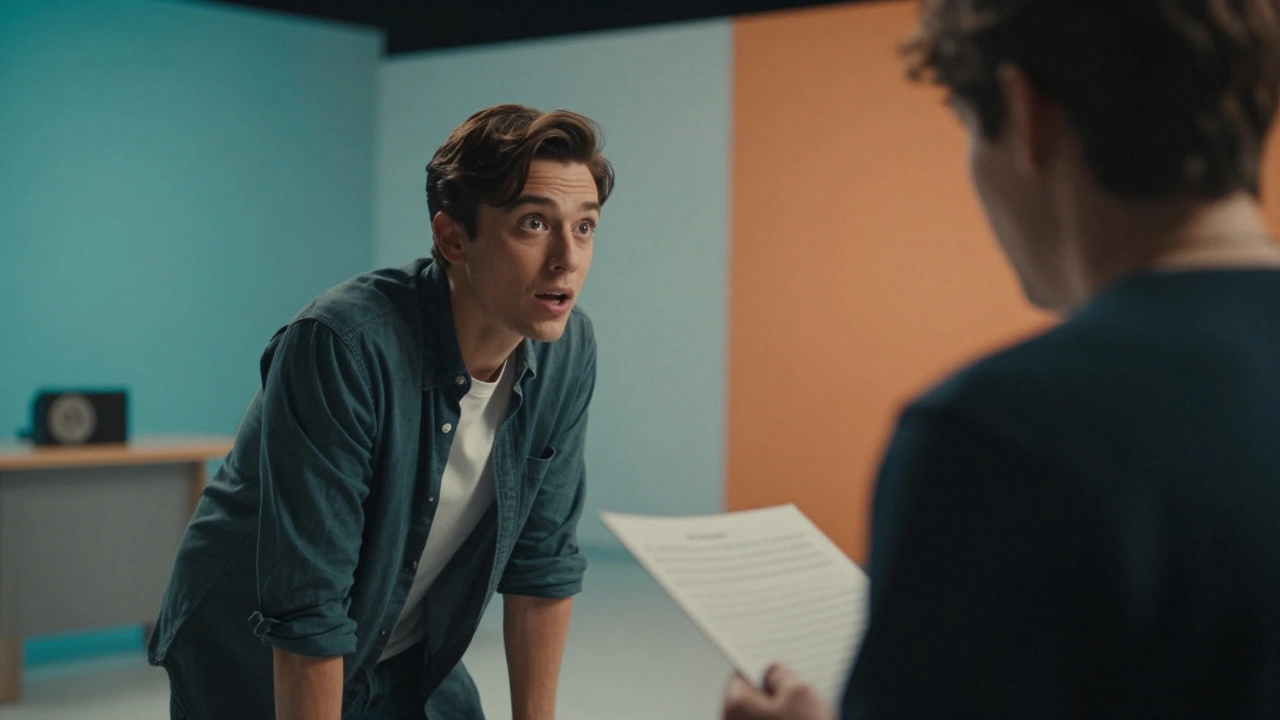
The biggest mistake actors make during cold reads is staring at the page. If your eyes are glued to the paper, you aren't acting; you're reading. You lose the connection with your scene partner and the casting team. To nail this, treat the script as a map, not a teleprompter. Glance at the line, grab the essence, and then look at the other person. The magic happens in the silence between the lines, not in the words themselves.
Think about a scenario where you're playing a tense argument between siblings. If you spend all your energy trying to get the wording exactly right, you'll miss the moment where the other actor gives you a look of genuine hurt. A great cold reader prioritizes the relationship over the text. They use the "roughness" of the first read to find something honest and unexpected that a rehearsed performance might have polished away.
Mastering Prepared Sides
On the flip side, you have Prepared Sides, which are specific excerpts of a screenplay sent to an actor in advance to be memorized and rehearsed before the audition. This is the industry standard for most major roles. You have the luxury of time to analyze the character's objective-what do they actually want in this scene?-and map out the emotional arc.
However, there is a dangerous trap here: the "locked-in" performance. I've seen countless talented actors walk in with a performance so rehearsed that it feels like a recording. They've decided exactly when to pause, where to whisper, and when to yell. When the director says, "Try it again, but this time, you're secretly terrified," the actor freezes. Why? Because they've built a mental wall around their prepared choices.
The trick to prepared sides is to prepare the intention, not the delivery. Know your character's goal, understand the stakes, but keep the actual performance fluid. If you're auditioning for a role in a high-tension thriller, don't decide that you're going to scream the final line. Instead, decide that you are desperate to be heard. That way, if the director asks you to play it as a whisper, your intention (desperation) remains the same, but the delivery changes effortlessly.
| Feature | Cold Read | Prepared Sides |
|---|---|---|
| Primary Goal | Test spontaneity and instinct | Test depth and character work |
| Main Risk | Lack of focus/stuttering | Over-rehearsing/rigidity |
| Key Strength | Raw, honest reactions | Polished, nuanced choices |
| Preparation Time | Minutes to an hour | Days to a week |
The Psychology of the Casting Director
To win the room, you have to understand who is watching. Casting Directors aren't just looking for the best actor; they are looking for the best fit. They are often dealing with a massive volume of talent and are looking for a reason to say "yes"-or a reason to move on. When they use Film Audition Techniques like the cold read, they are testing your "directability."
Directability is the most valuable currency in a casting room. If a director gives you a note-"Make it colder" or "Play it like you're talking to a child"-and you can pivot instantly, you've just proven that you'll be easy to work with on a million-dollar set where time is money. The actor who clings to their prepared version is a liability. The actor who says, "Got it," and immediately changes their approach is a professional.
Whether you are doing a self-tape or an in-person call, the energy you bring matters. In a cold read, that energy should be curiosity. In prepared sides, it should be confidence mixed with openness. If you look like you're fighting the script, the casting director will feel that tension. Instead, treat the scene as a playground. The more you enjoy the process of discovery, the more magnetic you become on screen.

Practical Strategies for the Waiting Room
The time between arriving at the studio and actually stepping in front of the camera is where the battle is won or lost. If you've been given sides upon arrival for a cold read, don't try to memorize the lines. That's a waste of brainpower. Instead, scan the scene for the "turning point." Every scene has a moment where the power shifts from one character to another. Find that moment.
If you're doing prepared sides, do a quick "shake-off." Literally shake your limbs, breathe deeply, and let go of the specific way you practiced the lines at home. Remind yourself that the version you practiced is just a draft. The final version will be created in the room through the chemistry you have with your reader.
Use these specific rules of thumb to stay grounded:
- The 80% Rule: For prepared sides, aim to give 80% of your rehearsed effort. This leaves 20% of your mental capacity open to react to the other actor.
- The Breath Technique: Before a cold read, take one deep breath and focus on the physical sensation of the room. It stops the panic response and brings you back into your body.
- Eye Contact: In a cold read, keep the paper at chest level. Never hide your face behind the script. Look up at the end of every sentence.
Dealing with the "Reader"
A huge part of any audition is the reader-the person acting the other part. In a professional setting, the reader might be a fellow actor, a casting assistant, or even the director. Sometimes they are amazing; sometimes they are flat and boring. Your job is to make them better.
If you're in a cold read and the reader is robotic, don't let it pull you down. Use their flatness as a character choice. Maybe your character is talking to someone who is depressed, or someone who doesn't care. By adjusting your performance to fit the reader's energy, you show that you are an active listener. This is an advanced move that casting directors absolutely love because it shows you can carry a scene.
For prepared sides, the reader might challenge you by changing their tone. If you've spent hours practicing with a friend who played the scene one way, and the professional reader does it differently, don't fight it. Lean into the new dynamic. The chemistry between two actors is the only thing that truly matters in a film; everything else is just window dressing.
Common Pitfalls to Avoid
One of the most common errors in both techniques is "indicating." This is when an actor tries to show the emotion rather than feeling it. For example, if the script says the character is sad, an actor might start squinting their eyes and trembling their lip. This looks fake. Instead, focus on what you want from the other person. If you're sad, maybe you want them to apologize. The desire for the apology creates the sadness naturally.
Another trap is the "over-read." This happens during cold reads when an actor tries to add too many flourishes to hide the fact that they are reading. They add unnecessary gestures or exaggerated accents. Stop. Keep it simple. The casting director wants to see you, not a caricature of a character. Simplicity is almost always more powerful on camera than theatricality.
Lastly, avoid the "apology loop." If you mess up a line during a cold read, do not stop and apologize. Do not say, "Sorry, let me start over." Just keep going. In a real movie, people stumble over words, pause, and lose their train of thought. If you incorporate the mistake into the character, you've turned a failure into a piece of brilliant acting.
What should I do if I completely forget a line during a cold read?
Don't panic and don't apologize. Simply glance down at the page, find your place, and keep moving. If you're comfortable, you can even improvise a similar thought to keep the flow of the scene going. Casting directors care more about your recovery and your emotional connection than a perfectly recited line.
How much should I memorize for a cold read if I have 15 minutes?
Do not try to memorize the whole scene. Instead, memorize the first and last lines of the scene. This gives you a strong start and a confident finish. For the middle, focus on the keywords and the emotional shifts. Knowing where the scene is going is more important than knowing every word.
Is it okay to ask the casting director for a second try?
Generally, no. Unless they ask you to try it a different way, assume the first take is the one. However, if you feel you completely missed the mark, you can politely ask, "Would you like to see a different approach?" but only do this once. Most of the time, the first raw instinct is what they are looking for.
How do I avoid sounding "rehearsed" with prepared sides?
The best way is to change your physical state right before you enter. Do some jumping jacks or listen to a song that puts you in the scene's mood. When you start the scene, listen intensely to the reader. If you are truly listening and reacting to what is happening in the moment, your performance will naturally shift away from the "rehearsed" version.
What is the best way to analyze sides quickly?
Look for the conflict. Ask yourself: "What do I want?" and "What is stopping me from getting it?" Once you identify the obstacle, your lines become tools to overcome that obstacle. This gives your performance a clear direction and purpose, even if you've only had a few minutes to look at the script.
Next Steps for Your Acting Journey
If you're struggling with cold reads, start practicing with random scripts at home. Pick up a play or a screenplay, flip to a random page, and try to perform it immediately. The goal is to build the muscle of "instant analysis." The more you expose yourself to different styles of dialogue, the less intimidating the casting room becomes.
For those who struggle with prepared sides, try recording yourself and watching it back-not to critique the acting, but to check for rigidity. If you sound like you're reciting a poem, you're over-rehearsing. Try doing the scene in a completely different environment-like while washing dishes or walking the dog-to break the association with a specific "performance style."
Ultimately, whether it's a cold read or a prepared side, the audition is a conversation. You're not there to deliver a monologue; you're there to see if you and the character can coexist in the same space. Stay flexible, stay curious, and remember that the mistakes are often where the most interesting acting happens.


Comments(9)