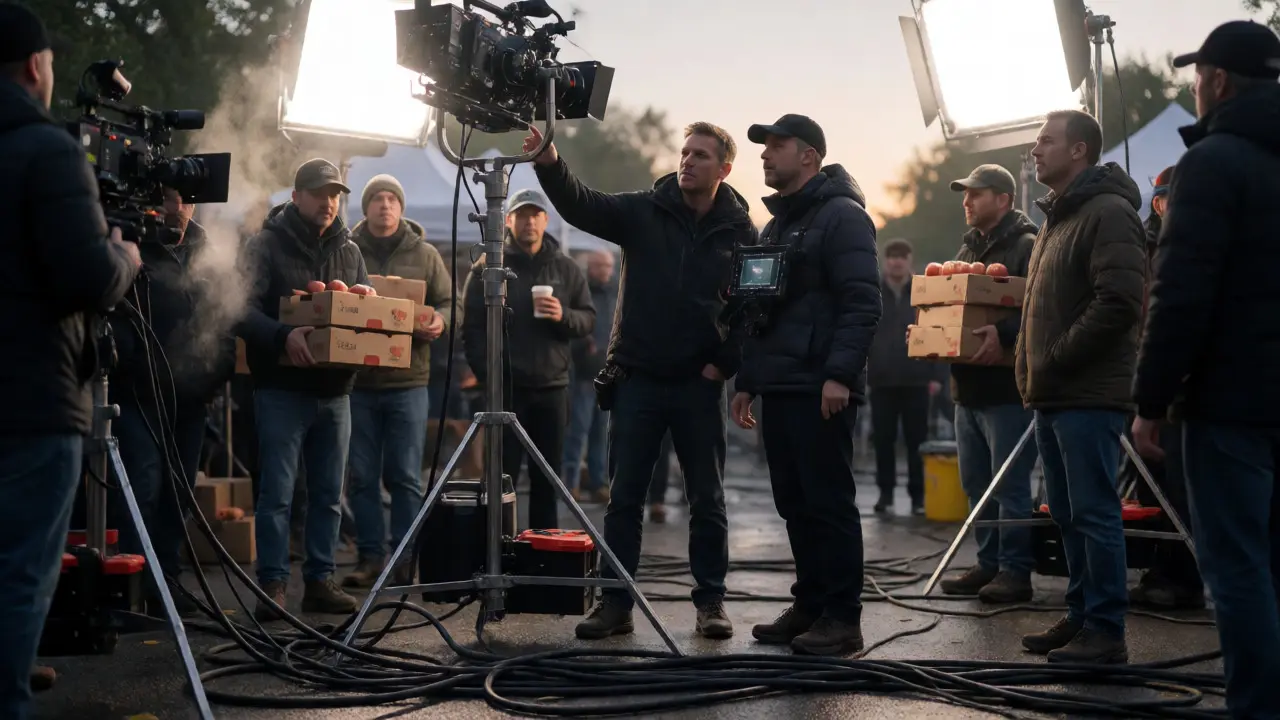
You walk onto a film set for the first time, and it looks like chaos. Cables snake across the floor. Someone is yelling about "apple boxes." The director is whispering to a guy with a monitor strapped to his chest. You’re trying to figure out who does what, but everyone seems to be doing everything at once. Then you realize: there’s a hierarchy here, as rigid as a military unit, just with more coffee and fewer salutes.
The Camera Department is one of the most critical units on any production. It’s the team responsible for capturing the visual story. If the script is the skeleton, the camera department provides the eyes. But it’s not just one person holding a rig. It’s a complex ecosystem of specialists, each with a specific job that keeps the shoot moving. Misunderstanding these roles leads to bottlenecks, wasted money, and frustrated creatives. Let’s break down exactly who stands where and why it matters.
The Head of the Visual Story: Director of Photography
At the top of the camera department sits the Director of Photography (DP), also known as the Cinematographer. This is the second-in-command after the director when it comes to the look and feel of the film. The DP doesn’t usually touch the camera during shooting; they design the light and frame the shot. They work closely with the director to translate emotional beats into visual language-deciding if a scene feels claustrophobic with a wide-angle lens or distant with a telephoto.
The DP makes high-stakes decisions about color palettes, lighting ratios, and movement. If the director says, "I want this moment to feel lonely," the DP decides whether that means a cold blue tint, a single hard source of light, or a slow dolly move away from the character. This role requires deep technical knowledge of optics and sensors, combined with artistic sensibility. On smaller indie sets, the DP might operate the camera themselves, but on larger productions, they step back to oversee the entire visual strategy.
The Hands-On Leader: Camera Operator
If the DP designs the shot, the Camera Operator executes it. This person physically handles the camera, maintaining framing and focus while following the action. Think of them as the pilot of the aircraft. They need steady hands, spatial awareness, and the ability to react instantly to actors’ movements. A great operator anticipates where an actor will turn their head before they do it, keeping the subject perfectly composed in the frame.
On big-budget films, there’s often a distinction between the main Camera Operator and a Steadicam or Crane Operator. These specialists handle specific rigs that require unique skills. For instance, a Steadicam operator wears a vest that distributes the weight of the camera, allowing them to walk smoothly over uneven terrain without shaking the image. It’s physically grueling work that demands balance and endurance. The Camera Operator reports directly to the DP, taking cues on when to zoom, pan, or tilt.
The Technical Guardian: Focus Puller (1st AC)
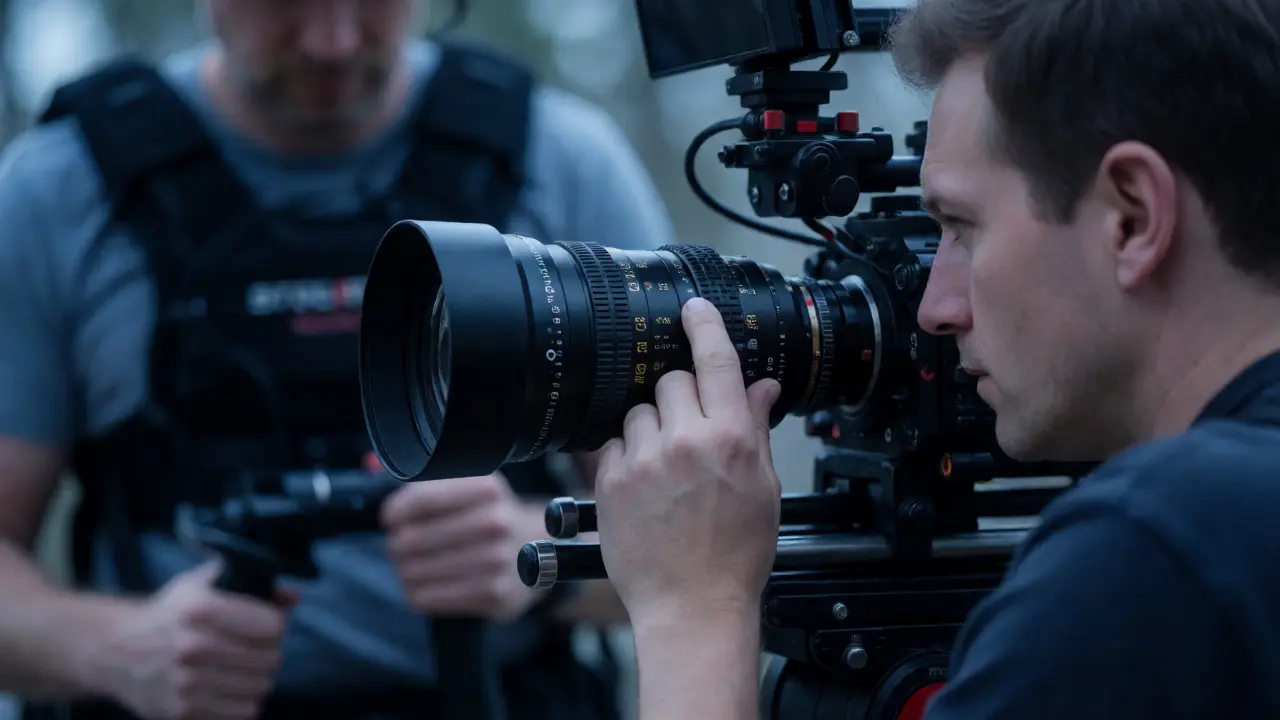
Here’s where things get nerdy-and vital. The Focus Puller, officially known as the First Assistant Camera (1st AC), has arguably the most stressful job on set. Their sole responsibility is keeping the subject sharp. In cinema, depth of field can be razor-thin. If an actor moves six inches toward the camera, the focus plane shifts. If the Focus Puller misses that adjustment by a millimeter, the take is ruined.
This role requires measuring distances constantly. Before a take, the 1st AC uses a tape measure or laser rangefinder to mark distances on the floor (called "marks") where actors will stand. During the take, they manually rotate the focus ring on the lens barrel, compensating for movement in real-time. It’s a skill that takes years to master. Modern technology helps with auto-focus systems, but most professional DPs still prefer manual control because autofocus can hunt or shift unexpectedly during emotional pauses.
| Role | Primary Responsibility | Key Tool/Skill |
|---|---|---|
| Director of Photography | Visual style, lighting design, lens selection | Light meters, monitors, creative vision |
| Camera Operator | Framing, composition, camera movement | Steady hands, spatial awareness |
| 1st AC (Focus Puller) | Maintaining focus, changing lenses | Laser rangefinder, precise hand movement |
| 2nd AC (Clapper Loader) | Slate operation, media management, logistics | Clapperboard, data cards, paperwork |
| DIT (Digital Imaging Technician) | Data integrity, color grading on set | Color scopes, laptops, RAID drives |
The Logistics Engine: 2nd AC (Clapper Loader)
While the 1st AC worries about pixels, the 2nd Assistant Camera (2nd AC) worries about process. Often called the Clapper Loader, this person claps the slate (the board with numbers) at the start of every take to sync audio and video. But that’s just the tip of the iceberg. The 2nd AC manages the camera equipment inventory, changes batteries, swaps memory cards, and fills out the camera reports that document which takes were good.
They are the glue holding the department together. If a lens breaks, the 2nd AC arranges the rental replacement. If the camera needs cleaning, they do it. They also assist the 1st AC by marking actors’ positions with tape. It’s a high-energy role that requires organization and communication. Without a competent 2nd AC, the camera department descends into confusion, losing track of which take was which-a nightmare for editors later on.
The Data Lifeguard: Digital Imaging Technician (DIT)
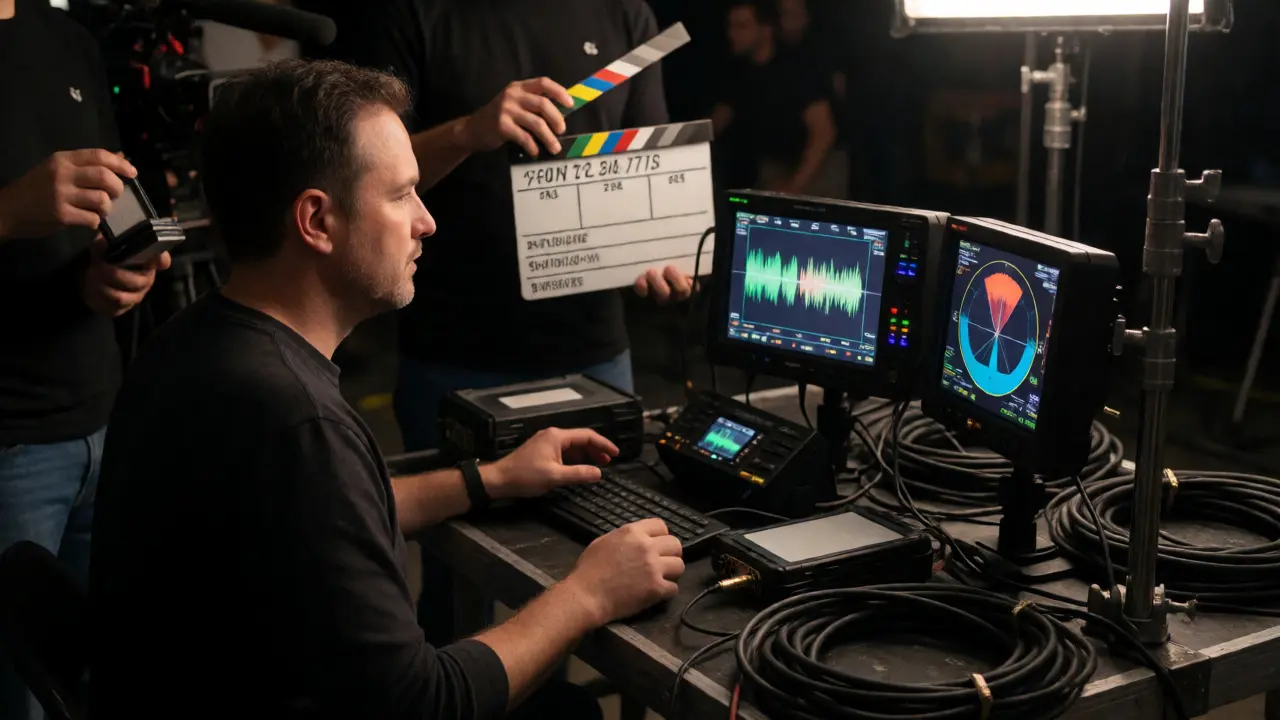
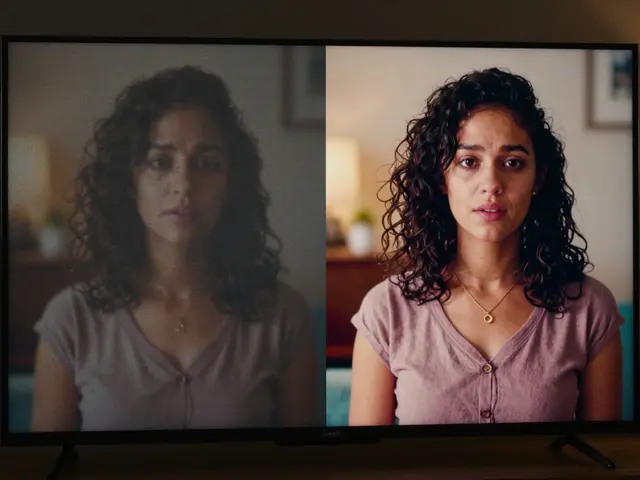
In the digital age, the Digital Imaging Technician (DIT) has become indispensable. This role didn’t exist 30 years ago. The DIT ensures that the raw footage coming off the camera is safe, correctly formatted, and visually consistent. They connect to the camera via SDI cables, monitoring exposure levels using waveform monitors and vectorscopes. If a shot is too dark or blown out, the DIT alerts the DP immediately.
Beyond monitoring, the DIT applies temporary LUTs (Look-Up Tables) to give the director a preview of the final color grade. More importantly, they manage the data workflow. They download files from camera cards to secure storage drives, verify checksums to ensure no data corruption occurred, and back up everything twice. Losing footage due to a corrupted card is a producer’s worst fear. The DIT prevents that disaster through rigorous protocols and redundancy.
How the Team Communicates on Set
Efficiency on set relies on clear, concise communication. The hierarchy dictates who speaks to whom. The Director talks to the DP. The DP talks to the Camera Operator and Gaffer (head of lighting). The Camera Operator talks to the Actors. The ACs talk to the Grip Department (who build the rigs).
- "Rolling!" - The 2nd AC announces the camera is recording.
- "Marker!" - The 2nd AC claps the slate for sync.
- "Cut!" - The Director stops the take.
- "Check gate!" - The 1st AC inspects the lens for dust or hair before the next take.
- "Reset!" - Everyone returns to starting positions for another attempt.
Notice how few words are used. Time is money. Every second spent explaining a simple task is a second lost from shooting. That’s why titles matter. When someone says "Grip," you know exactly what they mean. When someone says "AC," you know who holds the focus ring. Ambiguity kills momentum.
Common Pitfalls for New Crew Members
Newcomers often underestimate the physical toll of these roles. Carrying a 40-pound camera rig for ten hours straight wrecks your back. Standing still for hours waiting for lighting adjustments tests your patience. Here are three mistakes beginners make:
- Talking during takes: Never speak when the red tally light is on. Even a whisper ruins the audio.
- Ignoring cable safety: Tripping over a BNC cable can disconnect a live feed or cause injury. Always watch your step.
- Assuming tech solves everything: Just because a camera has autofocus doesn’t mean you don’t need a skilled operator. Human intuition still beats algorithms in complex scenes.
Another frequent issue is scope creep. An AC might try to fix a lighting problem because they see it, but that’s the Gaffer’s job. Stay in your lane. Trust the hierarchy. If you see something wrong, flag it politely, but let the right person fix it.
Why Understanding These Roles Helps Directors
If you’re a director or writer, knowing camera roles saves you headaches. You’ll learn to ask better questions. Instead of saying, "Make it look cool," you can say, "Can we get a tighter lens here?" or "Let’s try a handheld approach." You’ll understand why certain shots take longer to set up. Moving a heavy crane takes time. Changing a lens takes time. Knowing the constraints of the camera department helps you plan realistic schedules.
It also builds respect. Filmmaking is collaborative. Recognizing that the Focus Puller is working harder than anyone else to keep your shot sharp creates a positive culture. Happy crews shoot faster and creatively. Tired, confused crews make mistakes.
What is the difference between a DP and a Camera Operator?
The Director of Photography (DP) is responsible for the overall visual look, lighting design, and lens choices. The Camera Operator physically handles the camera, executing the framing and movement decided by the DP. On small shoots, one person may do both, but on professional sets, these are distinct roles.
Why is the Focus Puller considered so important?
The Focus Puller (1st AC) ensures the subject remains sharp throughout the take. With shallow depths of field common in cinema, even slight movements by actors can throw the image out of focus. A missed focus pull renders a take unusable, costing time and money.
What does a DIT actually do?
A Digital Imaging Technician (DIT) manages the digital data workflow. They monitor exposure, apply temporary color grades (LUTs), and back up footage from camera cards to secure drives. They ensure data integrity so no footage is lost due to corruption.
Do all camera departments have a DIT?
Not always. On low-budget or micro-budget productions, the 1st or 2nd AC might handle basic data offloading. However, for any project using high-resolution formats like 4K or RAW, a dedicated DIT is highly recommended to prevent data loss and maintain visual consistency.
Who reports to the Director of Photography?
The Camera Operator, 1st AC, 2nd AC, and DIT report directly to the DP. The Gaffer (head electrician) also works closely with the DP regarding lighting, though technically reports to the Producer for budgetary reasons. The DP coordinates with all these heads to achieve the desired look.



Comments(4)