Europe’s Film Subsidy Systems: How EU Funding Supports Independent Cinema

Joel Chanca - 27 Aug, 2026

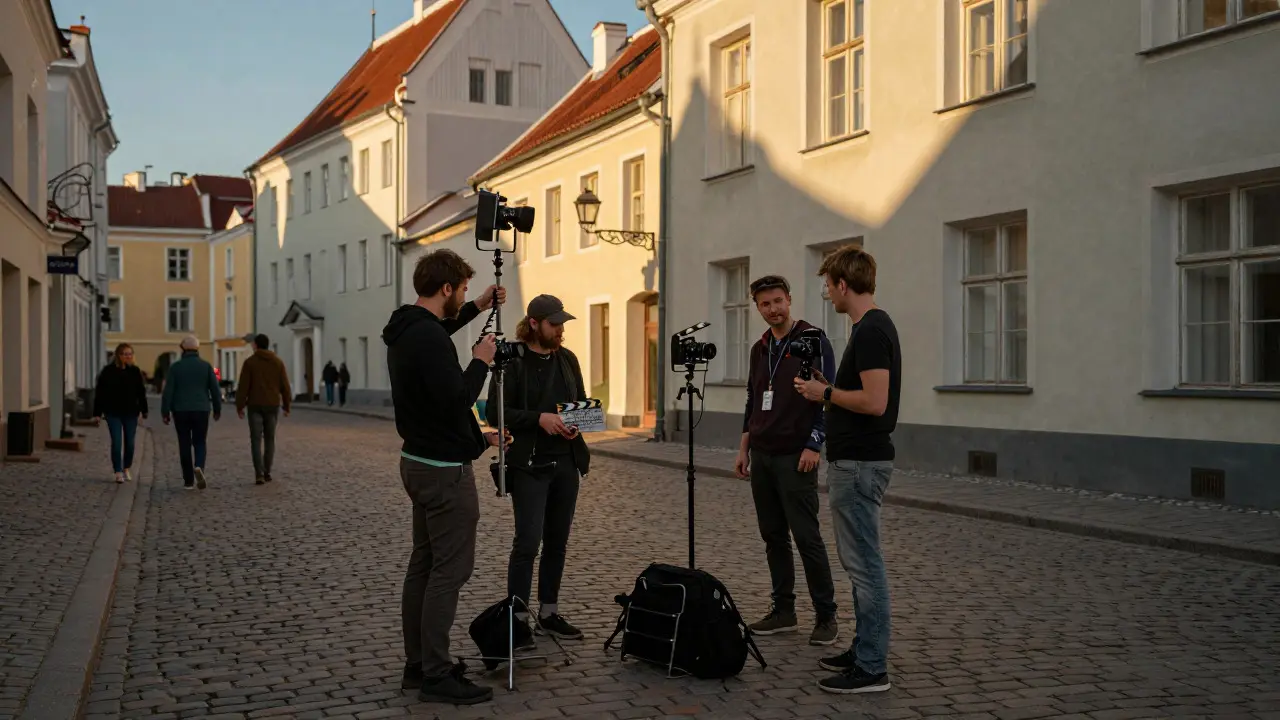
There is a specific kind of magic that happens when a small crew in Tallinn or a mid-sized production in Lisbon gets the green light not from a Hollywood studio, but from a government office. In Europe, independent film funding is a complex ecosystem of state-backed grants, tax incentives, and pan-European co-financing mechanisms designed to sustain non-commercial cinema. Unlike the US market, which relies heavily on box office returns and streaming rights deals to recoup costs, European cinema thrives on public policy. If you are a filmmaker, producer, or investor looking at the continent, understanding how these subsidy systems work is not just helpful-it is essential for survival.

The Core Pillars of European Film Support

To understand the money flow, you have to look at three distinct layers. First, there are National Film Funds, which are country-specific bodies like the BFI in the UK, CNC in France, or DFFF in Germany. These entities provide direct grants, loans, or equity investments based on cultural merit and economic impact. Second, there is the EU-level framework, primarily Creative Europe MEDIA, which focuses on distribution, circulation, and development rather than pure production financing. Finally, there are Co-production Treaties, bilateral agreements between countries that allow producers to access multiple national funds for a single project.

This tripartite structure means a single film can theoretically tap into three different sources of public money. For example, a French-British co-production might receive development support from CNC, distribution aid from Creative Europe MEDIA, and post-production grants from the British Film Institute. The key constraint? Eligibility. Each fund has strict rules about what counts as "European content," often requiring a certain percentage of the creative team (director, screenwriter, cinematographer) to be citizens or residents of the participating countries.

How Creative Europe MEDIA Actually Works

Creative Europe MEDIA is the EU’s dedicated program for the audiovisual sector. It does not typically pay for cameras or actors. Instead, it subsidizes the business side of filmmaking. The program offers several call types, each targeting a different phase of a film's lifecycle:

  • Development: Grants for script development and pitch preparation, helping filmmakers secure further investment.
  • Distribution: Financial support for acquiring international sales rights and marketing films across borders.
  • Circulation: Aid for cinemas and festivals to screen non-mainstream European works.
  • Training: Scholarships for industry professionals to attend masterclasses and workshops.

The application process is competitive. You submit a dossier including the script, budget, and a clear distribution plan. Reviewers assess the project’s potential for cross-border appeal. A common pitfall for first-time applicants is underestimating the administrative burden. You need a certified accountant to verify your budget and legal documents proving the European status of your key personnel. Many projects fail not because the story is weak, but because the paperwork is incomplete.

National Funds: The Real Engine of Production

While MEDIA helps with distribution, the heavy lifting for production budgets usually comes from national funds. These vary wildly by country. France’s CNC is one of the most robust systems in the world, offering automatic tax credits for production costs incurred on French soil. This model-often called the "tax credit system"-allows producers to recoup a significant portion of their local spend after the film is released. Germany’s DFFF operates differently, using a lottery-based selection process where projects are drawn from a pool of eligible applications, ensuring a degree of randomness that favors diversity over commercial viability.

In smaller markets like Estonia or Lithuania, national funds are crucial for keeping local cinema alive. Without them, productions would likely move to neighboring countries with larger budgets. These funds often prioritize "local value-add," meaning they want to see spending happen within their borders. This creates a ripple effect: local crews get hired, local vendors get paid, and the domestic film industry strengthens itself.

Comparison of Major European Film Funding Mechanisms
Mechanism Primary Focus Funding Type Key Requirement
Creative Europe MEDIA Distribution & Development Non-repayable Grant Cross-border potential
French CNC Tax Credit Production Costs Repayable Tax Rebate Spending in France
German DFFF Lottery Production & Post Grant Random Selection
UK BFI Awards Development & Production Grant/Loan UK Creative Team
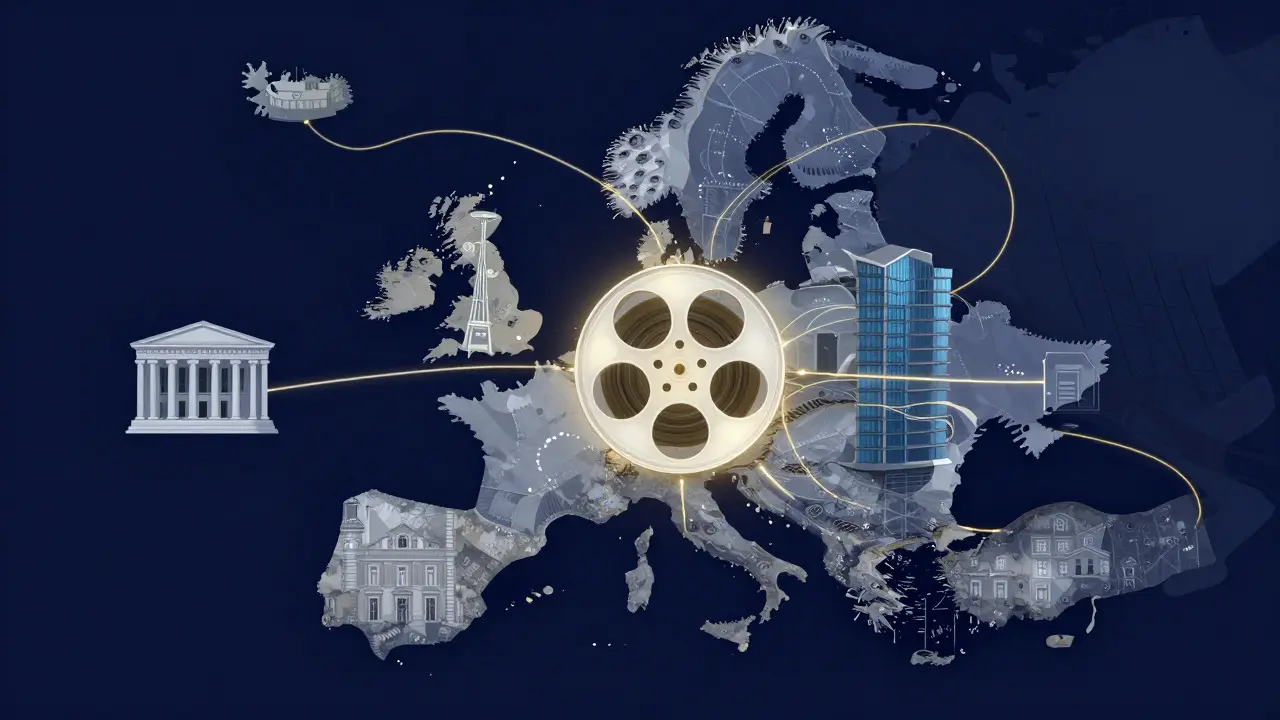
Conceptual art showing interconnected nodes representing European film funding networks

The Role of Co-Production Treaties

Here is where it gets strategic. A co-production treaty is a legal agreement between two or more countries that allows a film to be considered "native" to all signatories. Why does this matter? Because it unlocks access to multiple national funds. If you produce a film that is officially a French-German co-production, you can apply for French tax credits AND German DFFF grants. This effectively doubles your potential public funding base without needing additional private investors.

However, securing treaty status requires proof of genuine collaboration. You cannot simply hire a French director and shoot in Germany; you need substantive involvement from both sides. Usually, this means sharing creative control, splitting production companies, and ensuring a balanced ratio of staff from each country. Producers often negotiate these terms early in pre-production to avoid bureaucratic deadlocks later.

Common Pitfalls and How to Avoid Them

Many filmmakers stumble because they treat subsidy systems as a safety net rather than a strategic tool. Here are the most frequent mistakes:

  1. Ignoring Eligibility Deadlines: National funds often have rolling deadlines or specific annual windows. Missing a deadline by a day can cost you a year of planning time.
  2. Underestimating Reporting Requirements: Receiving a grant is easy; reporting on it is hard. You will need detailed financial reports, proof of expenditure, and sometimes even audience data. Hire an experienced production accountant before you start shooting.
  3. Overlooking Local Content Rules: Some funds require a minimum percentage of the cast or crew to be locals. Check the fine print before casting.
  4. Assuming One Size Fits All: A strategy that works for a French feature may not work for a Danish documentary. Tailor your approach to the specific strengths of each national system.

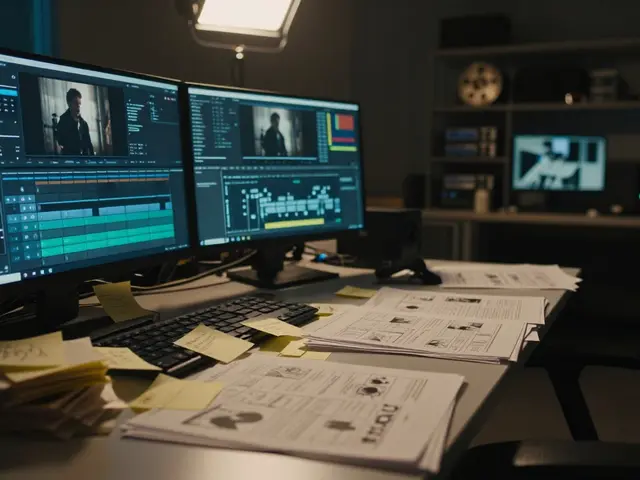
Hands reviewing stacks of production documents on a desk in a dimly lit office

Future Trends in European Film Finance

The landscape is shifting. With the rise of global streaming platforms, there is growing pressure on national funds to ensure that subsidized films actually reach audiences. Some countries are beginning to link funding to digital distribution metrics. Additionally, sustainability is becoming a factor. New calls for proposals increasingly ask for environmental impact plans, reflecting the EU’s broader green agenda. Filmmakers who adapt to these changes-who document their carbon footprint and plan for digital release-will find themselves better positioned to win future grants.

Frequently Asked Questions

Do I need to be a European citizen to apply for EU film subsidies?

Not necessarily. While many national funds require key creative roles to be held by citizens or long-term residents of that country, Creative Europe MEDIA programs are open to any company registered in an EU member state. However, the "European content" rules still apply to the creative team composition.

What is the difference between a grant and a tax credit?

A grant is a non-repayable sum of money given upfront or during production. A tax credit is a rebate on taxes owed, usually claimed after the film is completed and released. Tax credits reduce your overall tax liability, while grants directly inject cash into your budget.

Can short films access the same funding as features?

Yes, but often through different categories. Many national funds have specific streams for shorts, animations, and documentaries. Creative Europe MEDIA also has specific calls for short film distribution. The eligibility criteria are similar, but the budget caps and evaluation criteria differ.

How long does it take to get approved for a national film fund?

It varies by country. Some funds review applications monthly, while others have quarterly or annual cycles. On average, expect 3 to 6 months from submission to decision. Factor this into your pre-production timeline, as delays can push back shooting dates significantly.

Is it worth doing a co-production if my home country has strong funding?

Often, yes. Even if your home fund is generous, adding a co-producer from another country can unlock additional funding, broaden your distribution network, and increase the film's cultural prestige. However, it adds complexity to negotiations and production management.

Comments(9)

Hengki Samuel

Hengki Samuel

August 27, 2026 at 19:24

Let us be honest for a moment, shall we? This entire edifice of 'European cinema' is nothing more than a gilded cage built to keep the vibrant, untamed spirit of global storytelling at bay. You speak of magic in Tallinn or Lisbon, but I see only bureaucratic suffocation, a slow-motion death spiral where tax credits are handed out like candy to those who have already secured their place in the elite. It is a system designed to protect the comfortable, not to foster true artistic revolution.


Look at the so-called 'National Film Funds.' They are not engines of creativity; they are gatekeepers of mediocrity. In Nigeria, we struggle against a backdrop of underfunding and lack of infrastructure, yet our stories burn with a ferocity that no amount of EU paperwork can replicate. Why? Because we do not wait for permission to create. We create because we must.


Your 'Creative Europe MEDIA' program is merely a band-aid on a gaping wound. It subsidizes distribution, yes, but it does not subsidize the soul. It does not pay for the courage required to tell a story that challenges the status quo. Instead, it encourages filmmakers to pander to the lowest common denominator of cross-border appeal, turning art into a commodity that can be easily packaged and sold to the highest bidder.


The co-production treaties are particularly insidious. They promise access to multiple funds, but in reality, they dilute the cultural integrity of the film. When you mix French sensibilities with German efficiency and British reserve, what do you get? A bland, palatable mess that offends no one and inspires no one. It is the culinary equivalent of microwaved popcorn: safe, predictable, and utterly devoid of flavor.


And let us not forget the reporting requirements. You receive a grant, and then you are shackled by chains of accountability. Every penny spent must be justified, every creative decision scrutinized. Where is the freedom in that? Where is the risk? Art requires risk, and risk cannot survive in an environment where failure is penalized by the state.


So, while you celebrate the 'magic' of government-backed grants, I ask you to look beyond the borders of this self-imposed paradise. Look at Africa, look at Asia, look at the places where cinema is born from necessity, not subsidy. That is where the real magic lies. That is where the future of filmmaking resides. Until Europe learns to loosen its grip and embrace the chaos of genuine artistic expression, it will remain a museum of beautiful, dead ideas.

Michelle Jiménez

Michelle Jiménez

August 28, 2026 at 03:01

I totally agree with the point about the admin burden! i worked on a small doc last year and just the paperwork was insane. you spend half your time filling out forms instead of actually making the movie. it feels like the system is designed to trip you up if you dont have a big team behind you.


also, the part about local content rules is so relatable. we had to hire a specific amount of locals just to qualify for a grant, even though some of them werent really the best fit for the roles. it felt forced. but hey, the money helped cover the rest of the budget, so maybe it was worth it in the end?

Tess Lazaro

Tess Lazaro

August 28, 2026 at 16:34

While the administrative burden is certainly a valid complaint, it is important to note that these systems are not designed to trip up filmmakers, but rather to ensure accountability for public funds. The complexity arises because the funding sources are diverse and often contradictory in their priorities.


Furthermore, the 'local content' requirement is not merely a bureaucratic hurdle; it is a strategic tool to ensure that the economic benefits of production stay within the region. If you view it solely as a casting constraint, you miss the broader economic rationale. The goal is to build a sustainable domestic industry, not just to produce a single film.


However, I concede that the application process could be streamlined. Many first-time applicants fail due to incomplete dossiers, which suggests that the guidance provided by the funding bodies is insufficient. More transparent guidelines and pre-application consultations would likely reduce the failure rate without compromising the rigor of the selection process.

Pat Grant

Pat Grant

August 29, 2026 at 01:49

Meh. Just another way for bureaucrats to pick winners and losers based on who knows whom. Art should stand on its own, not on the back of a tax rebate. But sure, enjoy your little grants.

Priya Shepherd

Priya Shepherd

August 30, 2026 at 21:06

This is such a dramatic take on what is essentially a standard public policy framework. Of course there are gatekeepers; that is how any competitive funding system works. Without some form of selection process, you would simply have a free-for-all where the most connected individuals secure all the resources, regardless of merit.


The comparison to African cinema is also somewhat reductive. While it is true that many non-European regions face significant funding challenges, it is inaccurate to suggest that European subsidies stifle creativity entirely. In fact, many of the most innovative films coming out of Europe today are precisely those that use the safety net of public funding to take risks that commercial studios would never allow. The system provides a floor, not a ceiling.


Moreover, the idea that co-productions dilute cultural integrity is a romantic notion that rarely holds up in practice. Collaborations often lead to hybrid styles and new perspectives that enrich the final product. The key is to manage the collaboration effectively, ensuring that each partner contributes meaningfully to the creative vision.

Greg Basile

Greg Basile

September 1, 2026 at 11:18

Great breakdown of the mechanics, but let's zoom out for a second. What strikes me most here isn't just the money flow-it's the *philosophy* behind it. Europe treats culture as a public good, something that belongs to everyone, not just those who can afford a ticket. That’s a radical idea when you compare it to markets where art is purely a product. The friction you’re describing-the paperwork, the eligibility checks-isn’t just bureaucracy; it’s the price of collective ownership. And honestly? Worth it. Keep pushing for that balance between accessibility and artistic freedom!

Lynette Brooks

Lynette Brooks

September 3, 2026 at 01:41

You know, reading this made me feel so incredibly alone in my struggles, like nobody else understands the sheer emotional weight of trying to navigate these labyrinthine funding structures, and I just want to scream into the void because every time I think I’ve got a handle on the regulations, they change, and suddenly I’m back to square one, wondering if I’m even cut out for this industry anymore, and it’s exhausting, truly exhausting, to constantly be chasing down approvals while trying to keep your creative spark alive amidst all the red tape and endless meetings with people who clearly don’t care about the art, they only care about the numbers, and sometimes I wonder if the whole system is just a giant machine designed to grind down independent voices until they disappear completely, leaving only the polished, safe, corporate-friendly projects standing tall while the rest of us are left to pick up the pieces and try again next year, hoping that maybe, just maybe, the stars will align differently this time around.

Godfrey Sayers

Godfrey Sayers

September 3, 2026 at 05:48

Oh, how quaint. The 'emotional weight' of bureaucracy. One imagines a lone artist, weeping over a stack of forms, while the real tragedy is that the system has become so efficient at filtering out the truly disruptive voices that only the most compliant survivors emerge. It is not a machine grinding down independent voices; it is a sieve selecting for conformity. And we should be grateful, for it saves us the trouble of watching another mediocre project waste our precious time.

Barry Wilson

Barry Wilson

September 3, 2026 at 06:38

A balanced perspective is indeed valuable here. While the administrative load is undeniably heavy, it serves a crucial function in maintaining transparency and fairness in the allocation of public resources. The challenge for policymakers is to streamline processes without sacrificing the rigor necessary to ensure that funds are used effectively. Collaboration between national bodies and EU-level institutions could help harmonize standards, reducing the cognitive load on producers who navigate multiple jurisdictions. Ultimately, the goal should be to empower filmmakers, not to constrain them, fostering an environment where creativity and compliance can coexist harmoniously.

Write a comment