
You got the callback. The email landed in your inbox, or maybe your agent called with a quick update. You’re moving from the hundreds of headshots floating around to a room where they actually want to see you work again. But here’s the thing: getting a callback doesn’t mean you’ve won the role. It means you passed the first filter. Now comes the part where most actors trip up-not because they can’t act, but because they don’t understand the unwritten rules of the room.
Callback etiquette is the set of professional behaviors and preparation standards expected during the second or third stage of the casting process. Unlike initial auditions, which are often speed-run affairs, callbacks are about chemistry, directionability, and reliability. Casting directors aren’t just checking if you hit your marks; they’re testing if you’re someone they want to spend twelve hours a day with on set. If you treat a callback like a casual coffee chat, you might lose the job to someone who treated it like a job interview for their dream career.
Why Callbacks Are Different From Initial Auditions
Think of an initial audition as a resume scan. They saw your face, heard ten seconds of your voice, and decided you fit the general vibe. A callback is the job interview. Here, the stakes change because the pool shrinks dramatically. Instead of competing against 300 people, you’re likely up against five others. The Casting Director has already narrowed down the options based on type and basic skill. Now, they are looking for specific nuances: how you take direction, how you interact with other actors, and whether your energy matches the project’s tone.
This shift requires a mental gear change. In the first round, you might have been playing safe, sticking close to the script. In a callback, you need to show range without losing the character. Directors often give new sides (script pages) or ask for different takes. If you stick rigidly to your initial interpretation, you look inflexible. If you improvise wildly without grounding, you look unprepared. The sweet spot is showing that you have a strong point of view but are eager to collaborate. Remember, the goal isn’t to prove you’re the best actor in the world; it’s to prove you’re the right actor for this specific production.
Preparation: Beyond Memorizing Lines
Most actors memorize their lines. That’s the bare minimum. For a callback, you need to know the material cold enough to forget it exists. When you’re reciting, you’re thinking. When you’re thinking, you’re not listening. And if you’re not listening, you’re not reacting. Reacting is what makes a performance feel alive.
- Know the Context: Research the director’s previous work. Do they prefer naturalistic performances or stylized ones? Knowing this helps you calibrate your energy before you even walk in.
- Analyze the Relationship: Who are you talking to? Why do you want something from them? Even if the scene seems simple, find the subtext. What is unsaid?
- Prepare Multiple Choices: Have at least two distinct ways to play the scene ready. One grounded and realistic, one more heightened or emotional. This gives the director options to explore.
Also, check your tech setup if it’s a self-tape callback. Lighting should be flat and flattering, audio crisp. No background noise. If you’re in-person, arrive early but not too early. Fifteen minutes is perfect. Any earlier and you’re crowding the space; any later and you’re rushing.
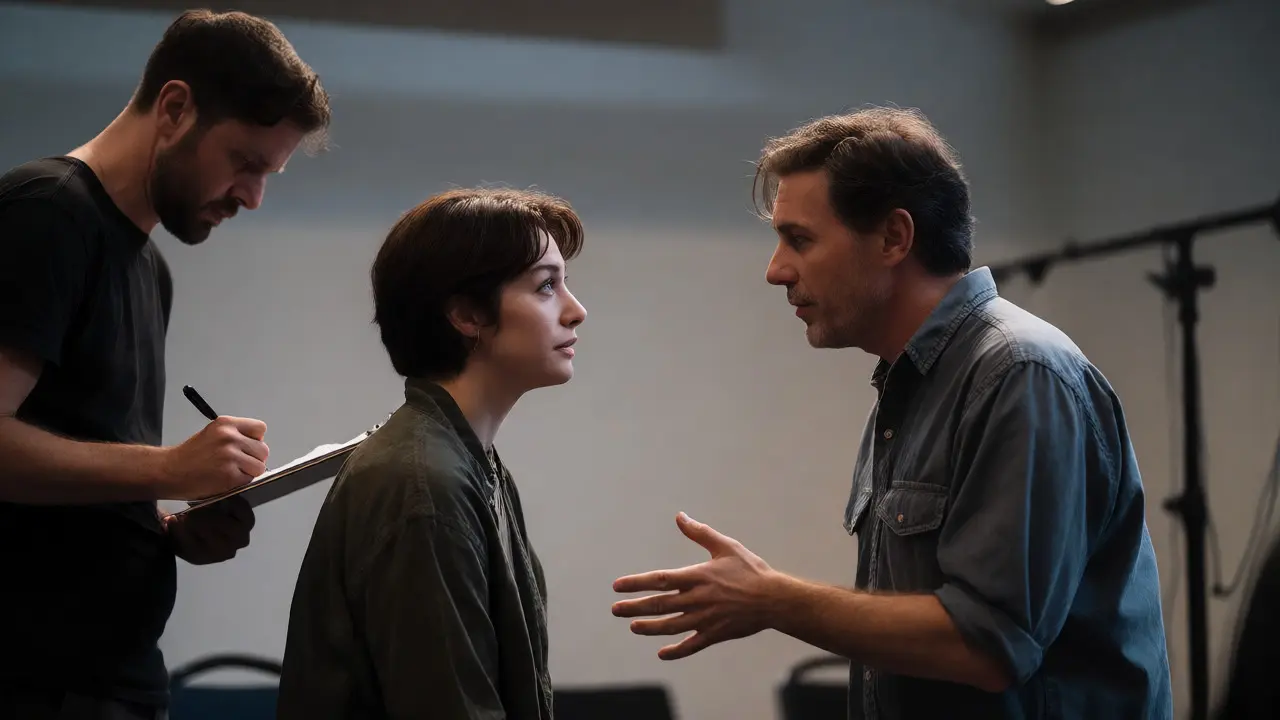
The Room Dynamics: Reading the Energy
Walking into a callback room can feel intimidating. There’s usually a Casting Associate running the room, the director watching closely, and sometimes producers or network executives lurking in the back. Your job is to read the room quickly. Is the atmosphere tense and serious? Or relaxed and joking around?
If the team is laughing beforehand, keep your entrance light. Smile, make eye contact, and offer a brief, genuine greeting. Don’t launch into a monologue before saying hello. If the room is silent and focused, match that intensity. Be quiet, respectful, and ready to work. Never try to force humor if the mood is serious. It falls flat every time.
One common mistake is trying to impress everyone equally. Focus on the person giving you notes. Usually, that’s the casting director or the director. If the producer says nothing, don’t look to them for validation. Keep your eyes on the person guiding the scene. This shows you respect the hierarchy and understand who holds the creative reins.
Taking Direction: The Real Test
Here is where callbacks are won or lost. After your first pass, the director will almost always give you a note. It might be vague, like "Try it more vulnerable," or specific, like "Slow down your pacing." How you respond matters more than the result itself.
Don’t argue. Don’t explain why you did it that way. Just say "Thank you" and do it. Even if the note seems wrong to you, execute it faithfully. If you fail, you fail while following instructions, which shows professionalism. If you succeed, you’ve proven you’re coachable. Actors who resist direction get labeled as "difficult," and no matter how talented they are, difficult actors get cut from shortlists fast.
| Behavior | Initial Audition Approach | Callback Best Practice |
|---|---|---|
| Memorization | Good to have lines down | Lines must be invisible; focus on connection |
| Direction | Often little time for notes | Expect multiple notes; demonstrate flexibility |
| Interaction | Solo or generic reader | Chemistry test with other finalists or casting staff |
| Preparation | Basic script reading | Deep character analysis and multiple choices |

Post-Callback Follow-Up
You left the room. Did you crush it? Maybe. But the job isn’t done until you send a thank-you note. This sounds old-school, but it works. Send a brief email to the casting director within 24 hours. Keep it short. Thank them for the opportunity, mention something specific about the session (e.g., "I enjoyed exploring the vulnerability in the second take"), and reiterate your interest.
Do not call your agent asking "Did I get it?" immediately. Agents hate being nagged. They will tell you when they know. Sending a polite follow-up after a week is acceptable if you haven’t heard anything. But remember, silence doesn’t always mean rejection. Sometimes decisions take weeks due to scheduling conflicts or budget approvals.
Common Pitfalls to Avoid
Let’s talk about the mistakes that kill callbacks. First, arriving late. Traffic happens, but if you’re going to be more than five minutes late, call ahead. Arriving ten minutes late without warning looks disrespectful.
Second, over-preparing physically. If you spent three hours doing vocal warm-ups in the parking lot, you might come in exhausted or overly energized. Find a calm center. Third, badmouthing the previous audition experience. If asked how it went, stay positive. "It was great to dive deeper into the character" beats "The first reader was terrible." Negativity sticks.
Finally, dressing incorrectly. Wear something that suggests the character but doesn’t costume you. If you’re playing a corporate lawyer, wear a blazer, not a full suit and tie. Let them imagine the rest. Over-costuming signals that you think your look is more important than your performance.
How many times can I expect to be called back?
Typically, actors go through one to three rounds of callbacks. Major studio films might have two or three, while smaller indie projects may only have one final callback before offering the role. If you’re called back four times, it usually means there’s significant debate about the role or scheduling issues.
Should I bring my own props or costumes?
Generally, no. Bring your headshot and resume. If the role requires a specific physical trait (like a hat or glasses) that defines the character, you can bring it, but use it sparingly. Casting directors want to see you, not your accessories. Over-accessorizing can distract from your performance.
What if I’m paired with another actor for the callback?
This is a chemistry test. Listen actively to your partner. Don’t wait for your turn to speak; react to what they are doing. If they miss a line, cover for them gracefully. The goal is to show that you can create a believable relationship on screen, not just deliver lines perfectly.
Is it okay to ask questions during the callback?
Yes, but keep them concise and relevant to the scene. Asking about motivation or context is fine. Avoid logistical questions like pay rates or shooting dates unless explicitly invited to discuss business terms. Save those for your agent.
What does 'reading' mean in a callback context?
A 'read' refers to performing the scripted scenes with a reader (often the casting associate) or another actor. It’s distinct from an improvisation exercise. Stick to the text unless asked to improvise. Accuracy to the script is crucial because writers and producers are often evaluating how well you interpret their words.







Comments(5)