Most people think of movies as stories with heroes, villains, and happy endings. But for over a century, a group of filmmakers has been trying to break that mold completely. They stripped away dialogue, destroyed the narrative arc, and treated the camera not as a storytelling tool, but as a paintbrush or a musical instrument. This is the world of avant-garde cinema, a movement dedicated to exploring the pure visual and emotional potential of moving images without relying on traditional plot structures.
If you’ve ever watched a film that felt like a dream, a fever, or a piece of abstract art, you’ve likely encountered experimental film. Understanding its history isn’t just about memorizing names; it’s about understanding how these artists changed what we believe a movie can be. From the silent era in Paris to the digital age in New York, this journey reveals how rebellion became a respected art form.
The Birth of Film Poetry in Europe
The roots of experimental cinema lie in early 20th-century Europe, specifically in France. In the 1920s, directors began asking a simple but radical question: What if a film didn't need to tell a story? The answer was "film poetry." These works focused on rhythm, light, and shape rather than character development.
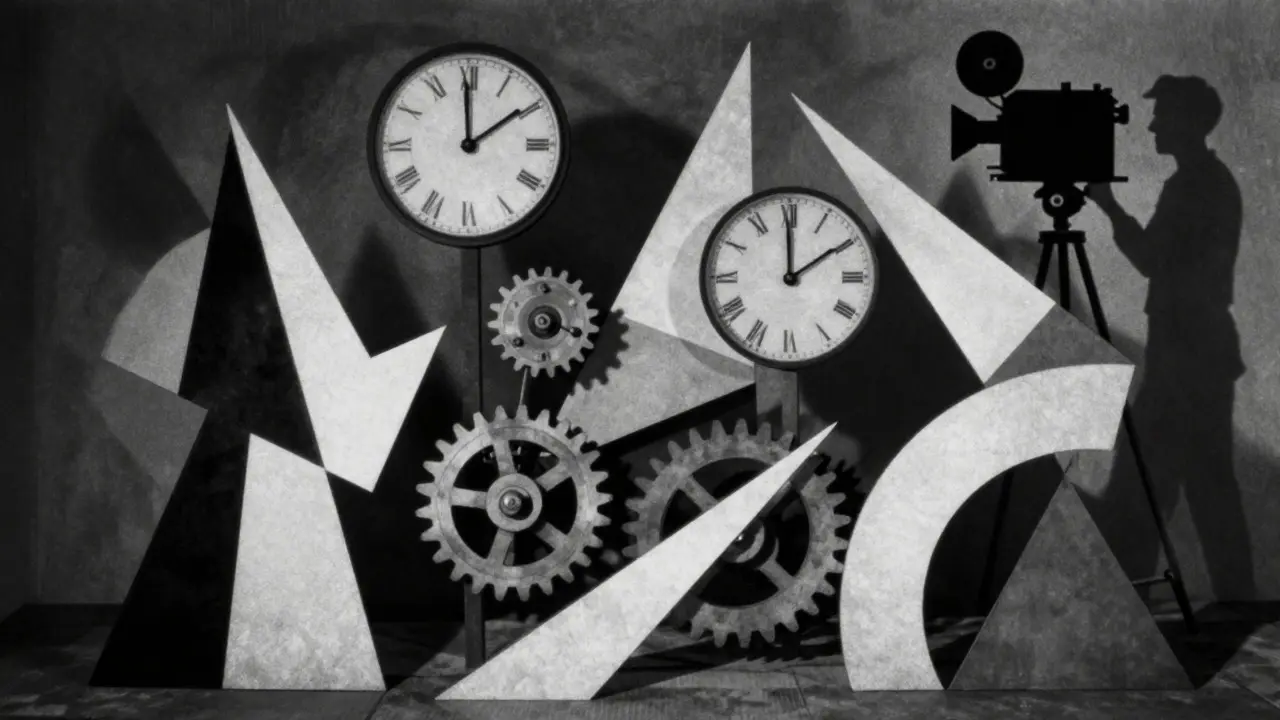
Léger's Ballet Mécanique (1924) is a prime example. Instead of actors acting, the film features geometric shapes, clocks, and mechanical objects moving in sync with a jazz score. It wasn't meant to be understood logically; it was meant to be felt. Around the same time, Dziga Vertov in Russia was pushing boundaries with Man with a Movie Camera (1929). While still documenting reality, Vertov broke the fourth wall by showing the editing process itself, proving that the cut is as important as the shot.
This era established the core philosophy of the avant-garde: the medium itself is the subject. You don't watch these films to learn what happens next; you watch them to experience the texture of time and image.
Post-War Abstraction and the Return of Narrative
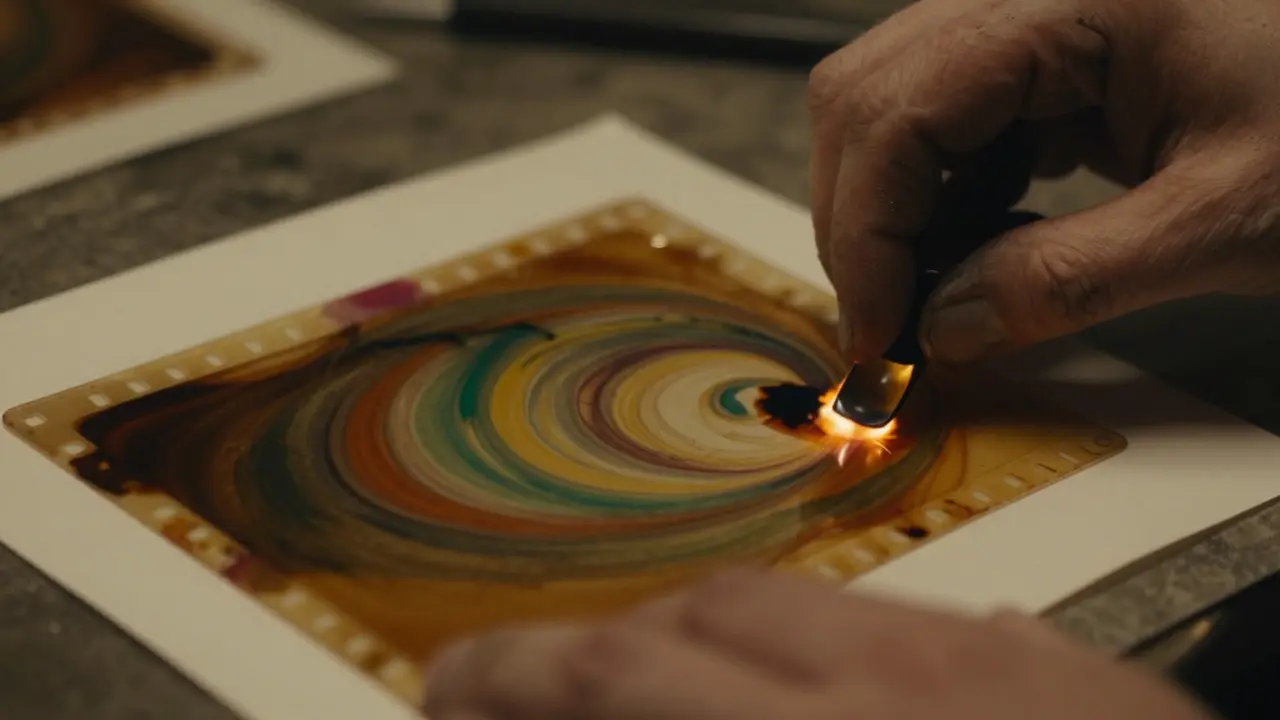
After World War II, the center of gravity shifted slightly, but the spirit remained. In the 1950s and 60s, filmmakers in the US and UK started experimenting with color and sound in new ways. Stan Brakhage became a central figure here. He often filmed directly onto raw film stock without a camera, scratching, painting, and burning the negative. His work, such as Window Water Baby Moving (1959), looks less like a movie and more like an animated watercolor painting.
Meanwhile, in the UK, Ken Jacobs took a different approach. He loved classical Hollywood techniques but used them ironically. In Moondog (1964), he slowed down footage of a street scene until the movements became surreal and dreamlike. This period proved that experimentation didn't have to mean total abstraction; it could also mean manipulating familiar images to reveal hidden meanings.
The Structural Film Revolution
By the late 1960s, a specific subset of experimental filmmaking emerged known as "Structuralist Film." This group believed that if you wanted to study film, you had to strip away everything except the basic mechanics: the frame, the cut, and the duration. They rejected narrative entirely, focusing instead on the physical properties of the filmstrip.
Peter Kubelka's Zero for Conduct (1961) and Jonas Mekas's diary-like documentaries were key influences, but the most famous structuralist work is probably Mia Hansen-Løve's predecessors, particularly Pamela Rosenkranz. Her film Wavelength (1967) is a single, unbroken take that slowly zooms in on a chair in a loft apartment while a party happens around it. There is no plot. There is only the passage of time and the changing focus of the lens. It’s a technical masterpiece that forces the viewer to confront the act of watching itself.
New York Underground and the Rise of Video Art
In the 1970s, the center of the avant-garde moved to New York City. The Lower East Side became a hub for artists who rejected the high costs of 35mm film. Enter video technology. Portable cameras and monitors allowed artists to create, edit, and screen their work instantly. This democratized the medium. You didn't need a studio; you needed a garage.
Nam June Paik is often called the father of video art. He used television screens as canvases, creating sculptures that flickered and glitched. Simultaneously, filmmakers like Harold Ramis and John Waters brought a punk energy to experimental cinema. John Waters, in particular, blended shock value with low-budget charm, creating cult classics that defied mainstream taste. This era was messy, loud, and incredibly vital. It proved that experimental film could be personal, political, and funny.
Digital Age and the Blurring of Lines
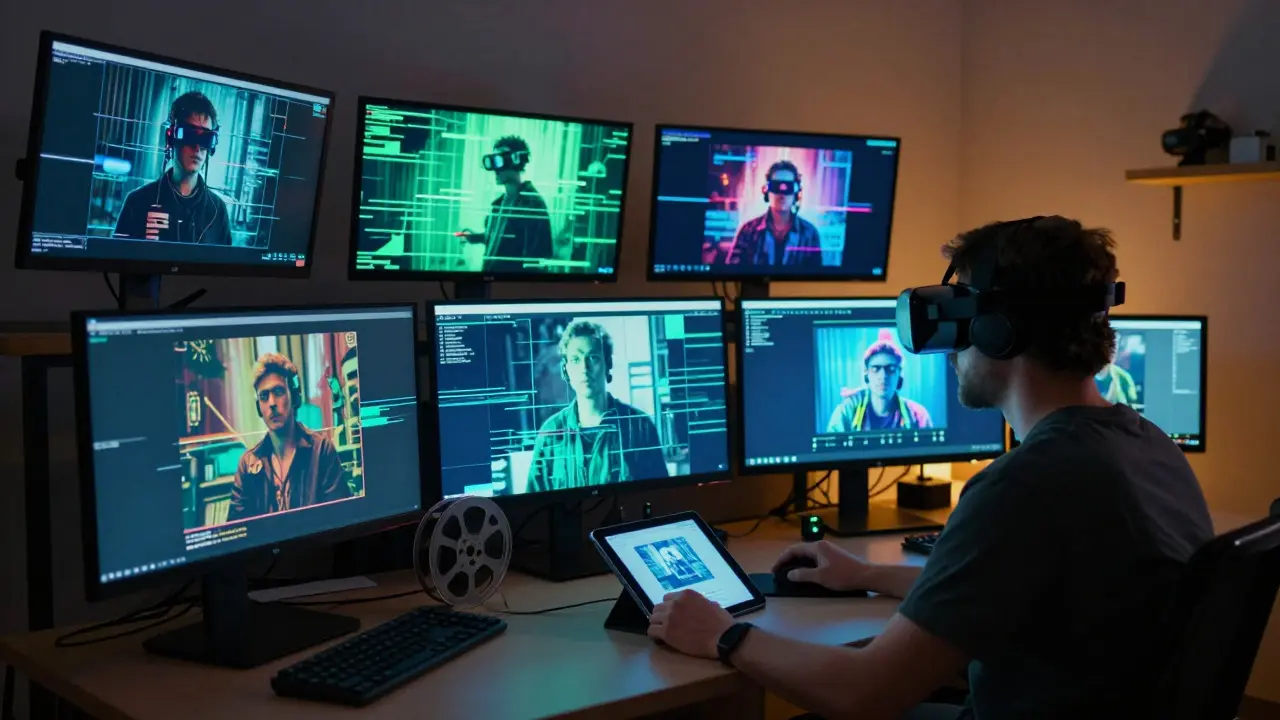
Today, the line between "experimental" and "mainstream" is blurrier than ever. Digital tools allow any filmmaker to manipulate time, space, and image with ease. Directors like David Lynch brought dream logic into blockbuster hits, while Christopher Nolan plays with non-linear time. Even music videos and short-form content on social media carry the DNA of the avant-garde: fast cuts, disjointed narratives, and visual prioritization over verbal explanation.
However, the pure avant-garde still thrives in festivals like the Berlinale Forum and the Sundance Midnight section. Filmmakers continue to push boundaries using virtual reality, AI-generated imagery, and interactive formats. The core mission remains unchanged: to challenge the audience's expectations and expand the definition of what cinema can achieve.
Key Figures and Their Contributions
To understand the scope of this movement, it helps to look at a few key players and what they specifically contributed to the evolution of experimental film.
| Filmmaker | Era | Primary Medium | Signature Technique | Notable Work |
|---|---|---|---|---|
| Léon Moussinac / Germaine Dulac | 1920s | Silent 35mm | Film Poetry / Rhythm | Femmes d'aujourd'hui |
| Stan Brakhage | 1950s-80s | 16mm / Hand-painted | Direct manipulation of film stock | Window Water Baby Moving |
| Peter Kubelka | 1960s | 16mm | Structuralism / Frame analysis | Zero for Conduct |
| Nam June Paik | 1970s | Video / TV | Glitch art / Interactive installation | TV Garden |
| John Waters | 1970s-80s | Super 8 / 16mm | Shock humor / Low-fi aesthetic | Pink Flamingos |
Why Does This History Matter Today?
You might wonder why anyone cares about films from the 1920s or 1960s. The answer is simple: every visual trick you see in modern action movies, sci-fi blockbusters, or even your favorite TikTok video traces back to these experiments. When a director uses a rapid montage to build tension, they are using a technique pioneered by D.W. Griffith and refined by Soviet Montage theorists. When a film uses a long, unbroken take to create immersion, it owes a debt to the structuralists who analyzed the frame.
Experimental cinema teaches us to be active viewers. It doesn't hand you the meaning; it asks you to construct it. In an age of algorithm-driven content designed to keep you passively scrolling, the avant-garde offers a counter-narrative. It demands attention, rewards patience, and reminds us that art is not just about entertainment-it’s about perception.
Frequently Asked Questions
What is the difference between avant-garde and experimental cinema?
The terms are often used interchangeably, but there is a subtle distinction. "Avant-garde" refers to the cultural position of being ahead of or outside the mainstream tradition. "Experimental" refers to the method-trying out new techniques or forms. All avant-garde films are experimental, but not all experimental films are necessarily avant-garde in a political or artistic manifesto sense. For example, a tech demo might be experimental but not avant-garde.
Who are some must-watch filmmakers for beginners in experimental cinema?
Start with accessible works that bridge the gap between narrative and abstraction. Eraserhead by David Lynch is a great entry point because it has characters but feels like a nightmare. For pure visual poetry, try Stan Brakhage's Moonlight (1971), which is short and beautiful. If you want something funnier and more chaotic, John Waters' Pink Flamingos (1972) is a cult classic that showcases the DIY spirit of the 70s underground.
Did experimental cinema influence mainstream Hollywood?
Absolutely. Techniques like jump cuts (popularized by Jean-Luc Godard in the French New Wave, which was heavily influenced by the avant-garde) are now standard in action movies. Non-linear storytelling, seen in Memento or Arrival, relies on the structuralist idea that time is malleable. Even the use of close-ups to convey emotion rather than exposition is a legacy of early film poetry experiments.
Where can I watch historical avant-garde films today?
Many classic experimental films are available on streaming platforms like Criterion Channel, MUBI, and Netflix (which has a dedicated section for independent and arthouse films). Additionally, museums like MoMA in New York and the BFI in London host regular screenings and retrospectives. Local film societies and university archives often hold print screenings, which offer a unique viewing experience due to the projection quality and communal atmosphere.
Is experimental cinema dead in the digital age?
No, it has evolved. The barriers to entry have lowered, so more people are making experimental work. However, the sheer volume of digital content makes it harder for specific avant-garde pieces to stand out unless they are distributed through curated channels like festivals or specialized streaming services. New technologies like VR and AI are creating entirely new sub-genres of experimental film that didn't exist twenty years ago.


Comments(9)