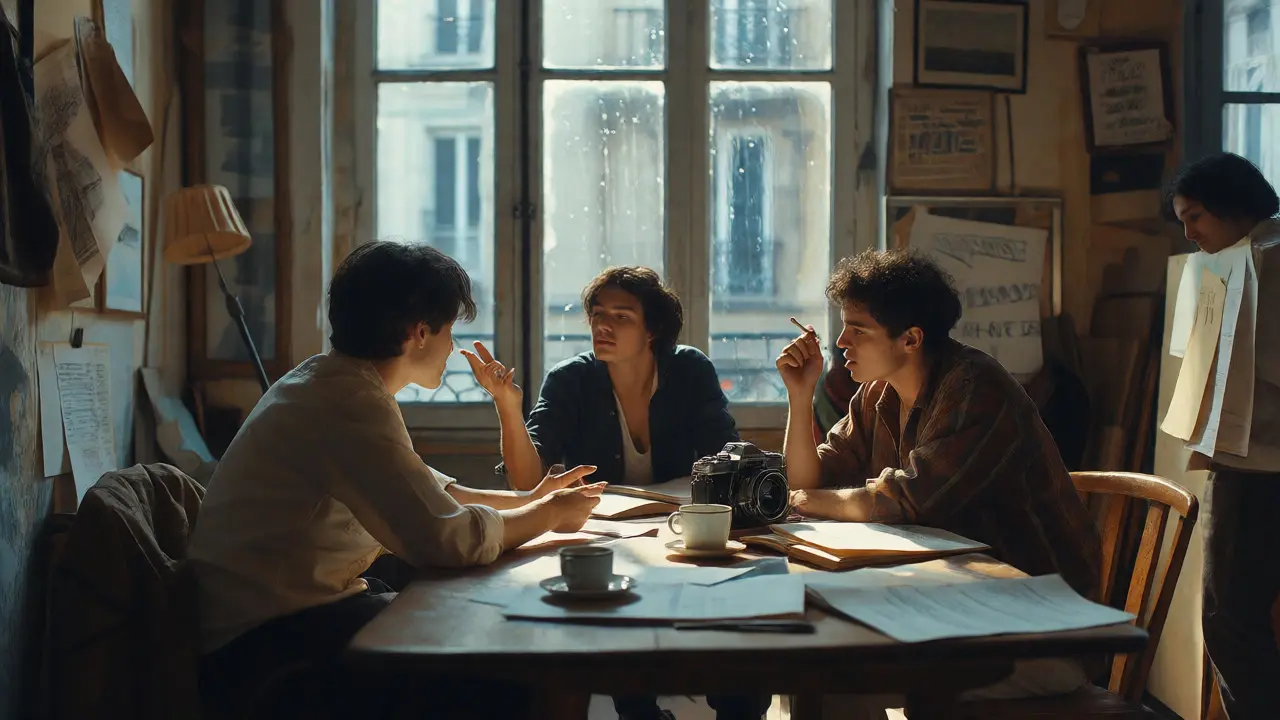
You’ve seen the movies where a bunch of painters, musicians, or filmmakers huddle together in a cramped apartment, arguing about art over cheap beer. It’s a romantic trope, sure. But it’s also a reflection of how many significant movements in cinema actually started. Artist Communities are not just background sets for biopics; they are active engines that drive the creation, distribution, and aesthetic evolution of film. When we look at film narratives, whether fictional or documentary, these groups reveal how isolation kills creativity and collaboration breeds innovation.
Why does this matter to you? Maybe you’re an aspiring filmmaker wondering if you should join a collective. Or perhaps you’re a cinephile trying to understand why certain eras, like the French New Wave or the Dogme 95 movement, exploded with such specific energy. The answer usually lies in the social structure behind the camera. Let’s break down how studios and collectives shape the stories we see on screen, and why the narrative of the "lone genius" is mostly a myth.
The Myth of the Lone Genius vs. Collective Reality
Hollywood loves a hero story. Think of Birdman or Whiplash. These films focus intensely on individual struggle. But historically, some of the most groundbreaking work came from tight-knit groups. Take the French New Wave. It wasn’t one guy making movies; it was a group of critics-turned-directors-Godard, Truffaut, Chabrol-who hung out, argued, and influenced each other daily. Their shared philosophy rejected the polished, expensive Studio System in favor of handheld cameras and improvised dialogue.
This dynamic creates a feedback loop. In a community, ideas get stress-tested before they hit the set. If you’re writing a script alone, you might miss a plot hole that your friend, who edits videos, would spot instantly. Collectives provide immediate, low-stakes critique. This doesn’t mean everyone agrees. Conflict within these groups often drives artistic breakthroughs. The tension between different visions forces creators to defend their choices, leading to sharper, more intentional work.
How Studios Shape Narrative Structure
On the other end of the spectrum, we have the traditional Studio System. Here, the "community" is hierarchical and corporate. The narrative goal isn’t necessarily artistic innovation but marketability. Studios rely on established formulas because they reduce financial risk. This impacts the story itself. Characters become archetypes rather than complex individuals. Plots follow predictable three-act structures designed to keep audiences engaged without challenging them too much.
Consider the Marvel Cinematic Universe. It’s a massive collaborative effort, yes, but it’s tightly controlled by a central authority (Kevin Feige and Disney). The narrative continuity is strict. You can’t just change the tone of a scene because it feels right; it has to fit the brand. This creates a sense of safety for viewers but can stifle unique directorial voices. Artists working within this system often describe it as acting within a sandbox. You have freedom, but only within high walls.
| Feature | Independent Collective | Traditional Studio |
|---|---|---|
| Decision Making | Consensus or democratic | Top-down executive approval |
| Risk Tolerance | High (experimental) | Low (formulaic) |
| Narrative Style | Non-linear, personal | Linear, universal |
| Resource Access | Limited, DIY | Extensive, specialized |
Collectives as Narrative Engines
When artists form Creative Collectives, they often share resources to overcome budget constraints. This necessity breeds creativity. Without money for big sets, you use real locations. Without famous actors, you cast friends. This limitation becomes a stylistic choice. The Dogme 95 manifesto is a perfect example. Lars von Trier and Thomas Vinterberg created rules-no artificial lighting, no genre plots-to force honesty into their films. The result was raw, emotional storytelling that felt different from anything else in theaters.
These groups also handle distribution differently. Instead of waiting for a studio deal, they build their own networks. They premiere at niche festivals, sell directly to fans, or use online platforms. This changes the relationship with the audience. Feedback comes faster. If a scene confuses people, the creator knows immediately and can adjust future projects. This agility is something large studios struggle with due to their slow decision-making processes.

Fictionalizing the Artist Community
Movies about artist communities often romanticize the struggle. Films like La Vie Bohème or Past Lives highlight the beauty of shared lives. But they also show the cost. Living closely with collaborators means there’s no escape from work. Breakups happen in front of colleagues. Financial stress spills into creative sessions. The narrative tension in these films comes from balancing personal relationships with professional ambitions.
A good example is Little Women (2019). While not strictly a film collective, the March sisters operate as a micro-community. Jo writes, Meg acts, Amy paints, Beth plays music. They support each other’s dreams while navigating societal pressures. The film shows how their interconnectedness strengthens their individual identities. It’s a reminder that art rarely happens in a vacuum. We need mirrors-people who reflect our potential back to us when we doubt ourselves.
Building Your Own Creative Hub
If you’re looking to start or join a community, don’t wait for permission. Start small. Find three people whose skills complement yours. Maybe you write, someone else shoots, and another edits. Meet weekly. Set clear goals. What do you want to make in six months? A short film? A podcast? Keep expectations realistic. Not every project will succeed, but every failure teaches you something valuable about working together.
- Define Roles: Avoid overlap confusion by assigning clear responsibilities.
- Set Boundaries: Agree on what constitutes constructive criticism versus personal attack.
- Share Resources: Pool equipment or software licenses to lower individual costs.
- Celebrate Wins: Acknowledge progress, even if it’s just finishing a draft.
Remember, the goal isn’t to replicate Hollywood. It’s to create a space where your voice can be heard. Studios offer stability; collectives offer freedom. Most successful careers blend both. You might start in a collective to develop your style, then take those skills into a studio environment later. Or vice versa. The key is staying connected to other creators. Isolation is the enemy of momentum.
What defines an artist collective in film?
An artist collective is a group of filmmakers who collaborate closely, often sharing resources, decision-making power, and creative vision. Unlike traditional production companies, collectives prioritize artistic experimentation and mutual support over commercial hierarchy.
Do studios suppress individual artistic voices?
Not always, but they often constrain them. Studios require adherence to brand guidelines and market trends, which can limit experimental storytelling. However, they provide resources that allow directors to execute large-scale visions that independents cannot afford.
Can digital platforms replace physical artist communities?
They can supplement them, but rarely replace them. Digital tools facilitate communication and distribution, but the spontaneous, face-to-face interaction of physical communities fosters deeper trust and faster creative iteration. Hybrid models are becoming common.
Why are French New Wave films considered communal?
Directors like Godard and Truffaut worked as critics together, funded each other’s early films, and shared crews and actors. Their films responded to each other, creating a dialogic body of work that defined the era.
Is joining a collective better than going solo?
It depends on your personality and goals. Collectives offer support and diverse skills but require compromise. Solo work offers total control but risks burnout and blind spots. Many filmmakers benefit from starting in a collective to learn collaboration before branching out.