Think about the last movie that truly stuck with you. Was it the dialogue? The plot twist? Or was it the feeling you got just by looking at a room? In cinema, space is never empty. Every wall, window, and hallway is a deliberate choice made to tell you something about the characters before they even speak. This is the power of film architecture. It’s not just about building pretty sets; it’s about using physical space to manipulate emotion, define character, and drive the narrative forward.
When we talk about Production Design, we’re talking about the visual DNA of a film. It’s the bridge between the script and the screen. A great production designer doesn’t just decorate a scene; they build a world that feels lived-in, dangerous, luxurious, or claustrophobic depending on what the story needs. Let’s break down how directors and designers use space to speak louder than words.
The Psychology of Space: How Sets Shape Character
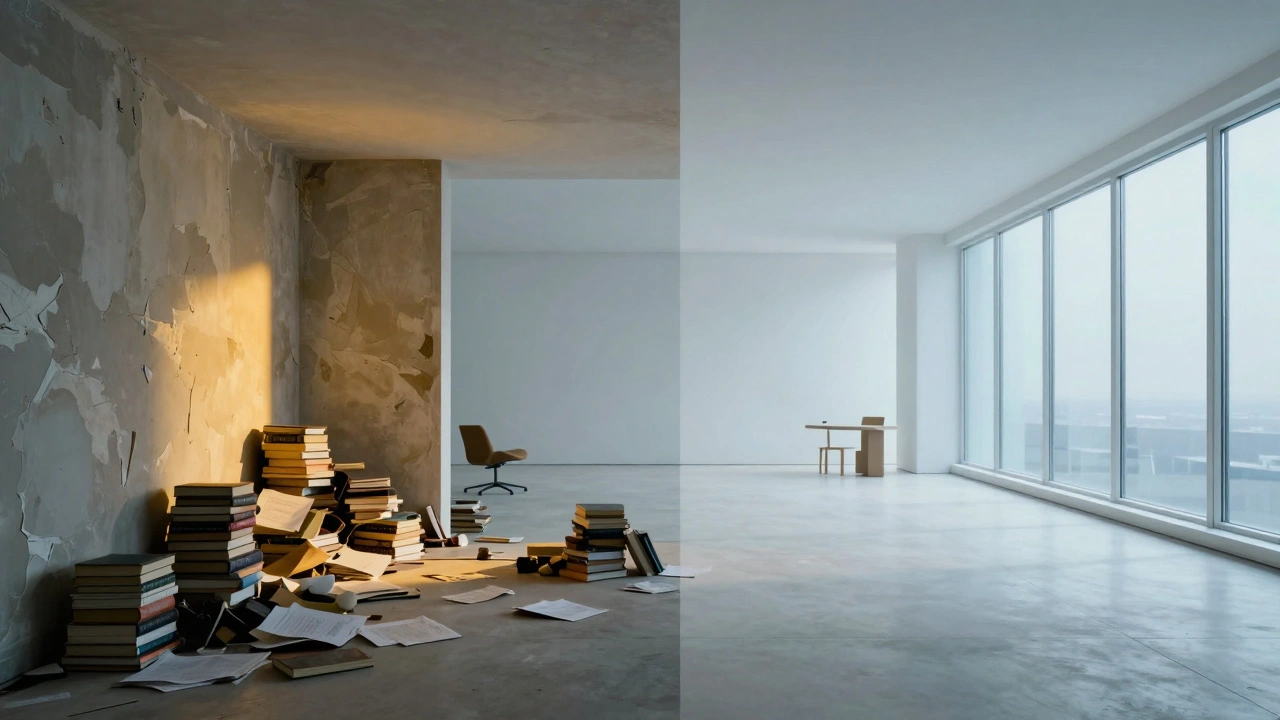
Your environment defines who you are. In film, this is taken literally. If a character lives in a cramped, cluttered apartment with peeling paint, you immediately understand their socioeconomic status and mental state without a single line of exposition. Conversely, a character in a vast, minimalist white penthouse screams control, wealth, and perhaps emotional coldness.
Consider the concept of Set Dressing. This involves placing props, furniture, and decor within a set to reflect the inhabitant’s personality. A messy desk isn’t just lazy writing; it suggests chaos, stress, or a mind working too fast for order. A perfectly aligned bookshelf might suggest rigidity or obsession. These details create subtext. They allow the audience to infer backstory and motivation simply by observing where a character chooses to sit, stand, or hide.
Think about Tony Montana in Scarface. His mansion is opulent but chaotic, reflecting his rise from nothing to everything, and his eventual descent into madness. The space is loud, just like he is. Now compare that to the sterile, geometric offices in Gattaca. The architecture there enforces conformity and genetic hierarchy. You feel the pressure of the system just by walking through those hallways.
Verticality and Power Dynamics
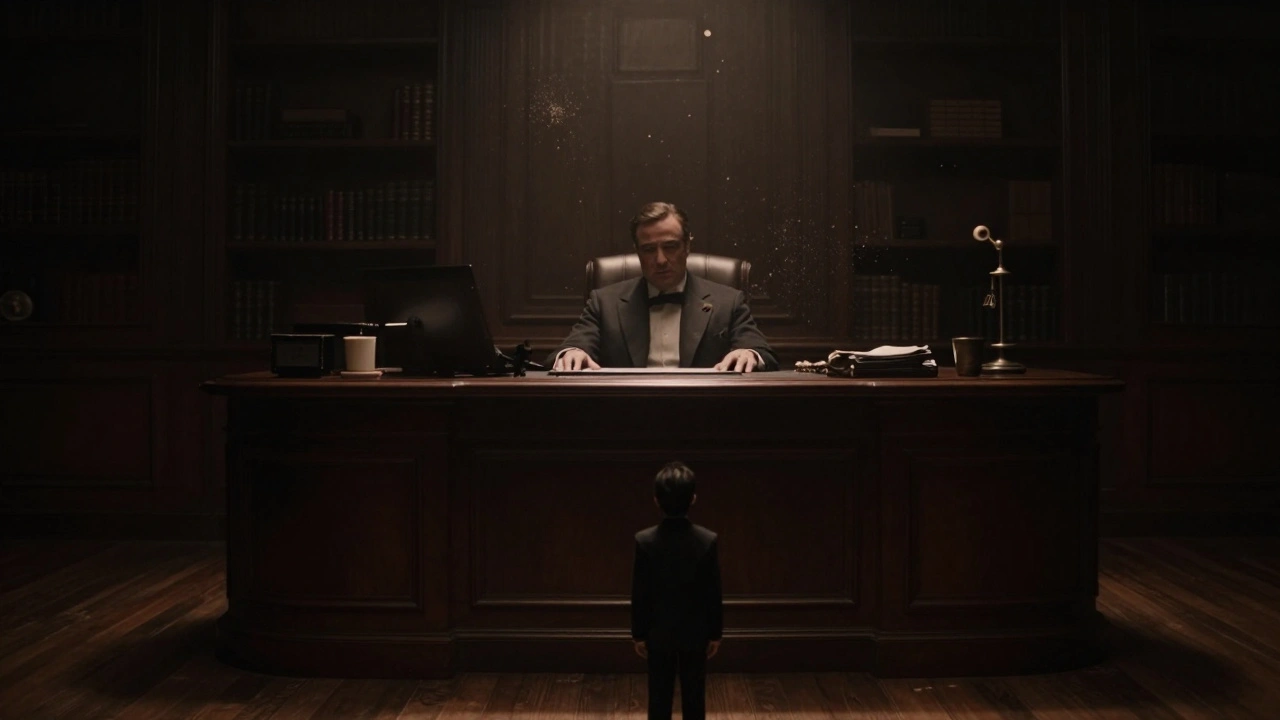
Architects and filmmakers love playing with height. Vertical space is one of the most effective tools for establishing power dynamics between characters. When one character stands above another, or when a character is framed against a towering structure, it visually communicates dominance or submission.
In The Godfather, the Corleone family compound is designed with deep shadows and high ceilings, emphasizing their mystery and entrenched power. Michael Corleone often sits behind large desks or in lower positions while others stand over him early in the film, showing his initial reluctance to engage in the family business. As he becomes more powerful, the camera angles and spatial arrangements shift. He begins to occupy the center of the frame, surrounded by open space, signaling his takeover.
This technique is also prevalent in political thrillers. Think of the Oval Office scenes in various films. The president is almost always seated behind the Resolute Desk, which acts as a barrier and a throne. Visitors must cross a threshold to approach them, reinforcing the distance between power and the common citizen. The architecture itself dictates the protocol of interaction.
| Element | Psychological Effect | Narrative Function |
|---|---|---|
| High Ceilings | Awe, insignificance, freedom | Establishes grandeur or isolation |
| Low Ceilings | Anxiety, confinement, intimacy | Creates tension or focus on dialogue |
| Narrow Corridors | Restraint, inevitability, fear | Guides movement, limits escape options |
| Open Plan Spaces | Vulnerability, exposure, modernity | Shows lack of privacy or corporate transparency |
| Mirrors/Reflections | Duality, self-reflection, deception | Reveals hidden truths or split personalities |
Lighting and Texture: The Mood of Materials
Architecture isn’t just shape; it’s texture and light. The materials chosen for a set-wood, steel, glass, concrete-carry heavy symbolic weight. Wood feels warm, organic, and traditional. Steel and glass feel cold, modern, and impersonal. Concrete can be brutalist and oppressive or raw and honest, depending on the lighting.
Cinematography works hand-in-hand with production design. Light doesn’t just illuminate a scene; it sculpts the architecture. In horror films, designers often use long, dark corridors with minimal light sources. This creates pools of shadow where threats can hide. The architecture becomes a monster itself. Think of the house in Hereditary or the hotel in The Shining. The spaces are labyrinthine, disorienting, and hostile. The carpet patterns, the endless identical rooms-they all contribute to a sense of losing one’s mind.
In contrast, romantic comedies often feature bright, airy apartments with large windows and soft textures. The light floods in, making the space feel safe and inviting. This encourages the characters (and the audience) to relax and engage emotionally. The texture of the sofa, the warmth of the lamp light-it all signals comfort.
Color Theory in Spatial Design
Color is an extension of architecture in film. A red room feels different than a blue room, even if the dimensions are identical. Production designers use color palettes to guide the viewer’s emotional response. Red is associated with passion, danger, and anger. Blue with calm, sadness, or sterility. Yellow with optimism or sickness, depending on the shade.
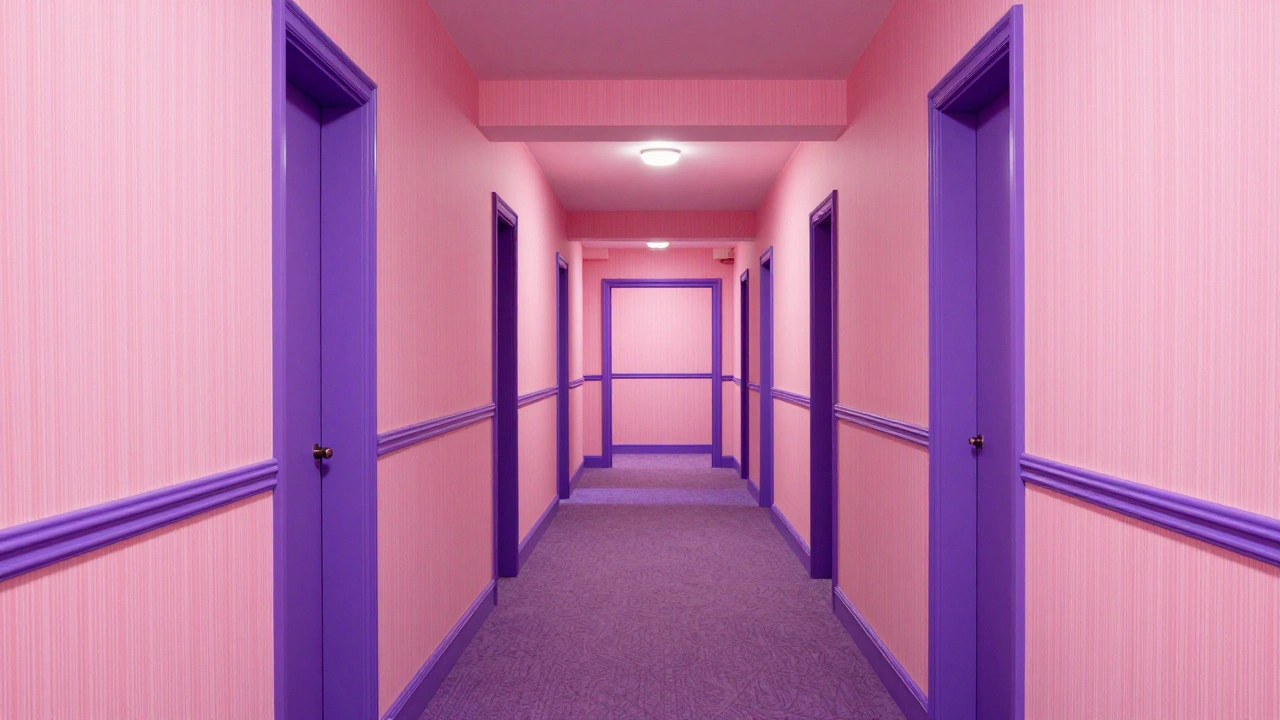
Wes Anderson is a master of this. In The Grand Budapest Hotel, the pastel pinks and purples of the hotel exterior evoke a nostalgic, fairy-tale quality. But inside, the symmetry and rigid color blocking create a sense of controlled order. When violence erupts, it feels jarring because it disrupts the carefully curated aesthetic. The architecture and color work together to create a specific tone that blends humor with tragedy.
David Fincher uses a desaturated, greenish-blue palette in Social Network. The sleek, modern interiors of Facebook’s headquarters feel cold and alienating. The architecture reflects the digital nature of the platform-clean, efficient, but lacking human warmth. The space tells us that money and code have replaced connection.
Historical Accuracy vs. Narrative Needs
One of the biggest debates in film architecture is historical accuracy. Should a period piece look exactly like it did in 1920, or should it look like how we *remember* 1920? Most successful films choose the latter. They use architectural shorthand to help the audience instantly recognize the time period without getting bogged down in minute details.
For example, in Mad Max: Fury Road, the world is post-apocalyptic. The architecture is scavenged, rusted, and functional. There are no straight lines because there is no stability. The vehicles themselves become mobile architecture, reflecting the nomadic lifestyle of the characters. The design choices prioritize survival and tribal identity over beauty or history.
On the other hand, Dunkirk uses real locations and practical effects to create a visceral sense of reality. The beaches, the ships, the airfields-they are treated with a documentary-like realism. The architecture here serves to ground the fantastical scale of war in tangible, recognizable places. This makes the experience more immersive and terrifying.
The Future of Film Architecture: Virtual Production
We are entering a new era with virtual production technologies like LED volume stages (popularized by The Mandalorian). This allows filmmakers to place actors in fully digital environments that react to their movements in real-time. The "architecture" is now code, but the principles remain the same. Depth, scale, lighting, and texture still need to be designed with intention.
This technology offers unprecedented flexibility. A director can change the size of a room or the weather outside a window instantly. However, it risks losing the tactile authenticity of physical sets. The challenge for future production designers will be to maintain the emotional resonance of space while leveraging these digital tools. The best results come when digital backgrounds feel physically present, casting realistic light and shadows on the actors.
Conclusion: Space as a Silent Actor
Next time you watch a film, pay attention to the walls. Notice how the camera moves through doorways. Observe the relationship between the character and their surroundings. You’ll start to see that architecture is not a passive backdrop. It is an active participant in the story. It pushes, pulls, hides, and reveals. It shapes our understanding of truth, power, and humanity. Great film design makes you forget you’re watching a movie and makes you believe you’re living in that world.
What is the role of a production designer in film?
A production designer is responsible for the overall visual look of the film. They oversee the creation of sets, props, costumes, and makeup to ensure that every visual element supports the story and the director's vision. They work closely with the director and cinematographer to establish the mood, time period, and geographical setting.
How does set design affect audience perception?
Set design influences audience perception by creating subconscious associations. Cluttered spaces can induce anxiety, while open spaces can evoke freedom or loneliness. Color palettes, lighting, and textures work together to signal genre and tone, helping viewers quickly understand the context and emotional stakes of a scene without explicit dialogue.
Why do horror movies use narrow corridors?
Narrow corridors create a sense of confinement and inevitability. They limit the character's field of view and escape routes, increasing tension. This architectural choice forces the audience to focus on what lies ahead, amplifying fear of the unknown. It also allows for dramatic camera angles that emphasize vulnerability.
What is the difference between set decoration and production design?
Production design is the overarching creative vision for the film's visual world, including structural elements like walls and floors. Set decoration focuses on the movable objects within those spaces, such as furniture, paintings, and personal items. While production designers build the skeleton, set decorators add the flesh and blood that make the space feel inhabited.
How does virtual production change film architecture?
Virtual production allows for dynamic, real-time changes to environments using LED screens and CGI. This enables filmmakers to shoot complex scenes without location travel or extensive physical sets. However, it requires precise coordination between lighting, camera movement, and digital assets to maintain realism and emotional impact.


Comments(10)