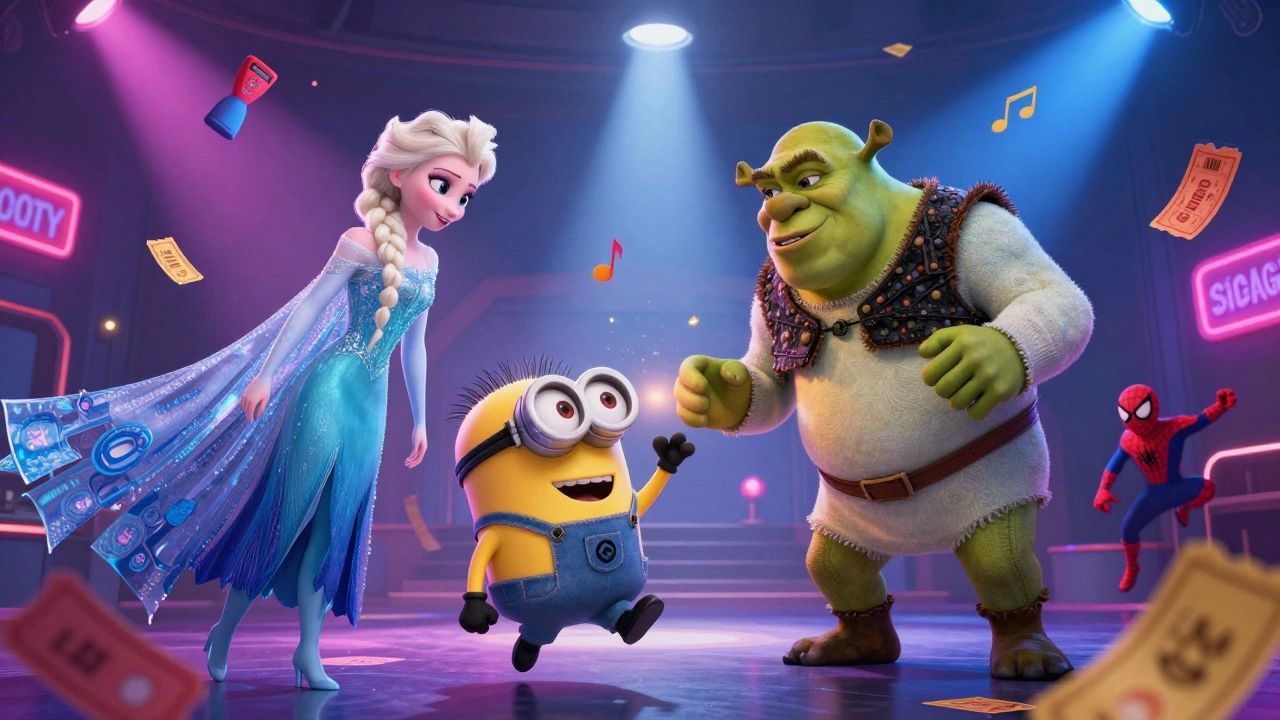
For the first time in over a decade, no single animation studio controls more than 25% of the global box office. It’s not just competition anymore-it’s a full-blown war for dominance. Studios that once operated in quiet corners of Hollywood are now spending billions to out-animate each other. Disney, Pixar, DreamWorks, Illumination, Sony-each has a strategy, a signature style, and a slate of films designed to steal your family’s movie night. But who’s winning, and why does it even matter?
Disney and Pixar: The Legacy Giants
Disney and Pixar still lead in total revenue, but their dominance is crumbling. In 2024, Disney’s animated films made $2.1 billion worldwide. That sounds huge-until you realize it’s down 18% from 2022. Their formula used to be simple: emotional stories, memorable songs, and flawless animation. Wish (2023) and The Wild Robot (2024) tried to revive that magic, but audiences didn’t respond the same way. Parents remember Frozen and Inside Out. Their kids? They’re watching TikTok clips of Spider-Man: Across the Spider-Verse or Minions dancing to pop songs.
Pixar’s recent films-Elemental, Luca, Turning Red-are critically praised but underperform at the box office. Why? They’re too niche. Disney’s executives keep pushing for "universal appeal," but what’s universal today? A story about a girl turning into a red panda? A fire spirit falling in love with water? Those are bold. But bold doesn’t always mean box office gold.
DreamWorks: The Comeback Kid
DreamWorks Animation didn’t die. It just got smarter. After years of chasing Disney’s formula, they stopped trying to be Pixar. Instead, they leaned into what they do best: loud, fast, funny, and surprisingly smart. The Bad Guys (2022) made $300 million on a $70 million budget. The Wild Robot (2024) was technically a Universal release, but DreamWorks handled production-and it earned $420 million globally. That’s more than any Disney animated film that year.
They’re also betting on franchises. Trolls is now a multi-billion-dollar brand with merchandise, music, and theme park rides. How to Train Your Dragon got a third film and a Netflix series. DreamWorks isn’t just making movies-they’re building ecosystems. And they’re doing it cheaper. Their average budget is $100 million. Disney’s? $180 million.
Illumination: The Profit Machine
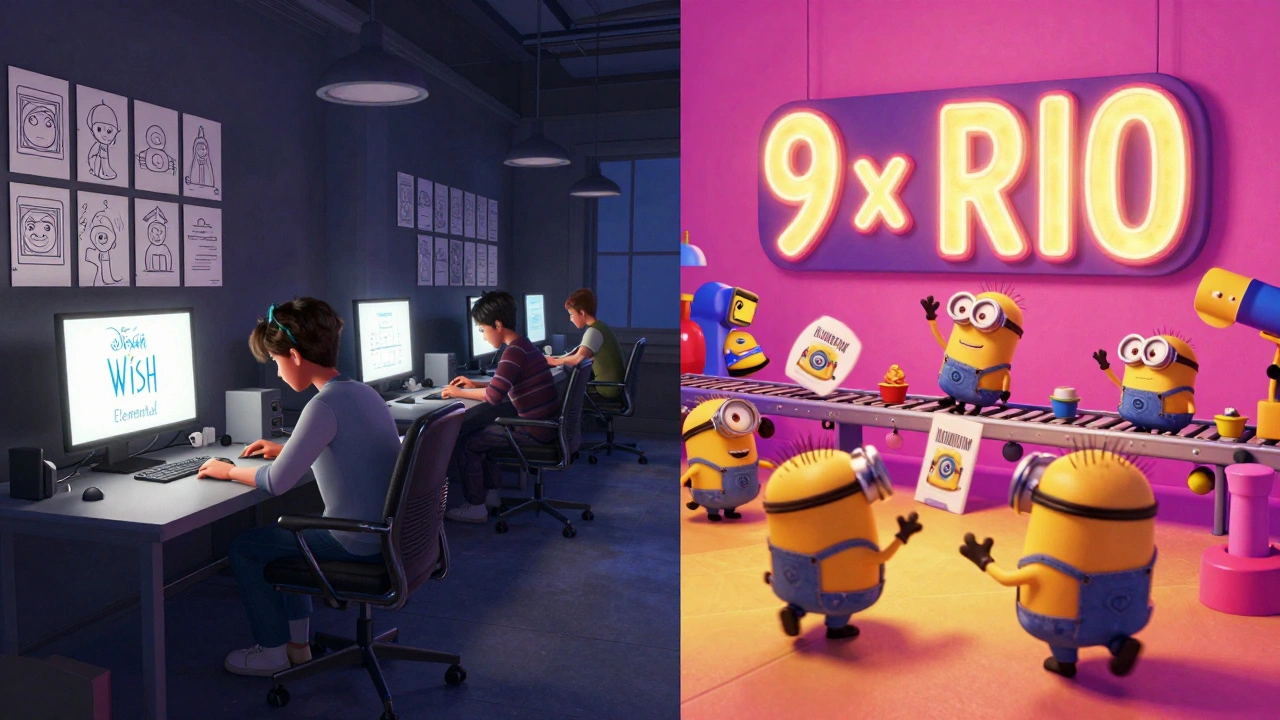
If DreamWorks is the comeback kid, Illumination is the quiet killer. They don’t win Oscars. They don’t make critics swoon. But they make money-every single year. Minions: The Rise of Gru (2022) made $940 million. That’s more than Spider-Man: No Way Home in some markets. How? Three words: Minions, merch, and timing.
Illumination’s formula is simple: dumb humor, bright colors, and characters you can turn into a keychain. Their films are designed for 3-year-olds and 80-year-olds. No deep themes. No emotional gut punches. Just a yellow blob saying "banana" over and over. It works. Their films cost $80 million on average. They make $700 million each. That’s a 9x return. No other studio comes close.
They also own the summer slot. While Disney and DreamWorks release in November or February, Illumination drops their big films in July. That’s when kids are out of school, and parents are desperate for something that won’t make them cry.
Sony Pictures Animation: The Wild Card
Sony doesn’t have a mascot. They don’t have a billion-dollar franchise. But they have Spider-Man: Across the Spider-Verse. That film made $1.9 billion. It didn’t just break records-it rewrote what an animated film could be. The visuals? A moving comic book. The story? A multiverse of identities, grief, and self-worth. It wasn’t for kids. It was for everyone who ever felt like they didn’t fit in.
Sony’s strategy is risky. They make one or two films a year, but they go all-in on originality. Spider-Verse cost $135 million. It made $1.9 billion. Hotel Transylvania made $1.1 billion total over four films. But Sony’s real win? They proved animation doesn’t need to be cute to be profitable. It just needs to be different.
The New Rules of Animation
Here’s what’s changed:
- Music matters more than ever. Songs from Trolls and Minions trend on Spotify before the movie even opens.
- Merchandise is the real profit center. A $15 Minions toy sells better than a $50 DVD.
- Streaming isn’t the enemy-it’s the launchpad. Films like Encanto and Luca gained traction on Disney+ after weak theater runs.
- Adults are the new target. Studios now design films that parents will tolerate, if not enjoy. Spider-Verse made $400 million from viewers over 25.
Animation isn’t just for kids anymore. It’s a global cultural force. And the studios that win aren’t the ones with the biggest budgets-they’re the ones who understand what people actually want to watch.
Who’s Winning Right Now?
Let’s break it down by 2024 numbers:
| Studio | Top Film | Global Gross | Average Budget | Profit Margin |
|---|---|---|---|---|
| Illumination | Minions: The Rise of Gru | $940M | $80M | 1,075% |
| Sony | Spider-Man: Across the Spider-Verse | $1.9B | $135M | 1,304% |
| DreamWorks | The Wild Robot | $420M | $100M | 320% |
| Disney/Pixar | Wish | $210M | $180M | 17% |
Look at the numbers. Sony’s profit margin is insane. Illumination’s consistency is unmatched. DreamWorks is quietly building a sustainable empire. Disney? They’re still the brand everyone remembers-but they’re no longer the one everyone chooses.
What’s Next?
2025 is the tipping point. Disney is releasing Moana 2 and Winnie the Pooh: Blood and Honey 2 (yes, that’s real). Sony has Spider-Man: Beyond the Spider-Verse in development. Illumination is launching a Despicable Me spinoff about the Minions’ grandparents. DreamWorks is working on Shrek 5.
But here’s the real story: audiences aren’t loyal to studios anymore. They’re loyal to characters. If a Minion makes them laugh, they’ll buy the ticket. If a Spider-Person makes them cry, they’ll stream it twice. The studio that wins next year won’t be the one with the most money. It’ll be the one that understands what makes people feel something-without telling them to feel it.
Frequently Asked Questions
Which animation studio makes the most money?
Illumination makes the most consistent profit, with Minions films regularly earning over $900 million on budgets under $100 million. But Sony’s Spider-Man: Across the Spider-Verse made $1.9 billion in 2023-the highest-grossing animated film ever. So it depends on whether you mean long-term profit or single-film peaks.
Why is Disney losing its edge in animation?
Disney keeps making films that feel like they’re trying to recreate the 2010s. Audiences now want bold visuals, adult themes, and humor that doesn’t talk down to kids. Disney’s recent films are technically excellent but emotionally safe. Meanwhile, Sony and DreamWorks are taking risks that pay off.
Are animated films still profitable in theaters?
Yes-but only if they’re smartly made. Films like Spider-Verse and Minions made over 10 times their budget in theaters. But Disney’s Wish barely broke even. Theaters still matter, but now they’re just the first step. Streaming and merch are where the real money is.
What’s the biggest trend in animation right now?
The biggest trend? Animation for adults. Studios are no longer pretending these films are just for kids. Spider-Verse, The Mitchells vs. The Machines, and even Minions have layers that adults appreciate. That’s why box office success now depends on family appeal-not just kid appeal.
Which studio is most likely to dominate in 2026?
Illumination. They’ve built a machine: low cost, high return, global appeal. Their next Despicable Me spinoff and the upcoming Secret Life of Pets 3 are already guaranteed hits. Sony’s risks could pay off, but they’re too inconsistent. Disney’s too slow. DreamWorks is growing-but Illumination is already there.
What to Watch Next
If you want to understand where animation is headed, don’t just watch the big releases. Look at the indie films: Chicken for Linda!, The Boy and the Heron, Wish’s under-the-radar competition. The future isn’t just about studios with billion-dollar budgets. It’s about creativity that doesn’t need permission to be different.





Comments(6)