You’ve watched a movie where the buildings seem to breathe, or the sky is the wrong color but feels exactly right. That’s not an accident. That’s animation production design. It is the discipline of crafting every visual element in an animated film to support the story’s emotional truth, rather than just replicating reality. If you think it’s just about drawing pretty backgrounds, you’re missing the point. It’s about control. It’s about telling the audience how to feel before a single word is spoken.
Why Realism Is Often the Enemy of Animation
In live-action, production design often tries to hide itself. You want the set to look like a real apartment or a real street. In animation, you have total freedom, which means you also have total responsibility. You can’t blame gravity or budget constraints for a bad shot. You chose that angle. You chose that color palette.
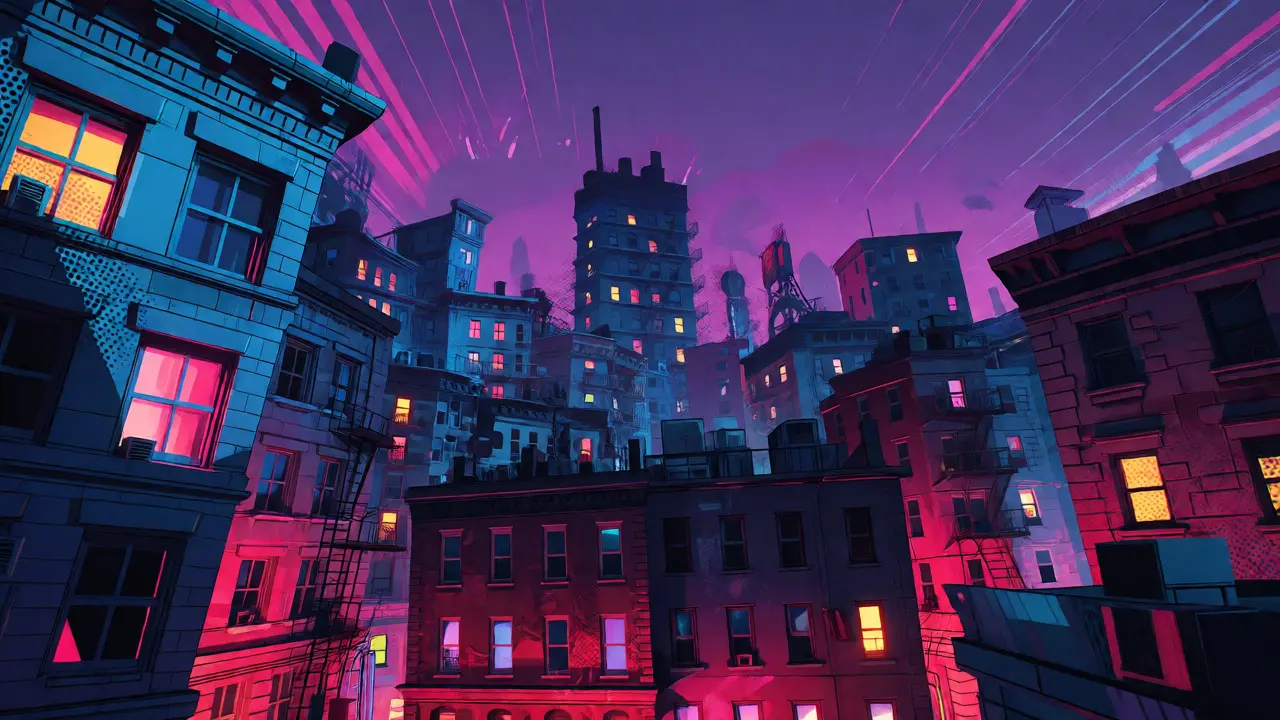
The goal isn’t photorealism. The goal is believability. Look at Spider-Man: Into the Spider-Verse. The city of Brooklyn wasn’t designed to look like a photo. It was designed to look like a comic book come to life. The halftone dots, the misaligned colors, the speed lines-these weren’t decorative. They were narrative tools. They told you this character was breaking out of his own dimension. If the designers had aimed for realism, the story would have lost its core metaphor.
This is the first rule of stylized world-building: Style serves story. Every curve, shadow, and hue must answer the question, "What does this character feel right now?" If the hero is anxious, maybe the walls of their room lean inward. Maybe the lighting is harsh and high-contrast. You aren’t designing a house; you’re designing a feeling.
The Core Pillars of Stylized World-Building
To build these worlds, artists rely on three main pillars. Ignoring one usually breaks the immersion.
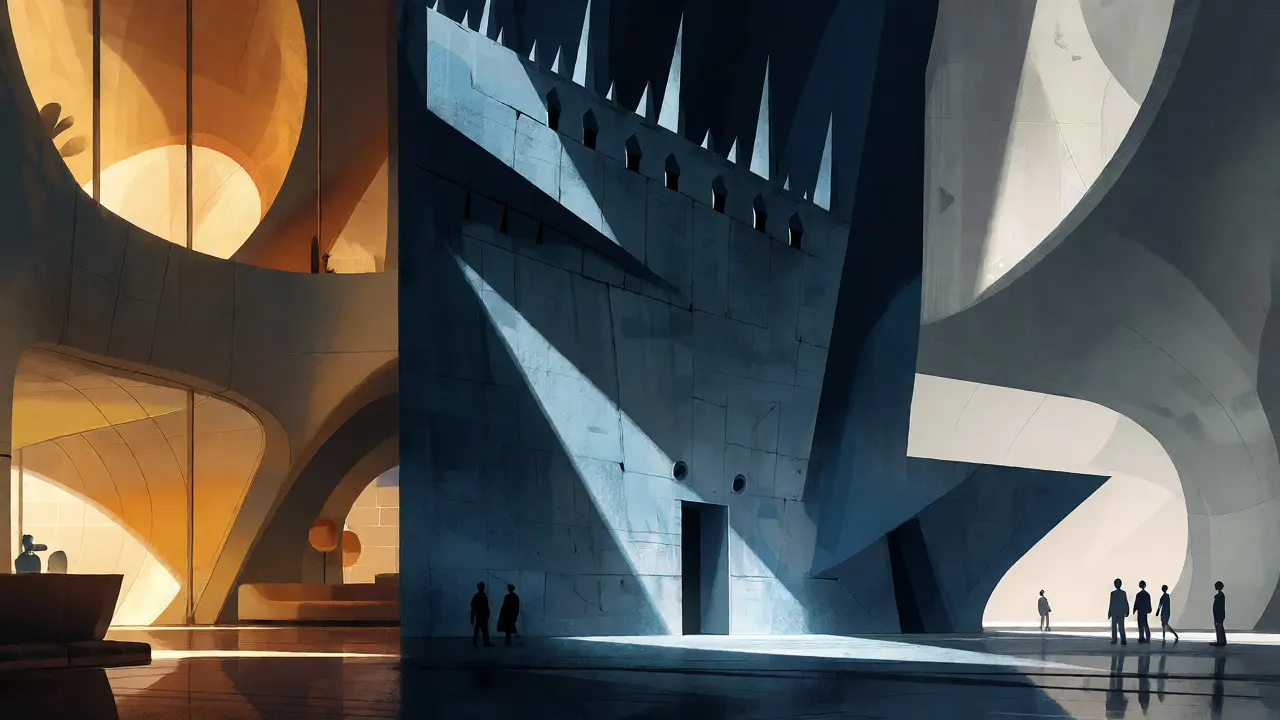
- Shape Language: This is the most subtle tool in your kit. Circles and curves suggest safety, softness, and approachability. Squares and rectangles suggest stability, rigidity, or oppression. Triangles and sharp angles suggest danger, speed, or aggression. When you design a villain’s lair, do you use rounded arches or jagged spikes? The answer tells the audience who to fear before the villain even speaks.
- Color Scripting: A color script maps the emotional journey of the film through light and hue. It’s not just about picking favorite colors. It’s about contrast. If a scene is emotionally cold, the palette might shift to blues and grays. If the climax is triumphant, warm golds and reds take over. Pixar’s Inside Out is a masterclass here. Each emotion has a specific color code, and the environment changes based on which emotion is driving the bus.
- Scale and Proportion: In animation, size is relative to power. Making a character look small by surrounding them with massive, looming architecture creates a sense of helplessness. Conversely, making a protagonist appear larger than life through low-angle perspectives and exaggerated proportions gives them agency. You manipulate the viewer’s subconscious perception of power dynamics simply by changing the ruler.
From Concept Art to Final Render
How does a rough sketch become a finished frame? It’s a pipeline, and it’s messy. It starts with Visual Development (VisDev). Artists create thousands of paintings exploring moods, lighting, and textures. They don’t care about physics yet. They care about vibe. They ask questions like, "What if the trees were made of glass?" or "What if the night sky was purple?"
Once the look is approved, it moves to Modeling and Texturing. Here, the flat concepts get depth. But here’s the trap: many beginners try to model everything perfectly. In stylized animation, you only need enough detail to sell the illusion from the camera’s perspective. If the camera never sees the back of a building, why model it? Efficiency matters. Texture painting also shifts from realistic dirt to painted strokes that guide the eye. You might paint a highlight on a wall that doesn’t exist in physical reality, just because it leads the viewer’s gaze to the character’s face.
Finally, there’s Lighting and Compositing. This is where the magic happens. Lighting in animation isn’t about mimicking the sun. It’s about directing attention. You can place a light source where no lamp exists. You can make shadows longer than they should be to increase drama. Compositors then layer effects like bloom, grain, or chromatic aberration to give the digital image a tactile, organic feel. Without this step, even great designs can look sterile and plastic.
Comparing Styles: Where Does Your Project Fit?
Not all stylized worlds are created equal. Choosing the right aesthetic depends on your target audience and the tone of your story. Here’s a breakdown of common approaches used in modern cinema.
| Style Type | Key Characteristics | Best For | Example Films |
|---|---|---|---|
| Hyper-Stylized | Exaggerated shapes, non-realistic colors, visible brushstrokes or ink lines. | Comedies, fantasy, experimental narratives. | Spider-Man: Into the Spider-Verse, Klaus |
| Stylized Realism | Realistic lighting and physics, but simplified geometry and enhanced colors. | Adventure, family dramas, coming-of-age stories. | Coco, Zootopia |
| Minimalist/Abstract | Reduced details, symbolic environments, focus on negative space. | Arthouse films, psychological thrillers, silent shorts. | The Red Turtle, Song of the Sea |
Pitfalls to Avoid When Designing Worlds
Even experienced designers fall into traps. The biggest one is over-designing. If every corner of the screen has a competing focal point, the audience gets confused. They won’t know where to look. Remember, the background supports the character. It shouldn’t steal the show unless the plot demands it. Keep the areas around the main characters relatively clean or less saturated.
Another common mistake is ignoring consistency. If your world operates on cartoon logic in one scene, it must do so in the next. If gravity is optional for the hero, it can’t suddenly become strict when it’s convenient for the plot. Audiences forgive weird physics, but they don’t forgive broken rules. Establish your world’s laws early and stick to them.
Also, don’t forget the sound. Yes, sound design is part of the visual experience. A creaky floorboard changes how you perceive the age of a house. The echo in a large hall makes it feel empty. While not strictly "production design," integrating audio cues during the design phase helps ensure the world feels cohesive.
Tools of the Trade
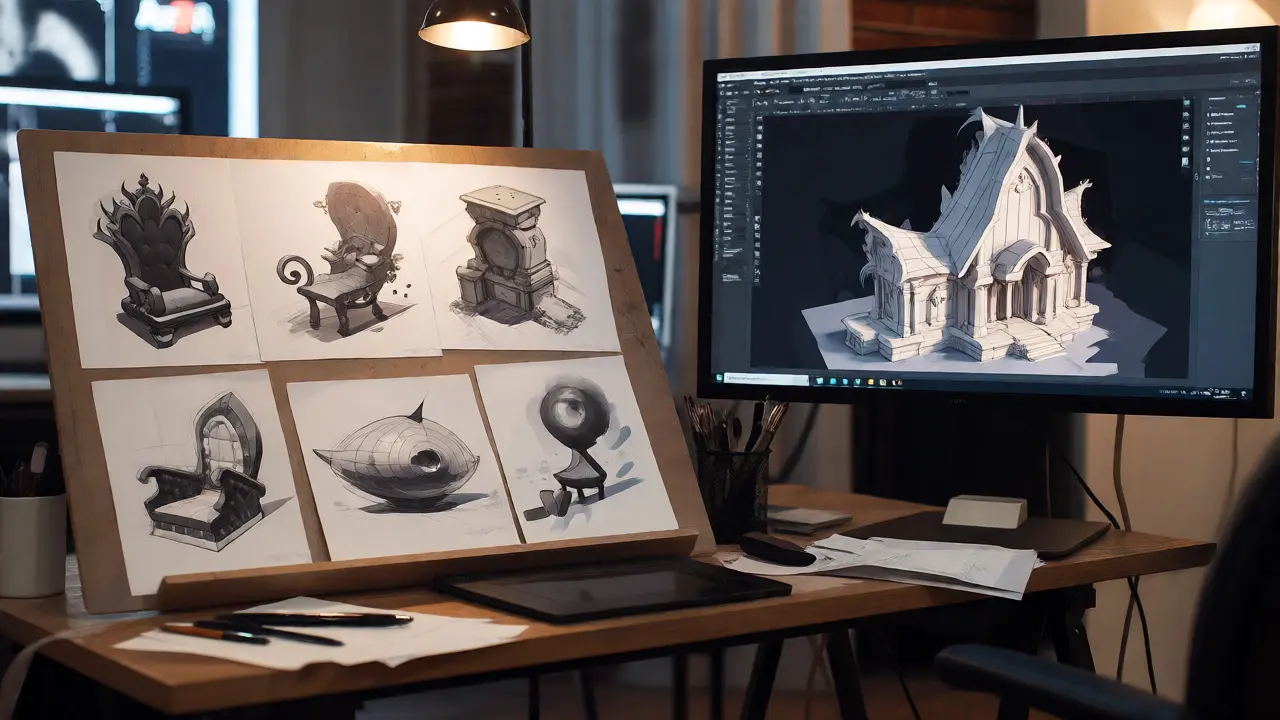
You don’t need a Hollywood budget to start experimenting. Most professional pipelines use a mix of traditional and digital tools. Adobe Photoshop remains the king of concept art. Its brush engines allow for quick exploration of texture and mood. For 3D blocking and layout, Blender has become incredibly popular due to its free cost and powerful features. It allows designers to test camera angles and scale quickly without needing expensive software licenses.
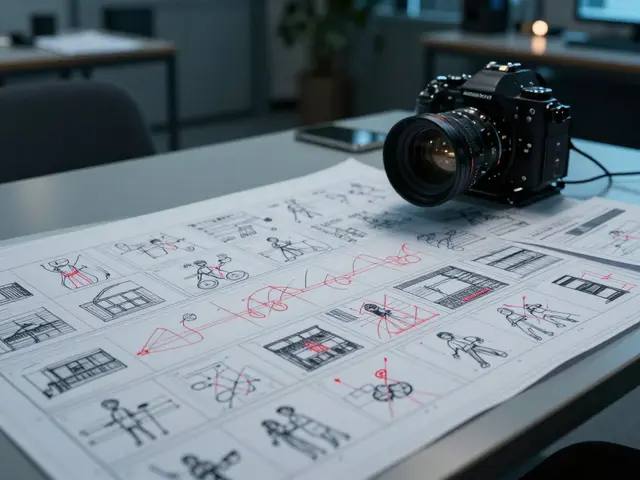
For those focusing on 2D animation, Toon Boom Harmony offers robust tools for creating layered, parallax backgrounds. And for final compositing, Nuke or After Effects are industry standards. But remember, tools are just hammers. The architect is still you. Don’t let software limitations dictate your creativity. Sketch on paper first. Figure out the idea before you worry about the pixels.
Final Thoughts on Crafting Believable Unrealities
Creating a stylized world is an act of empathy. You’re trying to translate an internal human experience into external visual forms. It requires observation, yes, but more importantly, it requires imagination. Stop looking at reference photos for what things are, and start asking what they feel like.
Start small. Take a simple object, like a chair. Draw it five ways: as a villain’s throne, a child’s toy, a piece of ancient ruin, a futuristic pod, and a dreamlike memory. Notice how shape, color, and context change the meaning entirely. That’s the power of animation production design. You don’t just build sets. You build emotions.
What is the difference between art direction and production design in animation?
Production design focuses on the overall visual concept and world-building, ensuring the environment supports the story's themes. Art direction manages the execution of that vision, overseeing the specific styles of characters, props, and backgrounds to maintain consistency. They work closely together, but production design is broader, setting the 'rules' of the world, while art direction ensures everyone follows them.
Do I need to know 3D modeling to be an animation production designer?
Not necessarily, but understanding 3D space is crucial. Many designers work primarily in 2D using tools like Photoshop or Procreate to create concept art. However, knowing how to block out scenes in basic 3D software like Blender or Maya helps in planning camera angles, scale, and lighting. You don't need to be a technical modeler, but you need to understand spatial relationships.
How does color theory impact animation production design?
Color theory drives emotional response. Warm colors (reds, oranges) often signify energy, anger, or warmth, while cool colors (blues, greens) suggest calm, sadness, or mystery. Production designers use color scripts to map these emotional arcs across the film. Contrasting complementary colors can draw attention to key elements, while analogous colors create harmony and unity within a scene.
Can stylized animation handle serious dramatic themes?
Absolutely. Films like 'Persepolis' and 'Waltz with Bashir' prove that stylization can enhance serious topics. By abstracting reality, animators can focus on the psychological state of characters rather than literal accuracy. Stylization allows for visual metaphors that live-action cannot achieve, such as distorting surroundings to reflect trauma or isolation.
What software is best for beginner animation production designers?
For 2D concept art, Adobe Photoshop is the industry standard, but Krita is a great free alternative. For learning 3D space and blocking, Blender is highly recommended because it is free, powerful, and has a massive community for tutorials. Start with these two to cover both the artistic and spatial aspects of design.