Imagine you are standing on a stage. The lights are hot, the audience is silent, and you have to project your voice to the back row without shouting. Now, imagine sitting three feet from a lens that can see the twitch of an eyelid or the slight hesitation in your breath. This is the core difference between acting for the camera and stage performance. While both require truthfulness and emotional connection, the mechanics of how you deliver that truth are completely different.
If you have spent years training in theater, moving to film can feel like unlearning everything you know. It’s not about being "better" at acting; it’s about adjusting your instrument for a different medium. In this guide, we will break down exactly what changes when you step in front of a camera, why subtlety becomes your best friend, and how to adapt your physical and vocal techniques for the screen.
The Scale of Expression: From Projection to Internalization
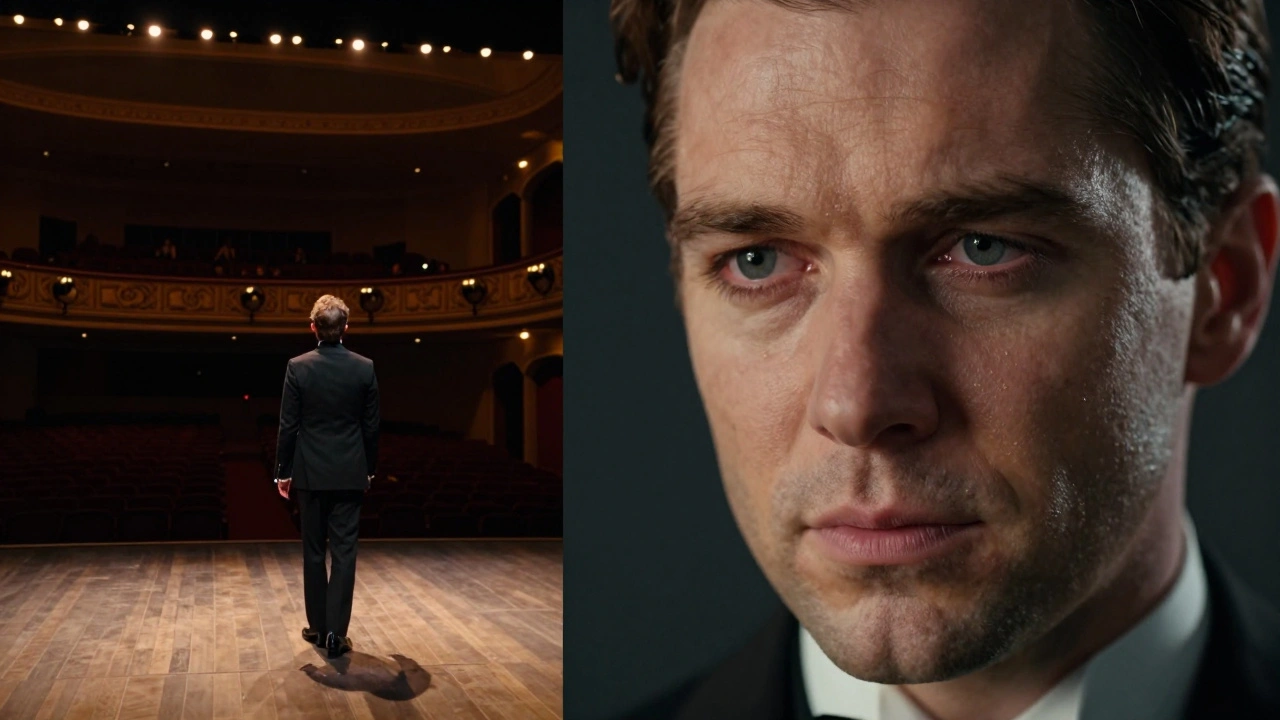
The most immediate shift you will notice is the scale of your expression. On stage, your face is only visible to the first few rows. To communicate with the entire auditorium, you must amplify your reactions. A shock needs to be wide-eyed; anger needs to be loud and expansive. If you act naturally on stage, you might look bored to someone in the balcony.
In film, the camera acts as the audience’s eye, often getting closer than any person would stand in real life. When you are in a close-up shot, every nuance is magnified. A small furrow in your brow reads as deep concern. A slight tightening of the lips reads as suppressed anger. If you use stage-level intensity here, you will look caricatured or over-the-top.
- Stage: Think big. Your gestures should be larger than life to reach the back wall.
- Film: Think small. Let the camera come to you. Trust that the lens captures what the naked eye might miss.
This doesn’t mean you should underact. It means you should internalize. Instead of showing the emotion outwardly, live it inwardly. The camera picks up the energy of thought before it even reaches your facial muscles. This is why many actors say that film acting is more about thinking than doing.
Vocal Dynamics: Speaking vs. Projecting
Your voice works differently in these two mediums. In theater, projection is a survival skill. You need to carry your lines through the ambient noise of the room and the distance to the audience. You rely on resonance, diaphragm support, and clear diction to ensure intelligibility.
In film, a microphone-often a boom mic just out of frame or a lavalier hidden in your clothing-captures your voice. This allows for a much more natural conversational tone. You can whisper, mumble slightly (if the character calls for it), or speak with the casual cadence of everyday speech. The goal is intimacy, not clarity at a distance.
| Aspect | Stage Performance | Film Performance |
|---|---|---|
| Volume | Projected, consistent volume | Natural, variable volume |
| Diction | Crisp, exaggerated articulation | Relaxed, authentic speech patterns |
| Pacing | Rhythmic, structured for comedic/dramatic beats | Unpredictable, overlapping, realistic pauses |
| Microphone Awareness | None (acoustic projection) | High (avoiding plosives, staying on axis) |
One common mistake stage actors make on set is continuing to "project" their thoughts. Even if they aren't shouting, they are pushing their voice forward. On camera, this creates a sense of tension in the jaw and neck that looks unnatural. Relax your throat. Speak as if you are talking to one person across a dinner table.
Physicality and Blocking: Continuity and Framing
On stage, blocking is usually fixed. You hit your marks because the lighting and sightlines depend on it. You move continuously through the scene. In film, blocking is fluid and often dictated by the camera angle, the lens choice, and the editing plan.
You might shoot the same conversation ten times from five different angles. This requires precise repetition of movement. If you take three steps to the left in the wide shot, you must take exactly three steps to the left in the close-up, or the editor won’t be able to cut them together seamlessly. This is called continuity.
Additionally, you must respect the frame. In theater, you can move anywhere within the proscenium arch. In film, if you step out of focus or block another actor’s light, you ruin the take. You need to develop a heightened awareness of your body’s position relative to the camera lens. Often, the director will ask you to stay still while the camera moves around you, which feels counterintuitive to stage instincts where movement drives energy.
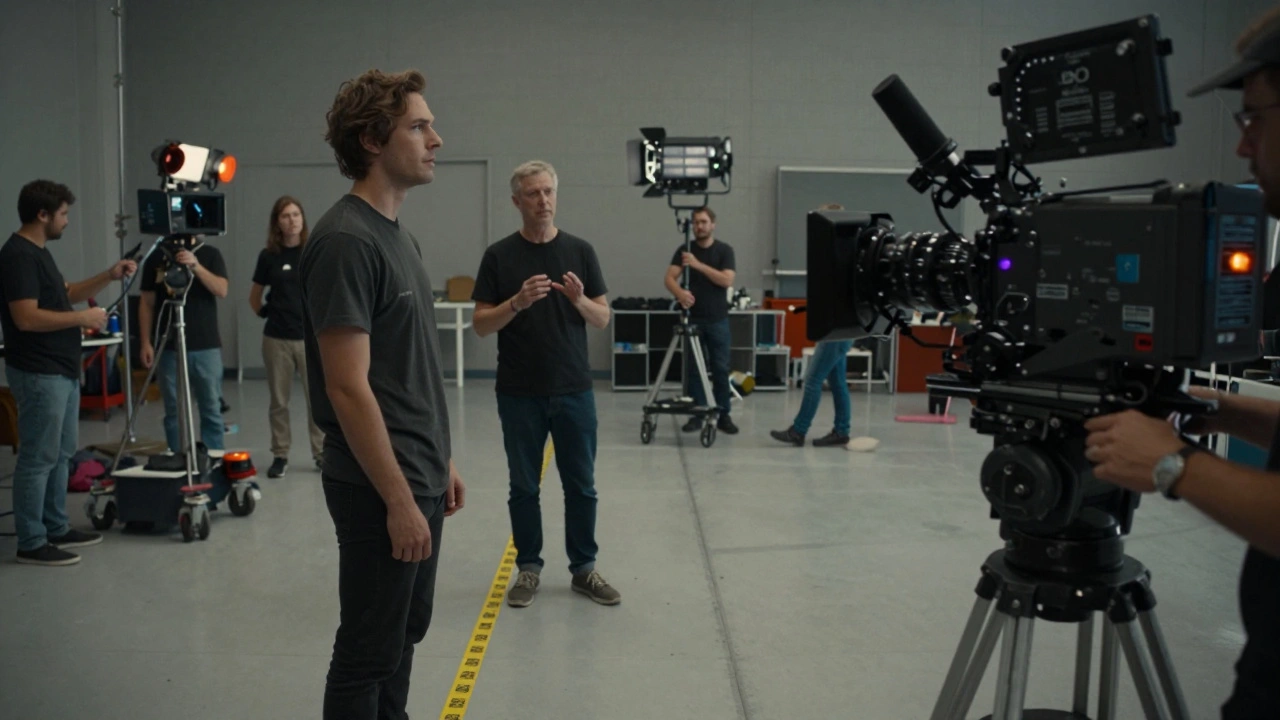
Eye Lines and Focus: Looking at Nothing
In theater, you look directly at your scene partner. The connection is tangible and reciprocal. In film, you rarely look directly into the camera unless you are breaking the fourth wall (like in news broadcasts or specific stylistic choices). Instead, you look at a point just next to the lens, known as the eye line.
This can feel strange. You are speaking to someone who isn’t technically there. Your scene partner might be standing behind the camera, or they might be shot separately entirely. You have to trust that the editing will create the connection later. Maintaining a steady eye line is crucial; if you drift too far left or right, the spatial relationship between characters breaks in the final edit.
Furthermore, your eyes do more work on camera. Audiences watch actors’ eyes to gauge truthfulness. A wandering gaze can signal dishonesty or distraction. A locked gaze signals intensity. Learn to control where your eyes go. Don’t blink excessively due to nervousness, but don’t stare unblinkingly either. Natural blinking rhythms are key.
The Rhythm of Work: Fragmented vs. Linear
Perhaps the biggest adjustment is the workflow. In theater, you perform the story linearly, from start to finish, night after night. You build momentum and emotional arc throughout the evening. In film, scenes are shot out of order. You might shoot the climax of the movie on Monday and the opening scene on Tuesday.
This fragmentation requires intense preparation. You cannot rely on the previous scene to get you into the emotional state. You must be able to access specific emotions on command, regardless of what happened hours ago. This is why technique and grounding exercises are vital for film actors. You need tools to jump instantly into the moment.
Also, film sets are stop-and-go. You might have thirty seconds of action followed by thirty minutes of waiting while the crew adjusts lights. You must learn to conserve your energy. Exploding with emotion during rehearsal can leave you drained by the time the director yells "Action." Save your battery for the takes that count.
Collaboration: Director vs. Audience
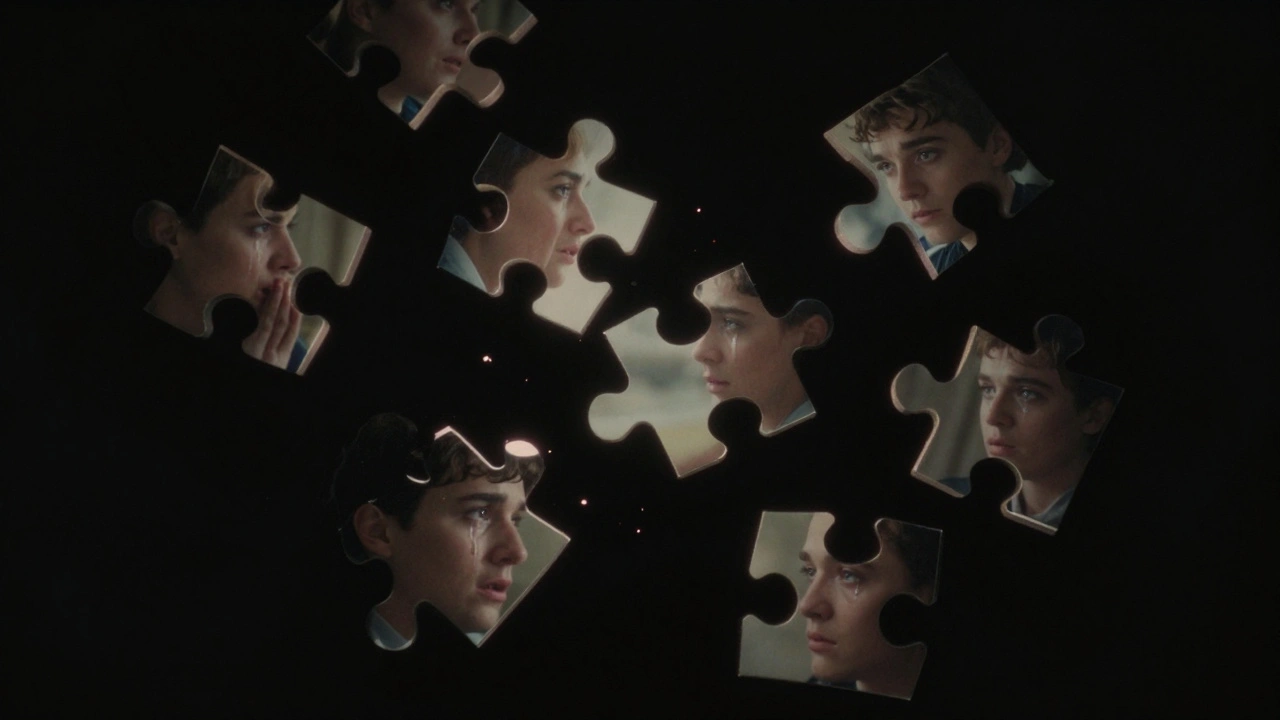
In theater, the audience is your ultimate collaborator. You read their laughter, silence, and gasps, and adjust your timing accordingly. Each performance is unique based on that feedback loop. In film, there is no audience during filming. Your primary collaborator is the director and the camera operator.
You are performing for the lens, which represents the future viewer. You must trust the director’s vision. They might ask for a subtle variation-a slower turn of the head, a softer tone-that serves the edit rather than the live experience. Be open to technical notes. In theater, notes are often about character interpretation. In film, notes are often about technical precision: "Stay left of the mark," "Don’t cross the axis," "Softer on the punchline."
Adapting Your Technique: Practical Steps
If you are transitioning from stage to screen, here are practical steps to help you adapt:
- Practice with a mirror: Watch yourself make small expressions. Notice how little movement is needed to convey emotion. Reduce it until it feels almost invisible, then add a tiny bit back.
- Record yourself: Use your phone to record monologues. Watch them back critically. Do you look like you are trying? Are your hands moving too much? Is your voice too projected?
- Work with a coach: Find a acting coach who specializes in on-camera work. They can give you immediate feedback on what reads well on tape.
- Study film actors: Watch movies with the sound off. Observe how actors use their faces. Compare this to watching plays. Note the difference in physical scale.
- Embrace silence: In film, silence is powerful. Don’t feel compelled to fill every gap with dialogue or movement. Let the camera linger on your reaction.
Remember, the goal is authenticity. The camera is a truth-teller. It reveals everything. By stripping away the theatrical layers, you allow your genuine humanity to shine through. This is what makes film acting so compelling and so challenging.
Can I use my stage acting skills in film?
Yes, absolutely. Skills like character analysis, memorization, and emotional truth are universal. However, you must adapt the delivery. The foundation is the same, but the presentation is scaled down significantly for the camera.
Why do stage actors sometimes look "bad" in movies?
They often look bad because they haven't adjusted their scale. Large gestures, projected voices, and exaggerated facial expressions read as fake or cartoonish on camera. The audience expects naturalism, not theatrical stylization.
How important is continuity in film acting?
It is critical. Because scenes are shot out of order and from multiple angles, your physical actions must be repeatable. If you hold a cup in your left hand in one shot and your right hand in the next, the editor cannot stitch the scene together smoothly.
What is the "eye line" in film acting?
The eye line is the specific point you look at when interacting with another character who is not in the frame. It ensures that when the shots are edited together, it appears you are looking directly at each other, maintaining spatial logic.
Do I need to change my voice for film roles?
You likely need to soften it. Stage acting requires projection to reach the back of the theater. Film uses microphones that capture whispers. Speaking naturally, with relaxed diction and conversational volume, is more effective and believable on screen.