
You just finished a fantastic indie thriller. The pacing is tight, the acting is raw, and the ending will leave you thinking for days. But here’s the cold hard truth: if that movie doesn’t speak your potential viewer’s language, it might as well be silent to them. We often talk about film festivals and critical acclaim, but the real money-and the real cultural impact-happens when a story crosses borders. That crossing isn’t magic; it’s engineering. It’s localization.
For decades, Hollywood assumed English was enough. If you wanted to watch American movies in Tokyo or Paris, you learned English or you got bad translations. But the streaming era changed the game entirely. Now, accessibility isn’t just a nice-to-have feature for the hearing impaired; it’s the primary engine of international distribution. Whether it’s subtitles (captions) or voice-over replacements (dubbing), how you handle language determines whether your film is a niche curiosity or a global phenomenon.
The Economics of Language Barriers
Let’s look at the numbers. According to data from major streaming platforms like Netflix, over 70% of their viewing hours come from non-English content. This isn’t an accident. It’s a direct result of aggressive localization strategies. When Netflix invested heavily in high-quality dubbing and subtitling for shows like 'Squid Game' and 'Money Heist', they didn’t just translate words; they removed friction.
Think about your own habits. Do you want to read text on the bottom of the screen while watching a high-octane action sequence? Probably not. You want to see the explosion, the facial expression, the stunt. Dubbing removes that cognitive load. Conversely, do you want to hear a dubbed voice for a subtle drama where the actor’s whisper carries the emotional weight? Absolutely not. Subtitles preserve the original performance.
The market reality is stark: films with poor localization get buried in the algorithm. Films with excellent localization trend globally. The barrier isn’t culture anymore; it’s linguistic accessibility. If a viewer in Brazil can’t understand a Korean film instantly, they scroll past. If they can, they binge it.
Dubbing vs. Subtitling: Choosing Your Weapon
This is the million-dollar question for distributors. Should you dub or subtitle? There is no one-size-fits-all answer, but there are clear regional preferences that dictate your strategy.
| Region | Preferred Method | Why? | Key Market Example |
|---|---|---|---|
| Germany, Italy, Spain, France | Dubbing | Cultural habit established since the 1930s; viewers dislike reading during visual media. | Spain consumes nearly all foreign content dubbed. |
| Nordic Countries, Netherlands, Portugal | Subtitling | High English proficiency; preference for authenticity of original voices. | Sweden relies almost exclusively on subtitles. |
| Latin America | Mixed | Dubbing dominates TV/Movies; subtitles preferred for prestige cinema and anime. | Mexico prefers dubbing for blockbusters, subs for arthouse. |
| Asia (Japan, China) | Dubbing/Subtitling | Complex scripts often require subtitles for nuance, but dubbing drives mass appeal. | Japan uses both, depending on genre and target demographic. |
Notice the pattern? Wealthier nations with strong educational systems tend to prefer subtitles because they value the "real" voice. Nations with strong dubbing industries (like Germany and Italy) have built entire careers around voice actors who are celebrities in their own right. In these markets, using a bad AI voice or a mismatched tone can kill a film’s reception faster than a bad plot.
The Hidden Cost of Bad Translation
We’ve all seen those memes of terrible movie subtitles. "I’m gonna make him an offer he can’t refuse" becoming something nonsensical. But beyond the laughs, bad translation costs money. It breaks immersion. If a joke falls flat because the translator didn’t catch the pun, the audience disconnects. Once they disconnect, they stop recommending the film to friends.
Localization goes beyond literal translation. It involves cultural adaptation. Consider the phrase "It’s raining cats and dogs." A literal translation into many languages sounds absurd. A good localizer changes this to a culturally equivalent idiom for heavy rain. This process, known as transcreation, ensures the emotional intent survives the journey across borders.
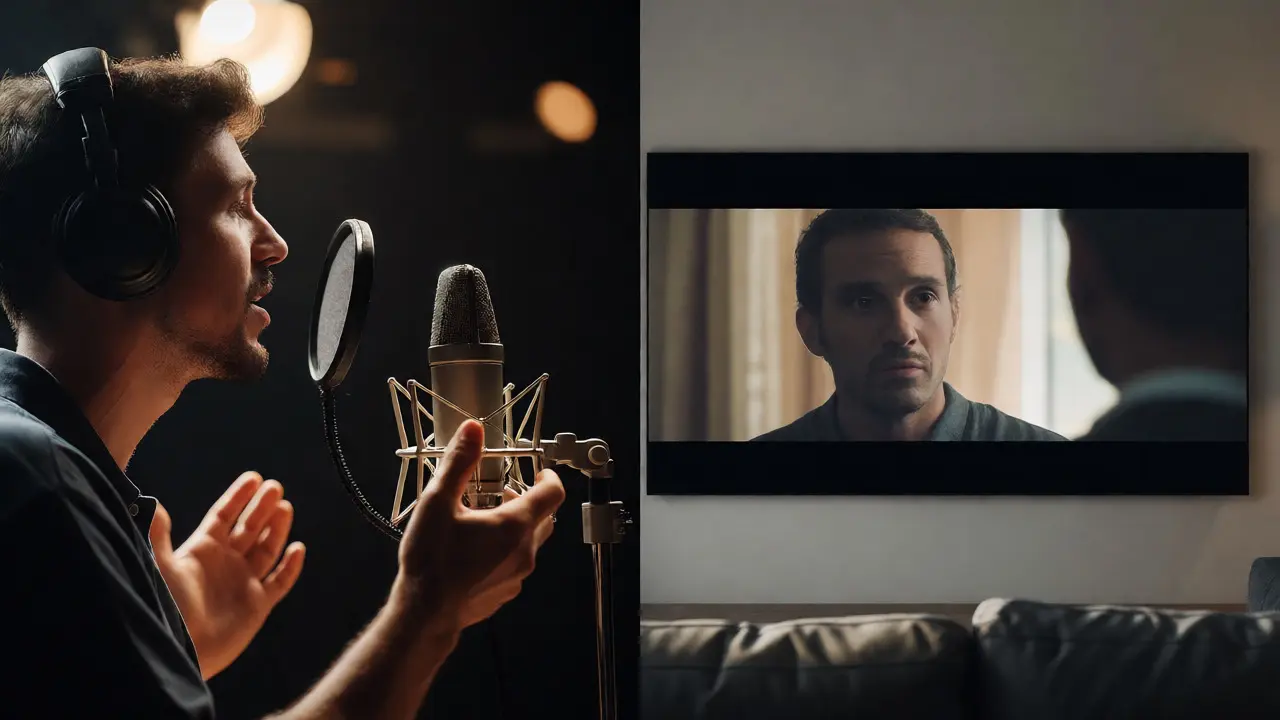
Furthermore, technical quality matters. In dubbing, lip-sync accuracy is paramount. If the dubbed mouth movements don’t match the on-screen speech, viewers notice immediately. Modern studios use software to adjust timing, but human direction is still required to capture emotion. A robotic delivery of a passionate line feels fake, even if the words are correct.
Technology Changing the Landscape
Traditionally, dubbing was expensive and slow. Hiring voice actors, booking studios, directing sessions, and mixing audio could cost tens of thousands of dollars per episode or film. For independent filmmakers, this was prohibitive. Enter AI.
In 2026, AI-driven localization is mainstream. Tools now exist that can clone an actor’s voice and translate dialogue while preserving tone and cadence. While purists argue it lacks soul, the efficiency gains are undeniable. Startups like ElevenLabs and HeyGen allow creators to generate multi-language versions of their content in hours, not weeks.
However, technology has limits. AI struggles with context, sarcasm, and cultural references. It works best for informational content or straightforward narratives. For complex dramas or comedies, human oversight remains essential. The hybrid model-AI for first drafts, humans for polishing-is becoming the industry standard. This lowers the barrier to entry, allowing smaller films to access global markets without breaking the bank.

Strategies for Indie Distributors
If you’re an independent creator looking to expand internationally, don’t try to boil the ocean. You don’t need to dub your film into 50 languages on day one. Here’s a pragmatic approach:
- Prioritize High-Value Markets: Look at where similar genres perform well. If you made a horror film, prioritize Japan and Latin America. If it’s a romantic comedy, focus on Europe and North America.
- Start with Subtitles: They are cheaper and faster. Use professional translators, not machine translation alone. Ensure the formatting is clean and readable.
- Test with Focus Groups: Before committing to dubbing, test your subtitled version with native speakers in target countries. Ask them: Did you understand the jokes? Did the emotions land?
- Leverage Festivals: International film festivals are great places to gauge interest. If a distributor in Korea buys your film, let them handle the localization. They know their market better than you do.
Remember, accessibility is also about inclusion. Closed captions aren’t just for translation; they help deaf and hard-of-hearing audiences. Ensuring your captions are accurate and synchronized is a legal requirement in many regions and a moral imperative everywhere.
The Future is Multilingual
The trend is clear: monolingual distribution is dying. As streaming platforms compete for subscribers, they invest more in local content and better translation tools. Viewers expect seamless experiences. They switch languages with a click. They expect the same quality regardless of the source language.
For filmmakers, this means designing with globalization in mind. Avoid overly localized slang unless you plan to adapt it. Write dialogue that translates well. And most importantly, budget for localization early. Don’t treat it as an afterthought. Treat it as part of the creative process.
The world is listening. Are you speaking their language?
Is dubbing always better than subtitling for international sales?
No, it depends on the region. In countries like Germany, Italy, and Spain, dubbing is preferred due to cultural habits. In Nordic countries and the Netherlands, subtitles are preferred because of higher English proficiency and a desire for authenticity. Always research your specific target market before choosing.
How much does professional dubbing cost compared to subtitling?
Dubbing is significantly more expensive, often costing 10 to 20 times more than subtitling. This includes hiring voice actors, studio time, sound engineers, and directors. Subtitling primarily costs for translation and typesetting, making it a more viable option for low-budget indie films.
Can AI replace human translators for film localization?
Not yet for high-quality narrative content. AI can provide quick, rough translations and even voice cloning, but it often misses cultural nuances, idioms, and emotional context. Human editors are still required to review and polish AI output to ensure it feels natural and engaging.
What is transcreation in film distribution?
Transcreation is the process of adapting a message from one language to another while maintaining its intent, style, and tone. Unlike literal translation, transcreation may change jokes, idioms, or cultural references to make them resonate with the target audience. It’s crucial for comedy and marketing materials.
Do subtitles affect the viewing experience negatively?
Some viewers find subtitles distracting, especially in fast-paced scenes with lots of visual information. However, studies show that younger generations are increasingly comfortable with subtitles, even for domestic content. Properly formatted subtitles with good timing minimize disruption.







Comments(8)