Most scripts fail not because the plot is weak, but because the world feels flat. Producers and directors don't just read dialogue; they scan for images that can be shot, sold to a studio, or rendered in VFX. If your setting doesn't offer concrete, distinct details, it remains an abstraction rather than a place. This guide breaks down how specific, tangible elements in a screenplay transform a vague concept into a sellable property.
The Core Principle: Show, Don't Tell, But Specifically
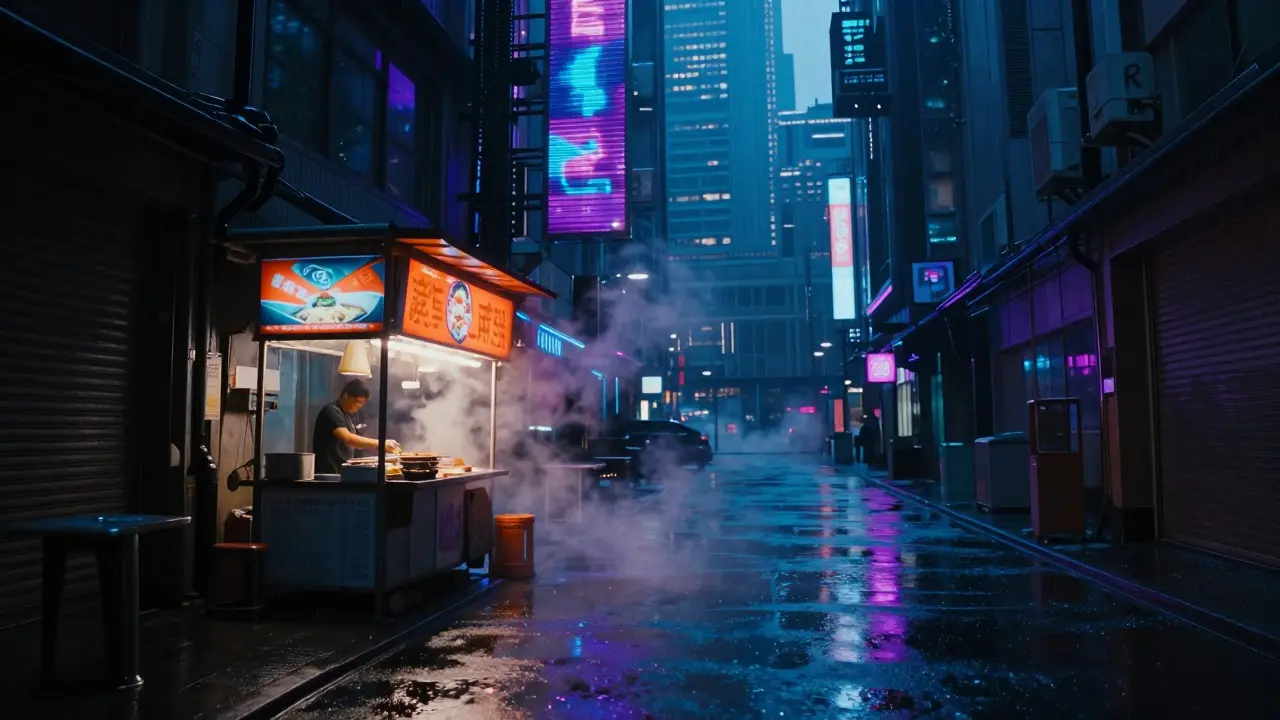
Screenwriting is the art of crafting a narrative structure for visual media where every word must translate into an image or sound. In this context, world-building isn't about writing a history book in the margins. It's about selecting three to five sensory anchors that define the location instantly. Think of the rain-slicked neon streets of Blade Runner. You don't need to explain the political collapse of Earth. You just need to show a noodle stand under a flickering hologram ad. That single image carries the weight of an entire dystopia.
When you write a scene heading like "INT. OFFICE - DAY," you are giving the reader nothing. When you write "INT. CLUTTERED ARCHIVE - NIGHT," you are providing texture. The difference lies in specificity. Specificity creates trust. If the writer knows exactly what the coffee cup looks like, the producer believes the writer knows what the character wants. This confidence is what makes a script feel 'real' before a single frame is shot.
Sensory Anchors: Sight, Sound, and Smell
Visuals dominate film, but audio and implied scent create immersion. A well-crafted script uses these channels to ground the audience. Consider the opening of The Godfather. We hear the muffled sounds of the wedding before we see them. We smell the flowers and the sweat of the guests. These aren't just descriptions; they are production notes disguised as story beats.
- Sight: Focus on light sources and shadows. Is the room lit by warm tungsten bulbs or cold fluorescent tubes? Each choice signals mood and time period.
- Sound: Identify the dominant ambient noise. A library has silence, but a specific *type* of silence-rustling pages, distant clock ticking. A factory has a roar, but is it mechanical grinding or hydraulic hissing?
- Touch/Scent: Implied through action. A character wiping grease from their hands tells us more about their job than a line of dialogue ever could.
Avoid generic descriptors like "messy" or "old." Instead, specify: "A desk buried under yellowed legal pads" or "Walls peeling to reveal brick beneath." These details give the Production Designer a starting point and help the director visualize the blocking immediately.
Cultural Texture and Social Hierarchy
World-building fails when every character behaves identically regardless of their status. Your script must reflect the social hierarchy of its setting through objects and behavior. In a medieval fantasy, the king's castle isn't just big; it's clean, quiet, and filled with imported spices. The peasant's hut is small, loud, and smells of woodsmoke. The contrast sells the class divide without exposition.
In modern settings, this translates to technology and language. How does the wealthy character communicate? Do they use sleek, silent devices? Does the working-class character rely on older, louder tech? These details establish power dynamics. For example, in The Matrix, the deserters wear ragged clothes while the agents wear pristine black suits. The clothing is a map of the society's values. When writing, ask yourself: What does a person of high status touch first upon entering a room? What do they avoid? Those interactions build the world faster than any monologue.

Economic Reality: Money Moves Worlds
One of the most overlooked aspects of world-building is economics. How do people survive? What is valuable? In a sci-fi film, if water is scarce, show characters rationing it. In a heist movie, show the security systems that protect the cash. Economic details make the stakes real. If the protagonist needs $10,000, the audience needs to understand why that amount is life-changing in this specific world.
This connects directly to Script Doctoring processes. Often, scripts get cut back because the economic logic is flawed. If a character buys a luxury car in a slum setting without explanation, it breaks immersion. Ensure that every transaction or display of wealth serves the plot or character arc. Money should be a character trait, not just a prop.
The Role of the Production Designer
Your script is the blueprint for the Production Design team. They translate your words into physical sets, costumes, and props. If your description is vague, they have to guess. If it's contradictory, they have to choose. To sell your film, you must respect their process. Provide consistent rules for your world. If gravity is low in Act 1, it must be low in Act 3. If the magic system requires blood sacrifice, show the cost. Consistency allows the production team to plan efficiently, which lowers budget risks and increases the likelihood of greenlighting.
Furthermore, consider the Cinematography implications. Are there wide shots available? Or is the world claustrophobic? Writing "EXT. OPEN FIELD - DAY" offers flexibility. Writing "INT. NARROW CORRIDOR - CONTINUOUS" forces a specific lens choice. Understanding how your world constrains or enables camera movement helps you write scenes that are easier to shoot and more visually dynamic.

Common Pitfalls to Avoid
Even experienced writers fall into traps that dilute their world-building. Here are the most common ones:
- Exposition Dumping: Never let a character explain the history of the galaxy unless they are a historian talking to a student. Let the environment speak.
- Inconsistent Rules: If a door is locked in Scene 5, it shouldn't be open in Scene 6 without reason. Continuity errors kill credibility.
- Over-Description: Three strong details beat ten weak ones. Don't describe every object in the room. Pick the one that matters to the character's goal.
- Ignoring Scale: Define the size of spaces. A conversation in a cathedral feels different than in a closet. Specify the scale to control the pacing of the scene.
Final Thoughts: Selling the Vision
Ultimately, world-building on the page is about selling a vision. You are not just telling a story; you are pitching a universe. When producers read your script, they want to see the movie in their heads. Give them the tools to do that. Use specific, sensory-rich details that imply a larger reality. Respect the craft of those who will bring your words to life. And remember: the best worlds are not explained; they are inhabited. Make your characters live in them, and the audience will follow.
How much detail is too much in a script?
If the detail doesn't affect the plot, character motivation, or visual tone, it's likely too much. Aim for three to five key sensory anchors per major location. If a description takes more than two lines, check if it's necessary for the scene's function.
Do I need to explain the magic system in a fantasy script?
No. Show the effects and the costs. If a spell burns the caster's hand, show the burn. If a potion glows blue, describe the glow. Let the audience infer the rules from the consequences shown on screen.
What is the role of props in world-building?
Props are physical evidence of a character's life and the world's economy. A worn-out boot says more about poverty than a line of dialogue. Choose props that reveal backstory or status quickly.
How can I make a modern city feel unique?
Focus on local quirks. Specific architecture, local slang, unique weather patterns, or cultural rituals. Avoid generic 'city' tropes. Describe the specific type of traffic, the specific food carts, or the specific way people interact in public spaces.
Does world-building matter for short films?
Yes, even more so. With limited runtime, every detail must count. A single, strong visual anchor can establish the entire mood and setting in seconds, making the story feel complete and polished.