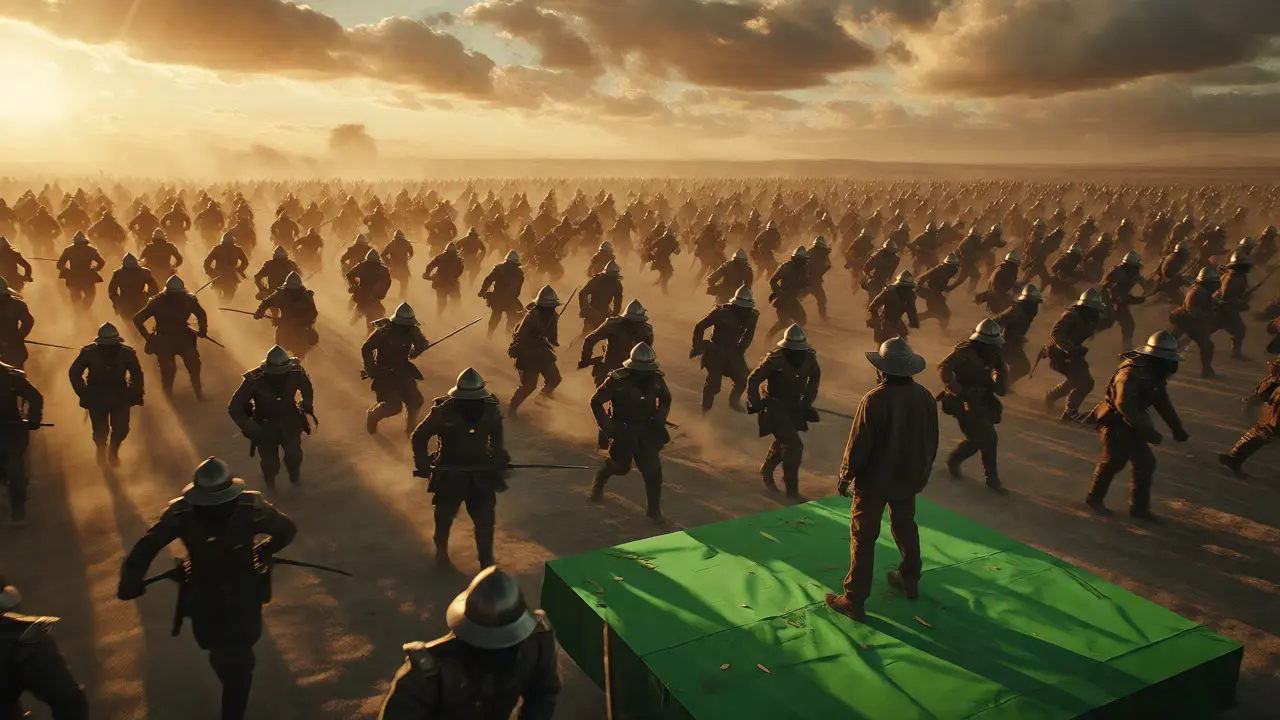
You watch a blockbuster scene with thousands of soldiers charging across a plain. You assume it took an army of real people to pull that off. But often, it was just one actor on a green screen, multiplied by algorithms until they looked like a legion. This is the world of virtual extras, also known as digital crowd simulation. It’s a technology that has quietly reshaped how movies are made, saving studios millions while raising uncomfortable questions about who gets paid and who gets replaced.
If you’ve ever wondered how films create massive battle scenes without hiring ten thousand stuntmen, or why some background characters look eerily lifeless, you’re asking the right questions. We’re going to break down how crowd simulation actually works, from the physics engines to the AI-driven behaviors. More importantly, we’ll tackle the ethical minefield it creates. Are these digital workers stealing jobs? Do they have rights? And where is the line between helpful tool and deceptive trick?
The Mechanics Behind the Magic
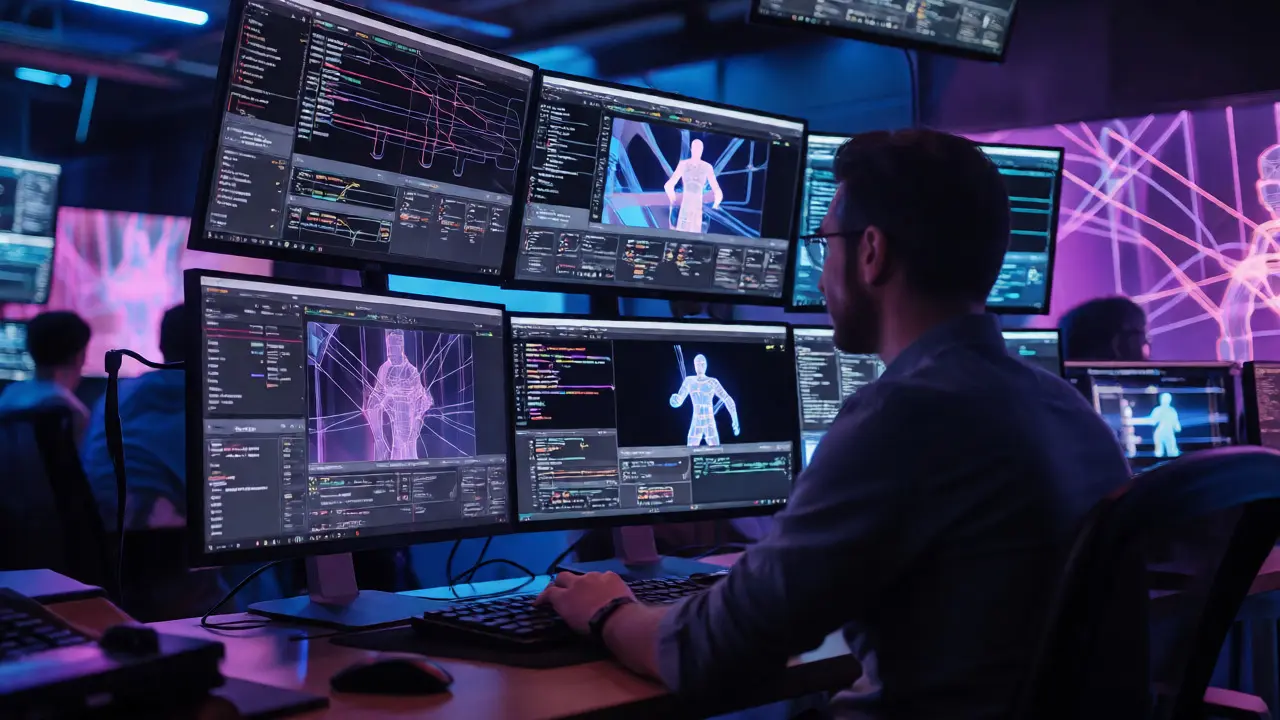
Creating a believable crowd isn’t just about copying and pasting a 3D model. That’s the first mistake people make. Real crowds are chaotic. People bump into each other, adjust their pace, and react to their neighbors. To mimic this, visual effects (VFX) artists use agent-based modeling. Think of each digital extra as an autonomous agent with its own set of rules. These agents don’t follow a fixed path; they make decisions based on their surroundings.
Software like Houdini and Massive allows artists to define behaviors such as "avoid collisions," "maintain formation," or "react to threat." When you run the simulation, thousands of these agents calculate their next move every frame. If an explosion happens on screen, the agents near the blast radius might flee, while those further away might only turn to look. This emergent behavior is what makes the crowd feel alive rather than robotic.
But technology has moved beyond simple rule-following. Modern pipelines now integrate machine learning to generate realistic variations. Instead of manually tweaking every avatar, AI can analyze footage of real crowds to learn how humans naturally stand, walk, and gesture. This reduces the uncanny valley effect, where digital humans look almost human but something feels off. The goal is always invisibility-if the audience notices the tech, the illusion fails.
From Background Noise to Narrative Focus
Historically, digital doubles were reserved for dangerous stunts or impossible shots. Now, they fill entire stadiums. Consider the difference between practical effects and digital ones. Practical effects require logistics: feeding people, housing them, managing safety protocols, and dealing with weather delays. Digital extras face none of these constraints.
This shift changes storytelling. Directors can stage scenes that would be logistically impossible otherwise. Imagine a zombie apocalypse unfolding in a city center. With practical extras, you’d need hundreds of performers in makeup, working in shifts. With digital crowds, you can have thousands of zombies filling every street corner, reacting individually to survivors. This scale allows for more epic visuals, but it also raises the bar for realism. Audiences are smarter now. They spot bad CGI instantly. A single glitchy avatar can break immersion for the whole scene.
| Feature | Practical Extras | Virtual Extras |
|---|---|---|
| Cost Structure | High upfront (wages, catering, transport) | High initial setup, low marginal cost per unit |
| Scalability | Limited by space and budget | Near-infinite scaling within render limits |
| Realism Risks | Natural human variation | Risk of uncanny valley and repetitive patterns |
| Flexibility | Fixed once filmed | Adjustable post-production (position, lighting, clothing) |
| Labor Impact | Direct employment for actors/stuntmen | Employment for technical artists and programmers |
The Ethical Dilemma: Who Gets Paid?
Here’s where things get messy. If a studio replaces 500 background actors with 500 digital avatars, who loses out? The background actors do. This isn’t hypothetical. In recent years, the Screen Actors Guild-American Federation of Television and Radio Artists (SAG-AFTRA) has fought hard over the use of synthetic performers.
The core issue is consent and compensation. Studios want to scan an actor’s face and body, then reuse that data indefinitely without paying them again. For a lead actor, this might mean a buyout fee. For a background extra, it could mean losing future residuals entirely. If your likeness is used in a sequel, a spinoff, or even a video game ten years later, should you get a cut? Currently, contracts vary wildly, leaving many performers vulnerable.
Then there’s the question of cultural representation. Early crowd simulations often relied on generic, Western-centric models. This meant diverse cities on screen looked oddly homogeneous. While newer tools allow for greater diversity, the bias in training data remains a concern. If the AI learns primarily from footage of one demographic, it struggles to accurately simulate another. This isn’t just a technical bug; it’s an ethical failure that erases visibility.
Legal Gray Areas and Intellectual Property
Who owns a digital extra? Is it the studio that commissioned it, the software company that built the engine, or the artist who sculpted the base mesh? Intellectual property law hasn’t fully caught up with generative AI and procedural animation.
Consider the case of scanning real people. If you scan a passerby for texture reference, do they need to sign a release? What if their distinctive gait is captured and replicated in thousands of avatars? Courts are still debating whether a movement pattern constitutes copyrightable expression. Until clear precedents exist, studios tend to err on the side of caution, using synthetic bases rather than direct scans of identifiable individuals whenever possible.
Another risk is deepfake misuse. As crowd simulators become more sophisticated, the line between a simulated crowd and a manipulated reality blurs. Could a political rally be faked using crowd simulation tech? Absolutely. The same tools that create epic battles can fabricate public opinion. This potential for deception adds a layer of responsibility for filmmakers and technologists alike.
The Future: Hybrid Workflows and New Roles
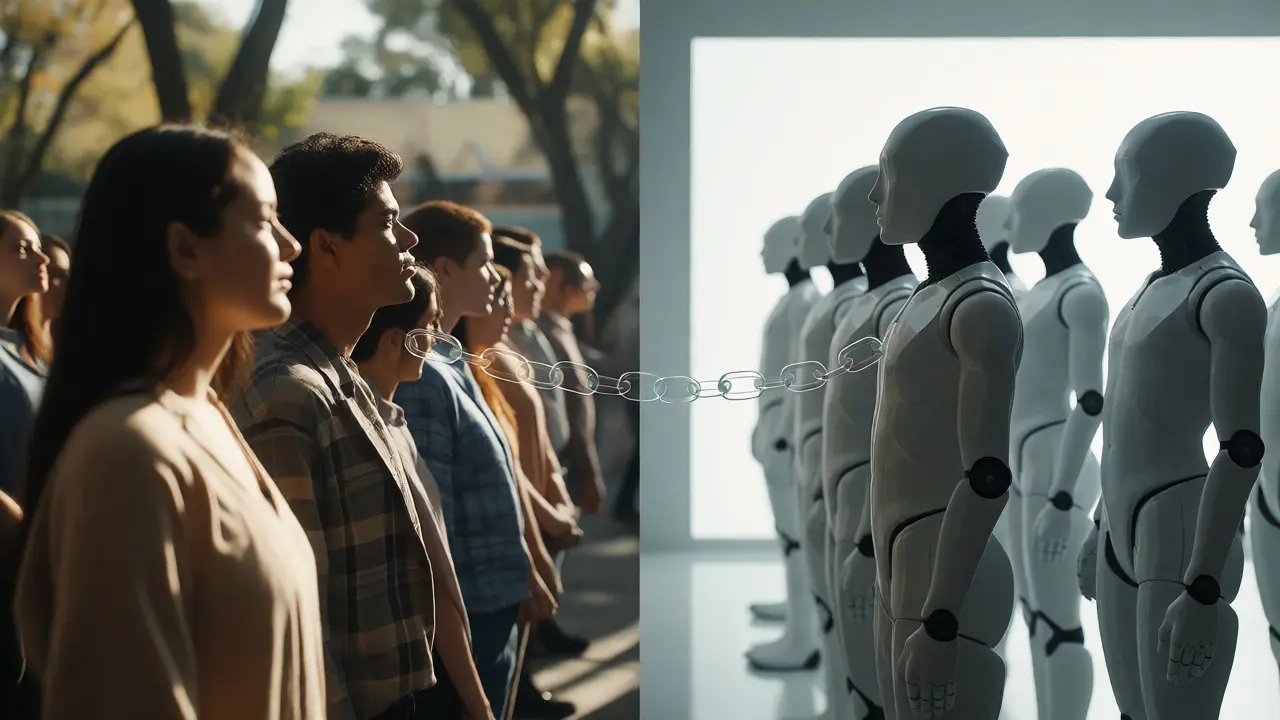
Don’t expect practical extras to disappear. The most successful productions use a hybrid approach. Real actors provide the emotional anchor and foreground interaction, while digital crowds fill the background depth. This balances authenticity with scale.
New roles are emerging in this space. We’re seeing Crowd TDs (Technical Directors) who specialize in behavioral tuning. There are also ethical compliance officers in large VFX houses, ensuring that digital likeness usage adheres to union agreements and moral standards. The job market is shifting from pure manual labor to technical oversight.
For aspiring filmmakers, understanding crowd simulation is no longer optional. It’s part of the visual language. Knowing when to hire real people and when to simulate them saves budgets and improves quality. It’s about matching the tool to the story’s needs, not just chasing the latest tech trend.
Frequently Asked Questions
How much does it cost to create virtual extras compared to real ones?
It depends on scale. Hiring 1,000 real extras costs wages, food, transport, and insurance, which can add up quickly. Creating 1,000 virtual extras involves high upfront costs for rigging, motion capture, and rendering time. However, adding the 1,001st virtual extra is nearly free, whereas adding the 1,001st real extra costs full price. For small crowds, real people are cheaper. For massive armies, digital wins.
Can audiences tell the difference between real and virtual extras?
Often, yes, especially in close-ups or when lighting is complex. Badly simulated crowds suffer from "cloning," where identical faces repeat too obviously, or unnatural movement patterns. High-end productions hide digital extras in the background or in fast-moving action sequences where details blur. If you stare at a static shot of a crowd, you might spot the repetition.
Do virtual extras steal jobs from actors?
They displace some entry-level background work. However, they also create new technical jobs for animators, coders, and VFX supervisors. The net impact is debated. Unions argue it threatens livelihoods for non-union workers. Producers argue it allows for more ambitious projects that employ more crew overall. It’s a trade-off between traditional performance roles and technical artistry.
What software is commonly used for crowd simulation?
SideFX Houdini is the industry standard for procedural crowd generation due to its powerful node-based workflow. Massive by Weta Digital was historically dominant, particularly for films like Lord of the Rings. Unreal Engine and Unity are increasingly used for real-time crowd visualization during pre-production. Autodesk Maya is also used for individual character creation before importing into simulation engines.
Are there ethical guidelines for using digital likenesses?
Yes, but they are evolving. SAG-AFTRA recently negotiated stricter rules regarding AI and digital replicas. Generally, consent is required for using a person’s likeness. Buyouts must be fair. There’s growing pressure for transparency-audiences may soon expect disclosure when significant portions of a cast are synthetic. Ethical guidelines focus on preventing exploitation and ensuring fair compensation for data usage.





Comments(5)