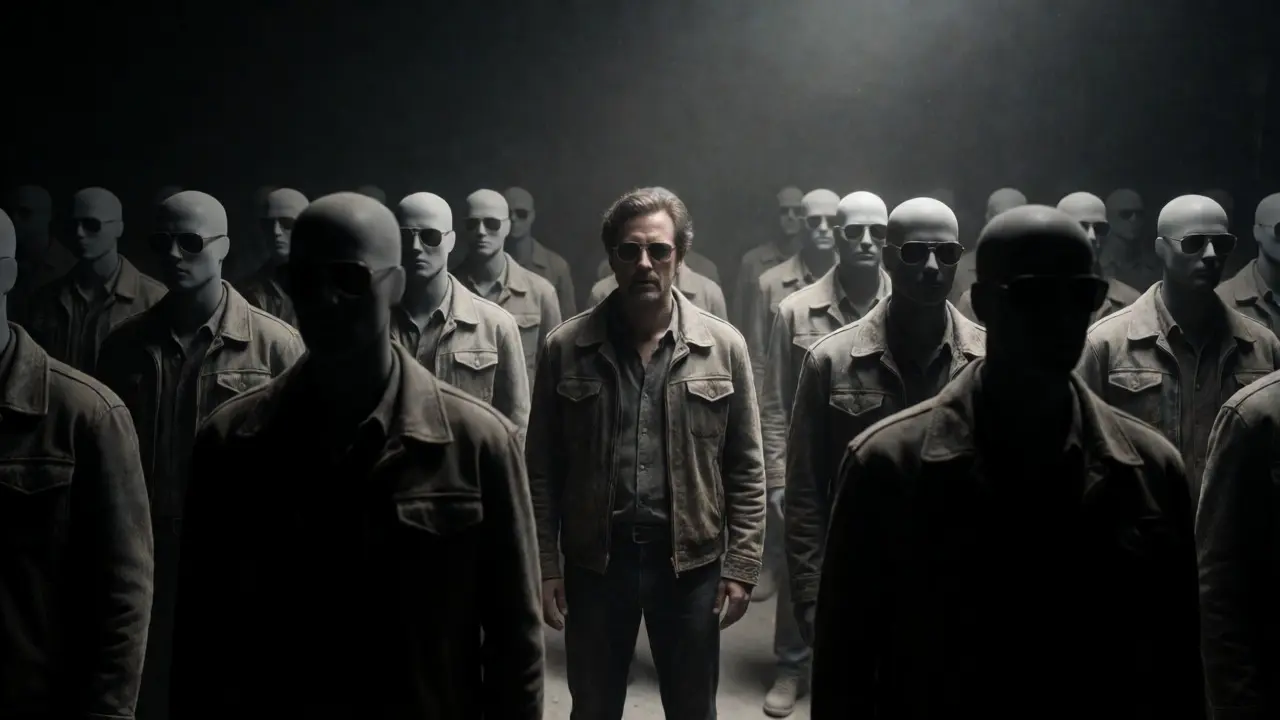
You watch a movie and think, "That's exactly who that actor is." It feels natural. It feels right. But for the person on screen, that comfort zone might be a cage. Typecasting is one of the most persistent traps in the film industry where actors are repeatedly assigned roles similar to their previous successes or public personas. It happens because it works. Directors want what sells. Studios want predictable returns. Audiences want familiar faces in familiar skins. The problem? This efficiency often kills an actor’s range.
Think about Jim Carrey. For years, he was the rubber-faced maniac. Then came Eternal Sunshine of the Spotless Mind. Suddenly, people saw sadness in him. Or consider Leonardo DiCaprio, who spent his early 20s as the pretty boy heartthrob before fighting tooth and nail to become a serious dramatic force. These shifts didn't happen by accident. They were deliberate breaks from the mold. If you’re an aspiring actor, or just a film buff wondering why your favorite star seems stuck in a loop, understanding how typecasting works-and how to break it-is crucial.
The Psychology Behind Why We Love Stereotypes
Casting directors aren’t necessarily lazy. They’re risk-averse. A $200 million blockbuster can’t afford experimental casting choices if there’s a proven alternative. This is where cognitive bias kicks in. We rely on mental shortcuts. When we see Dwayne Johnson, we expect strength and comedy. When we see Meryl Streep, we expect depth and transformation. These associations form quickly based on past performances, physical appearance, and even off-screen news stories.
This phenomenon creates a feedback loop. An actor plays a tough cop in Die Hard-style action. Critics praise the intensity. The next three scripts they receive are all for tough cops. The agent pushes for those roles because they are guaranteed work. The actor takes them because rent is due. Five years later, the actor has five credits as "Detective Mike" or "Sergeant Stone." The industry sees only Detective Mike. The nuance of the actor’s training disappears under the weight of the character archetype.
Data supports this trend. According to studies on Hollywood hiring practices, actors who appear in more than three consecutive films with similar character traits see a significant drop in offers for contrasting roles. It’s not personal; it’s algorithmic. Casting databases tag actors by keywords like "quirky," "villainous," or "romantic lead." Once tagged, escaping the category requires a massive outlier performance.
Physicality and Voice: The Invisible Bars
Sometimes, typecasting isn’t about talent. It’s about biology. Your height, voice pitch, facial structure, and body type dictate the first filter in casting. Tall, broad-shouldered men get offered military or authority roles. Petite women often get cast as ingenues or victims unless they actively fight against it. This is called "physical typing." It’s harder to overcome than behavioral typing because you can change your acting style, but you can’t easily change your bone structure.
Take Timothée Chalamet. His slight frame and youthful look initially limited him to coming-of-age dramas. He had to physically transform-losing weight, changing posture-to play Paul Atreides in Dune, a role that required a different kind of presence. Conversely, actors like Charlize Theron have used prosthetics and weight changes to shatter expectations, moving from model-like beauty to gritty, unrecognizable characters in films like Monster.
Voice matters too. A deep, resonant voice signals authority or menace. A higher, softer voice signals approachability or vulnerability. Actors with distinct vocal qualities often find themselves hired for their sound rather than their skill. Think of James Earl Jones. His voice is iconic, but it also limits the types of characters he can plausibly play without subverting audience expectations. Breaking these physical barriers requires either extreme physical commitment from the actor or a director willing to ignore conventional logic.

The Economic Engine of Typecasting
Filmmaking is expensive. Marketing is even more so. When a studio buys a script, they need to know how to sell it. Familiarity sells. If an actor is known for horror, putting them in a romantic comedy confuses the marketing team. Who do we put on the poster? Do we use scary fonts or pink hearts? Ambiguity costs money.
| Factor | Benefit for Studio | Risk for Actor |
|---|---|---|
| Predictability | Lower marketing risk; clear target audience | Stagnation; loss of critical respect |
| Brand Recognition | Easier press tours and interviews | Inability to pivot genres |
| Cost Efficiency | Faster shooting schedules (actor knows the beat) | Perceived lack of effort or craft |
Independent cinema is the exception here. Indie directors often hire actors for their raw potential rather than their box office draw. This is where many typecast actors go to reinvent themselves. Adam Sandler moved into serious territory with Uncut Gems through A24, a company known for taking risks. The trade-off? Lower upfront pay, but higher long-term prestige. Prestige opens doors to awards, which eventually leads back to mainstream leading roles, but now with credibility attached.

Strategies to Break the Mold
If you’re stuck in a loop, how do you get out? There are no magic bullets, but there are proven tactics used by successful career pivots.
- The Anti-Role: Deliberately choose a part that is the opposite of your last hit. If you played the villain, play the saint. If you played the comic relief, play the tragic hero. This shocks the system and forces critics to re-evaluate your skills.
- The Producer Pivot: Take control. Many actors start producing their own projects to create roles that don’t exist for them. Reese Witherspoon did this with Big Little Lies, creating complex female roles that Hollywood wasn’t offering.
- The Physical Transformation: Change your look drastically. Gain weight, shave your head, grow a beard. Make the audience struggle to recognize you. This visual cue signals that this is a new chapter.
- The Theater Detour: Step away from cameras. Return to stage work. Theater critics focus on live performance and versatility, not box office numbers. Success on Broadway or in London’s West End can reset your reputation.
Consider Matthew McConaughey. After being labeled the "shirtless rom-com guy," he went on a hiatus. He returned with Mud, Killer Joe, and True Detective. He didn’t just act differently; he changed his entire public narrative. He stopped doing interviews about his abs and started talking about method preparation. The shift was slow, but it worked.
When Typecasting Is Actually Good
Not all typecasting is bad. Sometimes, leaning into your strengths builds a franchise. Samuel L. Jackson is the ultimate example. He owns the "cool, dangerous mentor" vibe. He doesn’t try to play shy librarians. He doubles down on his persona. This consistency makes him bankable. Audiences trust him to deliver exactly what they expect, and they buy tickets for that certainty.
The key difference between good typecasting and career death is agency. If the actor chooses the role because they enjoy the challenge within the constraints, it’s art. If the actor takes the role because they have no other options, it’s stagnation. Look at Hugh Jackman. He played Wolverine for 17 years. That’s typecasting. But he balanced it with musicals (The Greatest Showman) and dramas (Prisoners). He kept the brand alive while proving he could do more. It’s a balancing act.
For audiences, recognizing typecasting helps us appreciate the craft. When you see an actor break character, notice how much effort it takes. Notice the subtle changes in posture, eye movement, and speech rhythm. Those tiny deviations from their usual pattern are the signs of an artist fighting for relevance. Next time you watch a movie, ask yourself: Are we seeing the actor, or are we seeing the brand?
Is typecasting always negative for an actor's career?
No, not always. In some cases, strong typecasting helps build a recognizable brand that guarantees steady work and financial stability. Stars like Samuel L. Jackson or Dwayne Johnson leverage their specific personas to maintain high demand. The negative aspect arises when the limitation prevents artistic growth or reduces the actor to a one-dimensional commodity, making them vulnerable to being replaced by younger or fresher faces with similar traits.
How do casting directors decide if an actor is typecast?
Casting directors analyze an actor’s previous roles, public image, and physical attributes. They look for patterns in recent credits. If an actor has played "angry boss" in four of their last five movies, they are flagged as typecast. They also consider market trends and whether the actor’s current fame level aligns with the specific niche they fill. Data from box office performance and streaming popularity metrics heavily influence these decisions.
Can physical appearance prevent an actor from breaking typecasting?
Yes, physical traits like height, voice pitch, and facial structure create immediate associations that are hard to shake. However, actors can mitigate this through drastic physical transformations, such as weight gain or loss, using prosthetics, or altering their vocal delivery. Directors who prioritize unconventional casting over traditional looks can also help bypass these physical biases, especially in independent films.
What is the difference between typecasting and stereotyping?
Stereotyping refers to assigning generalized characteristics to a group of people based on race, gender, age, or other demographics. Typecasting is specific to individual actors, where they are repeatedly cast in similar roles based on their past performances or persona. While stereotypes can lead to typecasting, typecasting can also occur based purely on an actor’s unique talent or success in a specific genre, regardless of demographic factors.
Do actors get paid more for being typecast?
Initially, yes. Being typecast often means consistent employment and lower risk for producers, which can lead to steady income. However, top-tier stars may command higher fees due to their guaranteed box office draw. Conversely, mid-level actors trapped in typecasting may find their salaries stagnant because they are seen as interchangeable parts rather than premium assets. Breaking typecasting can sometimes lead to higher pay if it results in critical acclaim and award recognition.





Comments(8)