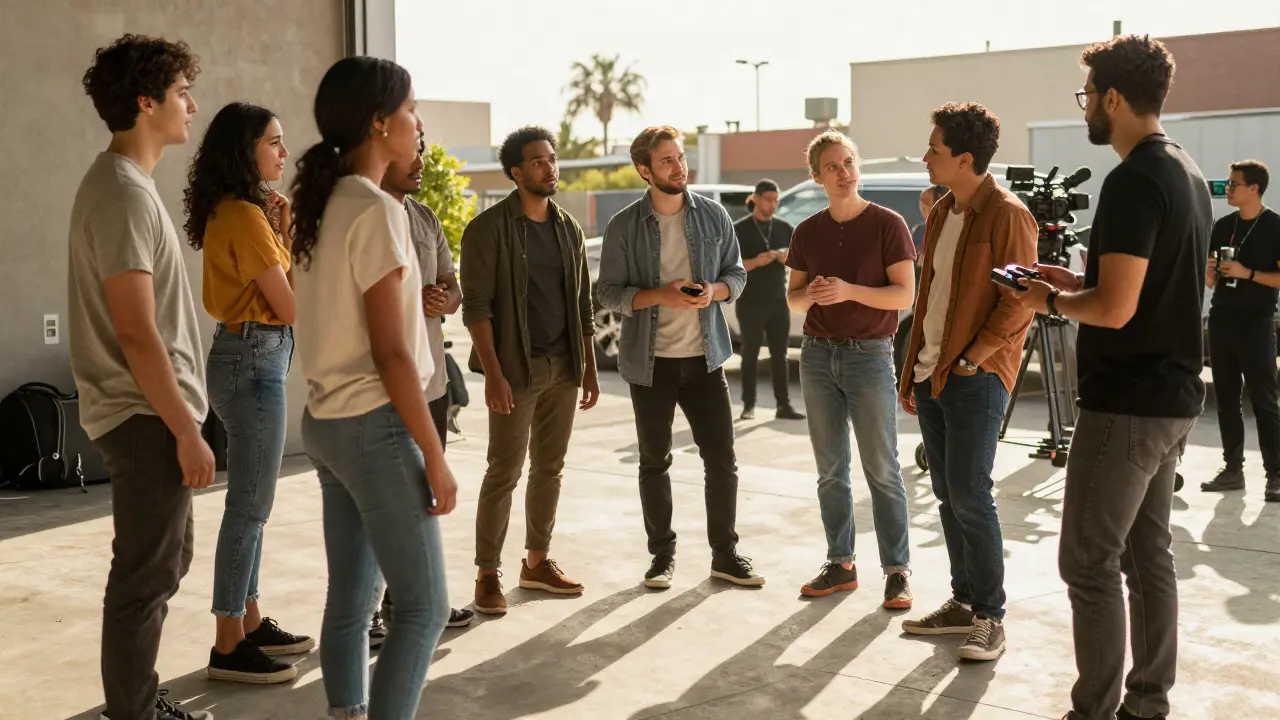
For decades, trans and non-binary characters on screen were either punchlines or tragic props. Today, the landscape looks different. Films like Portrait of a Lady on Fire (which touched on queer fluidity) paved the way, but recent years have seen a surge in stories led by actual trans and non-binary voices. This shift isn't just about casting; it's about who holds the pen. When directors, writers, and actors from these communities take the lead, the nuance changes. You stop seeing stereotypes and start seeing people.
The core problem for viewers is navigating this new wave. With so many titles released between 2023 and 2026, it can be hard to tell which films offer genuine depth and which rely on surface-level diversity. This guide breaks down how trans and non-binary representation has evolved, highlights key works that define the current era, and offers a framework for evaluating quality in contemporary cinema.
Key Takeaways
- Authenticity over Accuracy: Modern films prioritize lived experience and emotional truth over rigid medical or social 'correctness,' leading to richer character arcs.
- The 'Hire' Movement: The industry standard is shifting from consulting to hiring trans and non-binary talent as leads, directors, and producers, not just advisors.
- Non-Binary Visibility: While trans narratives dominate headlines, non-binary roles are expanding beyond sidekicks to become protagonists with their own distinct storylines.
- Audience Impact: Studies show that authentic representation correlates with higher audience engagement and critical acclaim, proving that inclusive stories are commercially viable.
The Shift from Tokenism to Protagonists
In the early 2010s, trans characters often served a single purpose: to teach a cisgender protagonist a lesson. Think of the 'tragic trans friend' trope that haunted dramas for years. By 2025, that model had largely collapsed. The change started with high-profile successes like Moonlight (2016), which featured a nuanced trans woman character played by Janelle Monáe, but it accelerated when trans actors began winning major awards. Daniel Kaluuya’s work and later, the rise of actors like Hunter Schafer and Maude Apatow, signaled that audiences were ready for complex, flawed, and fully realized trans and non-binary humans.
This shift is structural, not just aesthetic. Production budgets now allocate funds for community review boards earlier in the pre-production phase. Instead of fixing a script after shooting, studios consult with trans consultants during the writing stage. This ensures that dialogue reflects how people actually speak and live, rather than relying on outdated slang or clinical jargon. For example, the use of specific pronouns in scripts is now treated with the same grammatical weight as any other character detail, reducing awkward exposition scenes where a character explains their identity to the audience.
Defining Non-Binary Roles in Film
Non-binary representation presents unique challenges because the category itself is broad. It encompasses genderqueer, agender, bigender, and two-spirit identities, among others. In cinema, this complexity is often flattened into a visual shorthand: short hair, androgynous clothing, and a refusal to choose a binary label. However, contemporary cinema is moving past these markers. Recent films focus on the internal experience of non-binary individuals rather than just their external presentation.
Consider the difference between a character who is 'non-binary' as a plot device versus one who is non-binary as a facet of their personality. In older films, being non-binary might mean the character confuses everyone around them. In newer works, the confusion is often placed on the cisgender world reacting to the character, not the character themselves. This perspective flip is crucial. It validates the character's sense of self without requiring constant explanation. Directors like Alice Wu and emerging indie filmmakers are experimenting with visual language-camera angles, color palettes, and sound design-to convey non-binary identity without needing dialogue to do all the heavy lifting.

Case Studies: Landmark Films of 2024-2026
To understand the current state of play, look at three specific examples that illustrate different aspects of this evolution.
- The Binary Break (2024): A comedy-drama that centers on a non-binary software developer navigating a corporate environment. It avoids the 'coming out' climax, instead focusing on daily micro-interactions. The film was praised for its naturalistic dialogue and lack of melodrama.
- Body Electric (2025): A biographical drama exploring the life of a fictional trans artist in the 1970s. It uses period-accurate details to show how historical context shapes identity. The film won multiple awards for cinematography, highlighting how visual beauty can elevate personal stories.
- Fluid Lines (2026): An anthology series adapted for theatrical release, featuring four short stories about different facets of trans and non-binary life. One segment focuses on parenting, another on romance, ensuring that these characters aren't defined solely by their transition or identity status.
These films share a common thread: they treat identity as one part of a whole person, not the entire plot. This approach resonates with both LGBTQ+ audiences and general viewers because it mirrors real-life complexity.
Evaluating Quality: A Viewer's Checklist
How do you spot a well-made film versus one that checks a box? Use this simple heuristic when selecting what to watch:
| Criterion | High-Quality Signal | Low-Quality Signal |
|---|---|---|
| Casting | Trans/non-binary actors in lead roles | Cisgender actors in drag or prosthetics |
| Writing | Scripts written/consulted by community members | Identity used as a metaphor for something else |
| Plot Focus | Universal themes (love, work, family) intersecting with identity | Entire plot revolves around 'dealing with' the identity |
| Dialogue | Natural use of pronouns/names without exposition | Characters explaining terms to the audience |
If a film hits three or more 'High-Quality' signals, it’s likely worth your time. If it leans heavily on 'Low-Quality' signals, proceed with caution. This checklist helps filter through marketing hype and get to the substance of the storytelling.
The Economic Reality of Inclusive Cinema
Skepticism often arises from the belief that niche stories don’t sell tickets. Data from 2025 box office reports suggests otherwise. Films with strong LGBTQ+ leads, including trans and non-binary protagonists, have shown performance parity with mainstream blockbusters in international markets. This is partly due to streaming platforms prioritizing diverse content for global audiences. Netflix and Amazon Prime Video have dedicated slates for LGBTQ+ cinema, providing a financial safety net that allows riskier, smaller-budget films to reach wide audiences.
Moreover, the 'halo effect' applies. Audiences who engage with one high-quality inclusive film are more likely to seek out others. This creates a feedback loop where demand drives production, which in turn educates and expands the audience base. For independent filmmakers, this means funding opportunities are growing. Grants specifically for trans and non-binary storytellers have increased by 40% since 2023, according to arts funding reports. This infrastructure supports the pipeline from script to screen, ensuring that the next wave of films will be even more diverse in tone and genre.
Challenges Remaining in the Industry
Despite progress, hurdles remain. Ageism intersects with transphobia, making it harder for older trans actors to find roles. Most leading parts still go to young adults, leaving middle-aged and elderly trans experiences underrepresented. Similarly, intersectionality is sometimes overlooked. Trans people of color, trans disabled individuals, and trans rural residents often face double or triple marginalization in casting decisions. Contemporary cinema is starting to address this, but it’s slow.
Another challenge is the backlash. Political debates in certain regions have led to legislative attempts to restrict LGBTQ+ visibility in media. This has created a climate of uncertainty for some studios, leading to safer, less risky choices in certain markets. However, the global nature of cinema means that local restrictions rarely stop a film from reaching international audiences. In fact, controversy often boosts visibility. Films that face bans or protests tend to see spikes in streaming numbers as viewers rally around the title.
Frequently Asked Questions
What is the difference between trans and non-binary representation in film?
Trans representation typically focuses on individuals who identify with a gender different from the one assigned at birth, often involving a narrative arc of transition or acceptance. Non-binary representation focuses on individuals who do not exclusively identify as male or female. In film, trans stories may center on the process of changing one's life circumstances, while non-binary stories often explore the fluidity of identity and societal expectations of gender binaries.
Why is hiring trans and non-binary actors important?
Hiring actors from the community ensures authenticity in performance, particularly in subtle areas like body language, speech patterns, and emotional responses. It also provides economic opportunities for marginalized groups and reduces the reliance on makeup or prosthetics, which can be costly and uncomfortable. Furthermore, it signals to audiences that the story is told with respect and insider knowledge.
Are there any films where non-binary characters are not the main focus?
Yes, many contemporary films feature non-binary characters as supporting roles who enrich the main narrative without dominating it. This is often considered a sign of maturity in representation, as it normalizes non-binary existence within broader human stories, such as workplace dramas or romantic comedies, rather than isolating the identity as the sole subject.
How does streaming affect the distribution of LGBTQ+ cinema?
Streaming platforms allow for wider accessibility and lower barriers to entry for niche films. They enable global audiences to discover local productions that might not secure theatrical releases in major cities. This democratization helps sustain careers for trans and non-binary filmmakers and actors by providing consistent work and exposure across borders.
What should I look for in a film's credits to ensure good representation?
Check the 'Written by' and 'Directed by' sections for names from the trans or non-binary community. Look for 'Consultants' listed in the fine print, which indicates proactive effort to ensure accuracy. Additionally, read reviews from LGBTQ+ critics who often provide deeper insights into cultural nuances that mainstream reviews might miss.





Comments(10)