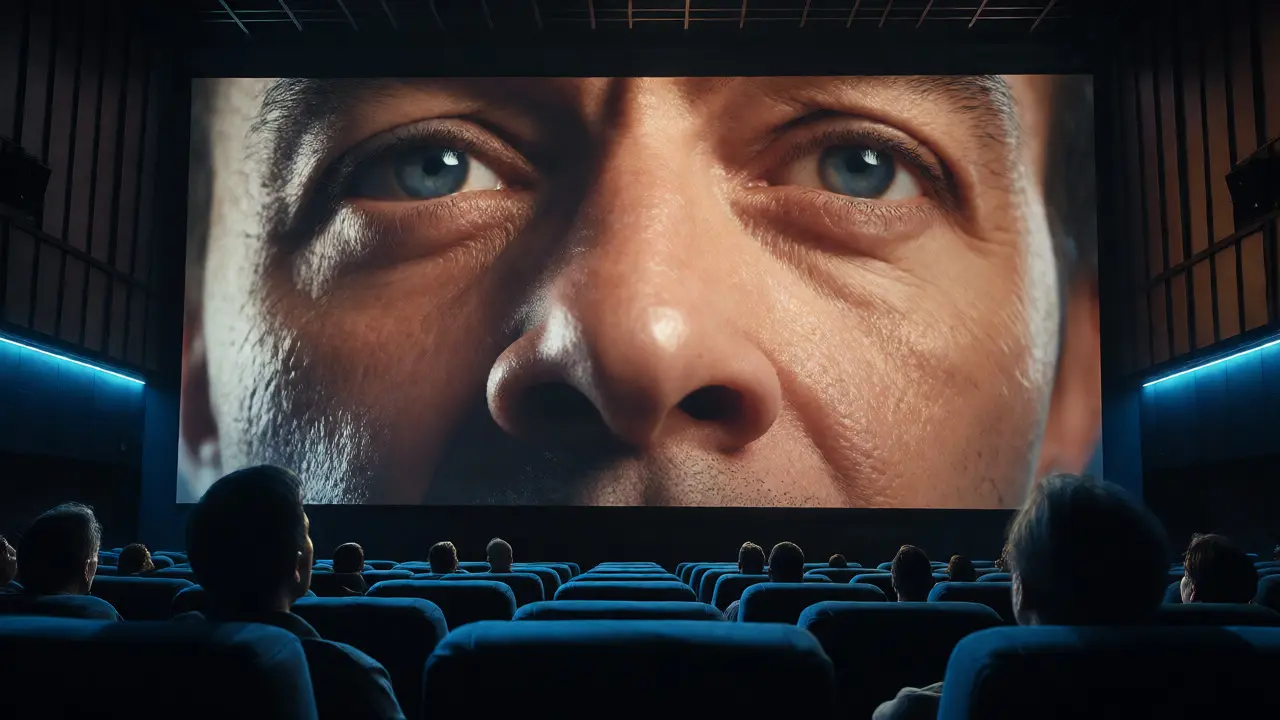
You walk into a theater with a screen the size of a two-story building. The sound hits your chest before you even hear the dialogue. You are sitting in a Premium Large Format (PLF), a high-end cinema experience featuring advanced projection and audio systems like IMAX or Dolby Cinema. But here is the catch: what looks charming on a smartphone screen might look terrifying on an IMAX wall. A subtle twitch of an eyebrow becomes a seismic event. A slight hesitation in speech feels like a stutter that lasts minutes.
Casting directors and filmmakers know this secret well. They run specific screen tests for PLF to see how actors hold up under the microscope of massive projection. It isn’t just about looking good; it’s about reading emotionally from forty feet away without losing nuance. If you are wondering why some stars dominate the box office while others vanish in wide releases, it often comes down to how their face translates in these specific environments. Let’s break down exactly how close-ups and presence change when the screen gets bigger.
The Physics of Scale: Why Your Face Changes Size
When we talk about IMAX, a proprietary system of motion-picture film formats and cinema projector standards, we aren’t just talking about a bigger TV. We are talking about aspect ratios that fill your peripheral vision. In a standard digital cinema, a close-up occupies maybe 15-20% of the frame height. In an IMAX 70mm or laser digital presentation, that same shot can occupy 40% or more, depending on the aspect ratio expansion.
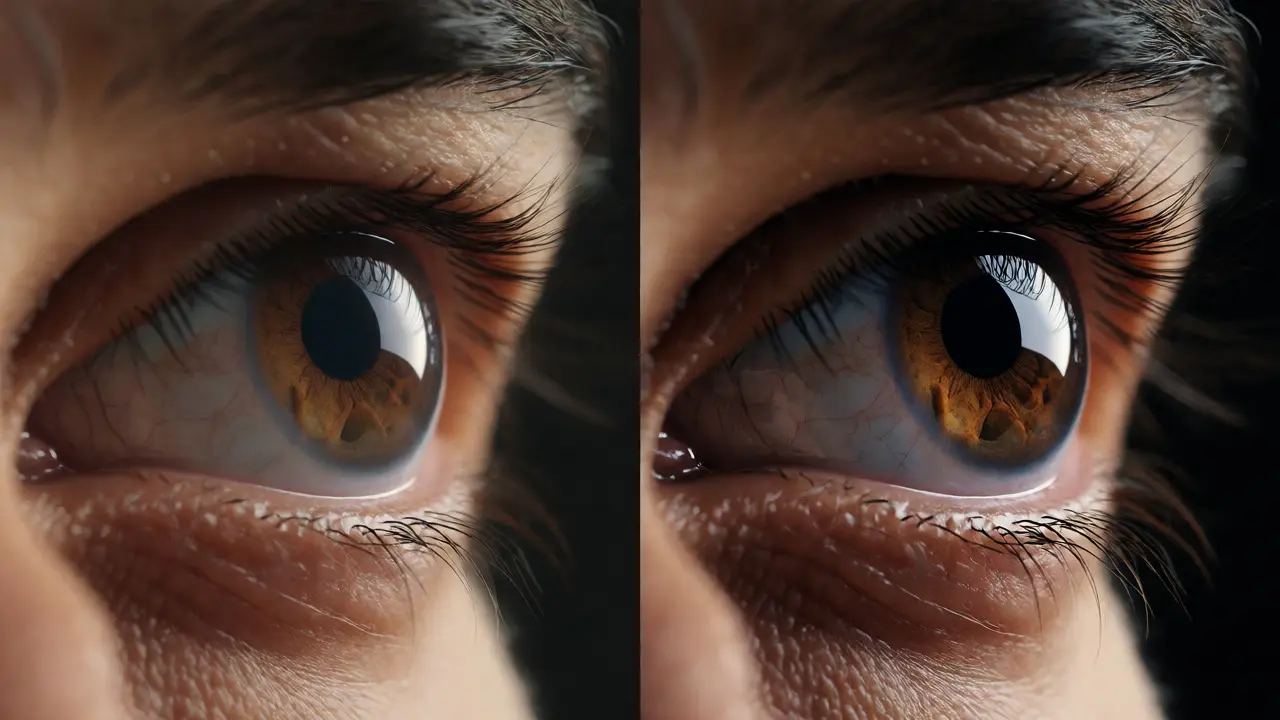
This physical enlargement changes how our brains process facial expressions. Micro-expressions-those fleeting movements that last less than a second-become clearly visible. On a laptop, a character’s suppressed anger might read as neutral. On an IMAX screen, the tightness around the eyes and the flare of nostrils scream rage. This is why actors known for "small" performances sometimes struggle in blockbusters. Their subtlety gets lost not because it is weak, but because the medium demands a different kind of energy.
Dolby Cinema, a premium large-format cinema system utilizing Dolby Vision HDR and Dolby Atmos audio, offers a different challenge. While its screens are often slightly smaller than full-screen IMAX, its contrast ratio is vastly superior. Black levels are deeper, and colors are more vibrant. This means shadows hide less. If an actor has uneven skin texture or poor lighting consistency, Dolby Cinema exposes it. There is no hiding behind soft focus or low contrast. The image is crisp, almost hyper-realistic.
Anatomy of the Perfect PLF Performance
So, what does casting look for? It isn’t just beauty. It is structural integrity under magnification. When reviewing screen tests, directors look for three specific traits that survive the jump to PLF:
- Symmetry and Structure: Asymmetrical faces can look distorted when stretched across a curved screen. Strong bone structure holds light better. Actors with high cheekbones or defined jawlines tend to "read" better because the light catches their features predictably.
- Eye Contact Capability: Can the actor sustain eye contact with the camera lens? In a small room, you feel close to them. In a 60-foot-wide hall, you need to feel like they are looking at you specifically. This requires intense focus and emotional availability.
- Vocal Projection vs. Intimacy: This sounds contradictory, but it is crucial. In Dolby Atmos mixes, whispers can be heard clearly from the back row. However, if the performance relies solely on shouting, it feels cheap on a big screen. The best PLF performances use quiet intensity that the audio mix amplifies naturally.
Consider the difference between a stage actor and a film actor. Stage actors project to the back of a theater using body language and voice. Film actors rely on thought processes visible through the eyes. In PLF, you need both. You need the internal life of a film actor combined with the stamina to maintain a consistent expression over long takes that might stretch across multiple scenes.
Technical Disparities: IMAX vs. Dolby Cinema
Not all large formats are created equal. Understanding the technical differences helps explain why an actor might test well in one but fail in another. Here is how the two major players compare regarding visual fidelity and audience perception.
| Feature | IMAX (Laser Digital) | Dolby Cinema | Standard Digital |
|---|---|---|---|
| Aspect Ratio | Up to 1.90:1 (Expanded) | 1.85:1 (Fixed) | 1.85:1 or 2.39:1 |
| Contrast Ratio | High, but lower than Dolby | Extremely High (HDR) | Moderate |
| Brightness | High (14 ft-Lamberts typical) | Very High (up to 31 ft-Lamberts) | Low (14 ft-Lamberts max) |
| Audio System | IMAX 12-Track | Dolby Atmos (Object-based) | 5.1 or 7.1 Surround |
| Best For | Epic scale, landscape, action | Color grading, shadow detail, intimacy | General narrative |
In IMAX, the expanded aspect ratio is the star. Directors shoot specifically for this, framing shots so that important elements don’t get cropped in standard versions. An actor positioned off-center might be cut out entirely in a home release but remains central in IMAX. Casting must account for this compositional shift. If an actor’s strength is in their profile, IMAX might favor them if the camera captures that side prominently. If their best angle is frontal, standard widescreen might actually serve them better unless the director uses the extra vertical space to emphasize stature.
Dolby Cinema, with its HDR capabilities, rewards color accuracy and subtle lighting changes. An actor with pale skin or complex makeup needs to ensure it doesn’t blow out under the brighter projection. Conversely, dark costumes can disappear in standard theaters but retain texture in Dolby. Screen tests should always be viewed on a calibrated monitor that approximates these conditions, not just a generic laptop screen.
The Role of Sound in Visual Perception
You might think sound is separate from visual casting, but it isn’t. Dolby Atmos, an object-based surround sound technology that allows precise placement of audio in three-dimensional space, changes how we perceive distance and presence. When a character whispers, and that whisper moves from the left rear speaker to the center front, your brain maps that movement visually. You expect the character to move toward you.
If the actor’s performance doesn’t match the audio cues, the illusion breaks. In screen tests, editors often check lip-sync precision against spatial audio tracks. A delay of milliseconds, imperceptible on a phone, feels jarring in a Dolby environment. Furthermore, breathiness in a voice reads differently. In a small theater, heavy breathing might seem nervous. In a Dolby Cinema, it can feel threatening or intimate, depending on the volume level. Casting directors listen for vocal textures that complement the acoustic properties of the venue.
Common Pitfalls in PLF Casting
Filmmakers often make mistakes by assuming a great performance on a monitor equals a great performance on a wall. Here are the most frequent errors:
- Overacting for the Medium: Some actors instinctively widen their gestures when they know a movie will be big. In PLF, this looks cartoonish. The camera is already close; the actor doesn’t need to help it see. Restraint is key.
- Ignoring Makeup Continuity: HD cameras pick up every pore. If makeup shifts during a long take, it looks worse in 4K or 8K projection. Screen tests should include sweat tests and long-duration shots to see how makeup holds up under hot lights and stress.
- Neglecting Eye Lines: With taller screens, eye lines matter more. If an actor looks slightly too high or too low, it can create unintended power dynamics. In IMAX, where the screen towers above you, looking slightly up can make a character seem vulnerable. Looking straight ahead makes them dominant. Directors adjust camera angles to control this, but the actor must understand the intent.
How to Conduct Effective PLF Screen Tests
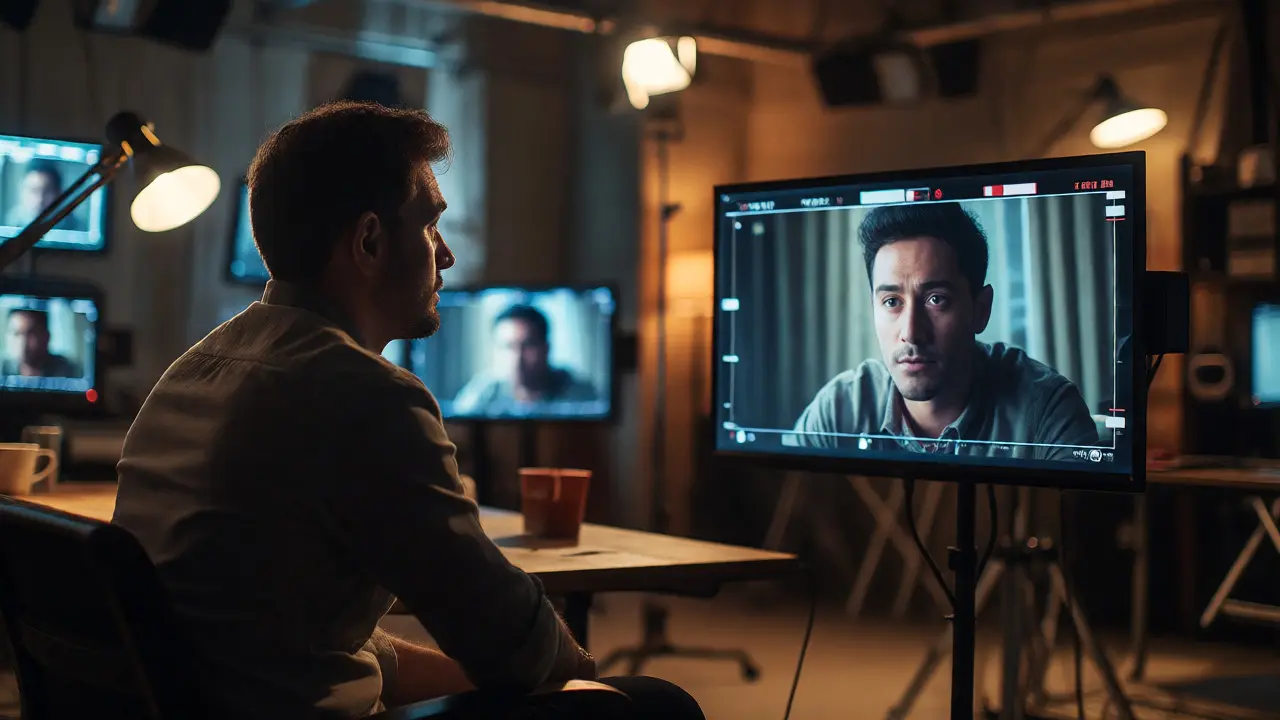
If you are a casting director or producer preparing for a large-scale release, standard auditions won’t cut it. You need a specialized workflow.
- Shoot in 4K Minimum: Always capture tests in at least 4K resolution. Downscaling hides flaws; upscaling reveals them. Use lenses that mimic the focal lengths used in the final production.
- Test on a Projector: Don’t just watch on a computer. Rent time at a local cinema or use a high-quality home projector. View the footage from the back of the room. Does the emotion still land?
- Include Silence: Record moments where the character says nothing. PLF thrives on silence. Watch how the actor exists in the frame without dialogue. Do they fidget? Do they drift? Or do they command attention?
- Check Color Response: Apply a basic LUT (Look Up Table) that matches the film’s color grade. See how the actor’s skin tone reacts to the specific palette. Cool tones might wash someone out; warm tones might enhance them.
This process ensures that when the actor steps onto the set, they are ready for the scrutiny of millions of viewers in premium seats. It saves reshoots, which are incredibly expensive when dealing with large format cameras.
The Future of Presence in Premium Formats
As technology advances, screens get larger and resolutions higher. LED Screens, self-emissive display panels used in venues like Samsung Onyx and LG Mirrored, are entering the market. These offer even higher brightness and perfect blacks. The trend is moving toward hyper-realism. Audiences are becoming accustomed to seeing details previously reserved for nature documentaries.
This puts pressure on casting to find actors who possess natural authenticity. Heavy prosthetics or excessive cosmetic work may become liabilities rather than assets. The future belongs to performers who can convey deep emotion with minimal movement, trusting the technology to amplify their presence. For filmmakers, understanding the nuances of PLF isn’t optional-it’s essential for commercial success. The next blockbuster star might not be the most famous name, but the one whose face holds up best when projected thirty feet high.
Why do actors look different in IMAX compared to standard theaters?
Actors look different because IMAX uses a taller aspect ratio (often 1.90:1 or 1.43:1) which enlarges the face significantly within the frame. Additionally, the higher resolution and brightness reveal micro-expressions and skin textures that are hidden in standard definition or lower-resolution digital projections. Subtle acting choices become amplified, requiring greater restraint.
Does Dolby Cinema require different acting techniques than IMAX?
Yes, slightly. Dolby Cinema focuses heavily on contrast and color depth via HDR, meaning lighting and makeup continuity are critical. Actors must maintain consistent skin tones and expression clarity under high-contrast lighting. IMAX focuses more on scale and immersion, where broader physical presence and eye-line precision relative to the tall screen are prioritized.
How does sound affect casting decisions for PLF films?
Systems like Dolby Atmos allow for precise spatial audio. Casting directors consider vocal timbre and clarity because whispered or nuanced dialogue carries significant weight in these environments. An actor with a raspy or unclear voice might struggle in a mix designed for pinpoint audio accuracy, whereas clear, resonant voices benefit from the immersive soundscape.
What is the main risk of casting for large format screens?
The main risk is "overacting." Performances that rely on large gestures or exaggerated expressions can appear comical or forced when enlarged on a 60-foot screen. PLF demands internalized, subtle performances that translate through the eyes and micro-movements, which can be difficult for stage-trained actors to adapt to quickly.
Are screen tests for PLF different from regular auditions?
Yes. Regular auditions are often viewed on laptops or tablets. PLF screen tests are reviewed on calibrated monitors or actual projectors to assess how the actor's face fills the frame. Tests often include longer takes without dialogue to evaluate presence and stability under high-definition scrutiny.


Comments(1)