You’ve seen the magic. The actor bursts into song, the camera pushes in, and the emotion hits you square in the chest. But behind that seamless moment is a logistical tightrope walk that would make a circus performer sweat. On-set playback for musicals isn’t just about pressing play on a speaker; it’s a complex dance of timing, technology, and trust between actors, directors, and sound engineers. If you’re an aspiring director, a curious film student, or just someone who wonders how on-set playback actually works without ruining the vibe, this guide breaks down the real-world logistics.
The Core Challenge: Why Not Just Sing Live?
Let’s address the elephant in the room. Why do most big-budget musicals like La La Land or Mamma Mia! use pre-recorded tracks instead of capturing the performance live? It comes down to control and quality. Film sets are noisy. Wind machines, generators, camera motors, and crew footsteps create a sonic chaos that makes clean audio recording nearly impossible. Plus, singing live requires a level of vocal perfection that is hard to maintain take after take. If an actor nails the emotional beat but cracks a note, you might have to reshoot the entire scene.
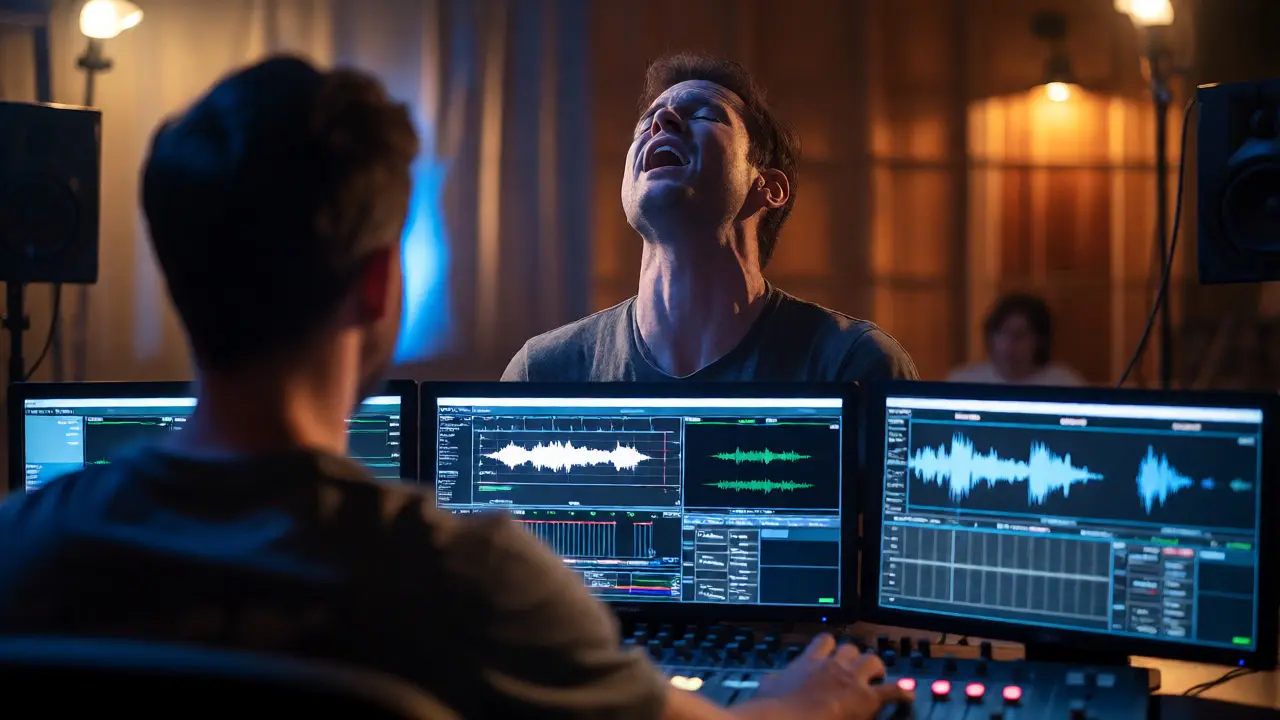
Pre-recording solves this. Actors record their vocals in a controlled studio environment weeks before shooting begins. This track becomes the backbone of the scene. On set, they sing along to this track, known as "playback." The goal isn’t to fake it; it’s to capture the physical performance while syncing perfectly with the polished audio. But here’s the catch: if the playback doesn’t match the actor’s breath and rhythm, the illusion shatters instantly.
The Pre-Production Prep: Building the Audio Foundation
The work starts long before the first clapperboard snaps. In the months leading up to shooting, music supervisors and directors hold intensive sessions called "song prep." Here, actors learn their songs not just by heart, but by muscle memory. They need to know exactly where the breath marks are, where the orchestral swells hit, and where the tempo shifts. This isn’t casual karaoke; it’s athletic training for the diaphragm.
Once the tracks are locked, the technical team creates specific playback files. These aren’t just MP3s. Engineers produce multiple versions of each track:
- The Full Mix: Includes vocals, instruments, and effects. Used for rehearsal and sometimes for wide shots where ambient sound matters.
- The Vocal-Only Track: Strips away the music so actors can hear themselves clearly against the wind or set noise.
- The Click Track: A metronome-like pulse used if the scene requires precise synchronization with visual effects or choreography.
This preparation phase is critical because it dictates how the scene will be shot. If a song has a sudden tempo change, the camera operator needs to know when to whip pan. If there’s a silent pause for dramatic effect, the lighting cue must align perfectly. Everything hinges on the accuracy of these pre-production decisions.
On-Set Execution: The Mechanics of Playback
So, you’re on set. The lights are hot, the cameras are rolling, and the actor is ready. How does the playback actually happen? It’s rarely as simple as blasting speakers at full volume. That would ruin the atmosphere for other departments and bleed into microphones meant for dialogue scenes happening nearby.
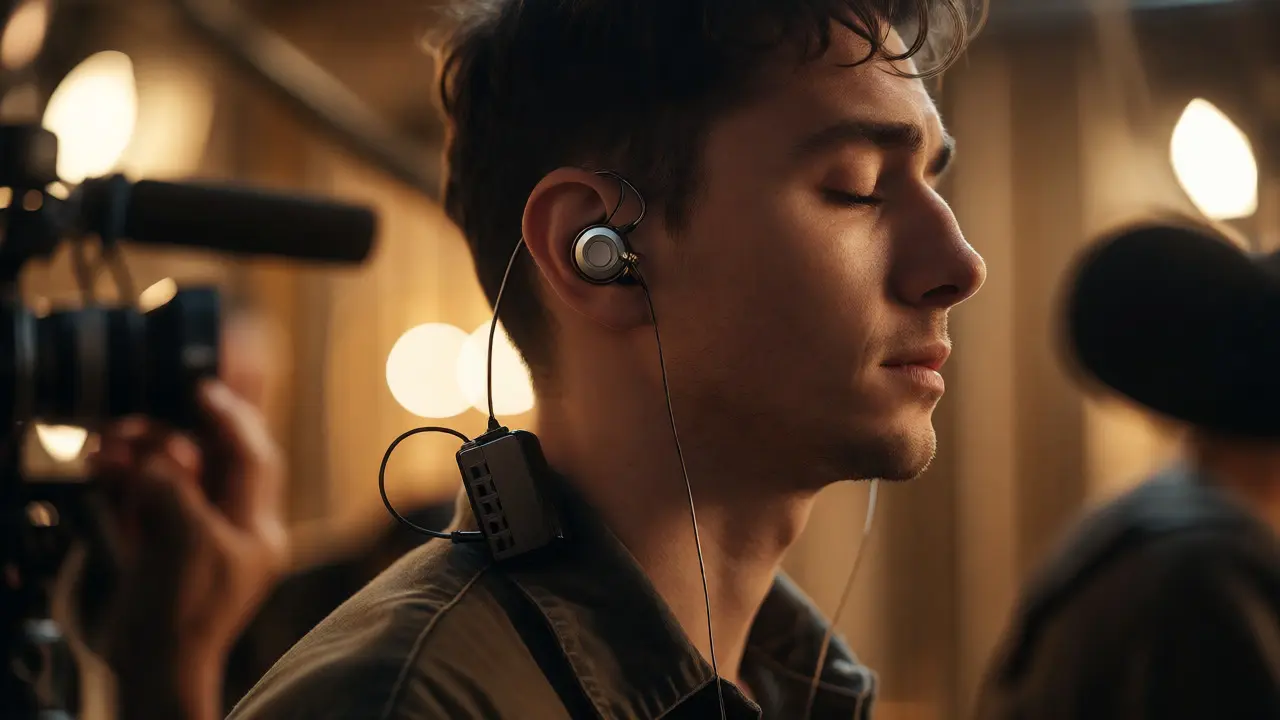
Most modern productions use a system called in-ear monitors (IEMs). The actor wears a discreet earpiece connected to a wireless transmitter. The playback engineer, often sitting off-camera with a mixing console, cues the track. The actor hears only what they need-usually the instrumental track and a faint guide vocal-while the rest of the set remains relatively quiet. This allows for intimate performances where the actor can focus entirely on the emotion rather than fighting external noise.
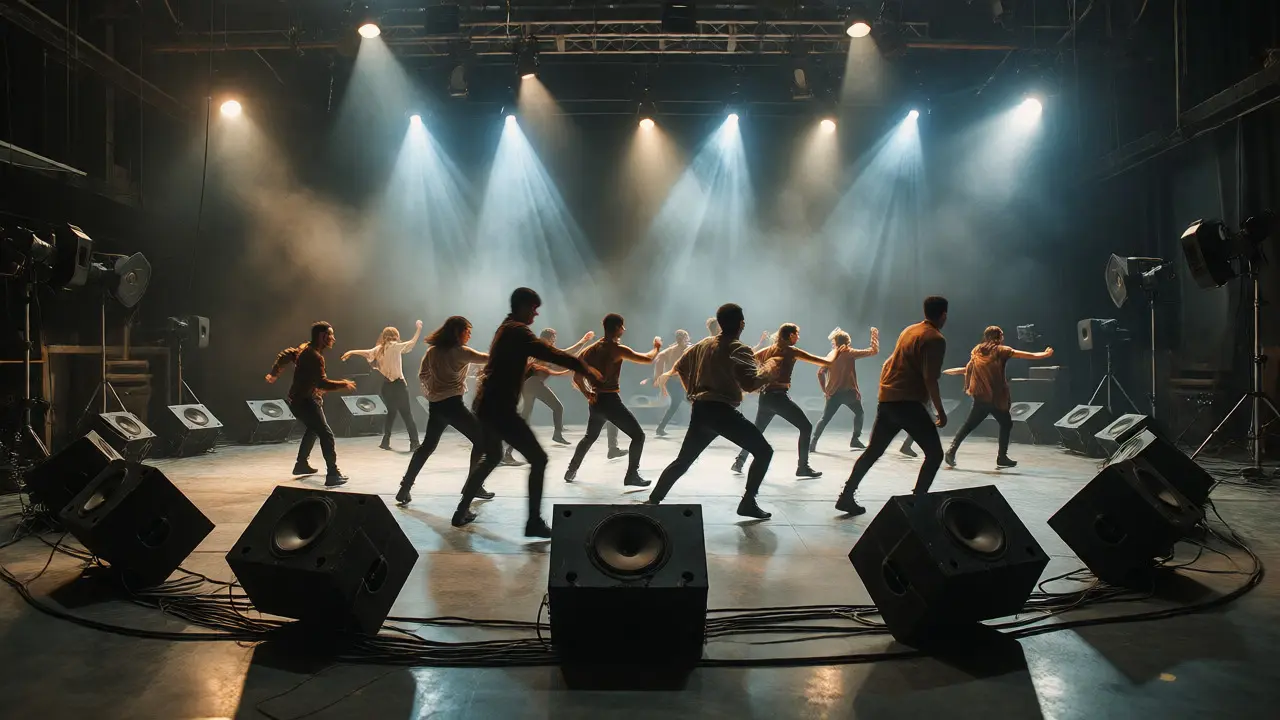
For larger ensemble numbers, however, IEMs might not cut it. Dancers need to feel the bass in their bodies to stay in sync. In these cases, directional speakers or subwoofers placed strategically around the set provide the necessary physical feedback. The key is balance: enough sound to keep the performers locked in, but not so much that it distracts the director or contaminates the ambient audio recorded for post-production.
| Method | Best For | Pros | Cons |
|---|---|---|---|
| In-Ear Monitors (IEMs) | Intimate solos, dialogue-heavy musicals | Isolated audio, no bleed, high fidelity | Actors may feel disconnected from the room |
| Directional Speakers | Dance numbers, large ensembles | Physical vibration aids rhythm | Risk of audio bleed into mics |
| Live Band (On Set) | Period pieces, raw authenticity | Natural interaction, flexible tempo | Expensive, difficult to mix, noisy |
Sync Sound vs. Post-Production Fixes
A common misconception is that editors fix everything in post. While modern software like Pro Tools or Nuendo is powerful, fixing lip-sync issues frame-by-frame is expensive and time-consuming. It also risks losing the natural micro-expressions that occur when an actor breathes in time with the music. Therefore, the priority on set is always to get the sync right in-camera.
Sound mixers use timecode to ensure absolute precision. Every piece of equipment-the camera, the playback device, the audio recorder-is locked to the same master clock. If the playback drifts even by a few milliseconds, the editor will see a mismatch between the mouth movement and the audio waveform. To mitigate this, directors often shoot multiple takes with slight variations in timing, giving the editor options. But relying on fixes is a last resort. The best musical films are those where the performance feels effortless because the logistics were invisible.
Common Pitfalls and How to Avoid Them
Even seasoned crews stumble. One frequent issue is "tempo creep." An actor, nervous on the day, starts rushing the lyrics. The playback engineer tries to follow, but the backing track is fixed. The result? The actor sounds ahead of the band. To avoid this, conductors or playback operators often use "rubber-band" technology, which slightly stretches or compresses the audio track in real-time to match the actor’s pace, though this requires extreme skill to remain undetectable.
Another pitfall is emotional disconnect. Hearing a pre-recorded voice in your ear can feel sterile. Some actors struggle to emote when they aren’t producing the sound themselves. Directors counter this by encouraging actors to sing loudly-even if it’s not being recorded-to generate genuine physical strain and facial tension. You can’t fake the look of hitting a high C; your neck muscles have to work. So, let them belt it out, even if the mic picks up mostly wind.
Real-World Examples: Learning from the Masters
Look at Les Misérables (2012). Director Tom Hooper chose to record live vocals on set, a controversial move that highlighted the fragility of the performances. It worked for some, but exposed the limitations of live capture in a noisy environment. Contrast this with The Greatest Showman, which relied heavily on polished playback. The result was a slick, energetic spectacle where the visuals matched the pristine audio perfectly.
Then there’s Bohemian Rhapsody. The recreation of Live Aid required massive crowd simulation. Playback wasn’t just for Freddie Mercury; it was for thousands of extras. The logistics involved coordinating hundreds of people moving in sync to a single audio feed, managed through a network of distributed speakers. This scale shows that playback isn’t just about one singer; it’s about orchestrating a human machine.
Key Takeaways for Your Next Production
If you’re planning a musical sequence, remember these rules of thumb:
- Invest in Pre-Production: Spend money on studio recording and coaching early. It saves hours on set.
- Test Your Tech: Do a full dress rehearsal with playback gear. Check for latency in IEMs and speaker coverage.
- Respect the Actor’s Process: Ask them what they need to hear. Some want the full mix; others need just the piano.
- Plan for Silence: Decide what ambient sound you want to keep. Sometimes, hearing the rustle of a costume adds more realism than a perfect studio track.
Do actors really sing live in movies?
It depends on the production style. Most big-budget musicals use pre-recorded tracks for consistency and audio quality. However, some directors, like Tom Hooper in Les Misérables, prefer live recording to capture raw emotion. Hybrid approaches are also common, where key lines are live and the rest is playback.
How do actors hear the music on set?
They typically use in-ear monitors (IEMs) that deliver a private audio mix directly to their ears. For large group scenes, directional speakers or subwoofers may be used so dancers can feel the rhythm physically. The goal is to provide clear guidance without disturbing the rest of the set.
What happens if an actor misses their cue?
If the miss is minor, the playback engineer might adjust the track slightly in real-time using rubber-band processing. If it’s significant, the director will call "cut" and reset. Repeated misses often indicate a need for better rehearsal or clearer monitoring for the actor.
Why not just dub the voices later?
Dubbing can break the connection between physical effort and vocal output. When an actor sings live or to playback, their body language matches the exertion of the song. Dubbing often results in a disconnect where the face looks calm but the voice sounds strained, breaking immersion.
Is playback cheaper than live recording?
Not necessarily. Pre-recording involves studio time, musicians, and engineers. However, it reduces reshoot days caused by bad audio, which can save money in the long run. Live recording requires highly skilled boom operators and sound mixers on set, which is also costly.




Comments(5)