
Most documentaries fail to answer a simple question: did the audience actually care? You might get glowing reviews from critics or strong word-of-mouth, but without concrete audience impact data, you’re guessing. In 2026, with streaming platforms dominating and attention spans shrinking, relying on gut feeling is no longer enough. Filmmakers and distributors need hard numbers to prove that their films changed minds, sparked conversations, or drove action.
This isn’t just about vanity metrics like view counts. It’s about understanding the journey from watching a trailer to taking real-world action. Whether you are an independent filmmaker trying to secure grants or a distributor looking to maximize reach, knowing how to measure this impact is your competitive edge. Let’s break down exactly how to capture this data effectively.
Why Traditional Metrics Fall Short
Box office revenue and stream counts tell you *how many* people watched, but not *what happened next*. A high view count doesn’t mean viewers were engaged; it could just mean they clicked out of curiosity and left after two minutes. For documentaries, which often tackle complex social issues, the goal is usually deeper than entertainment-it’s education and mobilization.
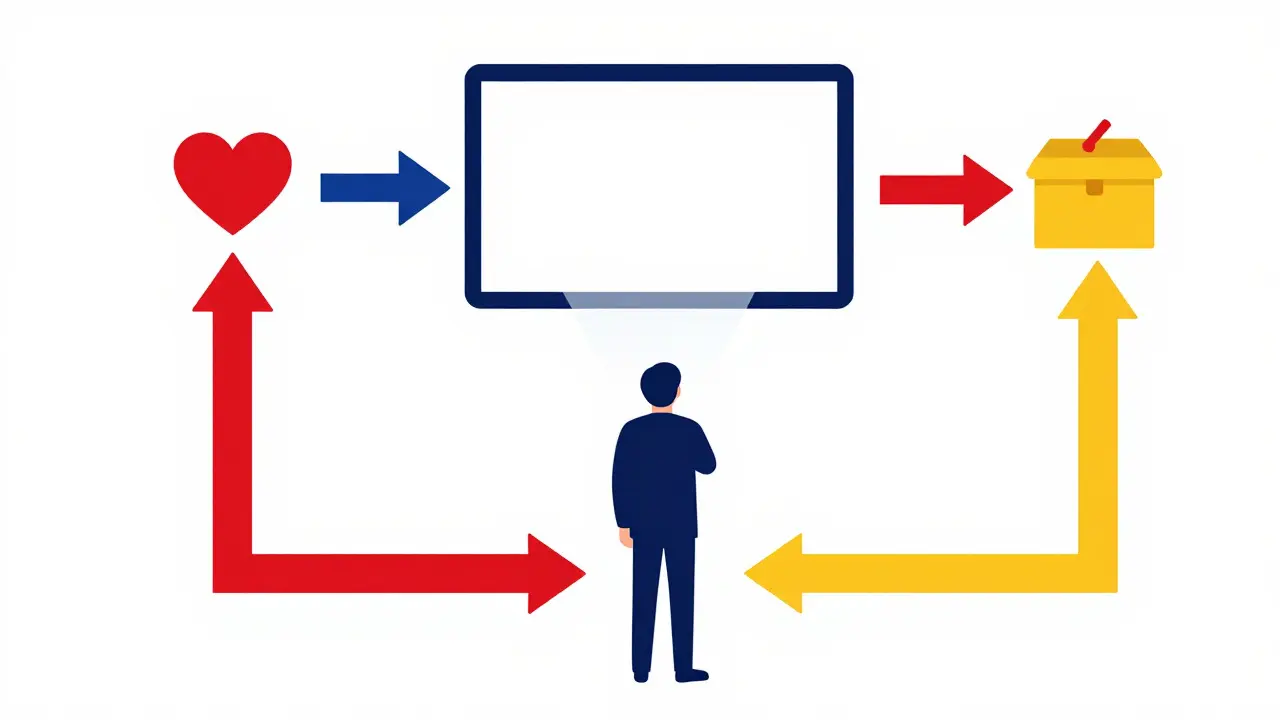
If you want to know if your film worked, you need to look at behavioral changes. Did viewers donate to the cause? Did they share the film with friends? Did they visit the organization’s website? These are the signals that matter. By shifting focus from passive consumption to active participation, you get a clearer picture of your film’s true influence.
Designing Effective Post-Viewing Surveys
The most common tool for measuring impact is the post-viewing survey. But here’s the catch: if your survey is too long or confusing, people won’t finish it. Keep it under five questions and under two minutes to complete. Place the survey immediately after the credits roll, while the emotional connection is still fresh.
Avoid leading questions. Instead of asking "Did you find the film inspiring?", ask "How likely are you to recommend this film to a friend?" This gives you a Net Promoter Score (NPS), a standard metric in business that translates well to cinema. Also, include one open-ended question like "What is one thing you will do differently after watching this film?" This qualitative data often reveals insights that multiple-choice questions miss.
- Timing: Launch surveys within 24 hours of viewing for best response rates.
- Incentives: Offer a small reward, like a free digital copy of the film or a merchandise discount, to boost completion rates.
- Simplicity: Use mobile-friendly formats since over 70% of viewers watch on phones or tablets.
Leveraging Digital Analytics for Real-Time Insights
Surveys are great, but they rely on self-reporting. Digital analytics give you objective behavior data. If your film is hosted on a platform like Vimeo, YouTube, or a dedicated microsite, you can track specific user actions. Look beyond total views. Focus on completion rate. If only 40% of viewers watch the entire film, you have a retention problem that needs addressing, perhaps through better pacing or shorter runtime.
Also, track click-through rates (CTR) on call-to-action buttons. If your film ends with a link to a donation page, what percentage of viewers actually clicked it? A low CTR suggests the call to action was unclear or poorly timed. Tools like Google Analytics allow you to set up custom events for these clicks, giving you a direct line to viewer intent.
| Method | Data Type | Strengths | Limitations |
|---|---|---|---|
| Post-Viewing Surveys | Qualitative & Quantitative | Deep insight into feelings and intentions | Low response rates, self-bias |
| Digital Analytics | Behavioral | Objective, real-time, large sample size | Doesn't explain 'why' behind actions |
| Social Media Listening | Public Sentiment | Unfiltered, organic conversation tracking | Noisy data, hard to attribute directly |
Tracking Social Change and Behavioral Outcomes
For issue-based documentaries, the ultimate metric is social change. This is harder to measure but more valuable. Partner with the organizations featured in your film to track specific outcomes. If your film is about climate change, work with the environmental group to see if their newsletter sign-ups spiked during your release window. If it’s about healthcare access, track appointment bookings at local clinics mentioned in the film.
You don’t need to prove causality to show correlation. If your film premiered in a city and donations to the featured charity increased by 30% in the following month, that’s a compelling story for funders and partners. Document these spikes clearly. Create a timeline showing the release date alongside the data points. Visualizing this connection makes your impact tangible.

Common Pitfalls to Avoid
Many filmmakers make mistakes that skew their data. The biggest one is sampling bias. If you only send survey links to your personal email list, you’re measuring the impact on your fans, not the general public. Try to distribute your film and surveys across diverse channels-community centers, schools, online ads-to get a broader dataset.
Another pitfall is ignoring negative feedback. If 20% of viewers say the film was confusing, that’s valuable information. Don’t hide it. Use it to improve future marketing materials or even edit a shorter version for different audiences. Data is only useful if you act on it.
Turning Data into Strategy
Collecting data is pointless if you don’t use it to make decisions. After your initial release, compile all your findings into a single report. Highlight key takeaways: What resonated most? Which demographics were most engaged? Where did viewers drop off? Use this report to guide your next steps. If older audiences responded better, target your next marketing campaign toward them. If a specific segment of the film drove the most shares, consider creating a standalone clip for social media. Your data should inform where you spend your budget, who you pitch to, and how you position your film in the market. Remember, measuring impact is an ongoing process. As your film travels to festivals, streams on new platforms, or gets picked up by educational institutions, keep collecting data. Each new audience brings new insights. Stay curious, stay data-driven, and let the numbers tell you the true story of your film’s reach.
What is the best time to send audience surveys?
Send surveys immediately after the viewer finishes the film, ideally within the first 24 hours. This ensures the experience is fresh in their mind, leading to more accurate responses and higher completion rates.
How many questions should a documentary impact survey have?
Keep it to 5 questions or fewer. Long surveys lead to drop-off. Focus on one core sentiment question, one behavioral intention question, and one open-ended question for qualitative insights.
Can I measure impact for films shown only in theaters?
Yes. Use QR codes on tickets or posters that lead to a short survey. You can also partner with theater chains to collect exit poll data or track ticket sales spikes in specific regions to correlate with marketing efforts.
What tools are best for analyzing documentary viewer data?
Google Analytics is essential for web-based viewership. For surveys, tools like SurveyMonkey or Typeform integrate well with email marketing platforms. For visualizing trends, Excel or Tableau can help create clear reports for stakeholders.
How do I distinguish between correlation and causation in impact data?
It’s difficult to prove direct causation. Instead, look for temporal proximity (did the spike happen right after the release?) and control variables (compare regions where the film was promoted vs. those where it wasn’t). Present data as strong correlations supported by context.