Walk into a movie theater on a Tuesday afternoon and you’ll see empty seats. Walk in at 7 PM on a Friday, and the lobby is packed. This isn't just about convenience; it’s a massive driver of box office performance. For theater owners and distributors, understanding how money flows through different time slots is the difference between a profitable week and a quiet one. The gap between matinee and evening shows isn't just a few percentage points-it can be the deciding factor in whether a film recoups its marketing costs.
The Financial Gap: Why Evenings Dominate
When we look at raw numbers, the evening slot (typically defined as 5:00 PM to midnight) consistently outperforms the matinee slot (11:00 AM to 4:00 PM). In recent years, data from major chains suggests that evening shows generate roughly 60-70% of total weekly ticket sales, despite occupying only half the screening hours. Why? Because leisure time drives consumption. Most adults have work or school commitments during the day. Their discretionary spending power peaks when they are off the clock.
However, the story changes slightly for specific demographics. Matinees capture a distinct audience: retirees, stay-at-home parents, students on break, and tourists. While their volume is lower, their price sensitivity is often higher. This creates a unique dynamic where theaters use matinees not just for revenue, but for filling capacity during otherwise dead hours. If a theater runs a 12 PM show with 10 people and a 7 PM show with 200 people, the 12 PM show might barely cover the concession stand staff cost, but it keeps the auditorium warm and the equipment active.
Pricing Strategies: Dynamic vs. Static
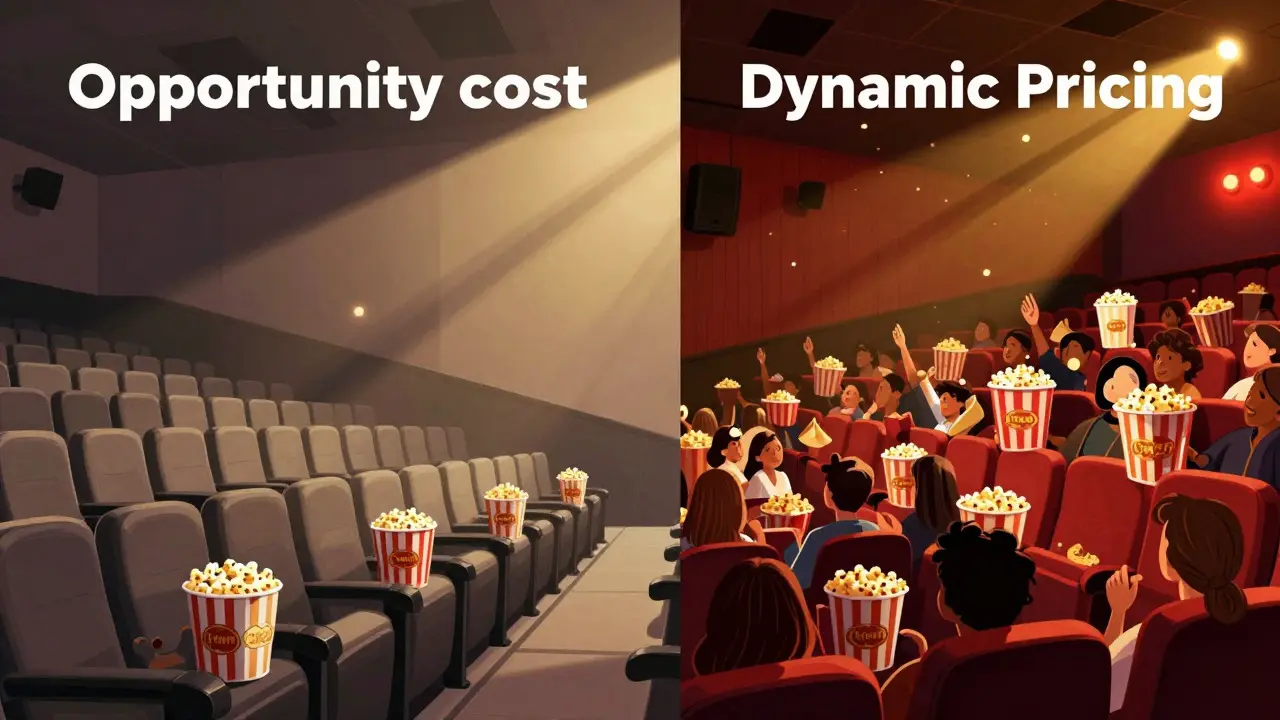
How do theaters monetize these differences? You’ve likely noticed that tickets aren’t always the same price regardless of time. Many modern multiplexes employ dynamic pricing models. A blockbuster opening weekend might charge $18 for a 7 PM show but only $12 for a 1 PM show. This is a direct response to supply and demand. When demand is high (evenings), prices rise. When demand is low (matinees), prices drop to stimulate attendance.
Some chains, however, stick to flat pricing. In this model, the revenue per seat sold is identical, meaning the evening show generates more total revenue simply because more seats are sold. But there’s a hidden cost: opportunity cost. If a theater could sell 50 seats at 2 PM for $10 each ($500) instead of leaving them empty, that’s pure margin. Concession sales, which carry margins of 70-80%, follow the same pattern. A full evening crowd buys popcorn and sodas; an empty matinee row does not.
| Attribute | Matinee (11 AM - 4 PM) | Evening (5 PM - Midnight) |
|---|---|---|
| Average Occupancy Rate | 15-30% | 60-85% |
| Primary Audience | Seniors, Students, Families | Working Adults, Couples |
| Ticket Price Sensitivity | High (Discounts effective) | Low (Willingness to pay premium) |
| Concession Spend per Head | $8 - $12 | $15 - $25 |
| Revenue Contribution | ~30-40% of Total | ~60-70% of Total |
Genre Matters: Not All Films Perform Equally
You might think every movie follows the same pattern, but genre shifts the needle significantly. Family films, such as animated features, often see stronger matinee performance than adult-oriented dramas. Parents want to get kids to bed early, so a 1 PM screening is ideal. Conversely, horror movies and late-night premieres thrive in the evening slots, sometimes even extending past midnight. The "midnight movie" phenomenon for cult classics proves that niche audiences will travel and pay premiums for specific time slots.
Action blockbusters, however, are heavily skewed toward evenings. The target demographic-adults aged 18-34-has limited free time during the day. If a studio releases a massive action franchise, they will schedule multiple evening screenings to maximize throughput. Matinees for these films are often scheduled fewer times per day, acknowledging that the demand curve drops sharply after 4 PM.
The Impact of Streaming and Competition
In 2026, the box office landscape is still evolving post-pandemic. Streaming services offer unlimited access, which erodes the urgency of going to the theater. However, the "event