Quick Takeaways for Production Managers
- A breakdown transforms a creative story into a logistical checklist.
- Identifying "hidden" costs early prevents budget overruns during principal photography.
- Scheduling depends entirely on how you group scenes by location and cast availability.
- Digital tools have replaced the old "highlighter and paper" method for faster updates.
What Exactly Is a Script Breakdown?
In the simplest terms, Script Breakdown is the process of analyzing a screenplay to identify every single element required for production. It is the bridge between the writer's vision and the producer's bank account. You aren't reading for plot or character arcs here; you're reading for resources.
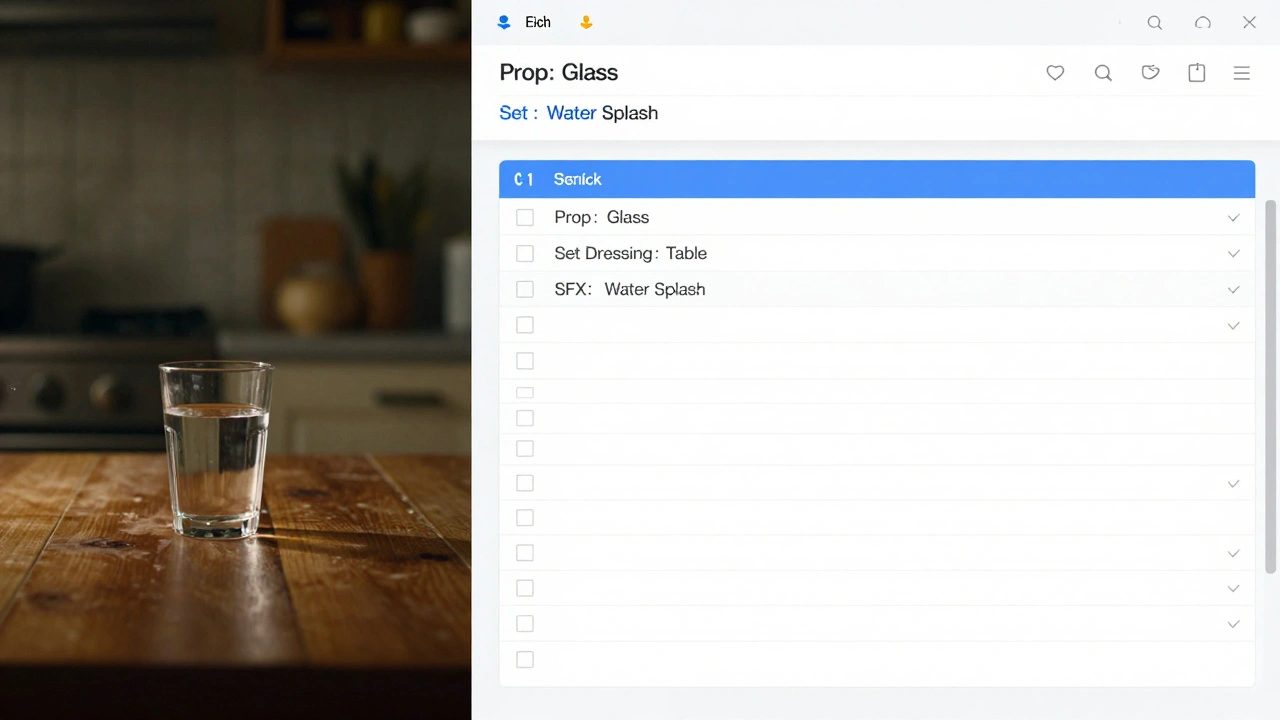
When you perform a breakdown, you treat the script like a shopping list. If the script says "the character slams a glass of water on the table," you don't just see a dramatic moment. You see a prop (the glass), a set dressing (the table), a costume (what the actor is wearing), and a potential special effect (the water splashing). If you miss that glass of water, you might find yourself at a craft services table at 6 AM trying to find a glass that doesn't reflect the camera lights.
The Essential Elements of a Breakdown
To get a script breakdown right, you have to categorize everything. Most professionals use a standard set of categories to ensure nothing slips through the cracks. Let's look at the heavy hitters:
- Cast: Who needs to be on set? This includes main actors, supporting roles, and Extras non-speaking background performers who fill out a scene.
- Locations: Where is this happening? You need to distinguish between a "Living Room" and a "Living Room - Night" because the lighting requirements change the time it takes to set up.
- Props: Any object a character handles. If they pick it up, it's a prop. If it just sits there, it's set dressing.
- Costumes: Not just the clothes, but changes. If a character is in a hospital gown in one scene and a suit in the next, that's a costume change that requires time.
- Special Effects (SFX): Anything from a smoke machine to a fake blood squib.
- Equipment: Does this scene require a Steadicam a camera stabilization system that allows for smooth, floating movement or a drone?
| Element | Definition | Example | Budget Impact |
|---|---|---|---|
| Set Dressing | Static items in the background | A bookshelf, a lamp | Low to Medium |
| Prop | Items touched by actors | A handgun, a letter | Medium (requires tracking) |
| SFX | Controlled physical effects | Rain machine, sparks | High (requires specialists) |
Turning the Breakdown into a Budget
Now that you have your list, you can actually start talking about money. A common mistake beginners make is guessing a total budget number and trying to fit the movie into it. Pros do the opposite: they build the budget from the breakdown.
For every item identified in the breakdown, you assign a cost. If you have twelve scenes in a "Luxury Hotel," you don't just pay one rental fee. You have to calculate the daily rate, the insurance, and the cleaning fees. This is where Line Producing the role of managing the budget and daily operations of a film shoot comes into play. The line producer takes the breakdown and converts every "Prop: Antique Clock" into a dollar amount based on rental quotes or purchase prices.
Don't forget the "invisible' costs. If your breakdown shows a scene in a crowded subway, you aren't just paying for the actors. You're paying for permits, security to keep real commuters away, and likely a higher insurance premium. By identifying the "Subway" entity in your breakdown, you trigger a chain of related costs that would be impossible to guess otherwise.
From Analysis to the Production Schedule
Once the budget is locked, you move to the Production Schedule a detailed calendar showing when and where every scene will be filmed. You don't film a movie in the order it's written. That would be a logistical nightmare. Instead, you use the breakdown to group scenes.
The goal is efficiency. If you have five different scenes that take place in the same kitchen, you film them all on the same day, regardless of whether they happen in the first or last act of the story. This is called "blocking by location." If you don't do this, you're wasting hours moving equipment and resetting the room over and over.
You also have to consider "actor blocks." If your lead actor is only available for ten days, you look at your breakdown and prioritize every scene they are in. If a scene requires a massive amount of lighting setup (like a nighttime exterior with a city skyline), you schedule it for a day when the crew is fresh, not at the end of a grueling 14-hour day.
Common Pitfalls to Avoid
Even seasoned producers miss things. One of the biggest traps is ignoring "the transition." If a character walks from a car into a building, you have two locations: the car and the building entrance. If you only break down the building, you'll arrive on set and realize you have no place to park the car or no lighting for the exterior shot.
Another mistake is underestimating the time it takes to reset a scene. If a scene involves a character knocking over a vase of flowers, you need to account for the time it takes to clean up the water and replace the vase for the second take. A breakdown should note "Reset Time" for any scene involving destruction or messy elements.
Finally, beware of the "simple" scene. A scene where two people talk in a coffee shop sounds easy. But if the breakdown reveals they are talking during a rush hour in a busy city, you suddenly need crowd control, a location permit for a public space, and a way to deal with ambient noise that might ruin your audio. The breakdown is what warns you that a "simple" scene is actually a production headache.
Modern Tools for the Job
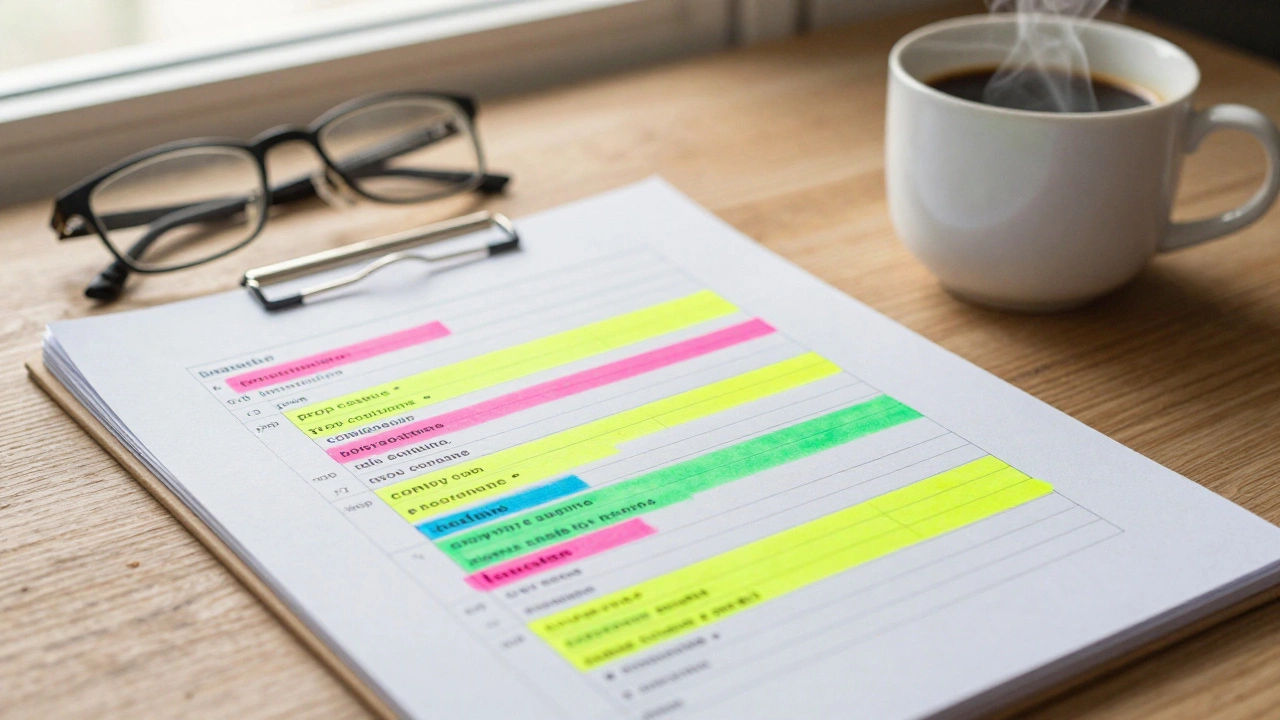
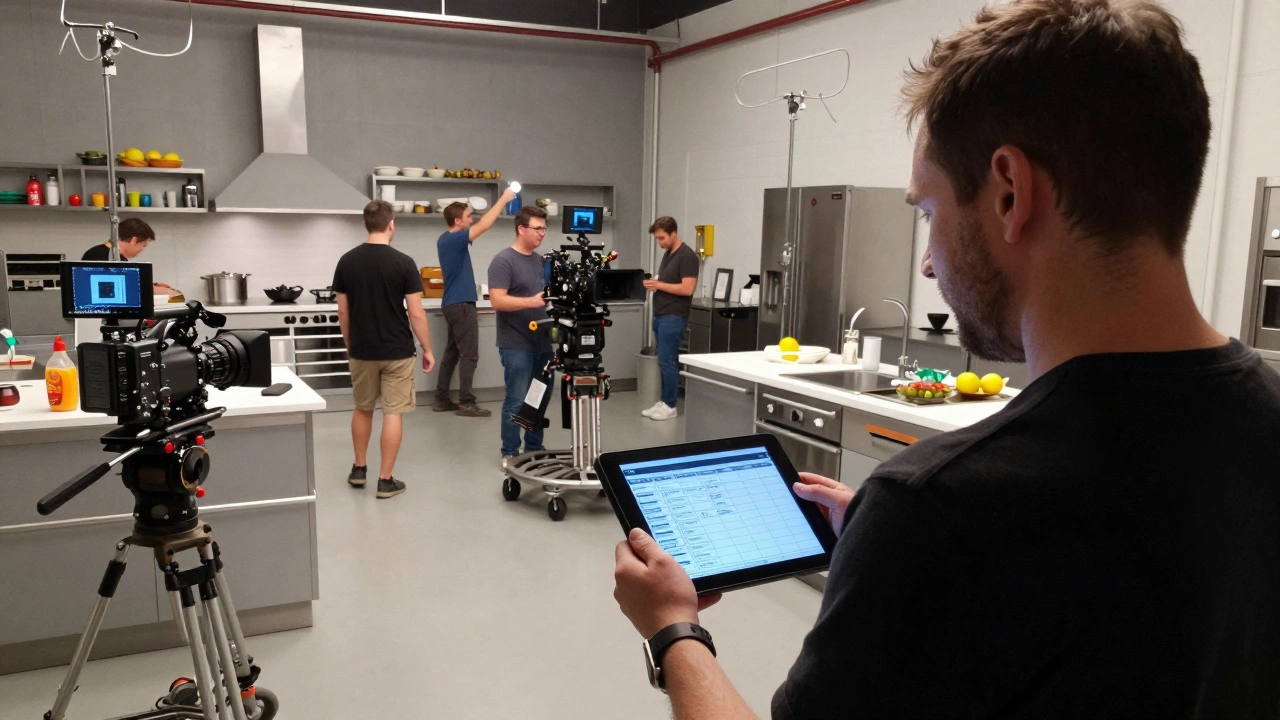
While some old-school filmmakers still use colored highlighters on paper scripts, most have moved to digital software. Tools like Movie Magic Scheduling industry-standard software for creating film production schedules and strip boards allow you to tag elements and automatically generate a budget or a schedule.
The advantage of digital breakdowns is the ability to update in real-time. If the director decides to change a location from a "House" to a "Tent," you change one tag, and the software automatically updates every single scene associated with that location. It also allows the 1st Assistant Director (1st AD) to share the breakdown with the wardrobe and prop departments instantly, so they can start sourcing items while the producer is still tweaking the budget.
Do I need a separate breakdown for every version of the script?
Yes. Even a small change in a scene-like changing a character's prop from a phone to a tablet-can affect the budget and the technical requirements. Always perform a "revision breakdown" whenever a new draft of the script is issued to ensure the production team isn't working off outdated information.
What is the difference between a script breakdown and a shooting script?
A shooting script is a version of the screenplay where scenes are numbered and technical notes are added. The script breakdown is the *analysis* of that script. The shooting script is the map, and the breakdown is the inventory of everything you need to carry while following that map.
How long does a thorough script breakdown usually take?
It depends on the complexity. A 90-page indie script might take a few days, while a big-budget action film can take weeks. The goal isn't speed; it's accuracy. Spending an extra day on the breakdown can save you thousands of dollars in overtime and rental fees during the actual shoot.
Can I do a script breakdown if I'm the only person on my crew?
Absolutely. In fact, it's even more important for solo filmmakers. Since you're playing the role of producer, director, and AD, the breakdown acts as your external memory. It ensures you don't forget to bring a crucial prop or book a location, since there's no one else to catch your mistakes.
Why is grouping scenes by location so important?
Moving a crew, trucks, and equipment is one of the most expensive and time-consuming parts of filming. By grouping all scenes in one location together, you minimize "company moves." Every time you move the entire production to a new spot, you lose several hours of shooting time to setup and teardown.
Next Steps for Your Production
If you've just finished your first draft, don't jump straight into casting. Start your breakdown now. If you're working with a small team, create a shared spreadsheet where everyone can add their specific needs. The wardrobe lead might notice a costume requirement you missed, and the cinematographer might see a lighting challenge that requires a more expensive piece of gear.
Once your breakdown is complete, use it to create a "strip board"-a visual representation of your shooting days. Try to balance your days so you don't have one 18-hour day followed by a 4-hour day. A steady pace keeps the crew happy and the quality of the work consistent. If you find that a certain location is appearing in too many scenes and blowing your budget, this is the time to negotiate with the writer to combine scenes or change the setting.




Comments(8)