
Imagine spending $150 million on a film. You’ve got the talent, the special effects, and the hype. But before the first ticket sells, you need to know one thing: will it work? That’s where box office predictions come in. They aren’t crystal balls; they are complex data models that studios use to forecast opening weekend performance.
If you get the prediction wrong, the consequences are massive. A bad forecast can lead to overspending on marketing or releasing a film during a crowded period. For executives, these numbers determine whether a movie becomes a franchise starter or a write-off. Understanding how these forecasts are built reveals the hidden machinery behind Hollywood’s biggest bets.
The Foundation: Tracking Services and Early Data
Every prediction starts with raw data. Studios don’t guess; they rely on specialized firms like Nash Information Services (NIS) is a leading box office forecasting agency.
NIS operates by surveying thousands of people daily. They ask specific questions: "Who are you planning to see this weekend?" If someone says, "I’m seeing the new superhero movie," that counts as a tracked intent. This data creates a baseline for demand. It’s not just about who *might* go; it’s about confirmed plans.
Another key player is Comscore, which provides real-time ticket sales data from theaters. While NIS looks at intent, Comscore looks at actual behavior. Combining these two sources gives studios a clearer picture. Intent tells them what people want; sales tell them what people are actually doing.
- NIS Surveys: Capture consumer intent days before release.
- Comscore Data: Track real-time ticket purchases.
- Theater Counts: Estimate potential capacity based on screen availability.
This early data forms the skeleton of the forecast. Without it, studios would be flying blind. The accuracy of these initial surveys often determines the final outcome within a margin of error of 10-15%.
Comparative Analysis: Finding the Right Benchmark
Once studios have early interest data, they look for historical parallels. This process is called comparative analysis. Analysts search for past films with similar characteristics. Did a previous sci-fi thriller starring an A-list actor open similarly?
For example, if a new horror movie has high early buzz, analysts might compare it to A Quiet Place, a horror film that defied expectations with strong word-of-mouth.
They adjust for variables. Was the previous film released in summer or winter? Did it have a wide release or limited rollout? These details matter. A film released in December faces different competition than one released in July. Adjustments account for inflation, population growth, and changing viewing habits.
| Factor | Impact on Forecast | Example Adjustment |
|---|---|---|
| Genre Trends | High | Horror opens stronger in October; comedies struggle in May. |
| Star Power | Medium | A-list actors add 10-20% to opening estimates. |
| Release Window | Critical | Holiday weekends boost family films by up to 30%. |
| Pre-Sales Data | High | Strong pre-sales indicate guaranteed opening day revenue. |
This step transforms abstract interest into concrete numbers. By anchoring current data to historical precedents, studios reduce uncertainty. However, history doesn’t always repeat itself perfectly. Black swan events, like a global pandemic or a sudden cultural shift, can break all models.

The Role of Marketing Spend and Hype
Data alone doesn’t drive tickets. Marketing does. Studios invest heavily in advertising to convert interest into action. The amount spent on marketing directly influences the forecast. A higher budget usually means broader awareness.
Consider the difference between a grassroots campaign and a blockbuster blitz. Indie films might rely on social media buzz and festival screenings. Blockbusters spend millions on TV spots, billboards, and digital ads. This spending lifts the ceiling for potential earnings.
Social media sentiment also plays a huge role. Tools like Brandwatch analyze online conversations. Are people talking positively about the trailer? Is there controversy? Negative buzz can tank a forecast overnight. Positive viral moments can boost it significantly.
Studios monitor "share of voice." This metric measures how much people talk about their film compared to competitors. If a movie dominates social media discussions, analysts increase their opening weekend estimate. Silence is dangerous. No buzz often means no business.
Screen Count and Distribution Strategy
You can have the best hype in the world, but if there aren’t enough screens, your revenue caps out. Screen count is a physical limit on box office potential. Studios negotiate with theater chains for prime locations and showtimes.
A wide release means showing the film in thousands of theaters simultaneously. This maximizes opening weekend impact. A limited release restricts the film to select cities, building prestige slowly. The choice depends on the target audience.
For instance, a documentary might start in five cities and expand based on reviews. A superhero sequel needs every available screen to capture casual viewers. Analysts calculate the maximum possible revenue per screen. Multiply that by the number of screens, and you get the theoretical upper bound.
Distribution partners like AMC Theatres provide detailed scheduling data. This helps studios optimize showtimes. Prime evening slots command higher prices and draw larger crowds. Getting those slots requires leverage and strong forecasts.
Adjusting for Real-Time Variables
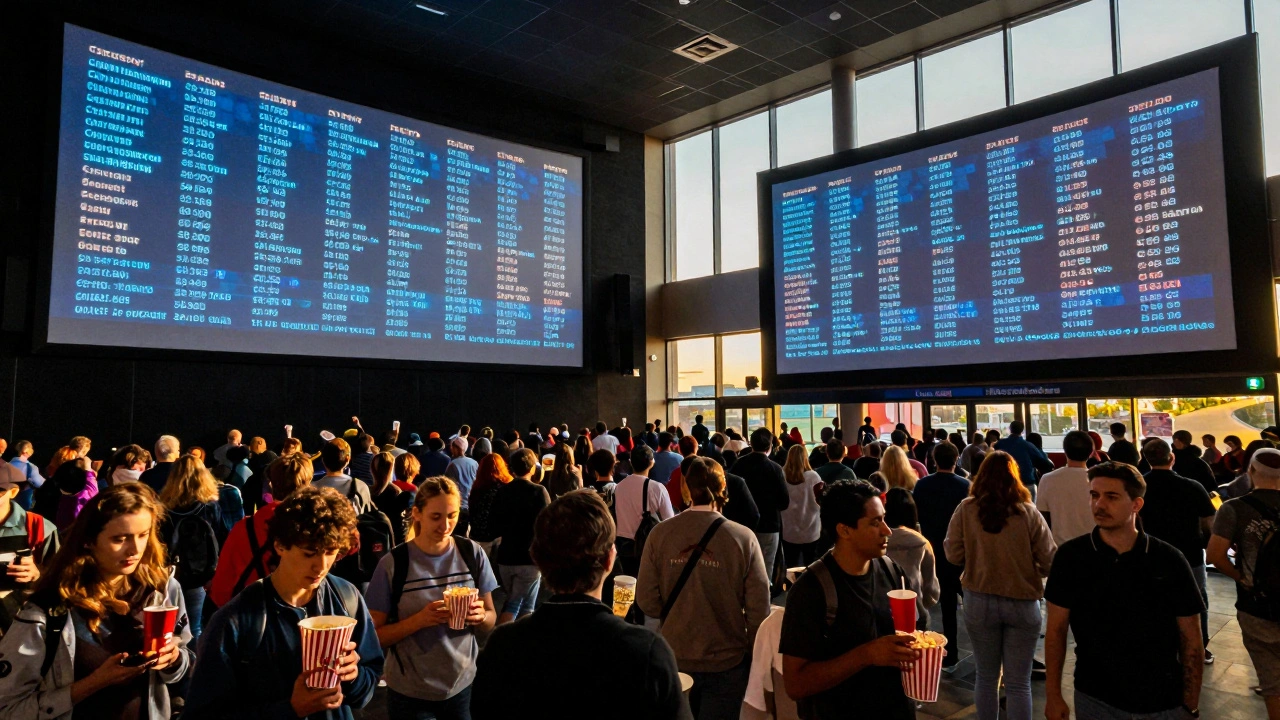
Forecasts aren’t static. They change daily as new information arrives. On Thursday morning, when Friday previews begin, the model updates. Early sales data from midnight screenings or advance ticket purchases provides immediate feedback.
If Friday previews exceed expectations, the weekend forecast rises. If they fall short, it drops. This agility allows studios to adjust marketing tactics mid-campaign. They might pull back on expensive TV ads or double down on social media influencers.
Weather also impacts attendance. Heavy rain or snow can keep people home. Analysts factor in local weather conditions for major markets. A sunny weekend in Los Angeles boosts turnout; a stormy one in New York suppresses it.
Competitor releases matter too. If another big film launches the same weekend, audiences split. Studios try to avoid direct clashes. When clashes happen, the forecast accounts for cannibalization. Each film gets a smaller slice of the pie.
Why Accuracy Matters Beyond the Opening
The opening weekend sets the tone for the entire run. A strong start generates positive press, more screen time, and longer legs. A weak start leads to rapid decline. Theaters drop underperforming films quickly.
Accurate predictions help studios manage cash flow. They know how much revenue to expect upfront. This affects production budgets for sequels and licensing deals. Merchandising, streaming rights, and international sales all depend on domestic performance.
Furthermore, investor confidence hinges on these numbers. Private equity firms and hedge funds bet on film outcomes. Reliable forecasts protect their investments. Misleading data can lead to financial losses and damaged reputations.
In essence, box office prediction is risk management. It turns artistic ventures into calculable assets. While art remains subjective, the business side demands precision.
How accurate are box office predictions?
Predictions are generally accurate within a 10-15% margin of error. Major factors like genre trends, star power, and marketing spend improve reliability. However, unexpected events like poor reviews or competitor surprises can cause deviations.
What is NIS and why do studios use it?
NIS stands for Nash Information Services. It is a leading forecasting agency that surveys consumers to gauge movie-going intent. Studios use NIS data because it provides early, actionable insights before tickets even sell.
Can social media change a box office forecast?
Yes, significantly. Viral moments or negative controversies can shift public opinion rapidly. Analysts monitor social sentiment to adjust forecasts upward or downward based on real-time buzz levels.
Why does the opening weekend matter so much?
The opening weekend determines initial momentum. Strong openings attract more screens and positive press, extending the film's life. Weak openings lead to quick declines as theaters replace titles with newer releases.
How does screen count affect total revenue?
Screen count sets the physical limit on how many people can watch a film. More screens mean higher potential revenue. Studios negotiate for prime showtimes to maximize earnings per screen during peak hours.