How Cinema Evolved: The Complete History of Film Projection Technology

Joel Chanca - 17 Aug, 2026

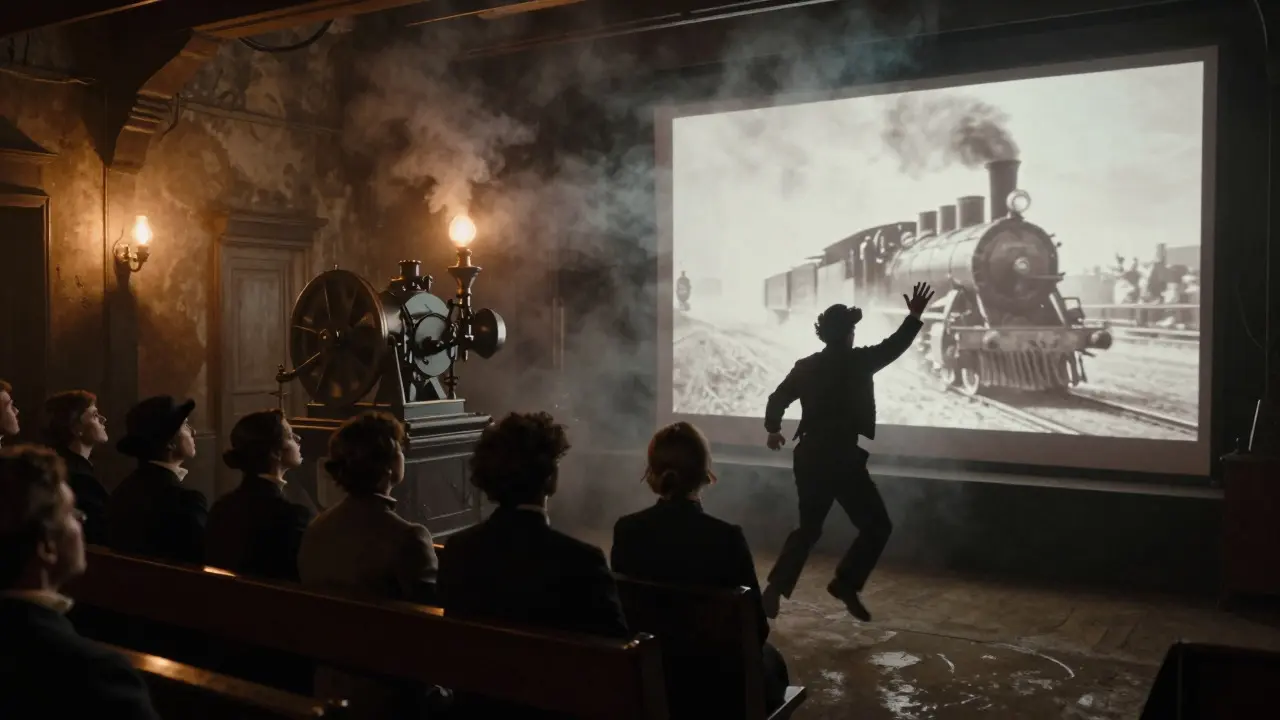
Imagine sitting in a dark room in 1895. The air smells like coal smoke and hot metal. Suddenly, a flickering image of a train rushes toward you. You jump out of your seat. That moment wasn't just entertainment; it was the birth of Cinema is a medium that captures moving images through optical projection, evolving from mechanical devices to digital networks over 130 years. It started with simple lenses and ended up reshaping how we perceive reality. Today, most screens are flat panels or laser projectors, but the journey from those early mechanical tricks to high-definition digital streams is one of the most fascinating stories in technology. This isn't just about movies getting better; it's about how we learned to tell stories using light itself.
Comments(7)

Scott Kurtz

Scott Kurtz

August 18, 2026 at 23:51

look at the date in that post and tell me you aren't just making stuff up because the lumiere brothers didn't even have a proper projector until later so calling 1895 the birth is technically wrong if you actually read the patents which are public record by the way and everyone here is too lazy to check them out before typing their little opinions into the void of the internet where no one cares about your historical inaccuracies anyway

Benjamin Spurlock

Benjamin Spurlock

August 19, 2026 at 08:56

👀 interesting take on the early tech.

Muller II Thomas

Muller II Thomas

August 20, 2026 at 04:43

its not like we need all this hype about old projectors its just a tool for showing off rich people's money the real art was lost when they started selling tickets to the masses who dont understand the true aesthetic value of silent frames anyway most people here cant even spell cinematography correctly so why bother reading this long winded nonsense about light and lenses its all just smoke and mirrors for the uninitiated who think they know better than the actual critics of our time

Chris Martin

Chris Martin

August 21, 2026 at 22:10

One must acknowledge the profound shift from mechanical projection to digital networks, as it fundamentally altered the democratization of visual storytelling. The transition was not merely technical but cultural, allowing for a broader spectrum of voices to be heard on the silver screen. It is essential to recognize that each technological leap carried with it new ethical considerations regarding content distribution and audience engagement. We should therefore view this history not as a linear progression of superiority, but as a complex tapestry of innovation and adaptation. The persistence of analog formats in certain niche communities further illustrates the enduring appeal of tactile media experiences. Consequently, the narrative of cinema’s evolution remains unfinished, continuing to unfold in ways we can scarcely predict today.

Vishwajeet Kumar

Vishwajeet Kumar

August 23, 2026 at 03:52

they are hiding the fact that the film grain was actually a signal from aliens or something nobody talks about that part the whole thing is a coverup to keep us from seeing the real truth behind the moving pictures i bet the government controls every single frame shown in theaters to manipulate our brains while we sit there eating popcorn and not thinking about how deep the rabbit hole goes trust no one especially not the big studios who own half the world now

Peter Sehn

Peter Sehn

August 24, 2026 at 10:31

THIS IS AMERICAN GENIUS AT WORK! THE LUMIERE BROTHERS WERE FRENCH BUT IT WAS AMERICAN INVENTORS WHO MADE IT BIG AND BEAUTIFUL! WE TOOK A SIMPLE IDEA AND TURNED IT INTO A GLOBAL EMPIRE OF ENTERTAINMENT! NO OTHER COUNTRY COULD HAVE DONE THIS WITH SUCH VIGOR AND PRIDE! LET US CELEBRATE OUR OWN HISTORY RATHER THAN LOOKING AT FOREIGN ORIGINS!

Clifton Makate

Clifton Makate

August 25, 2026 at 21:08

It is truly inspiring to see how far we have come from those early flickering images to the immersive digital experiences of today. This journey reminds us that innovation is not just about technology, but about the human desire to connect through shared stories. As we look forward, let us embrace these advancements with open minds and hearts, knowing that each step forward builds upon the foundation laid by pioneers before us. The evolution of cinema is a testament to our collective creativity and resilience in the face of change. Let us continue to support the arts and the technologies that bring them to life, ensuring that future generations can enjoy the magic of the moving image. Together, we can shape a brighter and more connected future for all.

Write a comment