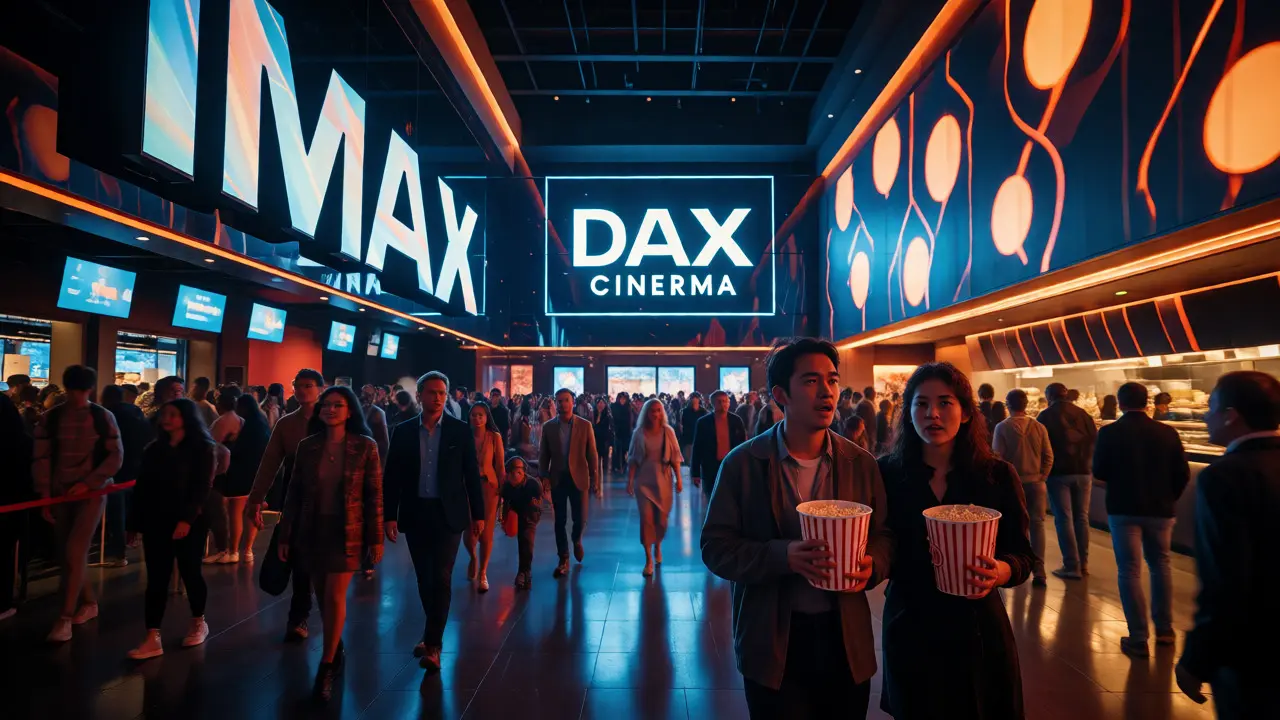
You might remember the headlines from a few years ago claiming cinemas were dead. Fast forward to late 2026, and that narrative feels laughably outdated. The global box office is not just surviving; it’s evolving into something more selective and strategic than we’ve seen in decades. If you’re wondering where the money is going in 2025 and 2026, the answer isn’t simple volume-it’s about event-driven consumption.
The post-pandemic hangover has largely cleared, but the habits formed during those quiet theater years stuck around. Audiences are no longer showing up every weekend out of habit. They show up for spectacles. This shift defines the current cinema landscape. We aren’t looking at a return to the 2019 baseline across the board. Instead, we’re seeing a bifurcated market where mega-blockbusters thrive while mid-budget films struggle to find theatrical legs.
The Event-Driven Economy of Moviegoing
Think about your last three trips to the movies. Were they casual? Probably not. You likely went for a specific reason-a sequel you’ve waited two years for, or a visual spectacle that demands an IMAX screen. Studios have caught on. The release calendars for 2025 and 2026 are packed with tentpoles designed specifically to force this behavior.
This isn’t just Hollywood thinking. In China, the largest international market outside North America, local productions like The Wandering Earth II set the template for domestic blockbusters that draw massive crowds without needing American IP. By 2026, this model has influenced markets in India, South Korea, and even parts of Europe. Local studios are investing heavily in high-production-value genre films-sci-fi, horror, and action-that compete directly with Western imports on the big screen.
Here’s the reality check: if a movie doesn’t offer a "must-see-in-theaters" experience, it’s bypassing the wide theatrical release entirely. It goes straight to streaming or gets a limited platform rollout. For the average viewer, this means fewer choices at the multiplex on a random Tuesday, but higher quality when you do go out.
North America vs. International Markets: A Diverging Path
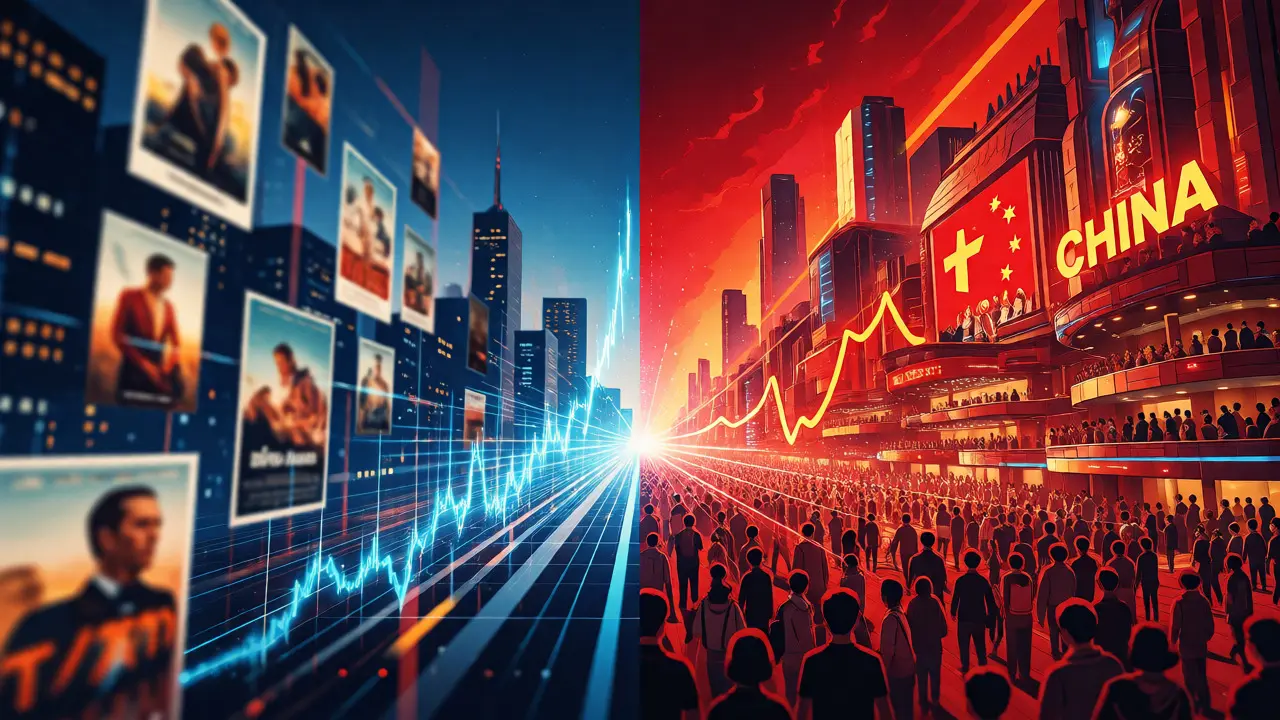
For years, analysts treated the global box office as a single monolith. That’s over. The data from 2025 shows a clear divergence between North American performance and international growth. While the US and Canada remain steady, recovering to about 85-90% of pre-pandemic levels, certain international regions are actually surpassing their 2019 numbers.
| Region | 2024 Status | 2025 Forecast | 2026 Projection | Key Driver |
|---|---|---|---|---|
| North America | 82% | 88% | 92% | Franchise Fatigue Mitigation |
| China | 75% | 95% | 105% | Domestic Sci-Fi/Action Boom |
| EMEA (Europe/Middle East/Africa) | 78% | 85% | 90% | Local Language Hits |
| LATAM | 70% | 80% | 88% | Rising Middle Class Access |
| APAC (Ex-China) | 80% | 90% | 95% | Korean & Japanese Exports |
Notice China’s projected overshoot. Why? Because Hollywood’s dominance there has waned slightly due to geopolitical tensions and stronger local competition. When a Chinese audience member buys a ticket, they are increasingly choosing a locally produced epic over a Marvel sequel. This forces global distributors to rethink their marketing budgets. You can’t just slap a poster on a wall in Shanghai anymore; you need localized cultural resonance.
In Europe, the story is different. The rise of subsidized local production hubs in France and Germany is creating a robust second tier of films. These aren’t trying to beat Avatar, but they are filling theaters consistently. The key here is consistency versus spikes. North America relies on spikes; Europe is building a sustainable base load.
The Streaming Hybrid Model Is Here to Stay
Remember the panic when Disney started putting everything on Disney+? That chaos has settled into a structured hybrid model. By 2026, the window between theatrical release and digital availability has stabilized at roughly 45 days for major releases, though some studios still experiment with shorter windows for mid-tier films.
This isn’t a battle anymore; it’s a funnel. Theaters act as the premium marketing channel. A strong opening weekend drives buzz, which then translates into higher subscription retention for streaming platforms. Data from late 2025 suggests that movies with theatrical runs lasting under four weeks see a 30% drop in long-tail streaming viewership compared to those with six-week runs. The theatrical experience adds perceived value.
Consumers understand this too. There’s a growing segment of "premium home viewers" who wait for the theatrical run to end so they can watch at home with better audio setups, saving $15 per person. But they still follow the hype cycle generated by the box office. The synergy is real. Studios are optimizing for total lifetime value, not just opening weekend gross.
Tech Upgrades: Premium Large Format (PLF) Dominance
If you walk into a modern multiplex today, you’ll notice fewer standard screens and more Premium Large Format (PLF) auditoriums. Dolby Cinema, IMAX, and ScreenX are no longer niche options-they are the default recommendation for blockbuster titles.
Why? Because the average ticket price for a standard seat hasn’t risen enough to cover inflation, but PLF tickets have. Chains are aggressively converting old halls into these premium formats. The logic is simple: people will pay $20-$25 for an experience they can’t replicate at home. They won’t pay $18 for a comedy that looks the same on their living room TV.
- IMAX: Continued expansion in Asia and the Middle East, focusing on non-Hollywood content.
- Dolby Cinema: Winning the audio fidelity war, particularly for horror and thriller genres.
- ScreenX: Struggling slightly due to inconsistent projection quality, but holding ground in specific urban centers.
- 4DX: Niche but profitable for family-oriented animated films.
The investment in these technologies is driving the capital expenditure cycle for chains like AMC and Cineworld. It’s a risky bet, but the data supports it. PLF screens now account for nearly 40% of all box office revenue despite representing only about 15% of total screens. Efficiency matters.
Content Strategy: Franchises vs. Originals
We heard the death knell for original films many times. Yet, 2025 saw several original thrillers break through. A Quiet Place: Day One and similar titles proved that if the concept is high-concept and the marketing is tight, audiences will show up. However, these are exceptions, not the rule.
The core engine remains franchises. But there’s a nuance. Superhero fatigue is real. The MCU’s performance in 2024 and early 2025 was mixed, prompting a recalibration. Studios are pulling back on quantity to focus on quality. We’re seeing fewer, bigger events. Meanwhile, legacy franchises like Star Wars and Fast & Furious are leveraging nostalgia effectively, targeting older demographics who grew up with them.
Animation is the sleeper hit. It’s resilient against fatigue because it appeals to families. Animated films rarely fail at the box office unless the quality is visibly poor. With the success of Illumination and Pixar hybrids, expect animation to hold a larger share of the pie in 2026 than ever before.
What This Means for You
If you’re a moviegoer, your wallet is getting stretched thinner, but your experience is getting richer. You’ll pay more per ticket, but you’ll be less disappointed by what you see. The era of "just checking out whatever is playing" is over. You curate your viewing.
If you’re in the industry, the playbook has changed. Marketing budgets are shifting toward social media virality and experiential pop-ups rather than traditional TV spots. The goal is to create FOMO (Fear Of Missing Out) within the first 48 hours of release. Word-of-mouth travels faster than ever, thanks to TikTok and X (formerly Twitter). A bad opening weekend can kill a movie before Friday night.
The global cinema box office outlook for 2025-2026 isn’t about returning to the past. It’s about embracing a leaner, smarter, and more premium future. The theaters that survive will be the ones that sell an event, not just a seat.
Is the global box office fully recovered from the pandemic?
Not fully in terms of raw attendance numbers compared to 2019, but financially, it is approaching parity due to higher ticket prices and premium format adoption. Revenue per attendee has increased significantly, offsetting lower overall foot traffic in some regions.
Which country is currently the largest movie market?
As of 2025 projections, China is expected to surpass or closely rival North America in annual box office gross, driven largely by strong domestic productions and government support for local cinema infrastructure.
Are superhero movies losing popularity?
They are facing "franchise fatigue," meaning audiences are more selective. They still make money, but they no longer guarantee massive openings automatically. Quality and novelty matter more now than brand recognition alone.
How long is the theatrical window before streaming?
The standard window has stabilized at approximately 45 days for major studio releases. Some smaller films may go to streaming sooner, while exclusive event films might stay in theaters longer to maximize revenue.
Do expensive tickets mean I should stop going to the movies?
Not necessarily. Consider using discount days, loyalty programs, or avoiding peak weekends. Also, prioritize films that benefit from large-screen technology, as watching small-scale dramas at home offers better value.