Remember when you had to trust the newspaper’s film critic to decide if a Saturday night at the cinema was worth your money? Those days are gone. Today, you have a thousand voices screaming at you from every direction. You’ve got professional reviewers with decades of experience, you’ve got aggregate scores on sites like Rotten Tomatoes is a website that aggregates film reviews and provides a "Tomatometer" score based on professional critics' opinions, and you’ve got millions of users posting hot takes on X (formerly Twitter) or TikTok. The landscape has shifted so dramatically that it often feels like we’re not even talking about the same thing anymore.
The role of the film critic hasn’t disappeared, but it has fractured. In an age dominated by audience scores and social media algorithms, the traditional gatekeeper of taste is now just one player in a chaotic ecosystem. This shift raises a critical question for every moviegoer: who should you actually listen to? Is the consensus of the masses more valuable than the nuanced analysis of an expert? Or has the noise become so loud that we’ve lost the ability to discern quality altogether?
The Death of the Gatekeeper and the Rise of the Crowd
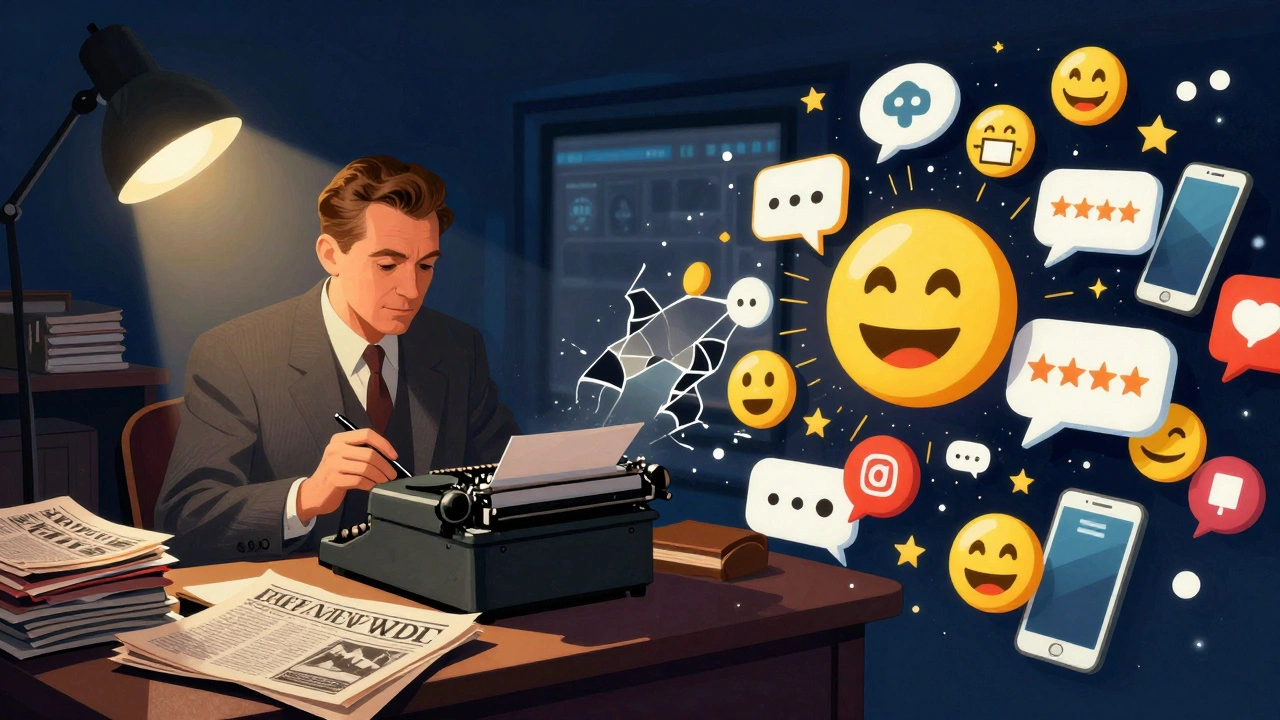
To understand where we are, we have to look at where we came from. For most of the 20th century, film criticism was a top-down model. A few prominent critics wrote for major publications, and their words carried immense weight. If Pauline Kael said a movie was bad, studios took notice, and audiences stayed home. It was a system built on authority and scarcity. There were only so many places to read a review, so those platforms held all the power.
Then came the internet, and then came smartphones. Suddenly, everyone had a platform. The barrier to entry for sharing an opinion dropped to zero. This democratization was supposed to be liberating. It meant that niche films could find their audience without needing mainstream approval. It meant that marginalized voices could critique cinema from perspectives that traditional outlets ignored. And in many ways, it did achieve these goals. However, it also created a paradox of choice. When everyone is a critic, no one is a critic. The signal-to-noise ratio plummeted.
We moved from a world of curated expertise to a world of raw data. Instead of reading a thoughtful essay on why a director’s use of lighting enhanced the narrative, you get a star rating. One star. Two stars. Five stars. Context evaporated. Nuance died. What remained was a binary judgment: good or bad. Love it or hate it. This simplification plays perfectly into the hands of social media algorithms, which thrive on engagement, not enlightenment. Outrage travels faster than appreciation. Therefore, extreme opinions-whether glowing praise or vitriolic hatred-are amplified, while moderate, balanced critiques get buried.
The Illusion of Objectivity in Aggregate Scores
This brings us to the elephant in the room: aggregate scores. Sites like Rotten Tomatoes is a popular review aggregator that displays both a professional critic score (Tomatometer) and an audience score and Metacritic is a website that uses a weighted average of reviews from mainstream critics to generate a single score out of 100 became the new standard for measuring quality. On the surface, this seems logical. Why trust one person when you can trust the wisdom of the crowd? But here lies the trap. These scores give an illusion of objectivity that simply doesn’t exist.
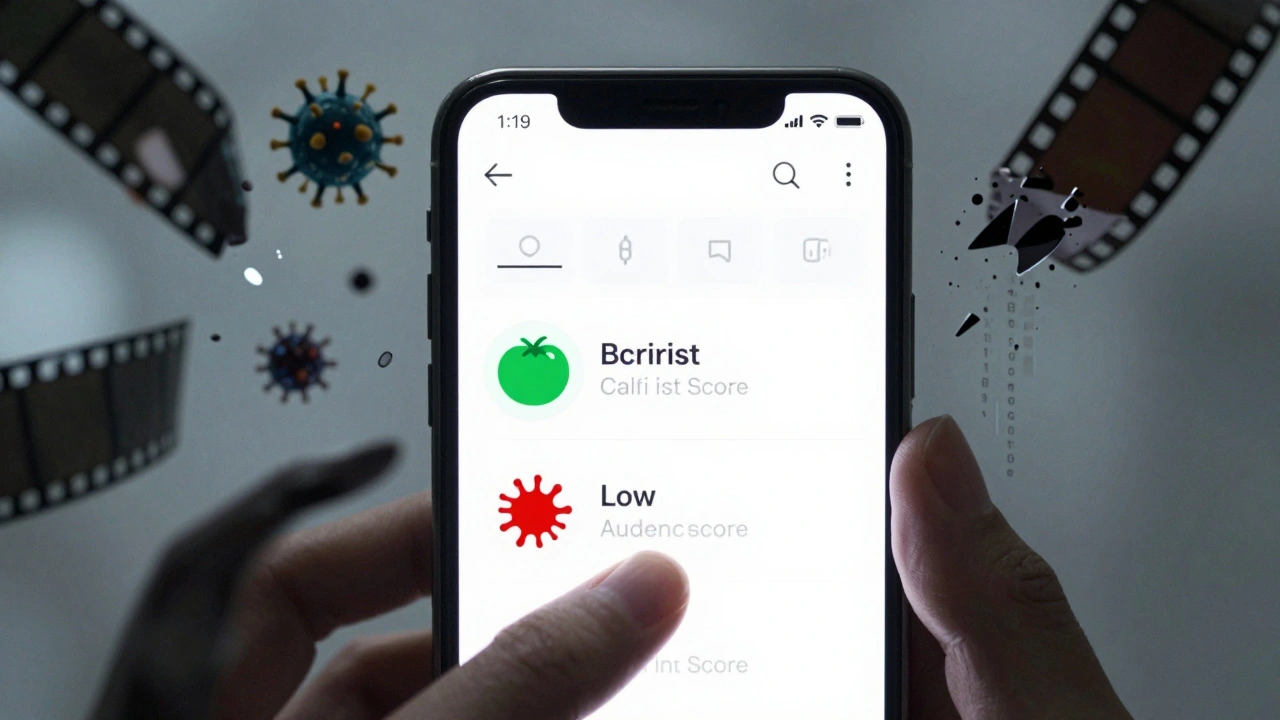
A Rotten Tomatoes score of 85% does not mean a movie is 85% good. It means that 85% of critics gave it a passing grade (usually 6/10 or higher). A masterpiece and a mediocre film can both sit at 85%. Conversely, a polarizing film might sit at 40%, not because it’s objectively terrible, but because half the critics loved it and half hated it. The metric fails to capture intensity of feeling. It flattens complex artistic experiences into a simple pass/fail binary.
But the real distortion comes from the audience side. Audience scores are notoriously volatile. They are easily manipulated by fan campaigns, coordinated trolling, and recency bias. Think back to the release of *Star Wars: The Last Jedi* or *The Batman*. Both films received strong critical acclaim but saw their audience scores tank due to organized backlash from segments of the fanbase who felt their expectations weren't met. These scores don’t reflect general audience enjoyment; they reflect tribal loyalty and disappointment. When you see a 30% audience score next to a 90% critic score, you aren’t seeing a disagreement on quality. You’re seeing a cultural clash.
| Source Type | |||
|---|---|---|---|
| Professional Critic | Context-rich, comparative analysis, historical perspective, potential elitism | High | Low (unless paid) |
| Aggregate Score | Quick snapshot, removes individual bias, lacks nuance, misleading metrics | Medium | Medium |
| Social Media User | Raw emotion, immediate reaction, highly biased, prone to manipulation | Low | Very High |
How Social Media Rewired Our Taste
If aggregate scores flattened criticism, social media fragmented it. Platforms like TikTok and Instagram Reels have given rise to a new form of micro-criticism. We’re talking about 60-second video essays that boil down a two-hour film into its most meme-able moments. This isn’t criticism in the traditional sense; it’s content creation. The goal isn’t to evaluate the film’s artistic merit; it’s to generate views, likes, and shares.
This format rewards spectacle over substance. A beautifully shot, slow-burn drama might get ignored because it doesn’t offer quick, punchy soundbites. Meanwhile, a visually flashy blockbuster with a controversial plot twist becomes fodder for endless debate threads. The algorithm pushes what keeps you scrolling, not what makes you think. As a result, our collective taste is being shaped by virality rather than quality.
Consider the phenomenon of "movie Twitter." Discussions there often devolve into identity politics and moral policing. Films are judged less on their cinematic craft and more on whether they align with specific ideological viewpoints. While discussing representation and ethics in media is vital, reducing a film solely to these dimensions ignores the art of filmmaking itself. Lighting, pacing, editing, acting-these elements matter. But when the conversation is dominated by outrage, technical proficiency gets sidelined. You end up with a culture where people know how to hate a movie, but fewer people know how to appreciate why it works.
The Enduring Value of Professional Criticism
So, does this mean professional critics are obsolete? Absolutely not. In fact, their role has become more important, even if their reach has diminished. What professional critics provide is context. They place a film within the broader history of cinema. They compare it to other works by the same director or within the same genre. They analyze the subtext, the symbolism, and the thematic depth that casual viewers might miss.
A good critic acts as a translator between the filmmaker’s intent and the audience’s experience. They help you understand *why* a scene worked, not just *that* it worked. This educational aspect is crucial. Without critics, we risk becoming passive consumers, reacting emotionally without engaging intellectually. We lose the vocabulary to discuss film as an art form. We stop asking questions like "How does this camera movement affect my perception of the character?" and start asking only "Did I like it?"
Moreover, critics often champion indie films, foreign language movies, and documentaries that wouldn’t otherwise get attention. Studios market blockbusters heavily. No one needs a critic to tell you about the latest Marvel movie; you’ll see it everywhere. But who tells you about the brilliant small-budget drama shooting in Poland or the groundbreaking documentary exposing environmental injustice? Often, it’s the critic. They serve as curators in an ocean of content, helping you discover gems that algorithms would never surface because they lack initial traction.
Finding Your Own Voice in the Noise
As a viewer, navigating this landscape requires intentionality. You can’t just glance at a score and move on. Here’s how to develop a more robust approach to evaluating films:
- Read the full review, not just the score. Look for critics whose tastes align with yours. If you love sci-fi, follow critics who specialize in speculative fiction. Their insights will be more relevant than a generalist’s take.
- Treat audience scores with skepticism. Understand that they are often skewed by fans and trolls. Use them as a gauge of popularity, not quality. If a film has a low audience score but high critic score, it might be polarizing or misunderstood-not necessarily bad.
- Diversify your sources. Don’t rely on one platform. Read long-form essays, watch video analyses, and listen to podcasts. Different formats offer different perspectives. A video essay might highlight visual details you’d miss in text.
- Trust your own gut, but question it. Your personal enjoyment is valid. But ask yourself: Why did I enjoy it? Was it well-made, or did it just scratch an itch? Distinguishing between entertainment and art helps you build a richer relationship with cinema.
The goal isn’t to reject social media or audience scores entirely. They have value. They represent the democratic voice of the people. But they shouldn’t replace critical thinking. They should complement it. By combining the breadth of public opinion with the depth of professional analysis, you create a more complete picture.
The Future of Film Criticism
Looking ahead, the role of the film critic will likely continue to evolve. We’re seeing a rise in hybrid models. Critics are building direct relationships with audiences through newsletters, Substacks, and YouTube channels. This bypasses traditional media gatekeepers and allows for more authentic, unfiltered discourse. It also fosters community. Readers feel connected to the critic, creating a dialogue rather than a monologue.
Additionally, AI is entering the mix. Algorithms can now generate summaries of reviews, predict box office performance, and even write basic blurbs. But AI cannot replicate human empathy, cultural context, or subjective experience. It can tell you what people liked, but it can’t tell you why it mattered. That human element-the ability to connect a film to the human condition-is something machines can’t fake.
Ultimately, the health of our film culture depends on us. We need to demand better than binary scores. We need to reward depth over speed. We need to support critics who do the hard work of analysis, not just those who shout the loudest. If we do that, film criticism won’t just survive; it will thrive, guiding us through the endless stream of content with wisdom and insight.
Do film critics still matter in 2026?
Yes, absolutely. While their mass influence has decreased, professional critics provide essential context, historical perspective, and deep analysis that social media and aggregate scores lack. They help audiences understand the artistic merits of a film beyond simple entertainment value and often champion lesser-known works that deserve attention.
Why are audience scores often lower than critic scores?
Audience scores are frequently skewed by fanboyism, coordinated trolling, and ideological biases. Fans may rate a film poorly if it doesn't meet their specific expectations, regardless of its quality. Additionally, casual viewers often judge films based on immediate emotional impact rather than technical craftsmanship, leading to discrepancies with critical evaluations.
Is Rotten Tomatoes a reliable indicator of quality?
Not entirely. The Tomatometer measures the percentage of positive reviews, not the average quality. A film can have an 80% score meaning 80% of critics liked it, but those reviews might have been mediocre. It’s a measure of consensus, not excellence. Always read individual reviews to understand the nuances behind the score.
How has social media changed the way we talk about movies?
Social media has accelerated and simplified film discourse. Conversations are now driven by viral moments, memes, and short-form content. This often prioritizes outrage and spectacle over thoughtful analysis. While it democratizes opinion, it also fragments discussion and makes nuanced debate difficult due to character limits and algorithmic incentives.
Should I ignore online reviews and just watch what I want?
You certainly can, but doing so might limit your exposure to great films. Reviews, especially from trusted critics, can introduce you to genres, directors, and stories you wouldn’t have discovered otherwise. Using reviews as a guide rather than a rulebook helps you balance personal preference with expanding your cinematic horizons.