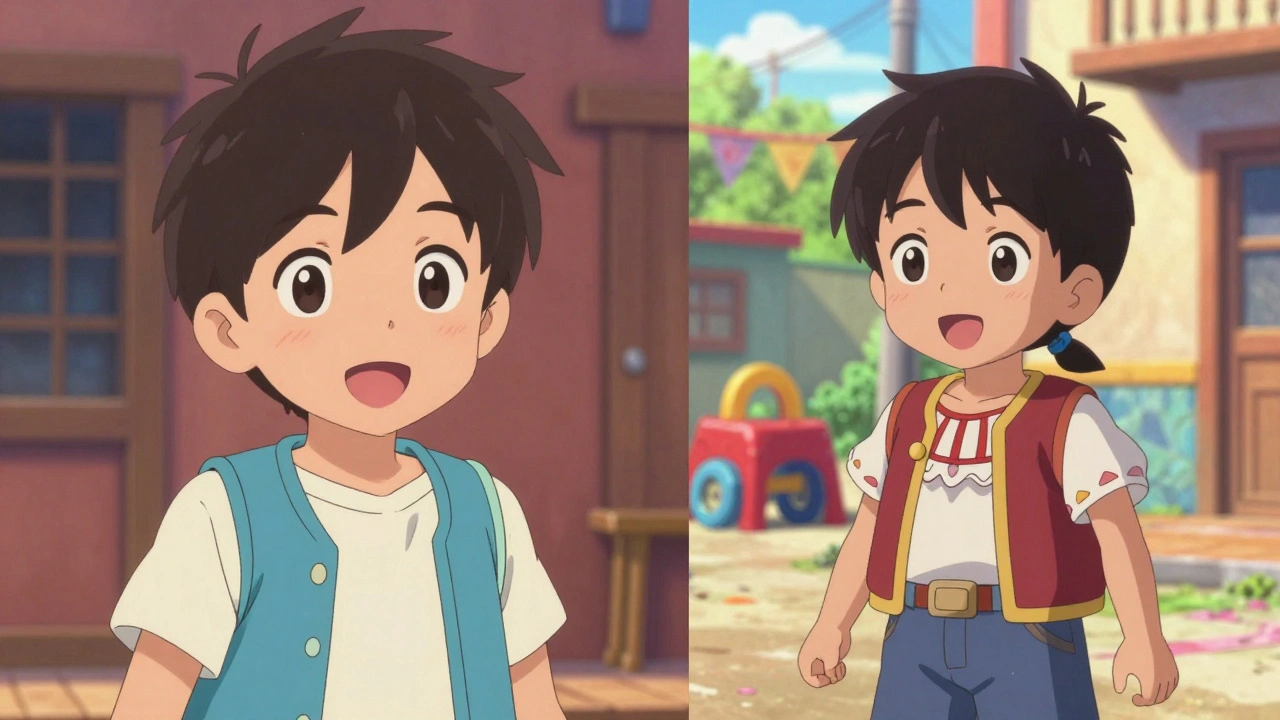
When a Japanese anime hits Netflix or a Disney cartoon plays in Brazil, it doesn’t just get translated - it gets rebuilt. Dubbing and localization for international animation releases aren’t about swapping words. They’re about rethinking humor, culture, timing, and emotion so that a five-year-old in Mexico laughs at the same joke as a kid in Tokyo - even if the joke was never written in Spanish.
Why Dubbing Isn’t Just Translation
Think of dubbing like fitting a square peg into a round hole - but the peg is a 90-second song, and the hole is a character’s mouth moving for exactly 2.3 seconds. Translation alone fails because animation is locked to lip movements. If the original line is “I’m not scared!” in English and takes 1.8 seconds to say, the Spanish version can’t be “¡No tengo miedo!” if it lasts 2.7 seconds. That mismatch breaks immersion. So dubbing studios don’t translate. They rewrite.
Take Dora the Explorer. In the original English version, Dora says “¡Vamos!” as a cheer. In Spanish-speaking markets, they kept it - but changed her outfit to match local styles. Why? Because “Vamos” was already a cultural signal. But in Germany, they replaced it with “Los geht’s!” - a phrase kids actually use. The name “Dora” stayed, but her backpack color changed to match German toy trends. That’s localization: changing what matters, keeping what connects.
The Hidden Rules of Animation Dubbing
There are no official manuals, but studios follow unspoken rules. Here’s what actually happens behind the scenes:
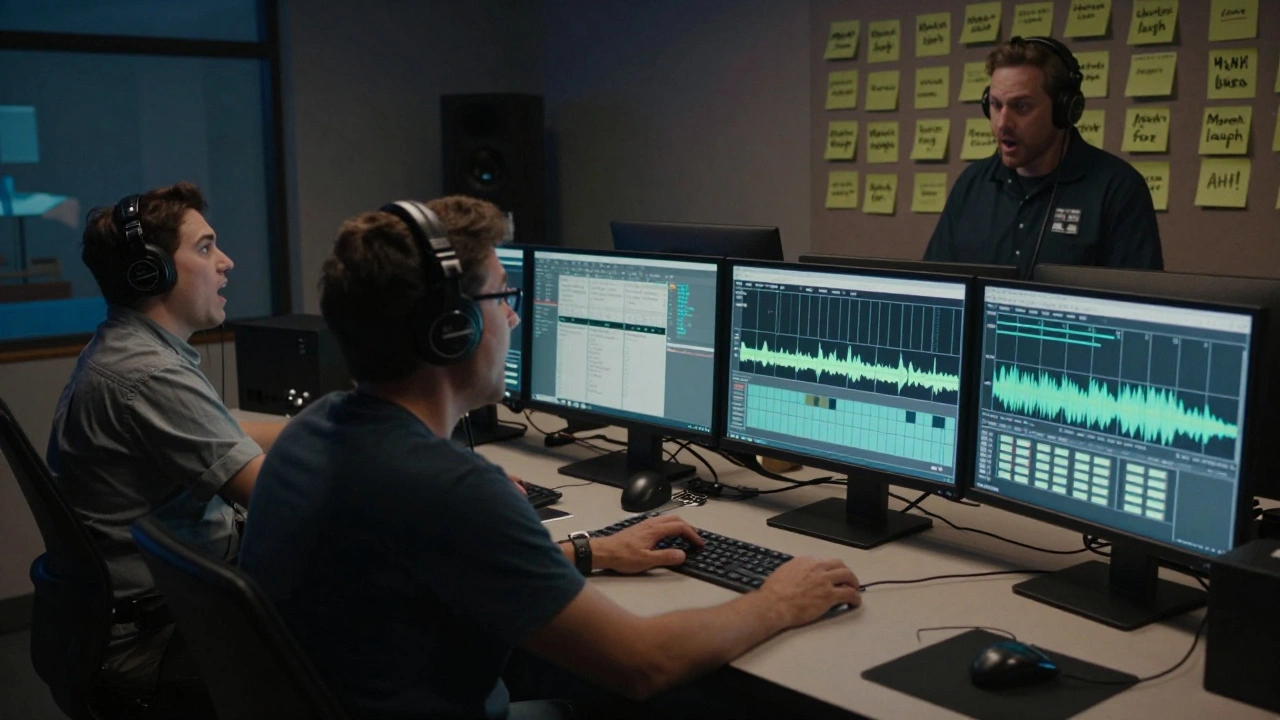
- Lip sync is law. Voice actors record line by line, matching mouth shapes frame by frame. If the character’s mouth opens wide for “Ahh!”, the dubbed line must have a vowel that requires the same mouth shape.
- Timing is everything. A 3-second laugh track in the original might become a 4-second silence in French if the joke doesn’t land. Studios cut or stretch pauses to keep rhythm.
- Cultural swaps are common. In the French dub of Shrek, the donkey’s references to American pop culture were replaced with French celebrities. One joke about “M&M’s” became “Smarties” - because Smarties are a French candy with the same cultural weight.
- Names get changed. In Italy, Avatar: The Last Airbender became Il Maestro dell’Aria - not because “Airbender” doesn’t translate, but because “Airbender” sounded like a video game, not a hero. They wanted mythic weight.
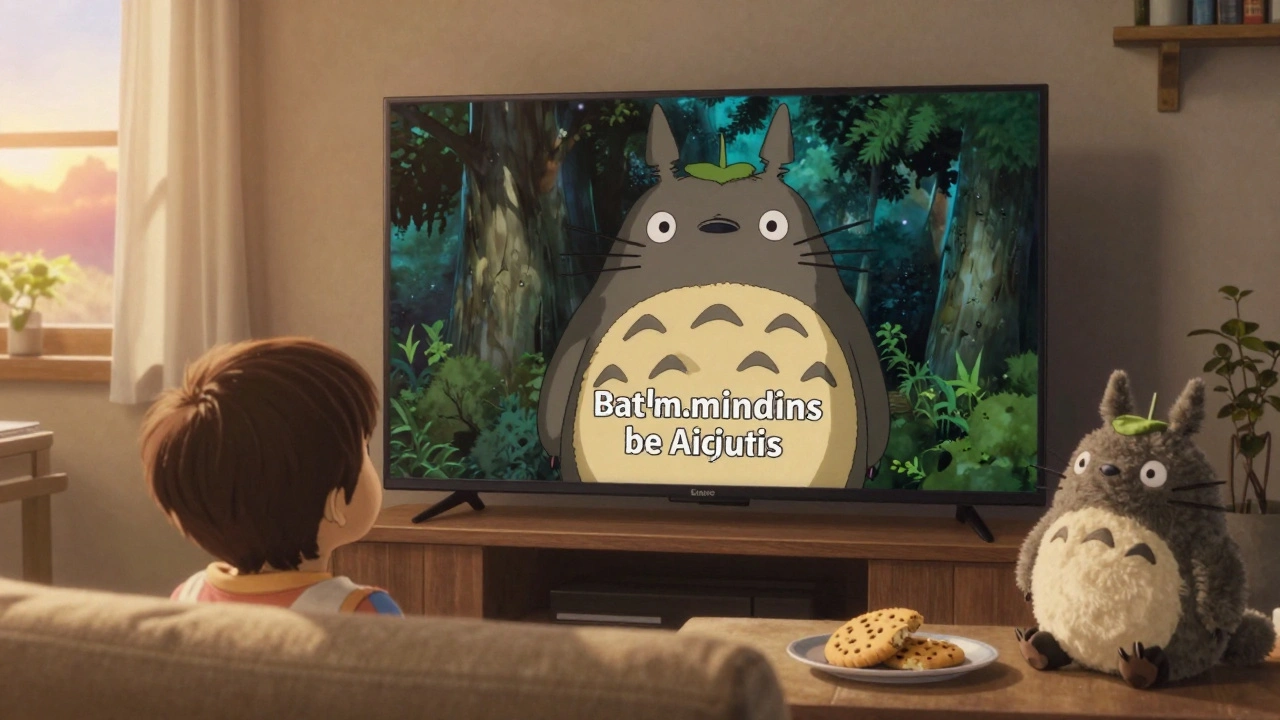
Some studios even hire child consultants. In Japan, when My Neighbor Totoro was localized for the U.S., they tested the dub with American kids aged 4-7. If a line made them frown, they rewrote it. One line - “The catbus is coming!” - was originally “The bus is shaped like a cat!” Kids didn’t get it. They shortened it. It worked.
Localization vs. Dubbing: What’s the Difference?
People mix these up. But they’re not the same.
Dubbing is about replacing the original audio track with a new one in another language - keeping the visuals, timing, and emotion intact. Think of it as voice replacement.
Localization is the broader process: adapting everything - jokes, idioms, clothing, food, music, even background signs - so the story feels native. A localized version might change a scene where characters eat sushi to them eating tacos. It might replace a Japanese school festival with a U.S. Halloween party. It’s not just language. It’s context.
Netflix’s Bluey is a perfect example. The Australian show had slang like “arvo” (afternoon) and “bikkie” (biscuit). For the U.S. version, they didn’t just translate. They rewrote lines to use “afternoon” and “cookie.” But they kept the humor - like Bluey’s dad pretending to be a dog. That didn’t need changing. It was universal.
Why Some Dubbed Animations Fail
Not all dubs work. Some become memes for the wrong reasons.
The 2006 English dub of Howl’s Moving Castle had a famous misstep. The character Howl, voiced by Christian Bale, was given a British accent. But in the original, Howl was flamboyant, theatrical, and slightly childish - like a rockstar who still plays video games. The English version made him sound like a Shakespearean actor. Fans called it “Howl the Drama King.” The studio later admitted they overdid it.
Another failure: Dragon Ball Z’s early English dub. The original Japanese version had a character say “Kamehameha!” as a battle cry. The dub changed it to “Kamehameha Wave!” - adding a word that didn’t exist. Why? Because the writers thought kids wouldn’t understand it was a name. They didn’t realize fans would spend years memorizing the original. That change stuck for years - and still annoys purists.
Even big studios mess up. In 2023, a dubbed version of The Boy and the Heron changed a line about “the wind carrying your voice” to “the wind carries your words.” It sounded flat. The original had poetic rhythm. The dub lost it. Audiences noticed.
The Rise of Subtitles - And Why Dubbing Still Wins
With streaming, subtitles are everywhere. So why do studios still spend millions on dubbing?
Because kids don’t read. In countries like Brazil, Mexico, Germany, and France, over 70% of children under 10 watch dubbed content. Parents say it’s easier. Teachers say it helps language development. And in places like Spain, dubbed animation is the norm - not the exception.
There’s also emotional connection. A child crying over a character’s death doesn’t want to read subtitles. They want to hear the voice. The tone. The pause before the sob. That’s why Studio Ghibli films still get full dubs - even in the U.S. - even though most adults watch them with subtitles.
Recent data from 2025 shows that dubbed animation generates 40% more viewership in non-English markets than subtitled versions. In India, dubbed Hindi and Tamil versions of Encanto hit 200 million views in 6 weeks. Subtitled versions? 45 million.
How Studios Choose Voice Actors
It’s not about who’s famous. It’s about who fits the character’s soul.
In Spain, the voice of Pikachu in Pokemon has been the same actor for 25 years. Kids there don’t know any other Pikachu. That’s loyalty. Studios look for consistency, not star power.
For Bluey’s French dub, they held auditions with 80 voice actors. They didn’t pick the most professional. They picked the one who sounded like a 6-year-old’s mom - warm, slightly tired, but full of love. The character’s mom is a stay-at-home parent. The voice had to feel real.
Some studios even use AI to test voice tones. They feed the script into a neural network trained on thousands of child voices. It predicts which pitch, speed, and emotion will resonate. Then humans refine it.
What’s Next for Animation Localization
AI is changing things. In 2025, Netflix tested a system that auto-dubs animation in real time. It syncs lip movements, adjusts timing, and even mimics emotional tone. But it still fails on humor. A joke about “silly socks” in English? The AI dubbed it as “funny socks” in Korean - and lost the absurdity.
So studios still rely on humans - but now they use AI as a helper. One studio in Los Angeles uses AI to generate 10 draft versions of a line. Then a team of five native speakers picks the best. It cuts production time by 60% - without losing heart.
Also, more studios are releasing “dual audio” versions. You can now watch Spider-Man: Across the Spider-Verse with English, Spanish, or Mandarin audio - all with matching lip sync. That’s the future: choice without compromise.
Final Thought: It’s Not About Language - It’s About Feeling
At the end of the day, animation isn’t about words. It’s about joy, fear, wonder, and belonging. A well-localized dub doesn’t make you think, “That’s a good translation.” It makes you forget the language ever changed.
That’s the goal. Not perfection. Not accuracy. But connection.



Comments(8)