
Every year, hundreds of documentaries are made. Some tell stories about climate change in remote villages. Others follow athletes overcoming impossible odds. A few even change laws. But how do we know which ones truly matter? The answer isn’t just in viewership or viral moments-it’s in the awards they win. From the quiet halls of the International Documentary Association to the glittering stage of the Oscars, documentary recognition follows a clear, often brutal, path.
What the IDA Awards Really Mean
The International Documentary Association (IDA) Awards are not the flashiest. There’s no live broadcast. No celebrity hosts. But if you’re a documentary filmmaker, winning an IDA is like getting a stamp of approval from your peers. It’s not about box office numbers. It’s about impact.
Founded in 1984, the IDA focuses on films that push boundaries-films that might not get funding from studios but still change how people think. In 2024, the IDA honored The Last Repair Shop, a quiet film about a team of technicians fixing instruments for Los Angeles public school students. It didn’t have A-list narrators. It didn’t use fancy CGI. But it won Best Feature. Why? Because it showed something real: how music can save lives in underfunded schools.
IDA winners often go on to bigger things. Since 2000, over 60% of IDA Best Feature winners were later nominated for an Oscar. That’s not coincidence. It’s a signal. The IDA acts as a filter. If a film survives their selection process, it’s already in the conversation for the highest honors.
The Documentary Oscar: A Different Game
The Academy Award for Best Documentary Feature is the crown jewel. But it’s not just about quality. It’s about timing, campaigning, and access.
Unlike narrative films, documentaries don’t always get wide theatrical releases. So the Academy created special rules: a film must play for at least seven consecutive days in a commercial theater in Los Angeles County. Many filmmakers spend tens of thousands of dollars just to meet that requirement. That’s not about art-it’s about logistics.
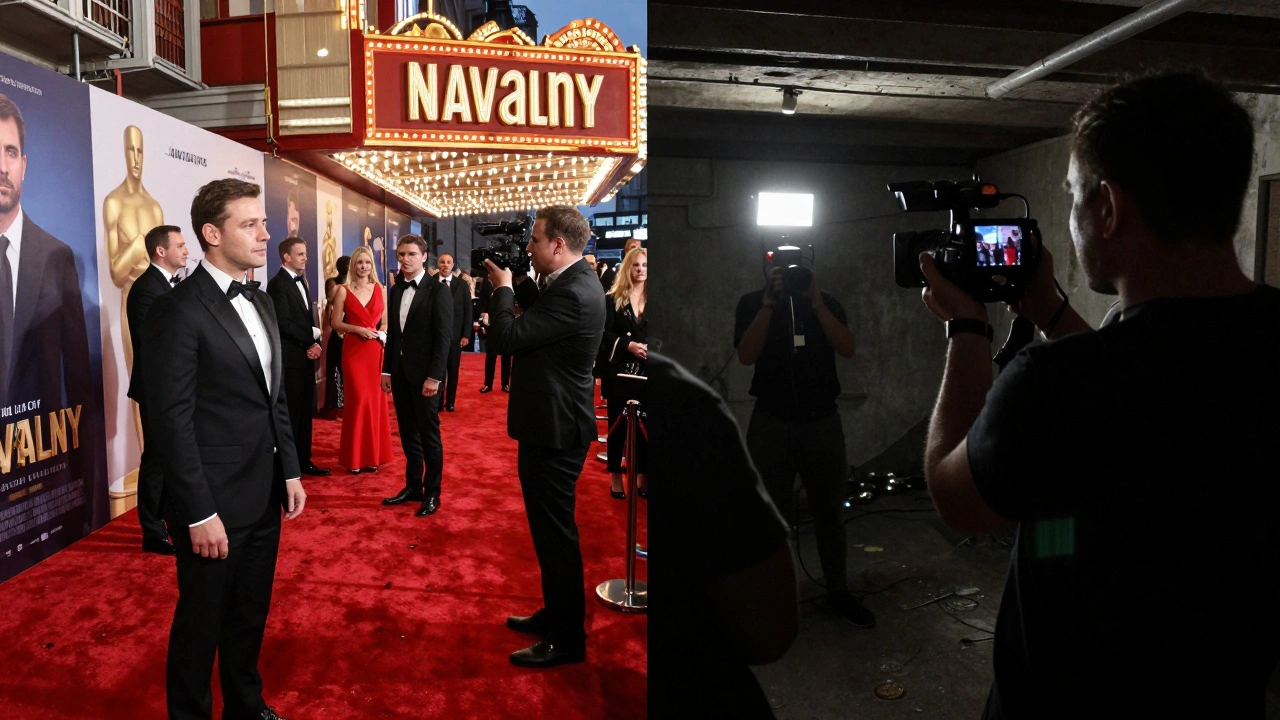
And then there’s the campaign. Major studios with deep pockets-Netflix, Hulu, Apple-spend millions on Oscar campaigns. They screen films for voters, host Q&As with directors, buy ads in trade publications. In 2023, Navalny won the Oscar. It was powerful. But it also had a $2.5 million campaign behind it. Meanwhile, 20 Days in Mariupol, a harrowing film shot by Ukrainian journalists under siege, won the next year. It had almost no marketing budget. Yet it won. Why? Because its rawness couldn’t be ignored.
The Oscars reward both art and strategy. The best documentaries are the ones that move people. But the ones that win? They move the right people.
Other Major Documentary Awards That Matter
There’s more to documentary recognition than just the IDA and the Oscars. Other awards carry weight in specific circles.
- Emmy Awards: The Television Academy honors documentaries that air on broadcast or streaming platforms. Our Father, a chilling investigation into a fertility doctor’s crimes, won an Emmy in 2023. It was made for Showtime but had the same impact as a theatrical release.
- Sheffield DocFest: Based in the UK, this festival is known for spotting films that later become Oscar contenders. In 2022, Fire of Love premiered here before going on to win an Oscar nomination.
- Hot Docs: Held in Toronto, it’s North America’s largest documentary festival. Winning here often leads to distribution deals. In 2024, Still: A Michael J. Fox Movie won the Audience Award and later swept the Oscars.
- European Film Awards: The European equivalent of the Oscars. The Territory, a film about Indigenous land rights in the Amazon, won Best Documentary here in 2022 before winning at the IDA and eventually the Oscars.
These aren’t just side events. They’re stepping stones. A film that wins at Hot Docs gets picked up by distributors. A film that wins at Sheffield gets noticed by Academy voters. Each award opens a door.
Why Some Great Docs Never Get Recognized
Not every powerful film wins an award. Some never even make it to the ballot.
In 2021, At the Ready followed three high school cadets in a Texas town where military recruitment is part of the culture. It was nominated for over 20 festivals. Critics called it one of the year’s best. But it didn’t get an Oscar nomination. Why? It didn’t have a distributor with an Oscar campaign budget. It didn’t have a star narrator. It didn’t have a Netflix deal.
This is the ugly truth: the documentary awards system favors accessibility as much as authenticity. A film shot on a smartphone can win an Oscar-if it’s released on a platform that can afford to campaign. A film shot on 16mm film with no marketing budget? It might vanish without a trace.
That’s why many independent filmmakers now release their work directly to audiences. They skip festivals. Skip awards. They use social media, community screenings, and crowdfunding. They know the system isn’t built for them. So they build their own.
The Ripple Effect: What Happens After the Win?
Winning an award doesn’t just mean a trophy. It means change.
After 13th won the IDA Award in 2016 and was nominated for an Oscar, it sparked national conversations about mass incarceration. Netflix reported that over 3 million households watched it in the first week after its release. Lawmakers in five states introduced criminal justice reform bills citing the film.
Food, Inc. won the IDA in 2009. A year later, Walmart changed its supplier standards for poultry. A major grocery chain stopped selling meat from a company featured in the film.
Even smaller wins matter. When My Octopus Teacher won the Oscar in 2021, bookings for dive tours in South Africa’s kelp forests jumped 400%. The film didn’t just win an award-it changed tourism, conservation efforts, and public perception of ocean life.
Documentary awards aren’t just about prestige. They’re about power. The right award can turn a quiet film into a movement.

How Filmmakers Navigate the System
So what’s the path for a new documentary filmmaker in 2026?
- Start with festivals: Submit to Sundance, Hot Docs, or Tribeca. These are gateways. Even if you don’t win, getting in means you’re seen.
- Target the IDA early: If your film has social impact, apply for the IDA Awards. It’s cheaper than an Oscar campaign and carries serious credibility.
- Build a campaign plan: If you’re aiming for the Oscars, budget for theatrical runs, press kits, and voter outreach. You need at least $50,000 minimum, even for a micro-budget film.
- Use streaming platforms: If you can get a deal with Netflix, Apple, or Amazon, you’ve already doubled your chances. Their campaigns are powerful.
- Don’t ignore grassroots: Screen your film in schools, libraries, churches. Build an audience. Sometimes, public pressure forces distributors to act.
The system is stacked. But it’s not impossible. The most successful filmmakers aren’t the ones with the biggest budgets. They’re the ones who understand the rules-and know how to work around them.
What’s Next for Documentary Recognition?
The landscape is shifting. Streaming platforms now dominate. Traditional theaters are shrinking. The Academy has started to relax some rules-like allowing films that premiere on streaming services to qualify for the Oscars.
But the core question remains: Who decides what matters?
For now, the answer is still a mix of industry insiders, festival programmers, and voters with decades of experience. But younger audiences are demanding more. They want diversity-not just in who’s on screen, but in who gets to tell the story. They want films from Indigenous communities, from Global South filmmakers, from people who’ve never had access to a camera before.
The next wave of documentary awards won’t just honor the best films. They’ll honor the most honest ones. And that might be the most important award of all.
What’s the difference between the IDA Awards and the Oscars for documentaries?
The IDA Awards are peer-judged by documentary filmmakers and focus on artistic merit and social impact. The Oscars are voted on by the entire Academy membership and favor films with wide visibility, strong campaigns, and commercial distribution. Winning an IDA often leads to an Oscar nomination, but not every IDA winner gets an Oscar nod.
Can a documentary win an Oscar without a theatrical release?
Yes, since 2020, the Academy has allowed documentaries that premiere on streaming platforms to qualify for the Oscars, as long as they meet specific criteria: a seven-day run in a Los Angeles theater and submission through the Academy’s official process. Many recent winners, like My Octopus Teacher and 20 Days in Mariupol, followed this path.
Do documentary awards actually change anything in the real world?
Yes. Documentaries like 13th, Food, Inc., and The Cove have directly influenced legislation, corporate policies, and public behavior. Awards bring visibility, which leads to action. A film that wins an IDA or Oscar often reaches policymakers, educators, and activists who use it as a tool for change.
Why do some powerful documentaries never get nominated?
Many lack the budget for an Oscar campaign, don’t have a distributor with industry connections, or are too niche to fit mainstream tastes. The system rewards accessibility as much as quality. A film shot in a remote village with no marketing budget can be brilliant-but still invisible to voters.
Which documentary awards are most respected by filmmakers?
Filmmakers respect the IDA Awards most because they’re judged by peers. The Sheffield DocFest and Hot Docs are also highly regarded for spotting emerging talent. The Oscars get the most attention, but many filmmakers see them as more of a publicity machine than a true artistic honor.
Documentary awards don’t just celebrate films. They decide which stories get heard, which voices get amplified, and which truths become part of the public record. The path from IDA to Oscars isn’t linear. It’s messy, unfair, and sometimes broken. But when it works-when a quiet film becomes a movement-that’s when you know why documentaries still matter.







Comments(7)