You watch a movie. The lead actor gets the applause. The director takes the bow. But who made sure the rain fell only on the villain’s face? Who ensured that sound didn’t bleed from one scene into another? That’s the work of the below-the-line crew members responsible for the practical and technical execution of a film production. While actors and directors hog the spotlight at the Oscars, the people building the sets, editing the cuts, and mixing the audio often get lost in the credits roll. Yet, without them, there is no movie-just a script and some confused people standing around.
The term "below-the-line" comes from old budget sheets. Above-the-line costs covered the creative talent (writers, producers, directors, stars). Below-the-line covered everything else: camera operators, gaffers, grips, costume designers, and editors. Today, this distinction isn't just about money; it's about visibility. When we talk about technical film achievements, we’re talking about the invisible art that makes storytelling believable. If you’ve ever wondered why certain films feel so immersive or terrifyingly real, the answer usually lies with these unsung heroes.
What Exactly Counts as Below-the-Line?
It’s easy to confuse the hierarchy. Let’s clear it up. Above-the-line roles include those involved in the development and pre-production phases, primarily focusing on creative vision and financing. Think of the screenwriter crafting the plot or the producer securing funding. These are the architects.
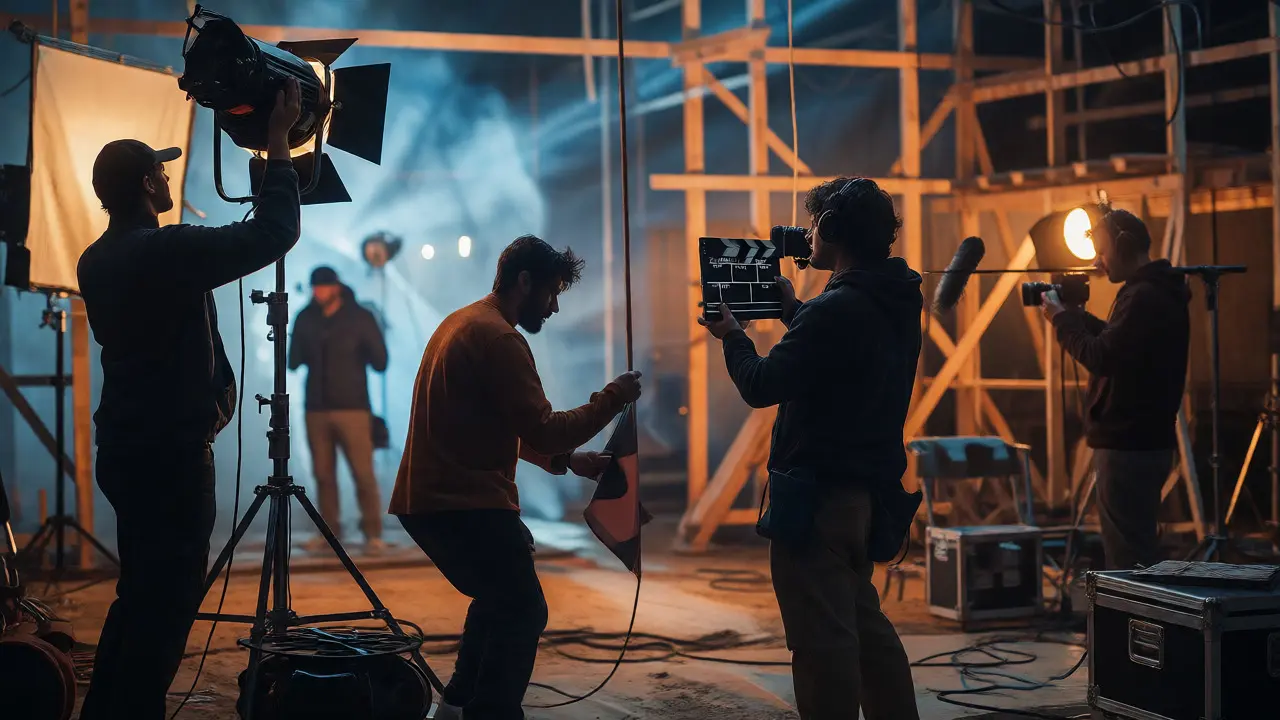
Below-the-line roles encompass the hands-on execution during production and post-production, including department heads and their teams. This is where the magic happens physically. It includes:
- Cinematography: Lighting, lens choice, camera movement.
- Editing: Pacing, rhythm, visual continuity.
- Sound Design: Foley, dialogue cleanup, ambient noise.
- Production Design: Sets, props, location dressing.
- Costume and Makeup: Character transformation through fabric and prosthetics.
Why does this matter? Because an award given to a cinematographer validates a specific skill set that differs entirely from acting. An actor interprets emotion; a gaffer interprets light. Both are artistic, but they require different training, tools, and instincts. Recognizing them separately respects the diversity of craft in cinema.
The Major Guilds and Their Prestigious Trophies
If you want to see below-the-line talent celebrated properly, skip the Academy Awards ceremony itself and look at what happens before it. The major craft guilds host events that are often more respected by industry insiders than the Oscars. Why? Because peers judge peers. A sound editor knows exactly how hard it is to remove a plane noise from a quiet scene. They appreciate the nuance in a way a general audience might not.
| Award Name | Presenting Organization | Focused On | Industry Perception |
|---|---|---|---|
| Academy Awards | Academy of Motion Picture Arts and Sciences | All categories, including technical | Highest public visibility; mixed respect for technical branches |
| Emmy Awards | Television Academy | Television crafts and technical excellence | High prestige for TV crews; distinct Creative Arts Emmys |
| ASC Awards | American Society of Cinematographers | Cinematography specifically | Elite status among camera departments |
| MPSE Golden Reel | Motion Picture Sound Editors | Sound editing and design | Critical benchmark for audio quality |
| Art Directors Guild Awards | Art Directors Guild | Production design and set decoration | Recognizes world-building efforts |
Notice the pattern? Each guild protects its turf. The American Society of Cinematographers doesn’t care if your movie won Best Picture. They care if your lighting motivated the story. Winning an ASC Award signals to other directors of photography that you understand the language of light. It’s a career-maker within the niche.

Why the Oscars Often Fail Technical Crews
Let’s be honest: the Oscars are a popularity contest wrapped in velvet. For decades, technical awards were handed out during commercial breaks. Yes, really. In recent years, the Academy moved some ceremonies online or to pre-show segments, trying to keep the main broadcast under three hours. This creates a weird dynamic. A sound mixer might spend six months perfecting a single explosion sequence, only to have their trophy presented by a comedian making a joke about cat videos.
This lack of prime-time exposure hurts the perception of technical roles. When audiences don’t see the process, they assume it’s automatic. They think, "The computer did it," or "They just filmed it." They don’t realize that visual effects supervisors coordinate thousands of artists across continents, or that colorists adjust every frame to evoke a specific mood. By burying these awards, the industry inadvertently teaches viewers that these jobs are less important.
Compare this to the Creative Arts Emmy Awards for television. These are separate ceremonies dedicated entirely to below-the-line crafts. They feature full speeches, red carpets, and genuine celebration. It’s a model that works because it gives time and space to the artisans. Hollywood should take notes.
The Economics of Recognition: Does Winning Pay Off?
You might ask, "Does winning a guild award actually put food on the table?" The short answer: yes, but indirectly. Unlike actors who can demand higher salaries after an Oscar win, technical professionals rely on reputation. A win proves reliability and excellence. Producers hire production designers with awards history because it reduces risk. If you built a convincing Mars landscape once, they trust you’ll do it again.
There’s also the union factor. Many below-the-line roles are governed by unions like the International Alliance of Theatrical Stage Employees (IATSE). IATSE negotiates minimum rates and working conditions. While awards don’t change union scales directly, high-profile wins can push individuals into higher-tier contracts or freelance rates that exceed standard union minimums. A top-tier editor known for Oscar-nominated work commands a premium simply because studios want that brand association attached to their project.
However, there’s a catch. Technical awards rarely boost box office sales directly. Audiences buy tickets for stars and franchises. They don’t check the IMDB page to see if the best sound editor is attached. So, while the award helps the professional network, it doesn’t necessarily help the studio’s marketing campaign. This disconnect explains why studios sometimes underfund technical departments-they know the ROI isn’t immediate.

Emerging Technologies and New Categories
The definition of technical achievement is shifting. Ten years ago, virtual production was a niche concept used in sci-fi blockbusters. Today, thanks to LED volume stages popularized by shows like The Mandalorian, it’s mainstream. This has created new hybrid roles. Who gets credit when the background changes in real-time based on the actor’s position? Is it the VFX team? The DP? The stage tech?
Awards bodies are struggling to keep up. Should there be an award for virtual set creation? Or does it fall under traditional production design? The ambiguity causes friction. We’re seeing more collaborative nominations now, where entire teams share credit rather than individual leaders. This reflects the reality of modern filmmaking: it’s a team sport, not a solo act.
Another emerging area is AI-assisted workflows. As artificial intelligence enters the editing room and color grading suite, questions arise about authorship. If an algorithm suggests a cut, does the editor still deserve the award? Most guilds currently insist on human oversight, maintaining that technology is a tool, not a creator. This stance protects the integrity of human craftsmanship, ensuring that awards recognize intent, not just output.
How to Support Below-the-Line Talent
If you love movies, you can help shift the culture. Start by paying attention to the credits. Next time you watch a film, stay through the end. Look for names like Ruth E. Carter in costume design or Roger Deakins in cinematography. Follow them on social media. Share their behind-the-scenes posts. Visibility drives value.
Support independent films that prioritize craft over star power. Small-budget movies often rely heavily on strong technical execution to compensate for limited resources. When you champion these films, you signal to the industry that technical excellence sells. Attend local film festivals that host panels with crew members. Ask questions about lighting setups or sound recording challenges. Show interest in the "how," not just the "what."
Finally, advocate for better broadcast coverage. Petition networks to air all award categories live. Demand that streaming platforms highlight technical achievements in their promotional materials. When the audience values the craft, the studios will invest in it. It’s a cycle: recognition leads to respect, which leads to better budgets, which leads to better movies.
What is the difference between above-the-line and below-the-line?
Above-the-line refers to creative and financial leadership roles like writers, producers, directors, and principal actors. Below-the-line refers to the technical and practical crew members who execute the production, such as camera operators, sound engineers, editors, and costume designers. The terms originate from historical budget formats where these groups were listed on opposite sides of a horizontal line.
Do below-the-line crew members get nominated for Oscars?
Yes, many below-the-line roles have specific Oscar categories, including Cinematography, Editing, Production Design, Costume Design, Makeup and Hairstyling, Sound Mixing, Sound Editing, Visual Effects, and Original Score. However, unlike acting awards, these are often awarded in separate ceremonies or during commercial breaks, reducing their public visibility.
Which guild awards are most prestigious for technical crews?
Peer-voted guild awards are highly respected within the industry. Key examples include the American Society of Cinematographers (ASC) Awards for camera work, the Motion Picture Sound Editors (MPSE) Golden Reel Awards for sound, the Art Directors Guild (ADG) Awards for production design, and the Costume Designers Guild (CDG) Awards. These awards are considered benchmarks of professional excellence among practitioners.
Why are technical awards often ignored by general audiences?
General audiences tend to focus on narrative elements like plot, acting, and directing. Technical achievements are often subconscious; when done well, they go unnoticed because they serve the story seamlessly. Additionally, broadcast schedules frequently relegate technical awards to non-prime-time slots, limiting their exposure compared to high-profile acting categories.
How does winning a guild award impact a crew member's career?
Winning a guild award enhances a professional's reputation and employability. It serves as a peer-endorsed credential that reassures producers and directors of the individual's skill level. While it may not directly increase box office revenue, it often leads to higher contract rates, more prominent projects, and long-term career stability within the competitive film industry.