
You know that feeling when you’re watching an awards show, expecting a celebration of cinema, but instead, it feels like a political press conference? It’s weird. One minute you’re admiring the cinematography in Dune, and the next, someone is lecturing the audience about geopolitical conflicts or corporate accountability. We tend to think of movie stars as people who just want their close-ups, but history shows they have plenty to say-and sometimes, they say it by refusing to show up.
Boycotts aren’t new. They are a tool. A lever. When actors, directors, or entire studios pull out of ceremonies like the Oscars or the Golden Globes, they aren’t just being dramatic. They are sending a signal. But does it work? And more importantly, does it hurt the movies we love, or does it force the industry to clean up its act?
| Ceremony | Year | Primary Trigger | Outcome |
|---|---|---|---|
| Academy Awards (Oscars) | 1973 | Lack of Indigenous Representation | Sacheen Littlefeather declined Marlon Brando’s award; sparked long-term debate. |
| Golden Globe Awards | 2021 | Corruption & Lack of Diversity in HFPA | NBC dropped broadcast; major studios pulled support; led to structural reforms. |
| Cannes Film Festival | Various | Geopolitical Conflicts (e.g., Ukraine, Palestine) | Protests during screenings; red carpet debates; no formal withdrawal but high tension. |
| BAFTA | 2024 | Industry Strikes (SAG-AFTRA/WGA) | Celebrities avoided campaigning; ceremony scaled back to honor labor rights. |
The Power Move: Why Stars Skip the Party
Think about the last time you saw a celebrity refuse an invitation. Was it because they were busy? Probably not. In Hollywood, presence is currency. If you skip the Oscars, you’re telling the Academy that your principles are worth more than your trophy. Take the 2021 Golden Globes boycott. It wasn’t just one actor having a bad day. Netflix, Amazon Studios, and Warner Bros. all said, "We’re not working with these guys anymore." Why? The Hollywood Foreign Press Association (HFPA) had zero Black members for decades. Zero. That’s not an oversight; that’s a system failure.
When big studios join a boycott, it hits the wallet. The HFPA relied on broadcast deals and studio access fees. When NBC canceled the telecast, the money dried up. This proves that financial pressure is the only language large institutions truly understand. Actors can give speeches, but studios control the checkbook. By withholding their star power, they forced the HFPA to hire diversity consultants, expand membership, and change voting rules. Did it fix everything overnight? No. But it broke the cycle of complacency.
Politics on the Red Carpet vs. Off It
There’s a difference between wearing a black dress in solidarity and refusing to attend. Wearing black is symbolic. It’s visible. You see it on TV. Refusing to attend is invisible unless reported. So why do people still choose the invisible route? Because symbolism gets ignored. Remember the Time’s Up movement in 2018? Everyone wore black at the Golden Globes. It looked great on Instagram. But did it change hiring practices immediately? Not really. The boycott approach-like what happened during the SAG-AFTRA strikes in 2023-is harder to ignore. If the nominees don’t campaign, the narrative doesn’t build. If the narrative doesn’t build, the ratings drop. Ratings drop means sponsors leave. Sponsors leaving means the ceremony risks becoming irrelevant.
This creates a paradox for filmmakers. You spend years making a movie. You want recognition. You want the boost in box office sales that comes with an Oscar nomination. But if the organization giving you that recognition is corrupt, biased, or politically tone-deaf, accepting the award feels like complicity. It’s a tightrope walk. Do you take the prize and stay silent, hoping to effect change from within? Or do you reject the platform entirely, risking that your message gets lost in the noise?
Case Study: The 1973 Oscars and Lasting Impact
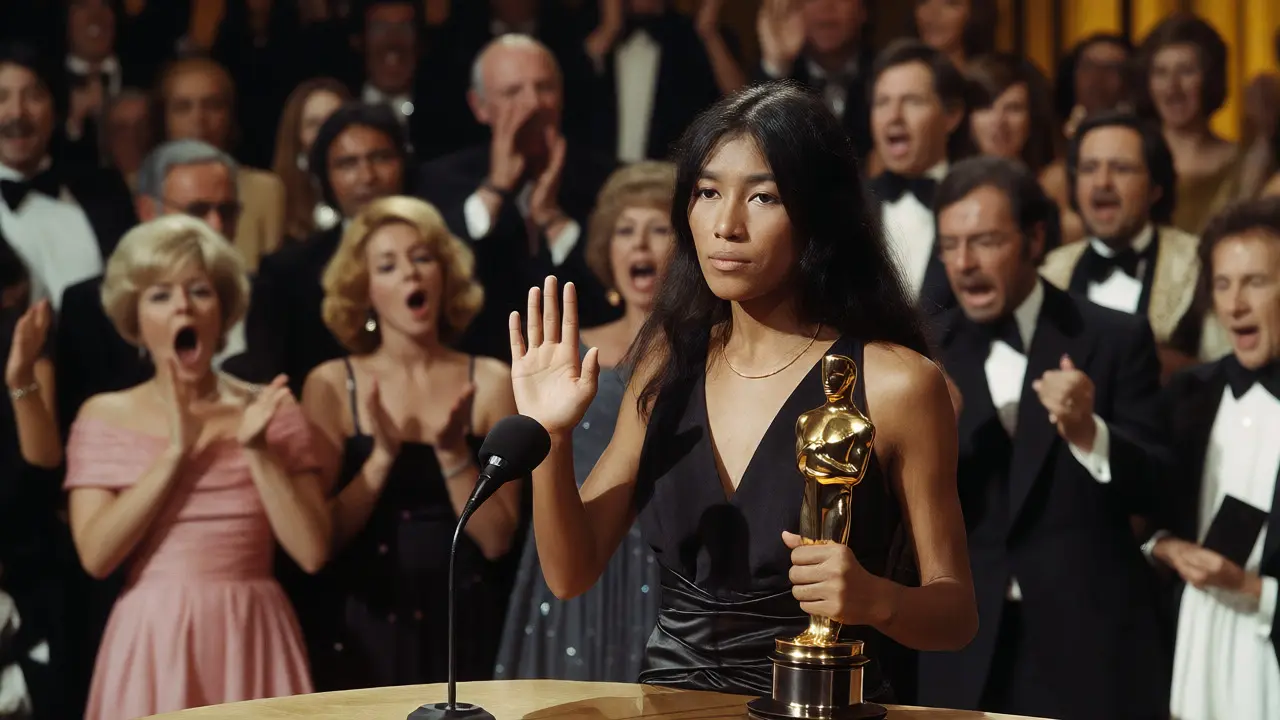
We can’t talk about boycotts without mentioning Marlon Brando. In 1973, he won Best Actor for The Godfather. He didn’t show up. Instead, he sent Sacheen Littlefeather, an Apache activist, to decline the award. Her speech was booed. It was messy. But it put the treatment of Native Americans in Hollywood front and center. For fifty years, that moment defined how we view political protest at awards shows.
Why does this matter today? Because it set the precedent that an award isn’t just a trophy; it’s a megaphone. If you accept it, you lend your voice to the institution. If you reject it, you challenge the institution. Recent controversies, such as the backlash against certain films depicting Middle Eastern conflicts, follow this same script. Critics argue that Western awards often reward stories that align with specific geopolitical narratives while ignoring others. When audiences feel that the selection process is biased, the legitimacy of the award erodes. And once legitimacy goes, the prestige follows.

The Audience Factor: Who Cares About the Drama?
Here’s the uncomfortable truth: most viewers don’t care about the internal politics of the Academy. They care about the spectacle. They want to see Zendaya in her custom Versace. They want to see Timothée Chalamet’s hair. When celebrities boycott, casual fans might roll their eyes. "Just let them have their fun," they say. But hardcore cinephiles? They notice. They discuss. They write op-eds. This split in audience reaction affects how networks handle controversies. Networks prefer drama that sells ads, not drama that scares away advertisers.
So, when a boycott threatens to cancel the show, producers panic. They try to compromise. Maybe they allow a pre-recorded acceptance speech. Maybe they invite a neutral mediator. These half-measures rarely satisfy anyone. The activists want systemic change. The network wants stability. The gap between those two desires is where the controversy lives. And it’s exhausting for everyone involved.
Future Trends: Will Boycotts Become Standard?
As streaming platforms dominate the landscape, the power dynamics are shifting. Netflix and Apple TV+ don’t need traditional theatrical releases to succeed. They have global reach. This gives them leverage. If the Oscars become too politicized or too exclusive, streamers could theoretically create their own parallel circuits of recognition. Imagine a "People’s Choice" style award backed by major tech companies, bypassing the old guard entirely. That scenario isn’t far-fetched.
Moreover, social media has democratized criticism. You don’t need a newspaper column to start a movement. A viral tweet can spark a hashtag campaign that forces a committee to reconsider its choices. The speed of information means controversies escalate faster than ever before. What used to take months to unfold now happens in hours. This volatility makes planning a ceremony incredibly difficult. Producers have to anticipate potential protests, prepare PR strategies, and ensure that the event remains entertaining despite the underlying tension.
Ultimately, awards ceremonies reflect the culture that produces them. If society is divided, the ceremonies will be too. Boycotts are symptoms, not diseases. They point to deeper issues regarding representation, labor rights, and ethical consumption of art. As long as those issues persist, we’ll see empty seats at the tables. And honestly? Sometimes, those empty seats speak louder than any acceptance speech ever could.
Why did the Golden Globes face a boycott in 2021?
The boycott was triggered by a Los Angeles Times investigation revealing that the Hollywood Foreign Press Association (HFPA), which organizes the Golden Globes, had no Black members among its 87 voters. Additionally, reports emerged of unethical behavior, including bribery and lack of transparency. Major studios like Netflix and Amazon paused relationships with the HFPA, and NBC canceled the televised ceremony until reforms were implemented.
Do awards boycotts actually change industry standards?
Yes, but usually over time. Immediate changes are rare, but sustained pressure leads to structural shifts. For example, after the #OscarsSoWhite movement and subsequent boycott threats, the Academy expanded its membership significantly to include more women and people of color. Similarly, the HFPA restructured its board and added diversity mandates following the 2021 crisis. The key factor is collective action from powerful entities like studios and talent agencies, not just individual actors.
How do strikes affect awards ceremonies?
During the 2023 SAG-AFTRA strike, actors were prohibited from promoting their films. This meant no red carpets, no interviews, and no campaigning for awards like the Emmys or Oscars. Without promotion, the buzz around nominated films diminished, leading to lower viewership and a less glamorous presentation. Ceremonies often scale back their production value during strikes to respect the labor dispute and avoid appearing out of touch.
What is the difference between a symbolic protest and a full boycott?
Symbolic protests involve participating in the event but using the platform to highlight issues, such as wearing specific colors or pins. Full boycotts involve refusing to attend, campaign, or accept awards. Symbolic protests maintain visibility and engagement with the audience, while full boycotts exert economic and reputational pressure on the organizing body. Full boycotts are riskier for careers but carry stronger messages of disapproval.
Are international film festivals also subject to political boycotts?
Absolutely. Festivals like Cannes and Berlin frequently face protests related to geopolitical conflicts. For instance, Ukrainian filmmakers and critics have protested Russian films at Cannes due to the war in Ukraine. Unlike US awards, which focus heavily on commercial success and domestic talent, international festivals often serve as diplomatic battlegrounds, making them highly susceptible to political interference and calls for exclusion based on nationality or government policies.





Comments(7)