Think about the last time you watched a movie that felt less like a product and more like a living, breathing organism. Maybe it was the chaotic energy of Studio Ghibli, where every frame seemed handcrafted by a group of friends obsessed with wind and clouds. Or perhaps it was the raw, improvised dialogue of the Mumblecore movement, born in cramped apartments rather than soundstages. These aren't just production companies; they are artist communities. And here’s the thing most people miss: the structure of these groups-whether they’re hierarchical studios or flat collectives-doesn’t just affect how the films get made. It fundamentally changes what stories get told and how they feel on screen.
We tend to view filmmaking as a solitary genius act, but history shows us it’s almost always a social endeavor. When artists cluster together, whether in a physical building or a loose network of collaborators, they create a shared language. This article breaks down how different types of artist communities in film operate, why some thrive while others collapse, and what this means for the movies we watch today. We’ll look at the rigid discipline of traditional studios, the democratic chaos of modern collectives, and the hybrid models emerging now.
The Studio Model: Discipline as a Creative Engine
When you hear "studio," you might think of big money and corporate interference. But historically, the studio system was also a powerful incubator for specific artistic visions. Take A24. While it’s a distributor and producer now, its early identity was built on a tight-knit community of directors like A24’s go-to filmmakers, Ari Aster and Robert Eggers. They didn’t just work for A24; they grew up within its aesthetic framework.
The key difference between a traditional studio and a collective is hierarchy. In a studio model, there’s a clear chain of command. The creative director or head of production sets the vision, and everyone else executes it. This can lead to incredible consistency. Think of the visual uniformity across all Pixar films. You know exactly what kind of emotional beat and technical polish you’re getting because the community shares a rigorous internal review process. Every frame passes through multiple eyes before it hits the screen.
This structure has benefits. It provides resources. A lone filmmaker struggles to afford high-end VFX or top-tier actors. A studio community pools resources, allowing individual artists to attempt projects they couldn’t handle alone. However, the downside is risk aversion. If the community consensus leans toward safe bets, unique voices get silenced. The pressure to conform to the "house style" can stifle experimental ideas that don’t fit the brand.
Collectives: Democracy and Disruption
On the other end of the spectrum are film collectives. These are groups where decision-making is often horizontal. No single person has final veto power; instead, the group debates until they reach a consensus-or at least a majority agreement. The Dogme 95 movement in Denmark is the classic example. Lars von Trier and Thomas Vinterberg created a "Vow of Chastity," a set of rules that banned artificial lighting, props, and non-diegetic music. They weren’t trying to make money; they were trying to purify their art.
Why do artists join collectives? Usually, it’s about freedom from commercial constraints. In a collective, you answer to your peers, not shareholders. This fosters radical experimentation. For instance, the RatPak in New York during the 1960s allowed filmmakers like Jonas Mekas and Andy Warhol to push boundaries without worrying about box office returns. Their films were weird, long, and often difficult-but they were entirely authentic to their creators’ visions.
But democracy in art is messy. Without a strong leader, collectives can suffer from "design by committee." Imagine five directors arguing over a color palette for three weeks. Nothing gets done. Many collectives dissolve because the administrative burden of consensus outweighs the creative joy. The success of a collective depends heavily on interpersonal chemistry. If two founding members have a falling out, the whole structure can crumble, unlike a studio which has institutional inertia to keep it running.
| Feature | Traditional Studio | Artist Collective |
|---|---|---|
| Decision Making | Hierarchical (Top-down) | Egalitarian (Consensus-based) |
| Resource Access | High (Shared budgets, equipment) | Low to Medium (Crowdsourced, DIY) |
| Creative Consistency | High (Brand alignment) | Variable (Individual expression) |
| Risk Tolerance | Low (Commercial viability focus) | High (Artistic exploration focus) |
| Longevity | Stable (Institutional support) | Unstable (Dependent on relationships) |
The Hybrid Approach: Modern Collaborative Hubs
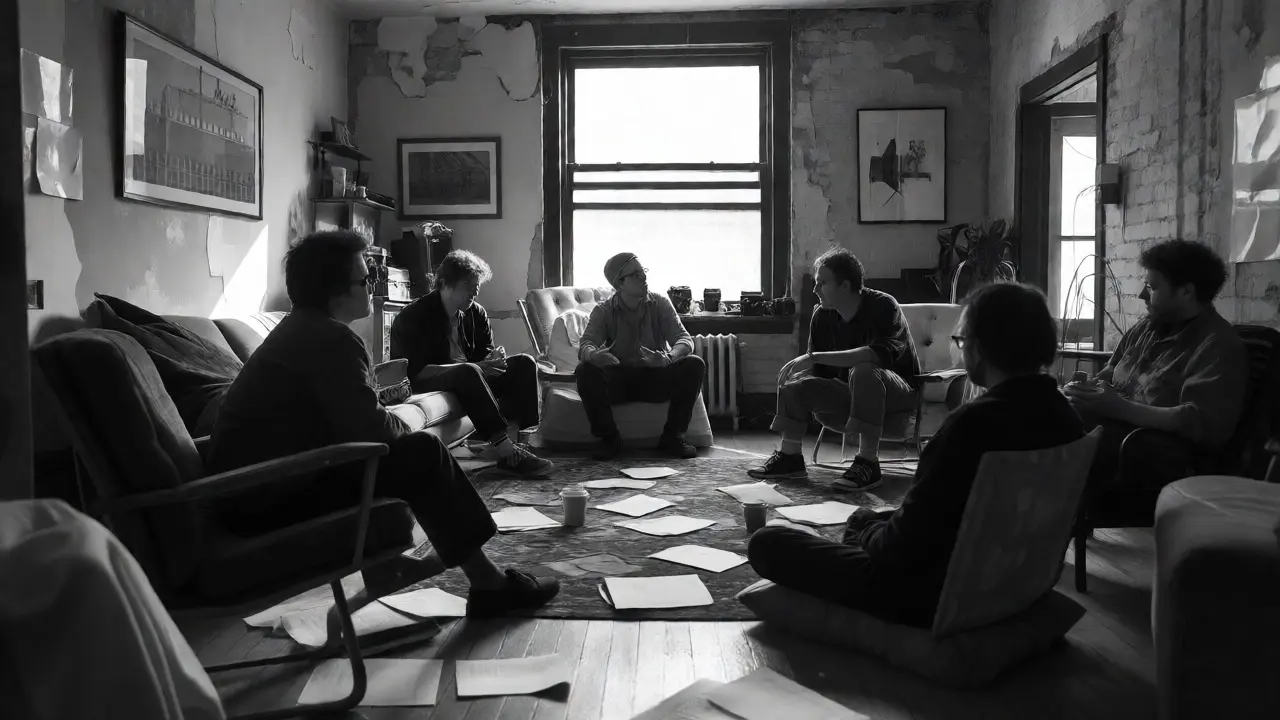
Today, the line between studio and collective is blurring. We’re seeing the rise of hybrid models that try to capture the best of both worlds. These are often called "production hubs" or "creative incubators." They offer the infrastructure of a studio-edit suites, funding access, legal support-but maintain the cultural ethos of a collective.
A prime example is MUBI. While primarily a streaming service, MUBI functions as a curator and community builder. They commission original works from directors who might otherwise struggle to find distribution. By curating a selection of films, they create a virtual community of cinephiles and creators. Directors know that if their film fits the MUBI aesthetic-often international, arthouse, visually distinct-it will find an audience. This creates a feedback loop where artists tailor their work to a community standard without sacrificing independence.
Another emerging trend is the use of digital platforms to form temporary collectives. Filmmakers no longer need to live in the same city to collaborate closely. Tools like Frame.io allow real-time feedback on edits, enabling a "virtual writers' room" that spans continents. This democratizes access further. A filmmaker in Lagos can co-produce with a editor in London and a composer in Seoul, forming a project-specific collective that dissolves once the film is done. This flexibility reduces the overhead costs that kill traditional collectives while maintaining the collaborative spirit.
How Community Shapes Narrative Content
You might wonder: does the business structure really change the story? Absolutely. The type of community dictates the themes explored. Studio films often reflect the values of the institution. Pixar movies, for example, frequently explore themes of family, belonging, and finding one’s place in a larger system-mirroring the studio’s own culture of teamwork and mentorship.
In contrast, collective films often prioritize individual alienation, identity crises, or societal critique. Because collectives are usually formed by outsiders challenging the mainstream, their narratives tend to be subversive. The Sundance Institute labs, which function as semi-collective educational communities, consistently produce films that tackle marginalized identities and unconventional structures. The environment encourages risk-taking, so the resulting stories are often less polished but more emotionally raw.
Consider the difference between a Marvel movie (studio-driven) and an A24 horror film (community-cultivated). Marvel relies on interconnectedness and legacy-the idea that every hero is part of a larger machine. A24 films, like Hereditary or Midsommar, focus on isolated individuals or small groups breaking apart under pressure. The narrative tension comes from the disintegration of community, a theme that resonates deeply in independent circles where loyalty is tested by artistic integrity.

Challenges and Pitfalls for Artist Communities
Not every experiment ends well. One major pitfall is "groupthink." In highly cohesive communities, dissenting opinions can be viewed as betrayal. If everyone loves minimalist cinematography, a filmmaker who wants to use flashy colors might feel pressured to conform, leading to homogenized output. This is common in long-standing studios where the "way things are done" becomes dogma.
For collectives, the biggest threat is burnout. Managing a collective requires significant emotional labor. Someone has to handle the emails, the grants, the scheduling. Often, this falls on one or two people who eventually resent the imbalance. Without clear roles defined from the start, resentment builds. Successful collectives, like the Wu-Tang Clan in music (which translates well to film crews), assign specific operational roles even if creative decisions remain shared.
Financial instability is another killer. Studios have cash reserves; collectives often live hand-to-mouth. If a grant is delayed, a collective might lose its space or its members. This precarity can force artists to take unrelated jobs, fragmenting their attention and weakening the community bond. Sustainability requires either external patronage or a successful commercial hit that funds future experiments-a catch-22 for many indie groups.
Building Your Own Creative Circle
If you’re an aspiring filmmaker, understanding these dynamics helps you choose your path. Do you want the security and resources of a studio-like environment? Then seek internships or assistant positions at established houses like Lights Camera Action or regional arts councils. You’ll learn discipline and workflow.
Do you crave creative control and peer feedback? Start small. Gather three to five trusted collaborators. Define your rules early. Are you sharing profits equally? Who has final cut? Write it down. Use digital tools to stay connected if you’re geographically dispersed. Remember, the goal isn’t just to make a movie; it’s to build a support network that sustains your career over decades.
The future of film lies in these networks. As production costs drop and distribution becomes global, the power shifts from gatekeepers to communities. Whether you’re joining a historic studio or starting a WhatsApp group of friends making short films, remember that the people you work with shape the art as much as the script does.
What is the main difference between a film studio and a film collective?
The primary difference lies in decision-making and resource allocation. Studios typically have a hierarchical structure with centralized funding and top-down creative direction, prioritizing commercial consistency. Collectives operate on a flatter, egalitarian model where members share decision-making power and resources are often pooled or limited, prioritizing artistic freedom and experimentation.
Can a film collective survive without a leader?
Yes, but it is challenging. Successful collectives often distribute leadership roles based on expertise (e.g., one person handles finance, another handles production logistics) rather than having a single creative dictator. However, without clear role definitions, decision paralysis and administrative burnout are common risks that can lead to dissolution.
How do digital platforms impact modern film communities?
Digital platforms enable "virtual collectives," allowing filmmakers to collaborate remotely in real-time. Tools for cloud-based editing, communication, and financing (like crowdfunding) reduce geographic barriers and overhead costs. This allows for flexible, project-based teams that can form and dissolve quickly, though it may weaken the deep interpersonal bonds found in physical communities.
Do studio films lack artistic authenticity compared to collective films?
Not necessarily. While studios prioritize commercial viability, many have cultivated distinct house styles that are artistically coherent (e.g., Pixar or A24). Authenticity depends on whether the individual creator’s voice aligns with the studio’s culture. Conversely, collectives can suffer from groupthink, diluting individual voices in favor of consensus.
What are the financial risks of joining a film collective?
Financial instability is a major risk. Collectives often rely on grants, personal savings, or sporadic income, lacking the steady cash flow of studios. Members may face unpaid labor, delayed payments, or loss of shared assets if the collective fails. Clear contracts regarding profit-sharing and liability are essential to mitigate these risks.