Imagine sitting down to watch a movie you've been waiting for all year. You check the reviews. One says it's "visually stunning but emotionally hollow." The other, generated by an algorithm, rates it 4.2 stars based on plot consistency and pacing metrics. Which one do you trust? This is the central tension in modern film criticism is the art of analyzing, interpreting, and evaluating films to guide audiences and preserve cultural context. As Artificial Intelligence becomes more sophisticated, the gap between what machines can quantify and what humans feel is widening.
The debate isn't about replacing critics with robots. It's about understanding where each excels. Machines are getting better at spotting patterns in box office data and audience reactions. Humans are still the only ones who can explain *why* a specific camera angle made them cry. Let's break down how these two approaches differ and why both matter.
What AI Actually Does in Film Analysis
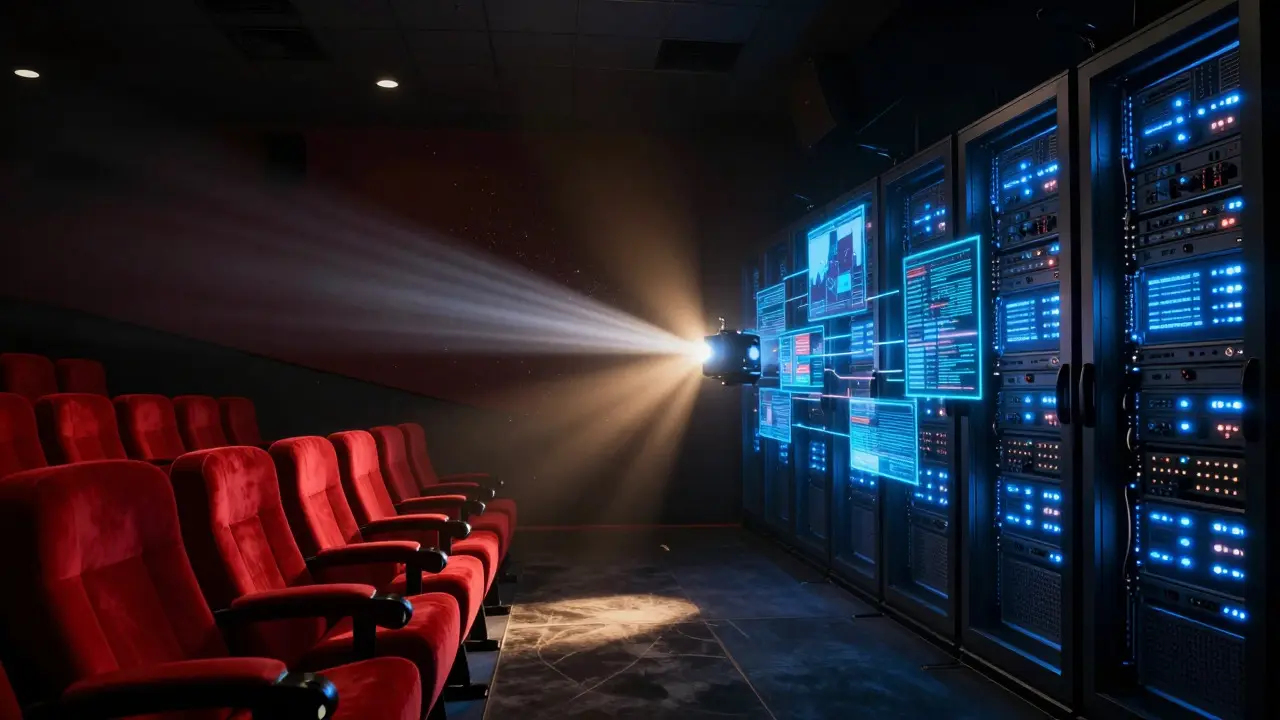
When we talk about AI in this context, we're mostly referring to Natural Language Processing (NLP) and computer vision models. These tools don't "watch" a film like you or I do. Instead, they process data. They analyze transcripts, scan visual frames, and track audio levels.
Here’s how the process typically works:
- Data Ingestion: The system takes in the film's script, subtitles, and video feed.
- Feature Extraction: Algorithms identify key elements like dialogue frequency, color palettes, and editing pace.
- Sentiment Scoring: NLP models assign emotional values to words and scenes, creating a "mood map" of the movie.
- Prediction: Based on historical data, the AI predicts audience reception or compares the film to similar titles in its database.
For example, if a film has a high density of fast cuts and loud sound effects, the AI might classify it as "high-energy action." If the dialogue is sparse and the color grading is desaturated, it might tag it as "dramatic" or "melancholic." It’s efficient, consistent, and free from personal bias. But does it understand nuance?
The Limitations of Machine Summaries
Machine summaries are great for logistics. They tell you the runtime, the genre, and whether the plot twists match common tropes. But they often miss the point. A machine can detect that a character died in Act III because the body was shown on screen. It cannot detect that the death felt unearned because the character development was rushed in Act II.
This is the core weakness of automated reviews: they lack contextual memory. They don't remember the director's previous work. They don't know the political climate when the film was released. They don't feel the weight of a silence that lasts ten seconds too long. To a machine, a silent scene is just zero decibels. To a human critic, it might be the most powerful moment in the entire movie.
Furthermore, AI struggles with irony and satire. If a film mocks the very genre it belongs to, a simple sentiment analyzer might get confused. Is the low score from the characters' failures a sign of bad writing, or is it the intended joke? Humans catch this instantly. Algorithms often need thousands of examples to learn that pattern, and even then, they can fail on subtle variations.
Where Human Insight Still Reigns Supreme
Human film criticism brings something irreplaceable: perspective. A critic looks at a film through the lens of their own experiences, cultural background, and artistic taste. This subjectivity is not a bug; it's a feature. It allows for diverse interpretations that enrich our understanding of cinema.
Consider the concept of cultural context. A film shot in post-war Japan carries different weights than the same story set in post-war America. A human critic knows this history. They can explain how the cinematography reflects the societal trauma of the era. An AI can note the visual style, but explaining the *meaning* behind it requires deep cultural knowledge that goes beyond mere data points.
Also, human critics engage in discourse. They argue with each other. They reference other films. They build arguments over paragraphs, not just star ratings. This conversation shapes public opinion in ways that a static algorithmic score never could. When a critic writes, "This sequel feels like a cash grab," they are making a value judgment based on industry trends, fan expectations, and artistic integrity. That's complex reasoning.
Comparing the Two Approaches
To make this clearer, let's look at how AI and human critics handle the same task: reviewing a new sci-fi blockbuster.
| Attribute | AI / Machine Summary | Human Critic |
|---|---|---|
| Consistency | High (same input = same output) | Variable (depends on mood/context) |
| Speed | Instant (seconds) | Slow (hours/days for deep analysis) |
| Emotional Depth | Low (quantifies sentiment only) | High (interprets emotional resonance) |
| Bias | Algorithmic (based on training data) | Personal (based on experience/taste) |
| Cultural Awareness | Limited (unless specifically trained) | Deep (inherent in human understanding) |
| Cost | Low marginal cost per review | Higher cost (time/expertise) |
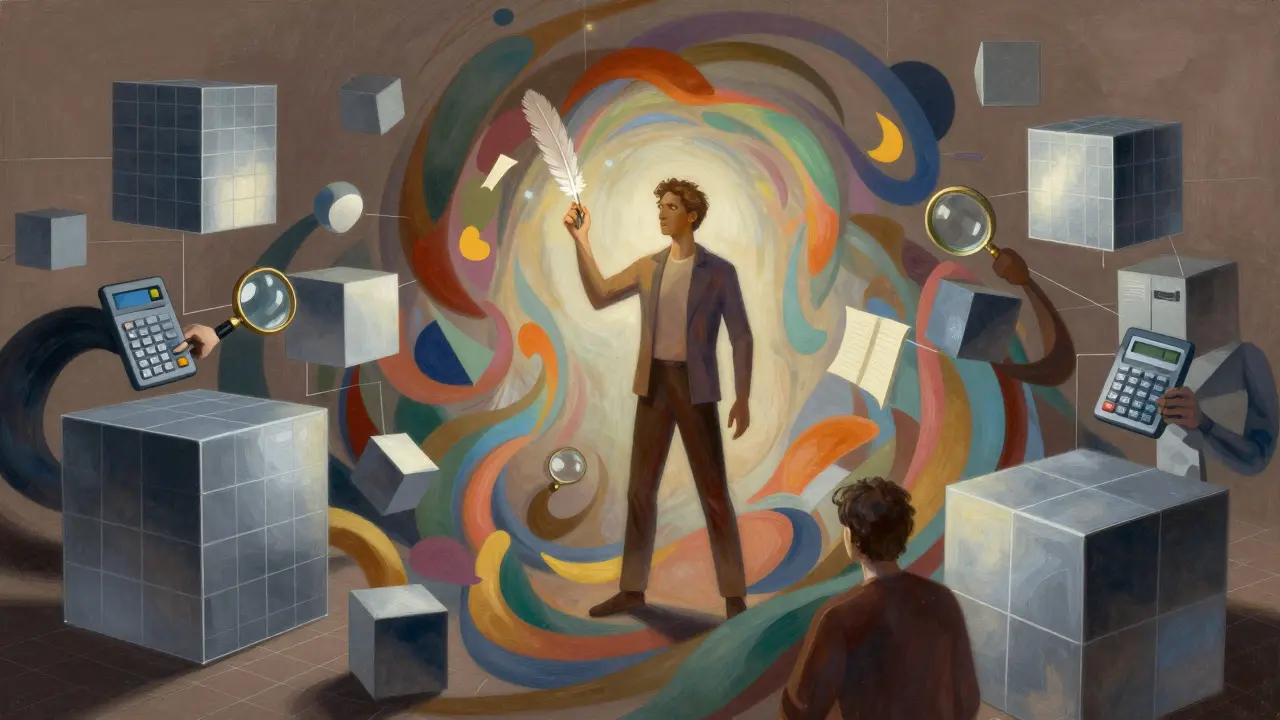
Notice the trade-off. AI wins on speed and consistency. Humans win on depth and interpretation. Neither is "better" in a vacuum. They serve different purposes. AI helps you filter through noise. Humans help you understand the signal.
The Hybrid Future of Criticism
We aren't heading toward a world where either side completely dominates. Instead, we're moving toward a hybrid model. Streaming platforms already use AI to recommend movies based on your viewing history. Critics use data to back up their opinions. For instance, a critic might say, "The pacing slows down significantly in the second act," and cite average scene length statistics generated by AI tools to prove it.
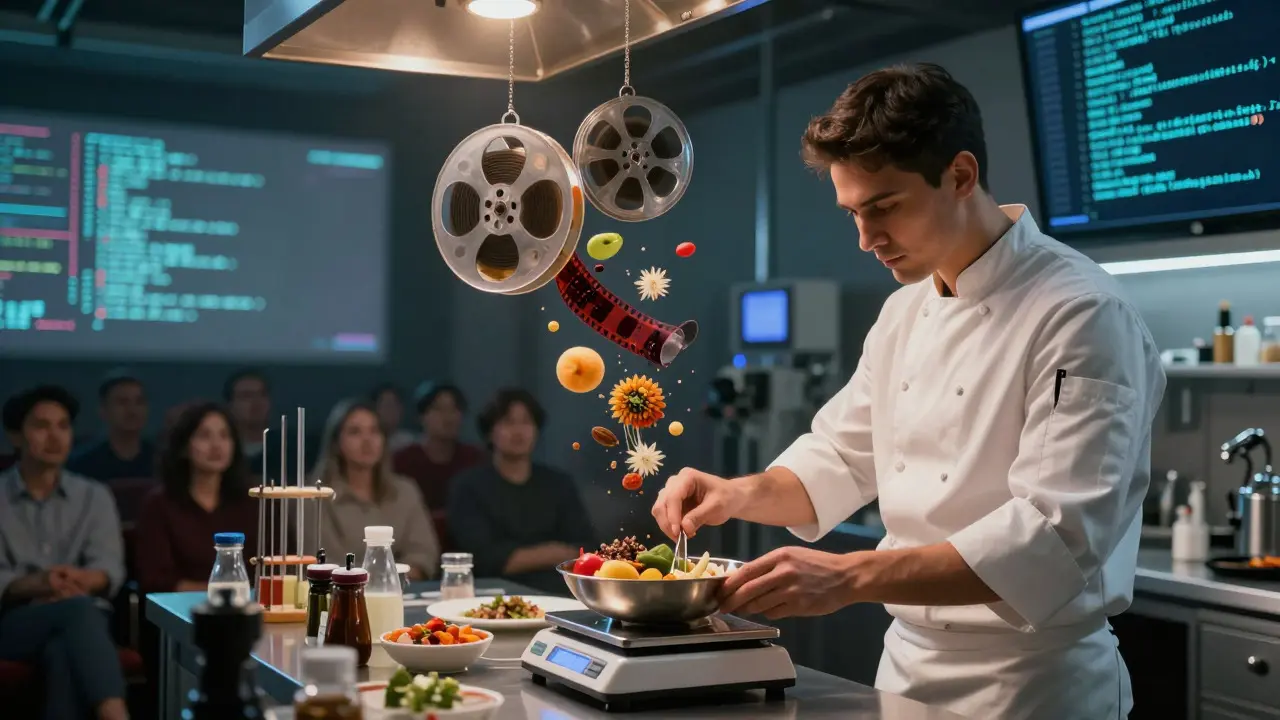
This combination offers the best of both worlds. You get the efficiency of machine processing and the soul of human interpretation. Think of it like a chef using a digital scale. The scale ensures precision (AI), but the chef decides the flavor profile (Human). Without the chef, you have precise ingredients but no meal. Without the scale, you might mess up the ratios. Together, they create a better dish.
As machine learning models improve, they will likely become better at detecting narrative structure and thematic consistency. But until they can truly "feel" the impact of a performance or understand the subtext of a line of dialogue, human critics will remain essential. The role of the critic may shift from being the sole gatekeeper of quality to being a guide who interprets the data for the audience.
Practical Tips for Audiences
So, how should you approach reviews in this mixed landscape? Here are a few practical strategies:
- Check the Source: If a review is extremely detailed and mentions specific scenes, it's likely human-written. If it's a short paragraph with a star rating and generic phrases like "well-paced" or "good visuals," it might be AI-generated or aggregated.
- Look for Argumentation: Human critics make arguments. They take a stance and defend it. AI summaries describe. They list features. If you want to know *why* a film works, look for the argument.
- Use AI for Filtering: Use algorithmic scores to narrow down your choices. If an AI gives a film a 9/10 for "genre consistency," it's likely safe for fans of that genre. Then, read a human review to see if it resonates with your personal tastes.
- Be Skeptical of Perfection: If an AI gives a film a perfect score, be cautious. Perfect scores usually mean the film fits a standard template perfectly, which can sometimes indicate a lack of originality. Human critics are more likely to penalize formulaic content.
Frequently Asked Questions
Can AI really understand humor in films?
Not yet. While AI can detect laughter tracks or fast-paced dialogue associated with comedy, it struggles with dry wit, sarcasm, and situational irony. These forms of humor rely heavily on context and timing, which are difficult to quantify with current NLP models. A human viewer understands the pause before the punchline; an AI often misses the beat.
Are AI-generated reviews biased?
Yes, but differently than humans. AI bias comes from its training data. If the data consists mostly of mainstream Hollywood blockbusters, the AI may rate independent films lower because they don't fit the expected patterns. Human bias is personal, influenced by individual taste and experience. Both biases exist, but AI bias is systemic and harder to correct without diverse datasets.
Will AI replace professional film critics?
Unlikely in the near future. While AI can handle data aggregation and basic summaries, professional critics provide cultural analysis, historical context, and persuasive writing that engages readers. The role of the critic is evolving to include data literacy, but the core function of interpretation remains a human strength.
How accurate are AI sentiment scores for movies?
They are moderately accurate for broad emotional tones (happy, sad, scary) but less reliable for complex emotions (bittersweet, anxious, nostalgic). Sentiment analysis works best on clear-cut dialogue. When emotions are conveyed through music, acting subtleties, or visual symbolism, the accuracy drops significantly. Always treat AI sentiment scores as a starting point, not a final verdict.
What is the biggest advantage of human film criticism?
The ability to connect a film to the broader world. Human critics can relate a movie to social issues, historical events, or other artworks. They offer a narrative framework that helps viewers place the film in a larger context. This storytelling aspect of criticism is what makes reading a review an experience in itself, rather than just a data lookup.