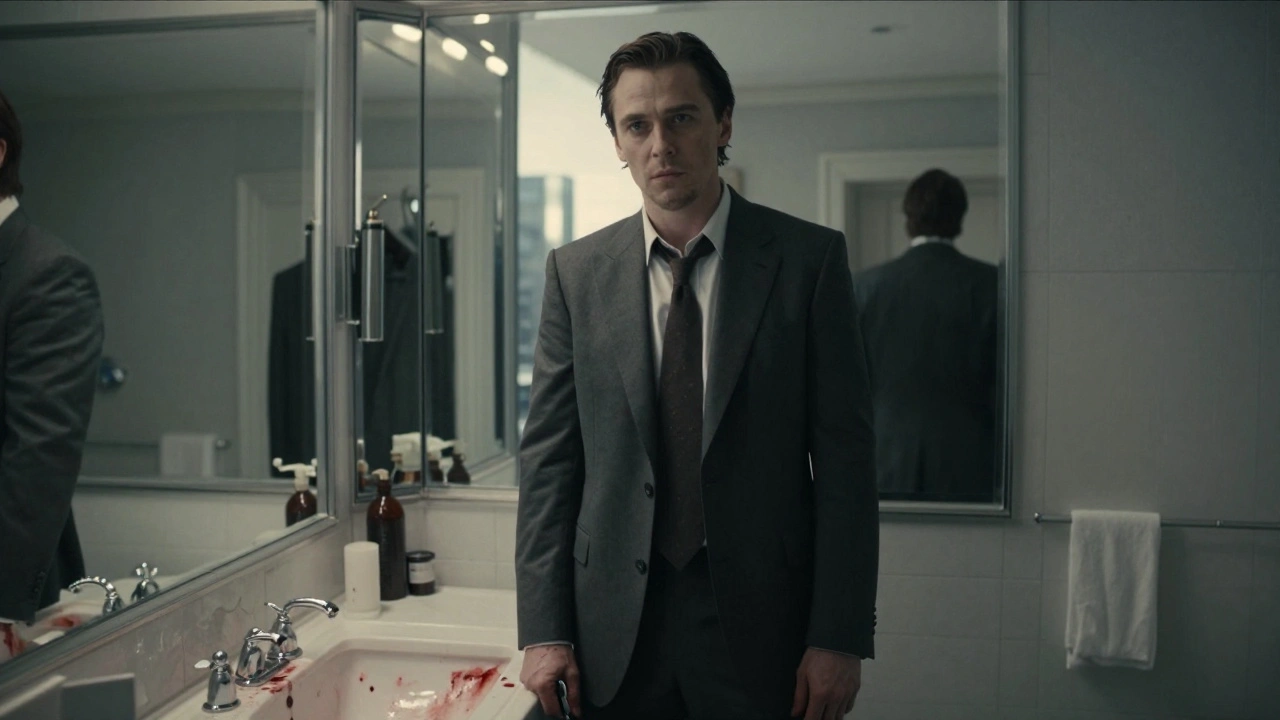
Think about your favorite actor. Now picture them playing something completely opposite of what you’ve seen before. A comedic lead as a silent assassin. A heartthrob as a grieving widower with a limp. A superhero as a timid librarian. When it happens, it’s electric. That’s against-type casting - and it’s one of the most powerful tools in filmmaking that audiences rarely notice until it works.
What Against-Type Casting Really Means
Against-type casting isn’t just about swapping genres. It’s about casting an actor in a role that contradicts their established public image, physical type, or previous performances. It’s the moment a studio looks at the box office track record and says, ‘What if we break it?’
For decades, Hollywood relied on typecasting as a safe bet. Tall, muscular men became action heroes. Women with wide eyes and soft voices got the romantic lead. Comedians did comedies. Dramatic actors stayed serious. It made marketing easy. But audiences are smarter now. They don’t just want to see their favorite actor - they want to see them surprise them.
When an actor steps outside their lane, it’s not just a stunt. It’s a statement. It says, ‘I’m not just this one thing.’ And when it lands, it redefines careers.
When the Risk Pays Off
Some of the most iconic performances in film history came from actors who were wildly mismatched to their roles.
Take Christian Bale in American Psycho. Before 2000, he was known for playing earnest young men in Empire of the Sun and American History X. But Patrick Bateman? A wealthy, psychopathic Wall Street yuppie who kills people between manicured grooming sessions? Bale didn’t just play him - he became him. He lost 40 pounds, studied the cadence of narcissism, and delivered a performance so chillingly calm it haunted viewers. No one expected it. That’s why it worked.
Or consider Jodie Foster in The Silence of the Lambs. She’d been a child star, then a teen icon in Nell and Contact. But Clarice Starling? A quiet, driven FBI trainee with a haunted past? Foster didn’t play her with bravado. She played her with restraint. The result? An Oscar win and a role that still defines the genre 30 years later.
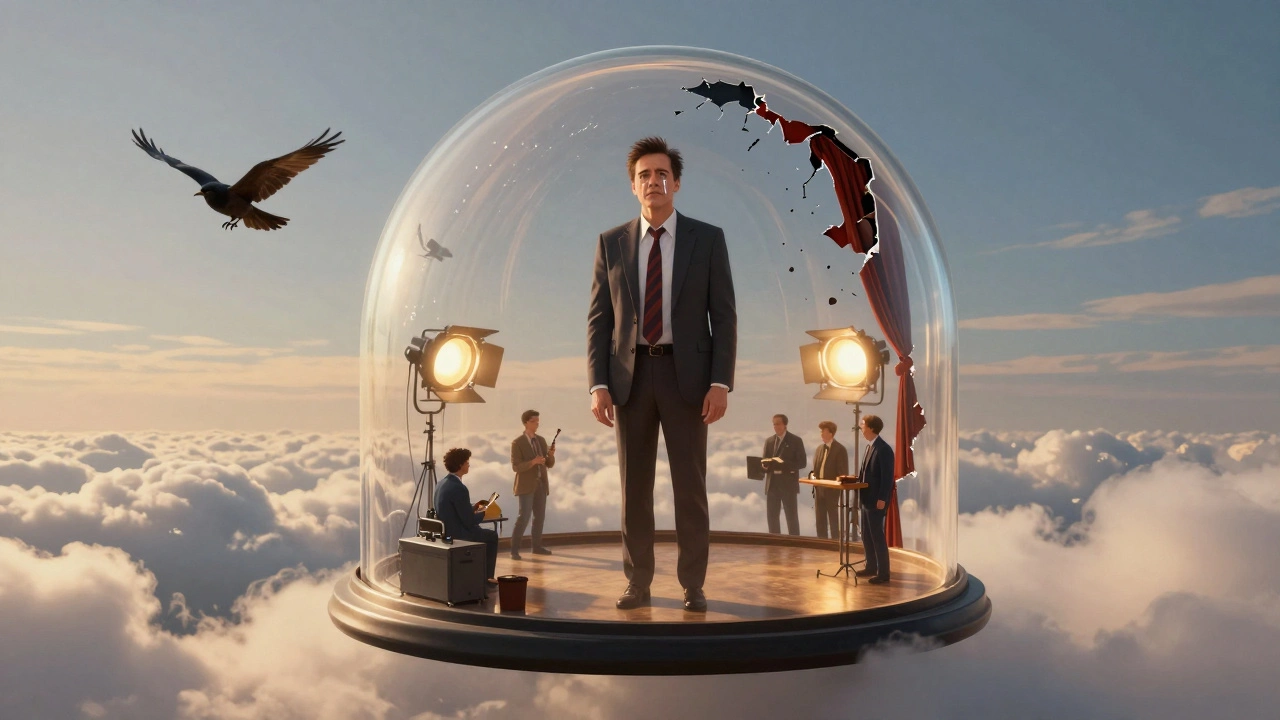
Even comedians have broken through. Jim Carrey in The Truman Show wasn’t just funny - he was devastating. His character’s slow realization that his entire life was a lie? Carrey didn’t use his usual physical comedy. He used silence. He used trembling lips. He used tears. That performance didn’t just earn him a Golden Globe - it changed how people saw him.
Why Studios Resist - and Why They Shouldn’t
Studio executives still worry about brand equity. They ask: ‘Will the audience accept this actor in this role?’ But that question is backwards. Audiences don’t care about the actor’s past roles - they care about whether the character feels real.
Look at the backlash against casting John Travolta as Vincent Vega in Pulp Fiction. He was known for Grease and Saturday Night Fever. By 1994, he was considered a faded star. Quentin Tarantino didn’t care. He saw something else: a man who could carry menace with charm. The result? A career resurrection and one of the most quoted characters in film.
Same with Robert De Niro in Meet the Parents. He was the godfather of gritty drama - Taxi Driver, Raging Bull. Then he played a controlling, terrifying father-in-law who scared the hell out of Ben Stiller. No one expected De Niro to be funny. But he was. Not because he was trying to be - because he committed to the character’s logic. That’s the key.
When actors fully inhabit a role that contradicts their type, the audience doesn’t see the actor. They see the character. And that’s when magic happens.
The Dark Side: When Against-Type Casting Backfires
Not every risk pays off. Sometimes, the mismatch is too extreme - or the actor isn’t ready.
Remember when Tom Cruise played a man with Asperger’s in Rain Man? No, wait - he didn’t. Dustin Hoffman did. And that’s the point. Cruise once tried to play a gay man in Vanilla Sky - but the role was written as a straight man with a fantasy twist. The performance felt forced. The audience didn’t buy it. Why? Because the casting wasn’t against-type - it was confused.
Another example: Hugh Jackman in The Fountain. He’s a charismatic action star. The film asked him to play a 12th-century knight, a 21st-century scientist, and a space traveler all in one. The performance was emotionally raw - but the script was too abstract. The audience couldn’t connect. The risk was real. The payoff? Not enough.
Against-type casting only works when the actor has the depth to carry it. You can’t just slap a serious actor into a comedy and call it a breakthrough. You need preparation, understanding, and emotional truth.
How Directors Find the Right Mismatch
Great directors don’t cast against-type by accident. They hunt for it.
David Fincher cast Brad Pitt as a depressed, emotionally stunted man in Fight Club. Pitt was the golden boy of Hollywood - the guy who smiled through every interview. But Fincher saw the quiet sadness beneath. He pushed Pitt to suppress his charm. The result? Tyler Durden wasn’t just a character - he was a fracture in Pitt’s public persona.
Same with Cate Blanchett in Blue Jasmine. She’d played queens, spies, and superheroes. But Jasmine? A broken, delusional socialite losing everything? Blanchett didn’t play her as a victim. She played her as someone who believed her own lies - even as they collapsed around her. The performance was so raw, it earned her an Oscar.
The trick? Directors look for actors who have hidden dimensions. They ask: ‘What’s the opposite of what they’re known for?’ Then they build the role around that.
What This Means for Actors
For actors, against-type casting isn’t just a career move - it’s survival.
Actors who only play the same role get stuck. They become a brand, not a talent. The industry moves fast. Audiences get bored. If you’re only the funny best friend, the tough cop, or the love interest, you’ll eventually run out of roles.
The actors who last - the ones who keep working into their 50s, 60s, 70s - are the ones who’ve proven they can do more. Meryl Streep didn’t become Meryl Streep by playing the same type. She played a Nazi sympathizer, a British prime minister, a witch, a lawyer, a singing matriarch, and a grieving mother - all in the same decade.
Actors who want longevity need to challenge themselves. Take a role that scares you. Play someone you don’t understand. Let the audience be uncomfortable with you. That’s how you grow.
The Future of Casting
Streaming platforms have changed everything. With more shows, more characters, and more niche audiences, studios can afford to take bigger risks.
Look at Succession. Brian Cox plays a ruthless media mogul - but he’s also a tender, lonely father. Jeremy Strong plays a man who’s emotionally paralyzed, yet fiercely intelligent. Neither actor fit the mold of the typical powerful CEO or neurotic son. But their performances made the show unforgettable.
Even animated films are doing it. In Inside Out 2, Maya Rudolph voices Anxiety - a role that could’ve gone to a traditional voice actor. But they cast her because she’s known for comedy, not emotional depth. The result? A layered, terrifyingly real portrayal of panic.
Next year, we’ll see more of this. A rapper playing a classical pianist. A former WWE star as a gentle poet. A child actor as a war veteran. The lines are blurring. And the audience? They’re ready.
Why We Love It
We love against-type casting because it reminds us that people aren’t one thing. We’re all complex. We laugh and cry. We’re strong and broken. We hide parts of ourselves.
When an actor breaks type, it’s not just about performance - it’s about truth. It says, ‘You don’t know me. And that’s okay.’
That’s why we remember it. That’s why we talk about it. That’s why it sticks.
What is against-type casting in film?
Against-type casting is when an actor is chosen for a role that directly contradicts their established public image, previous roles, or physical type. For example, casting a well-known comedian as a silent, emotionally broken character - like Jim Carrey in The Truman Show. It works when the actor brings depth and authenticity to a role audiences didn’t expect them to play.
Why do studios still rely on typecasting?
Studios use typecasting because it’s safe. If an actor is known for action roles, casting them in another action movie reduces marketing risk. Audiences know what to expect. But this approach limits storytelling and can stall careers. As audiences become more sophisticated, studios that stick to type risk losing relevance.
Can any actor pull off against-type casting?
No. It takes more than just wanting to try something new. The actor needs emotional range, preparation, and a deep understanding of the character. It’s not about changing appearance - it’s about changing behavior, voice, posture, and inner life. Actors like Meryl Streep, Christian Bale, and Jodie Foster succeeded because they studied, lived in the role, and let go of their own persona.
What’s the biggest risk of against-type casting?
The biggest risk is that the audience won’t believe it. If the actor doesn’t fully commit, or if the script doesn’t support the shift, the performance feels forced. Examples like Tom Cruise in Vanilla Sky show how mismatched casting can backfire - not because the actor is bad, but because the role and performance don’t align emotionally.
How can aspiring actors use against-type casting to advance their careers?
Start small. Take roles in indie films or theater that challenge your usual type. If you’re known for comedy, try a dramatic short. If you’re the ‘tough guy,’ play someone vulnerable. Build a reel that shows range. Agents and directors notice actors who aren’t afraid to be uncomfortable. It’s not about being the star - it’s about being unforgettable.






Comments(9)