Star Ratings vs Letter Grades: Which Film Rating Scale Works Best?

Joel Chanca - 29 Sep, 2026

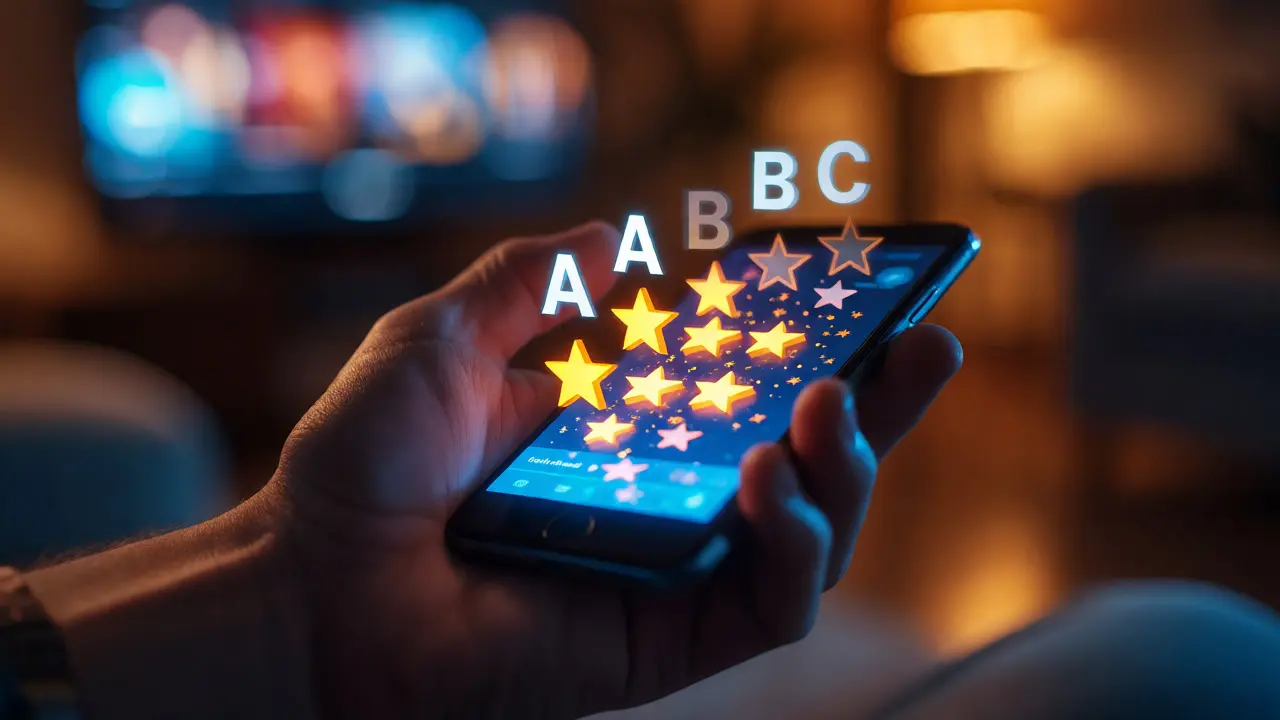
You’ve probably felt it. You’re scrolling through Netflix or IMDb, looking for a Friday night watch. You see a movie with four stars. Great, right? Then you see another with an "A-" grade. Is that better? Worse? How do they compare? This isn’t just a minor annoyance; it’s a genuine communication breakdown in how we judge art.

The debate between star ratings and letter grade systems has been raging among critics, audiences, and platform designers for decades. One side argues that stars are intuitive and visual. The other claims letters offer more nuance and avoid the trap of false precision. Neither is objectively "correct," but choosing the wrong one can mislead your audience or distort your own perception of quality.

The Psychology Behind Star Ratings

Star ratings, typically ranging from 1 to 5, are the default language of modern consumer feedback. Think Amazon, Yelp, and most major streaming services. Why did this system win? Simplicity. Humans process visual cues faster than text. A row of filled yellow stars triggers an immediate emotional response: "This is good." It requires zero cognitive load to understand.

But here’s the catch: stars encourage binary thinking. Did you like it? Yes (4-5 stars) or No (1-2 stars). There’s very little room for "It was technically proficient but emotionally hollow." When users rate films on platforms like Rotten Tomatoes or IMDb, they often round up. If a movie was "pretty good," they give it 4 stars. If it was "okay," they might still give it 3, because 2 feels too harsh. This inflation skews the data. A 3.8-star average doesn’t mean the same thing today as it did in 1990.

Furthermore, stars suffer from what psychologists call "anchoring bias." Once you see a movie has 4.5 stars, you enter the theater expecting greatness. If it’s merely decent, you feel disappointed, not because the film failed, but because the expectation was inflated by the metric itself. Stars promise perfection; they rarely deliver it.

The Case for Letter Grades

Letter grades (A through F), popularized by outlets like Entertainment Weekly and certain academic-style blogs, approach film criticism differently. They borrow from educational assessment, implying that a film can be evaluated against specific criteria: acting, direction, script, technical merit.

An "A" doesn’t necessarily mean "perfect." In many grading scales, an A represents excellence within a context. An "F" isn’t always "unwatchable"; sometimes it means "failed its intended purpose." This system allows for nuance. You can have a B+ thriller that is highly entertaining but flawed, or an A- drama that is brilliant but boring. Letters force the reviewer to justify the score. Why is this an A? Why is that a C?

Critics who prefer letters argue that numbers create a false sense of mathematical precision. What’s the difference between a 7.8 and a 7.9 on IMDb? Probably nothing significant. But viewers treat them as distinct tiers. Letter grades smooth out these arbitrary distinctions. A B is a B. It acknowledges competence without pretending to measure soul with a ruler.
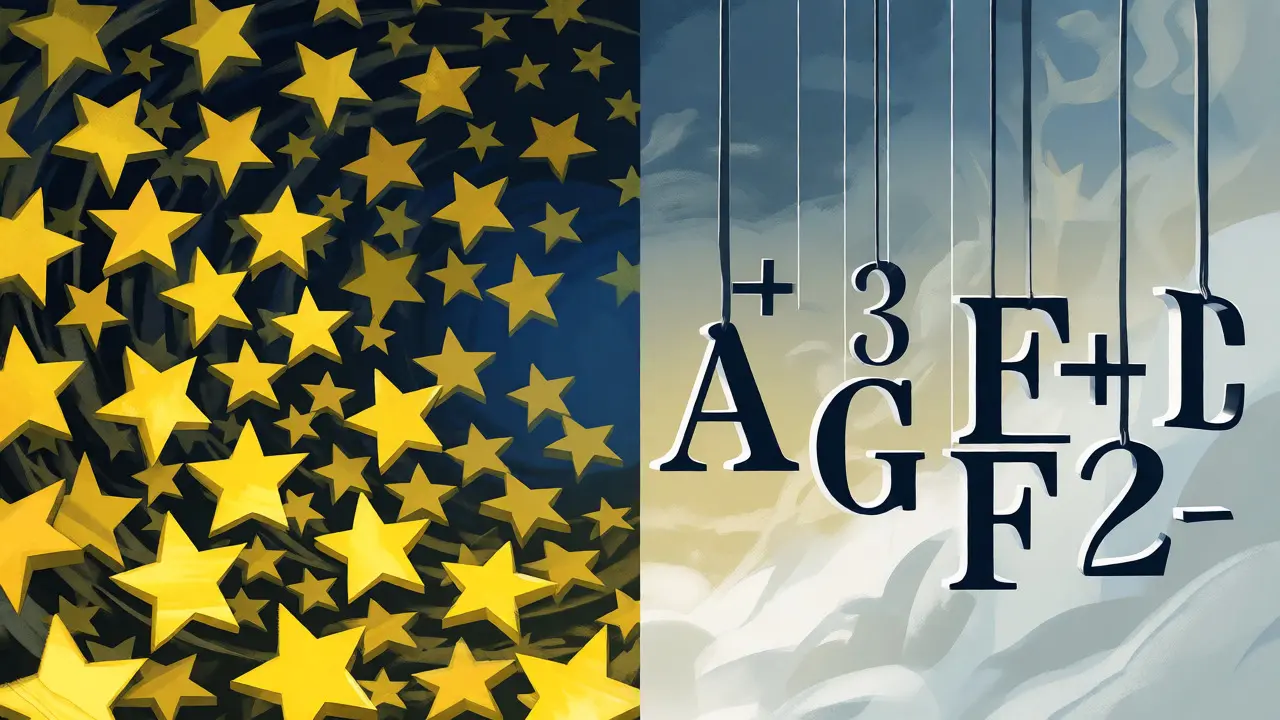
Split image showing chaotic stars versus orderly letter grades

Comparing the Metrics: Where They Fail

Both systems have fatal flaws when used in isolation. Let’s look at where each breaks down in real-world application.

Comparison of Star Ratings vs. Letter Grades
Feature Star Ratings (1-5) Letter Grades (A-F)
Intuitiveness High. Instantly recognizable globally. Moderate. Requires cultural context of school grading.
Nuance Low. Tends toward binary like/dislike. High. Allows for qualified praise or criticism.
Bias Susceptibility High. Users inflate scores to avoid negativity. Moderate. Critics may over-grade to seem generous.
Granularity Poor. Half-stars add complexity without clarity. Good. Plus/minus modifiers offer subtle distinctions.
Best For Quick decisions, commercial viability checks. Detailed analysis, critical discourse.

Notice the pattern? Stars are great for speed. If you need to decide in ten seconds whether to rent a movie, stars work. Letters are better for depth. If you want to know *why* a movie works, a letter grade paired with a short explanation provides more value.

How Platforms Use These Scales

Major platforms have experimented with both. Netflix moved away from stars years ago, switching to a simple thumbs-up/thumbs-down model. Why? Because their algorithm cares about engagement, not critical acclaim. A user watching a 2-star movie for three hours signals interest, regardless of the rating.

Meanwhile, Metacritic uses a weighted average of professional critic scores, converting them into a 0-100 number. This hybrid approach tries to capture the nuance of letters while maintaining the comparability of numbers. It’s effective but opaque. Most users don’t know how the weighting works, leading to trust issues.

Independent reviewers often stick to letters because it differentiates them from the crowd. In a sea of five-star hyperbole on social media, a thoughtful "B" stands out. It suggests the reviewer actually watched the whole film and considered its flaws. This builds credibility with niche audiences who value honesty over hype.
Modern home theater with remote and abstract film imagery on screen

Choosing the Right Scale for Your Audience

If you’re writing reviews or designing a review site, ask yourself: Who is reading this? Are they looking for entertainment advice or critical analysis?

  • For casual viewers: Stick to stars or thumbs. They want quick answers. Don’t make them decode a GPA.
  • For cinephiles: Use letters or numerical scores out of 100. They enjoy the debate over why a film got a B+ instead of an A.
  • For commercial products: Stars drive sales. A 4.5-star product converts better than a "Very Good" label because shoppers trust aggregate data.

Consider the medium too. On mobile devices, stars are easier to tap and read. On desktop blogs, letters allow for longer explanations. Never mix the two arbitrarily. If you use stars, define what each star means. If you use letters, publish a rubric. Consistency is key to trust.

The Future of Film Evaluation

We’re moving toward personalized metrics. Instead of asking "Is this movie good?", algorithms ask "Will *you* like this movie?" This shift makes universal scales less relevant. Your favorite director might get a C from a general audience but an A from fans of that genre.

Emerging platforms are testing tags and sentiment analysis over rigid scores. Imagine a review that says, "Great cinematography, weak plot," instead of "3 stars." This descriptive approach bypasses the star-vs-letter debate entirely. However, until AI can perfectly summarize subjective experience, we’ll still need shorthand. And for now, knowing which shorthand your audience understands best is half the battle.

Don’t let the scale dictate your opinion. Watch the film first. Rate it second. If you find yourself agonizing over whether to give 3 or 4 stars, maybe the answer is that it’s neither-and that’s okay. Sometimes, the most honest review is the one that refuses to fit neatly into a box.

Why do people give movies 5 stars even if they were bad?

This is known as "rating inflation." Users often hesitate to give low scores because they fear appearing elitist or negative. Additionally, many viewers conflate enjoyment with quality. A "guilty pleasure" movie might get 5 stars from someone who had fun, even if critics would rate it lower based on technical merit.

Are letter grades better than star ratings for serious criticism?

Generally, yes. Letter grades imply a standard of evaluation rather than just personal preference. They allow for nuanced distinctions (e.g., A- vs. B+) that reflect specific strengths and weaknesses. Stars tend to flatten these nuances into a binary like/dislike spectrum, which can oversimplify complex artistic achievements.

What does a 3.5-star rating actually mean?

In most contexts, a 3.5-star rating signifies "above average but not exceptional." It suggests the film is worth watching for most people but lacks the standout qualities needed for a top-tier recommendation. However, interpretation varies by platform; on some sites, 3.5 is mediocre, while on others, it’s quite positive.

Why did Netflix remove star ratings?

Netflix switched to thumbs-up/thumbs-down to improve their recommendation algorithm. They found that users’ star ratings didn’t accurately predict future viewing habits. Thumbs-up signals explicit interest, which is a stronger indicator for machine learning models than ambiguous star counts. It also simplified the interface for mobile users.

Can I convert star ratings to letter grades?

There is no direct conversion because the scales measure different things. Stars measure satisfaction; letters measure quality against criteria. However, a rough heuristic is: 5 stars ≈ A, 4 stars ≈ B+, 3 stars ≈ C, 2 stars ≈ D, 1 star ≈ F. Keep in mind this ignores the nuance that letter grades provide regarding specific aspects of filmmaking.

Comments(10)

Matthew Jernstedt

Matthew Jernstedt

September 29, 2026 at 18:33

I absolutely love this breakdown because it validates what so many of us have been feeling in our gut for years without being able to articulate it clearly!

It is truly inspiring to see someone finally tackle the psychological weight of these arbitrary symbols with such grace and precision, reminding us that art is subjective and messy. We often get so caught up in the algorithmic chase for the perfect score that we forget the magic of just sitting down and watching a film with an open heart. This post is a beautiful reminder that our feelings matter more than the yellow stars or the letter grades on a screen.

We need to keep pushing for this kind of nuanced conversation because it empowers viewers to trust their own instincts rather than relying solely on aggregated data points. Every time we choose a movie based on how it makes us feel instead of how it scores numerically, we are reclaiming our power as consumers of culture. Let’s not let the fear of missing out on a 'highly rated' masterpiece stop us from discovering those hidden gems that might only have a B- grade but speak directly to our souls.

This is exactly the kind of positive energy and thoughtful analysis that Reddit needs right now to counteract the cynicism that plagues so many other discussions online. Keep writing pieces like this that encourage us to look deeper and appreciate the complexity of human expression in cinema.

Anthony Beharrysingh

Anthony Beharrysingh

October 1, 2026 at 08:45

Oh please, spare me the academic hand-wringing over which arbitrary symbol system is superior 😒. It’s all performative nonsense designed to make critics feel intellectually superior while the audience remains utterly confused and manipulated by marketing departments 🙄. The fact that you’re even debating this proves how disconnected modern criticism is from actual viewing experiences 💅. Nobody cares about your rubric when they’re trying to decide what to watch on a Friday night; they care about vibes and whether the plot holds water 🤷‍♂️. Letter grades are just pretentiousness wrapped in a school metaphor that doesn’t translate to adult consumption habits 📉. Stars aren’t perfect, sure, but at least they don’t require a degree in semiotics to decode the reviewer’s hidden agenda 🎭. This entire article is a waste of bandwidth that could have been used to discuss actual cinematic techniques or narrative structures 🗑️. You’re analyzing the wrapper instead of the candy, and frankly, it’s exhausting to read through the layers of self-important justification 🥱.

Scott Kurtz

Scott Kurtz

October 1, 2026 at 21:33

actually both systems are fundamentally broken because they rely on linear scaling for non-linear human experience

the anchoring bias mentioned here is real but its not just about expectations its about cognitive laziness people want to offload judgment to a number so they dont have to think about why they liked something

imdb scoring is garbage anyway because its dominated by fanboys who rate everything their favorite franchise gets a 10 and everything else a 1 regardless of merit

letter grades imply a standard but whose standard is it really just some critics personal preference dressed up as objective truth using educational authority to mask subjectivity

the real issue is that we treat films as products to be consumed rather than experiences to be lived which reduces art to a transactional value metric

half stars are worse than whole stars because they create false precision where none exists implying a level of discernment that most raters simply do not possess

netflix removing stars was actually smart because it acknowledged that binary choice reflects actual behavior better than granular scales that no one uses consistently

if you really want nuance use tags or sentiment analysis which captures the multidimensional nature of artistic appreciation far better than any single scalar value ever could

Muller II Thomas

Muller II Thomas

October 1, 2026 at 23:24

its not about the scale its about the moral failing of the viewer who cant handle ambiguity

people want simple answers because they lack the intellectual fortitude to engage with complex media and thats sad honestly

using letters implies a hierarchy that reinforces classist notions of cultural capital which excludes those who didnt grow up with formal education

stars are democratic but flawed yet at least they dont pretend to measure quality against an arbitrary academic standard that ignores emotional resonance

i find it offensive that we reduce human creativity to a letter grade as if art can be graded like a math test

the author misses the point entirely by focusing on mechanics rather than the ethical implications of rating systems in a capitalist society

we should abolish ratings altogether and return to word of mouth which is slower but more honest and community driven

until then were just participating in a collective delusion that numbers mean something when theyre just noise

Aleen Wannamaker

Aleen Wannamaker

October 3, 2026 at 14:44

Great overview! 🌟 I’ve noticed that on platforms like Letterboxd, people are moving toward descriptive reviews rather than just star counts, which aligns with the future trends mentioned here. 📝 For casual viewers, stars are definitely faster, but for cinephiles, adding context is key. 🎬 Maybe a hybrid model where you give a star rating AND a short tag (e.g., "🌟🌟🌟🌟 - Great visuals, weak script") would bridge the gap? 🤔 It helps manage expectations without losing the quick visual cue. 🧠 What do others think about combining quantitative and qualitative feedback? 👇

Hengki Samuel

Hengki Samuel

October 5, 2026 at 01:33

THIS IS AN OUTRAGEOUS MISREPRESENTATION OF AFRICAN CINEMA'S INFLUENCE ON GLOBAL RATING STANDARDS!!! 🌍💥

Why does nobody acknowledge that Nollywood pioneered the rapid-fire consumer feedback loop long before Hollywood adopted these trivial symbols??? 🎬🔥

We have been judging films based on community consensus and visceral reaction for decades, rendering these Western academic constructs utterly irrelevant!!! 🚫📚

The arrogance of assuming American grading systems apply universally is staggering and deeply insulting to our rich cultural heritage!!! 😡🏆

Our audiences demand authenticity, not sterile letter grades detached from the emotional pulse of the storytelling!!! ❤️‍🔥✨

Until you respect the global diversity of critical thought, this discussion remains parochial and incomplete!!! 🌐📢

I am furious that this platform continues to center Anglo-American perspectives in a world dominated by diverse narratives!!! 🇳🇬✊

Peter Sehn

Peter Sehn

October 6, 2026 at 23:11

AMERICA LEADS THE WAY IN INNOVATION AND THESE SYSTEMS ARE PROOF OF OUR SUPERIOR CULTURAL EXPORTS!!! 🇺🇸🦅

Nobody does entertainment like we do and our rating metrics are the gold standard worldwide!!! 🏆⭐

If other countries don't understand our systems that's THEIR problem not ours!!! 🤷‍♂️🇺🇸

We invented the blockbuster and we invented the way we judge it so deal with it!!! 💪🎬

Global acceptance of American standards is inevitable because our soft power is unmatched!!! 🌎🔥

Clifton Makate

Clifton Makate

October 7, 2026 at 05:53

Good day everyone,

I found this discussion quite illuminating regarding the evolution of media consumption habits across different cultures. It is fascinating to observe how technological interfaces shape our perceptual frameworks when engaging with creative works. While the debate between stars and letters is intriguing, I believe the core issue lies in the democratization of critique itself. In many communities, including my own, oral tradition and communal discussion still hold significant weight over digital metrics. Perhaps the future lies in integrating these traditional forms of validation with modern algorithms. We must ensure that technology serves humanity rather than dictating our aesthetic values. Thank you for raising such pertinent questions about our digital literacy.

Benjamin Spurlock

Benjamin Spurlock

October 9, 2026 at 03:34

Stars are fine for quick scrolling. Letters take too much mental effort. 🤷‍♂️ Thumbs up/down is best. 👍

Chris Martin

Chris Martin

October 10, 2026 at 19:47

I respectfully disagree with the premise that either system is inherently superior. Both serve distinct functional purposes within their respective ecosystems. Star ratings facilitate rapid decision-making for mass-market consumers, whereas letter grades cater to a niche audience seeking detailed analytical breakdowns. The optimal approach depends entirely on the user's intent and familiarity with the platform's conventions. Standardization is desirable, but flexibility is necessary to accommodate diverse viewing contexts.

Write a comment