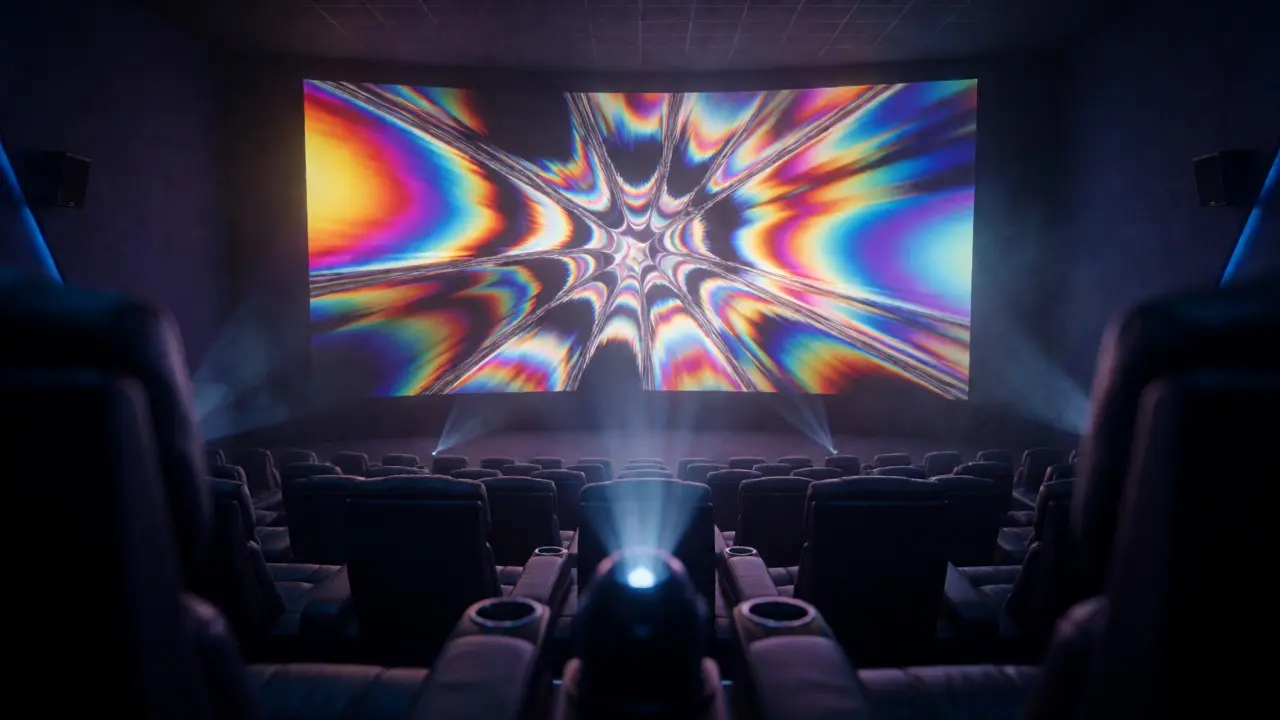
You paid $28 for a movie ticket last weekend. Did you actually care about the laser projection or the 12-channel sound? Or did you just want the best seat in the house without thinking about the capital expenditure behind the screen? This is the central tension in modern exhibition: Premium Large Format (PLF) technologies like Dolby Cinema and IMAX Laser require massive upfront investments, yet their long-term viability depends entirely on whether audiences will consistently pay higher ticket prices to experience them.
Theaters aren't just selling seats anymore; they're selling engineering. But if the price tag scares people away, the tech becomes a white elephant. If it's too cheap, the theater never recoups its investment. So, how do exhibitors find that sweet spot? It’s not just about marking up the base price by 50%. It’s a delicate dance of perceived value, competitive positioning, and psychological pricing tricks that most moviegoers don’t even notice.
The Cost Behind the Screen
To understand why your ticket costs more, you have to look at what changed in the projection booth over the last decade. The shift from xenon arc lamps to Laser Projection systems offers significantly higher brightness levels, wider color gamuts, and lower maintenance costs over time compared to traditional bulb-based projectors. While laser systems eventually save money on lamp replacements, the initial hardware cost is steep. A single dual-laser projector setup can run into the hundreds of thousands of dollars per auditorium.
Then there’s the audio. Standard digital surround sound is fine for watching a rom-com. But for an action blockbuster, exhibitors are installing object-based audio systems like Dolby Atmos which places sound objects in a three-dimensional space rather than assigning them to specific channels, creating a more immersive auditory experience. These installations require structural changes to the auditorium-reinforcing ceilings for speakers, rewiring entire rooms, and calibrating acoustics to millimeter precision.
All this capital expenditure (CapEx) has to be recovered. Exhibitors typically aim for a return on investment within five to seven years. If ticket prices remain static while equipment costs rise, the profit margin evaporates. That’s why the surcharge exists. It’s not greed; it’s amortization. But here’s the catch: consumers don’t see CapEx tables. They see a price jump from $14 to $22. Does the visual upgrade justify a 57% price hike? That’s where pricing strategy gets tricky.
Perceived Value vs. Actual Experience
Most people can’t tell the difference between standard digital projection and high-end laser projection unless they’re sitting in the front row or comparing side-by-side. Yet, they’ll happily pay extra for a recliner seat because they feel the comfort immediately. This disconnect between tangible physical comfort and intangible audiovisual quality drives pricing models.
Exhibitors leverage Brand Equity where established names like IMAX carry historical weight and consumer trust, allowing theaters to command higher premiums based on brand recognition alone rather than immediate sensory comparison. When you buy an IMAX ticket, you’re paying for a promise of scale. You know the screen is bigger. You know the aspect ratio might change. That certainty reduces decision fatigue. Consumers prefer known quantities, even if the actual technical improvement over a well-calibrated standard screen is marginal for certain genres.
Conversely, newer technologies like CINITY a premium format developed by China Film Group and Cameron Pace Group that combines high frame rate, high dynamic range, and wide color gamut technologies. struggle with this. Without decades of brand history, CINITY relies heavily on marketing education. Exhibitors often have to discount these formats initially to build trial volume. Once customers realize the clarity during fast-motion scenes, willingness to pay increases. But getting them through the door the first time requires aggressive pricing tactics.
Tiered Pricing Structures
Gone are the days when every seat in the house cost the same. Modern ticketing systems use dynamic algorithms to adjust prices based on demand, day of the week, and time of day. However, PLF premiums usually sit outside this dynamic base, acting as a fixed add-on. Here’s how major chains structure these tiers:
| Format Type | Base Price Range | Premium Surcharge | Primary Value Driver |
|---|---|---|---|
| Standard Digital | $12 - $16 | N/A | Accessibility & Convenience |
| IMAX Laser | $15 - $19 | $3 - $5 | Screen Size & Brand Prestige |
| Dolby Cinema | $16 - $20 | $4 - $6 | Contrast Ratio & Audio Immersion |
| Recliner PLF | $18 - $24 | $5 - $8 | Physical Comfort + Tech Bundle |
Notice the bundling effect. The highest premiums aren’t just for the tech; they’re for the combination of tech plus luxury seating. A standalone laser projector in a hard-seat auditorium commands a smaller premium than the same projector paired with electric leather recliners. Why? Because the recliner solves a pain point (discomfort) that the projector doesn’t necessarily address for casual viewers. Therefore, successful pricing strategies often bundle PLF with hospitality upgrades.
Psychological Anchoring and Discounting
Have you ever noticed that the "VIP" or "Dolby" option is always listed first or highlighted in gold on the booking app? This is Anchoring Effect a cognitive bias where individuals rely too heavily on the first piece of information offered (the anchor) when making decisions, making subsequent options seem cheaper by comparison. By showing the $28 Dolby ticket first, the $22 standard premium ticket feels like a bargain, even if $22 is objectively expensive.
Exhibitors also use membership programs to smooth out adoption curves. Chains like AMC Stubs or Regal Crown Club offer points toward free upgrades. This creates a "try before you commit" loop. A user pays full price once, enjoys the experience, earns points, and then uses those points to subsidize future PLF visits. This lowers the barrier to entry for price-sensitive customers who wouldn’t otherwise pay the cash premium. Data suggests that members are 40% more likely to choose a premium format than non-members, proving that loyalty programs are essential tools for sustaining PLF revenue streams.
Another tactic is time-based differentiation. Matinee premiums are often waived or reduced. If you go to a Dolby Cinema on Tuesday afternoon, you might pay only $2 more than standard. On Friday night, that gap widens to $6. This maximizes yield management: capturing maximum willingness-to-pay from evening crowds while filling empty seats during off-peak hours with lower-margin sales.
Competitive Pressure and Market Saturation
In urban markets, multiple theaters compete for the same dollar. If one chain charges $25 for Dolby and another charges $18 for a comparable laser format, the latter gains market share quickly. This forces competitors to either drop prices or differentiate further. We’re seeing a trend where smaller boutique cinemas introduce "boutique PLF" concepts-smaller screens but ultra-high-quality projection-to undercut big-box premiums while maintaining margins through lower operating costs.
However, oversaturation poses a risk. If every auditorium becomes a premium format, the scarcity value disappears. Why pay extra for Dolby if the regular hall also has laser projection and Atmos sound? Exhibitors must carefully balance the number of PLF screens against total capacity. Typically, no more than 20-30% of seats in a multiplex should be designated as premium. Beyond that, cannibalization occurs, where customers downgrade from premium to standard simply because the price difference isn’t justified by a noticeable difference in experience.
Future Trends: Dynamic Bundling
The next evolution in pricing isn’t just about higher tickets-it’s about personalized bundles. Imagine buying a ticket online and being offered a package deal: "Add popcorn and a drink for $5, or upgrade to Dolby for $3." Algorithms analyze your past behavior. If you always buy snacks, the system might prioritize bundling food discounts over tech upgrades. If you never buy food, it pushes the tech upgrade harder.
We’re also seeing the rise of "eventized" pricing. Special screenings, director’s cuts, or fan-premiere nights command super-premium rates regardless of format. Here, the content itself drives the price, not just the technology. This shifts the burden of justification from the projector to the programming. For studios, this means releasing tentpole films exclusively in PLF formats for the first two weeks, forcing fans to pay the premium if they want to see it immediately. This artificial scarcity protects the premium price point until general release dilutes the exclusivity.
Why are IMAX tickets so much more expensive than regular movies?
IMAX tickets cost more due to the significant capital investment required for specialized cameras, larger screens, proprietary projection systems, and enhanced sound infrastructure. Additionally, IMAX holds strong brand equity, allowing exhibitors to charge a premium based on perceived superior quality and exclusive content availability that standard theaters cannot replicate.
Is Dolby Cinema worth the extra cost compared to standard digital?
For visually driven films with dark scenes or complex sound design, Dolby Cinema is generally considered worth the extra cost. Its dual-laser projection offers deeper blacks and brighter highlights, while Dolby Atmos provides precise 3D audio placement. However, for dialogue-heavy dramas or comedies, the difference may be less noticeable, making the premium less justifiable for some viewers.
Do movie theaters make more profit on premium tickets?
Yes, premium tickets have higher gross margins despite higher operational costs. While the equipment depreciation is steeper, the incremental cost to serve one additional customer in a premium seat is minimal. Since the ticket price is significantly higher, the net profit per attendee in a PLF auditorium is often double or triple that of a standard auditorium, assuming similar occupancy rates.
How do loyalty programs affect premium format pricing?
Loyalty programs reduce the effective price for frequent attendees by offering points redeemable for upgrades or discounted tickets. This encourages trial among price-sensitive customers and builds habitual attendance at premium venues. Members are statistically more likely to select premium formats, helping theaters maintain high occupancy rates in expensive auditoriums.
Will ticket prices continue to rise for new technologies?
Ticket prices for new technologies tend to start high to recover development and installation costs, then gradually stabilize as adoption grows and competition increases. However, as inflation affects labor and energy costs, base prices may rise independently of technology. The key factor will be whether consumers perceive continued improvements in immersion as valuable enough to sustain the premium.