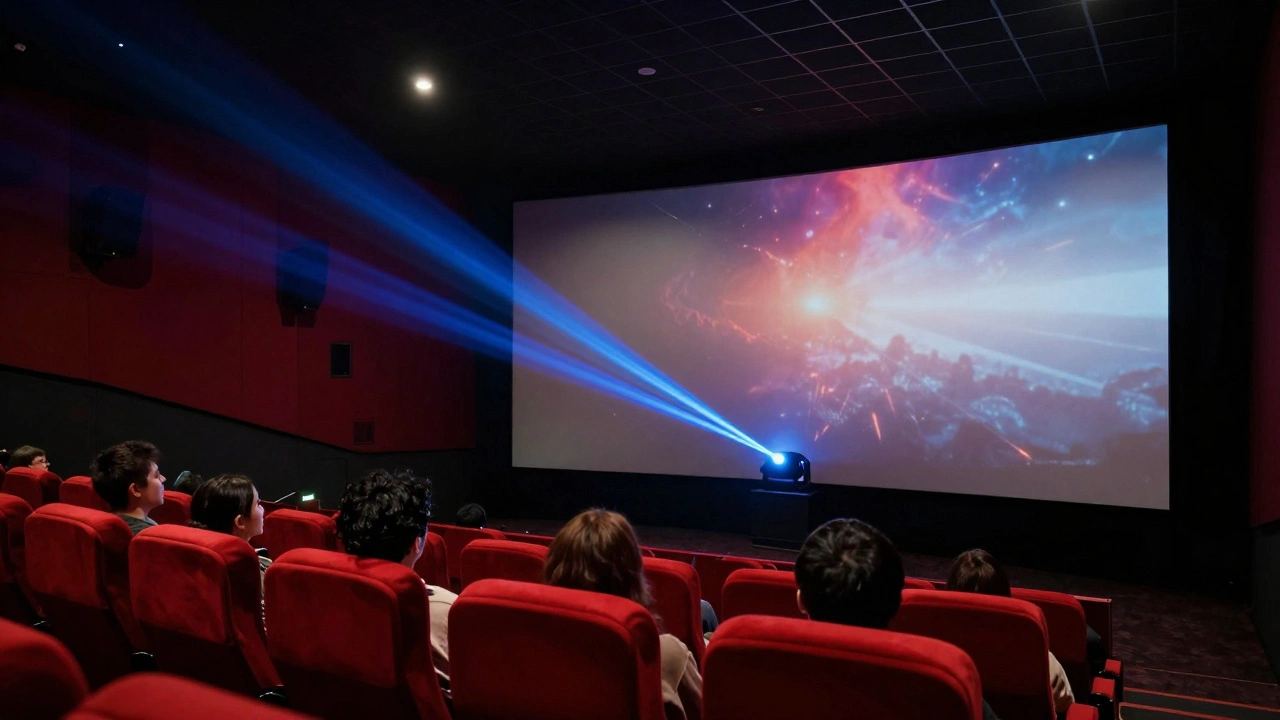
When a movie theater owner decides to swap out an old xenon lamp projector for a laser system, they’re not just buying a brighter image-they’re betting on future revenue. The upfront cost can hit $150,000 or more per screen. But for exhibitors running high-traffic locations in urban centers or luxury multiplexes, the math often adds up. The question isn’t whether laser projection is better-it’s whether the return justifies the spend.
What laser projection actually changes for audiences
Laser projectors don’t just make images brighter. They deliver 100% of the DCI-P3 color gamut, meaning reds, greens, and blues appear exactly as filmmakers intended. Contrast ratios jump from 2,000:1 on older projectors to 2,000,000:1 with laser. That’s not a marketing claim-it’s a measurable difference. In a dark theater, blacks look deeper, shadows hold detail, and highlights don’t blow out.
Real-world impact? Audiences notice. A 2024 survey by the National Association of Theatre Owners found that 68% of moviegoers in markets with laser-equipped theaters said they chose that theater over others because of image quality. That’s not just preference-it’s a direct driver of ticket sales.
How exhibitors break down the cost
Calculating ROI isn’t guesswork. It’s a ledger with five real-line items:
- Hardware cost: A single laser projector runs $120,000-$180,000, depending on brightness (20,000-30,000 lumens) and brand (Barco, Christie, NEC). Installation adds $15,000-$25,000.
- Power savings: Laser systems use 30-40% less electricity than xenon lamps. A typical 12,000-lumen xenon projector draws 6.5 kW. A comparable laser pulls 4.1 kW. At $0.12/kWh and 12 hours of daily use, that’s $1,200 saved per screen per year.
- Maintenance reduction: Xenon lamps last 500-1,000 hours and cost $3,500 each to replace. Laser diodes last 30,000+ hours with no consumables. That’s 20-30 fewer lamp changes per screen over five years.
- Screen rental premiums: Studios now offer higher revenue splits for laser-equipped theaters. For premium large format (PLF) screenings like Dolby Cinema or IMAX Laser, exhibitors keep 5-8% more of ticket revenue. In 2025, that’s an extra $1.50-$2.50 per ticket on average.
- Increased attendance: Theaters with laser projection see 15-25% higher occupancy on weekend nights. That’s not speculation-data from AMC and Regal show consistent spikes in ticket volume after upgrades.
Real numbers: A case study from Charlotte, North Carolina
A 10-screen multiplex in Charlotte upgraded four of its auditoriums to Barco laser projectors in early 2024. Here’s what happened:
- Total investment: $680,000 ($170,000 per screen)
- Annual power savings: $4,800
- Annual lamp replacement savings: $21,000 (30 lamps at $700 each)
- Additional revenue from premium pricing: $127,000 (from 28,000 extra tickets at $4.50 premium)
- Increased foot traffic: 18% more weekly admissions across upgraded screens
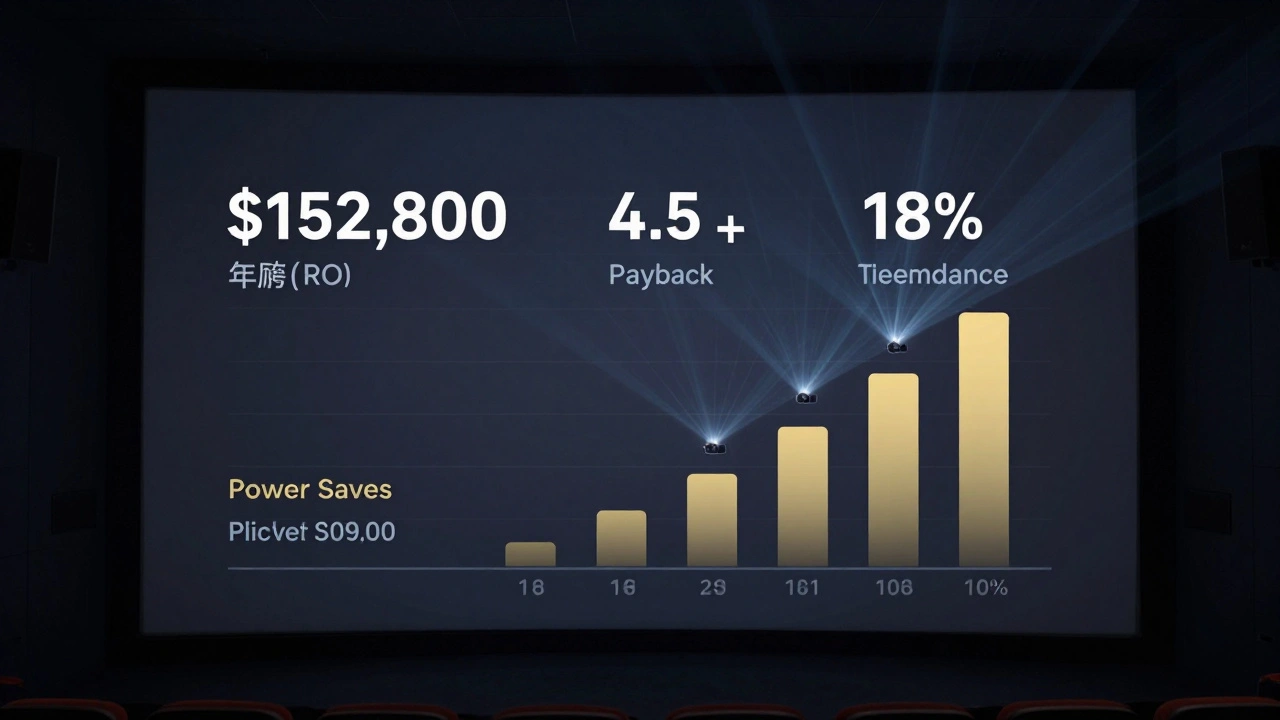
That’s $152,800 in annual savings and revenue lift. The payback period? Just 4.5 years. After that, every dollar earned from those screens is pure profit. And since laser systems have a 15-year lifespan, the theater gains 10+ years of higher margins.
When laser upgrades don’t make sense
Not every theater should upgrade. The math breaks down in low-traffic markets. A rural 4-screen theater showing 10 movies a week? The extra $150,000 spent on laser won’t generate enough additional revenue to cover the cost in 10 years.
Here’s the rule of thumb: if your theater sells fewer than 80 tickets per screen per day on average, laser isn’t a smart bet. But if you’re hitting 120+ tickets per screen daily-especially on weekends-and you’re showing 3-5 premium format films per week, the ROI is almost guaranteed.
Another red flag: if your screens are smaller than 40 feet wide. Laser’s biggest advantage-color accuracy and contrast-is wasted on tiny screens. The human eye can’t perceive the difference at close distances. Save the money and upgrade your seating instead.
What studios and distributors want
Major studios like Disney, Warner Bros., and Universal now require laser projection for premium content. If you want to screen Avengers: Doomsday or Oppenheimer 2 in Dolby Vision or IMAX Laser format, you need laser hardware. No exceptions.
Studios also offer marketing support. In 2025, Warner Bros. provided free digital signage, social media assets, and in-theater promo kits to theaters that upgraded to laser. That’s not charity-it’s an investment in consistent quality across their releases.
Hidden benefits you can’t ignore
There’s more to ROI than dollars. Laser systems are quieter. No more loud lamp fans drowning out dialogue. They turn on instantly-no 10-minute warm-up. No color shift after 300 hours of use. No need to dim lights during lamp changes.
These aren’t flashy features, but they matter. A theater with smooth operations and no technical hiccups builds trust. Moviegoers return. Families come back. Repeat customers are worth more than one-time ticket buyers.
What comes next? The next upgrade cycle
By 2027, LED projection will start entering the commercial market. It’s cheaper, even more energy efficient, and lasts longer. But it’s not ready for prime time yet. LED still struggles with peak brightness and color volume in large theaters.
Laser is the bridge. It’s the current standard. And for exhibitors who upgraded between 2022 and 2025, they’re now in the sweet spot: low operating costs, high audience demand, and studio backing. They’re not just keeping up-they’re leading.
How to start the process
If you’re considering a retrofit, here’s your action plan:
- Track your daily attendance per screen for six months. If any screen averages over 100 tickets/day, it’s a candidate.
- Check your film slate. Are you regularly showing Dolby Cinema, IMAX, or 4K HDR titles? If yes, laser is mandatory.
- Call your projector vendor. Ask for a free ROI calculator. Most offer web tools that plug in your location, screen size, and ticket price.
- Apply for state or local energy efficiency grants. Some programs cover up to 20% of the cost for theater upgrades.
- Start with one screen. Test the impact. Measure attendance, concession sales, and customer feedback before scaling.
There’s no magic formula. But the data is clear: laser projection isn’t a luxury. For exhibitors in the right markets, it’s the most reliable way to grow revenue, reduce costs, and stay competitive.
How long does a laser projector last compared to a xenon lamp?
Laser projectors last 30,000 hours or more-roughly 15 years at 6,000 hours per year of operation. Xenon lamps last only 500 to 1,000 hours and need replacement every few months in high-use theaters. That’s 30 times longer lifespan with no consumables.
Can I upgrade just one screen to test the ROI?
Yes, and it’s recommended. Start with your busiest screen, preferably one that shows premium format films. Track attendance, ticket price premiums, and customer feedback for 3-6 months. Most exhibitors see a 15-25% boost in revenue on upgraded screens within the first quarter.
Do I need to replace the screen when upgrading to laser?
Not always, but it helps. Laser projectors work fine on standard white screens, but a high-gain silver screen (like Stewart Filmscreen’s FireHawk) boosts brightness and contrast even further. If your current screen is over 8 years old or shows color fading, replacing it with a laser-optimized screen adds 10-15% to the image quality-and can justify the upgrade cost.
Are there any hidden costs after the installation?
The main hidden cost is calibration. Laser systems need annual color and brightness calibration to maintain accuracy. That runs $1,500-$2,500 per screen. Some vendors include it in maintenance contracts. Always ask before signing.
What if I can’t afford the upfront cost?
Many vendors offer leasing options with $0 down and monthly payments under $3,000 per screen. Some even structure payments based on ticket sales-so you pay more when you earn more. Talk to your supplier about revenue-sharing models. They’re designed to make upgrades accessible without draining cash reserves.



Comments(6)