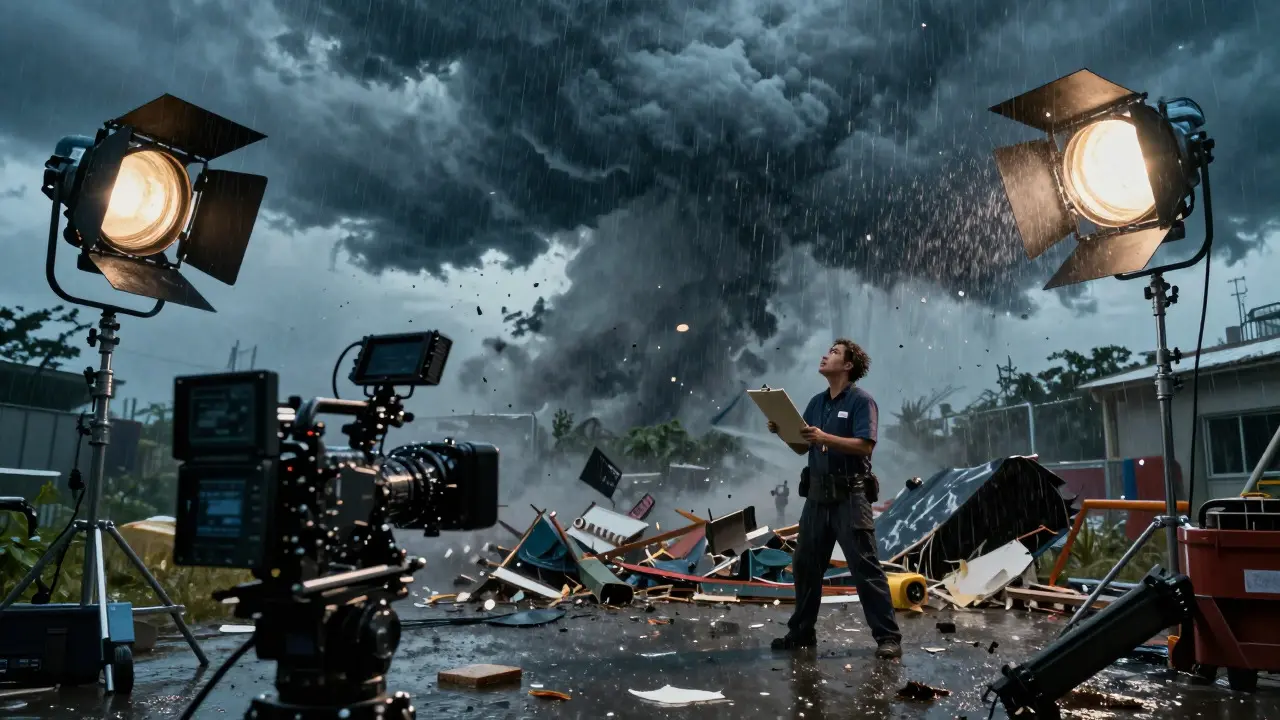
Imagine your lead actor gets sick three days before the first shoot date. Or a hurricane hits your coastal location, destroying sets you spent weeks building. In these moments, the contract is the only thing standing between you and financial ruin. But does it actually protect you? Most filmmakers assume force majeure covers every unexpected disaster. It doesn't. It covers specific, defined events-and if your clause is vague, you're gambling with millions of dollars.
Force majeure isn't just a legal jargon term; it's a risk management tool that determines who pays when things go wrong. Whether you're an independent producer or part of a major studio, understanding how this clause works in practice can save your project. This guide breaks down what force majeure really means in film contracts, how to draft it effectively, and where most productions fail.
What Force Majeure Actually Covers (And What It Doesn't)
Force Majeure is a contractual clause that excuses parties from performance due to unforeseeable events beyond their reasonable control. In the film industry, this typically includes natural disasters, government actions, wars, pandemics, and labor strikes. However, it rarely covers things like poor weather that was forecasted, budget overruns, or creative differences.
The key distinction is "unforeseeability." If a typhoon season is known for your shooting location, courts may argue you should have planned for it. But if a new trade embargo suddenly shuts down equipment imports, that’s likely force majeure. The line is blurry, which is why specificity matters.
- Covered Events: Earthquakes, floods, fires, epidemics, war, terrorism, government bans, port closures.
- Usually Not Covered: Routine bad weather, mechanical failures, supplier delays (unless caused by a covered event), financial insolvency of partners.
Think of it this way: if the event could have been insured against or mitigated through standard planning, it might not qualify. That’s why many producers pair force majeure clauses with comprehensive production insurance policies.
Why Vague Clauses Cost You Money
A common mistake is using boilerplate language copied from old templates. Phrases like "acts of God" are outdated and legally ambiguous. Modern contracts need precise definitions. For example, instead of saying "natural disasters," specify "earthquakes exceeding magnitude 6.0, hurricanes categorized 3 or higher, or floods causing closure of primary transport routes for more than 7 days."
Vagueness leads to disputes. When a dispute happens, you’re not just fighting the event-you’re fighting your own contract. A clear clause reduces negotiation time and legal fees. It also helps insurers understand what they’re covering, which can lower premiums.
| Aspect | Weak Clause | Strong Clause |
|---|---|---|
| Event Definition | "Acts of God or other unavoidable circumstances" | "Natural disasters including earthquakes >6.0, hurricanes Cat 3+, floods closing roads >7 days" |
| Notification Requirement | Not specified | "Written notice within 5 business days of event occurrence" |
| Duration Limit | None | "If delay exceeds 30 days, either party may terminate without penalty" |
| Mitigation Duty | Implicit | "Affected party must use commercially reasonable efforts to mitigate impact" |
Drafting a Bulletproof Force Majeure Clause
You don’t need a lawyer to understand the core components, but you do need one to finalize the language. Here’s what to include in your negotiation checklist:
- Define Events Explicitly: List specific triggers. Avoid broad terms unless you define them later in the contract.
- Set Notification Deadlines: Require written notice within a set number of days. Late notice can void the claim.
- Include Mitigation Obligations: Both parties should agree to try to reduce the impact. For example, rescheduling shoots or finding alternative locations.
- Specify Duration Limits: If the disruption lasts too long, allow termination. This prevents indefinite delays.
- Clarify Financial Consequences: Who pays for storage costs during a delay? Who bears the cost of rebooking talent?
For instance, if a pandemic shuts down international travel, does the crew get paid while waiting? Does the producer cover hotel bills? These details prevent arguments later. Add a sentence like: "During any force majeure delay, the Producer shall pay Crew per diem at 80% of daily rate, up to 14 days."
Insurance as a Safety Net
Force majeure excuses performance, but it doesn’t always pay the bill. That’s where production insurance comes in. Standard packages often include coverage for "production interruption" or "delay in start-up" (DSU). DSU pays for fixed costs-like rent, salaries, and equipment leases-when a covered event halts work.
But here’s the catch: insurance policies usually mirror the force majeure definition in your contract. If your contract defines force majeure broadly, your insurer might reject claims for events they consider foreseeable. Align your contract language with your policy wording to avoid gaps.
Also, check for sub-limits. Some policies cap DSU payments at 90 days or require proof that no alternative location was available. Document everything: photos of damage, official government notices, weather reports. Insurers love paper trails.
Real-World Scenarios and Lessons Learned
Consider the 2020 global shutdowns. Many films paused due to health mandates. Contracts with clear force majeure clauses allowed producers to pause without breaching agreements. Those without such clauses faced lawsuits from actors and studios demanding full payment despite no work being done.
Another example: a coastal shoot delayed by a storm surge. The producer had a strong clause specifying flood-related delays. They notified the studio within 3 days, documented the damage, and shifted two weeks of scenes to an indoor set. The result? Minimal financial loss and no legal battle. Contrast this with a similar production that used vague language. They argued for months over whether the storm was "unforeseeable," ending up paying penalties for late delivery.
The lesson? Specificity saves money. Documentation protects you. And alignment between contract and insurance closes the loop.

Common Pitfalls to Avoid
- Assuming All Delays Are Covered: Only listed events count. If your clause says "government action," does a local permit delay qualify? Probably not, unless it’s a ban or seizure.
- Failing to Notify on Time: Missing the notification window can void your claim, even if the event was valid.
- Ignoring Mitigation Duties: If you could have found an alternative location but didn’t, you might be liable for extra costs.
- Mismatched Insurance Terms: Your contract says "floods" are covered, but your policy excludes "routine seasonal flooding." Read both documents side-by-side.
Next Steps for Producers and Legal Teams
If you’re currently drafting or reviewing a film contract, take these actions now:
- Audit Existing Clauses: Check if your current template uses outdated or vague language. Update it with specific event definitions.
- Align with Insurance: Share your proposed force majeure clause with your broker. Ensure the policy covers the same events and conditions.
- Create a Response Protocol: Decide internally who handles notifications, documentation, and communication with partners when a disruption occurs.
- Train Key Staff: Make sure your line producer and assistant director know the notification deadlines and mitigation steps. They’re often the first to respond on set.
Force majeure isn’t about predicting the future-it’s about preparing for it. A well-drafted clause turns chaos into a manageable process. It gives you clarity when everyone else is panicking. And in the high-stakes world of film production, that clarity is worth its weight in gold.
Does force majeure cover actor illness?
Only if the illness is part of a broader epidemic or pandemic declared by a recognized authority. Individual sickness is usually considered a normal business risk and not force majeure. Check your specific contract language and insurance policy for exceptions.
How long after a disruptive event must I notify the other party?
This depends entirely on your contract. Common windows range from 3 to 10 business days. If your contract doesn’t specify, aim for immediate written notice to protect your position. Always keep copies of all communications.
Can I terminate a contract if force majeure lasts too long?
Yes, if your clause includes a duration limit. For example, "if delay exceeds 30 days, either party may terminate without penalty." Without this provision, termination might be seen as a breach. Include this safeguard in all new contracts.
Is bad weather considered force majeure?
Rarely. Unless the weather event is extreme (like a hurricane or earthquake) and explicitly listed in your contract, routine rain or wind is expected in outdoor filming. Define severe weather thresholds clearly to avoid disputes.
Do I need a lawyer to draft a force majeure clause?
While you can draft basic language yourself, having a lawyer review it ensures it aligns with local laws and your insurance policy. Legal errors can invalidate the entire clause. The cost of review is far less than the cost of a failed claim.