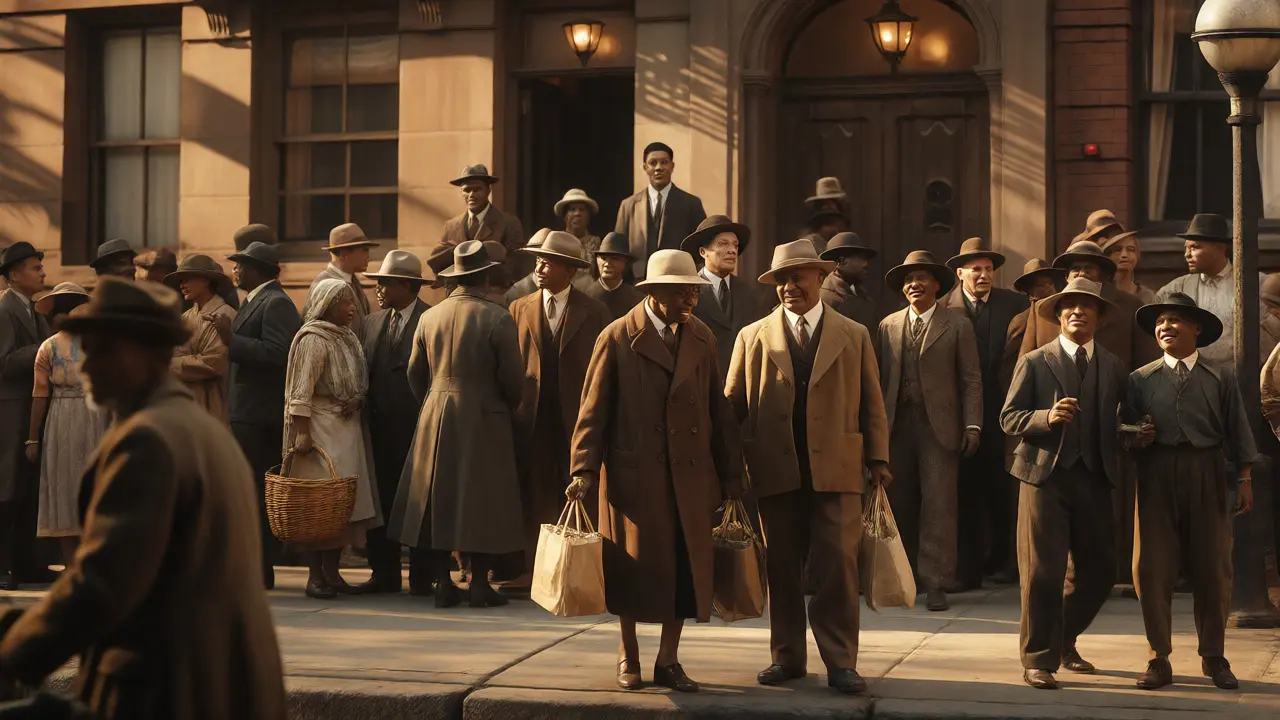
You know that feeling when you’re watching a period drama set in 1920s Harlem, but the crowd shot looks like it was populated by people who just walked out of a modern-day coffee shop? It breaks the spell instantly. That disconnect isn’t just about bad costumes or wrong cars; it’s often about crowd casting. We spend hours analyzing lead performances and director choices, yet we rarely talk about the hundreds of unnamed bodies filling the frame. These background actors are the texture of reality on screen. When they don’t reflect the world the story claims to inhabit, the audience subconsciously flags the scene as fake.
This isn’t just an aesthetic nitpick. In 2026, audiences are sharper than ever at spotting lazy production shortcuts. If a film claims to depict a diverse city but fills its streets with homogeneous groups, it feels dishonest. Let’s look at why getting the extras right is actually one of the most critical steps in building a believable cinematic world.
The Illusion of Reality Starts in the Margins
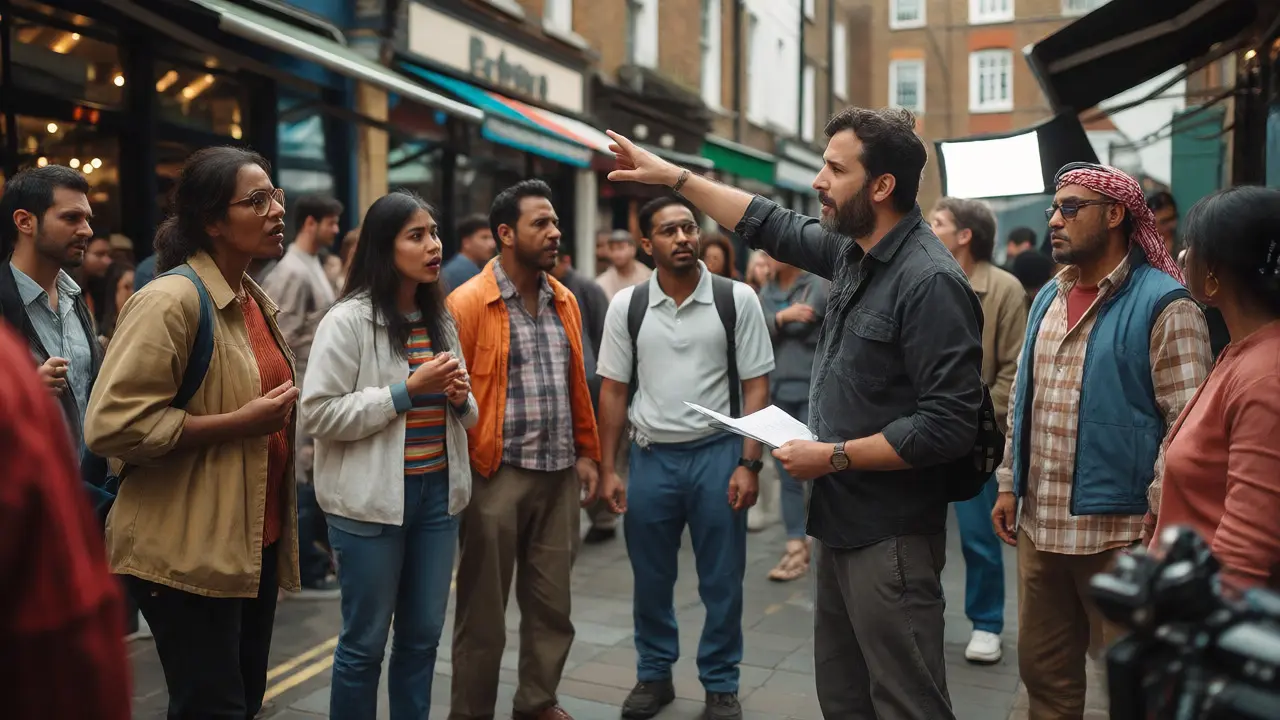
Film is a lie that tells the truth. But for that lie to work, every pixel needs to align. The main characters carry the plot, sure, but the background carries the context. Think about a scene in a busy London market. If the crowd lacks the specific ethnic mix, age range, and socioeconomic vibe of that actual location, your brain rejects the setting. You stop believing the character is really there because the environment feels staged.
Crowd Casting is the process of selecting and directing background actors to create realistic and authentic environments in film and television productions. Unlike principal casting, which focuses on individual talent and star power, this discipline requires a holistic view of demographics, movement patterns, and social dynamics. It’s less about finding the best actor and more about curating a believable slice of life. When directors ignore this, they rely on stock footage vibes rather than lived-in realism.
Consider the difference between a generic "street crowd" and a targeted one. A generic crowd might have ten people walking left and right. A well-cast crowd has a group of teenagers laughing near a bus stop, an elderly couple struggling with groceries, and a businessman checking his watch. These micro-interactions tell the audience what kind of neighborhood this is without a single line of dialogue. That narrative weight rests entirely on the shoulders of the background performers.
Why Homogeneous Crowds Feel Fake
For decades, Hollywood defaulted to uniformity. If you needed a crowd for a school scene, you hired twenty kids who looked roughly alike. This wasn’t always malicious; it was efficient. But efficiency killed authenticity. Human beings aren’t uniform. Cities are melting pots, not monoliths. When a production casts a crowd that ignores the racial, cultural, and economic diversity of its setting, it creates a visual dissonance.
Take a look at historical epics. For years, many films set in ancient Rome or medieval Europe featured predominantly white crowds, ignoring the well-documented mobility and trade networks that brought African, Asian, and Middle Eastern peoples into those regions. Recent shifts in Historical Accuracy in cinema have forced casting directors to reconsider these defaults. Now, if you cast a Roman marketplace without including North African or Syrian merchants, historians and savvy viewers will call it out immediately.
This scrutiny extends to modern settings too. A tech startup office in San Francisco shouldn’t look like a frat house. A hospital ward in Detroit shouldn’t look like a suburb in Connecticut. The failure here isn’t usually intentional bias; it’s often budgetary laziness. It’s easier to hire from one agency pool than to seek out specific community groups. But that shortcut costs the film its credibility.

The Economic and Ethical Ripple Effects
Diverse crowd casting isn’t just good art; it’s good business. When productions actively recruit from underrepresented communities, they tap into local economies. Hiring background actors from the actual neighborhood where filming takes place keeps money in the community. It also builds goodwill. Local residents who see themselves represented on screen-even as blurred figures in the distance-feel a sense of ownership over the project.
There’s also the ethical dimension. Film has immense power to shape perception. If certain groups are constantly excluded from background roles, it reinforces the idea that they don’t belong in public spaces or professional settings. Conversely, normalizing diversity in the background helps dismantle stereotypes. When a viewer sees a doctor, a police officer, and a teacher in the background of a scene, all portrayed by people of different backgrounds, it subtly reinforces inclusivity.
Moreover, unions and guilds are pushing harder for this. SAG-AFTRA and other organizations now emphasize inclusive hiring practices. Productions that fail to meet these standards risk fines or reputational damage. It’s no longer optional to consider who fills the frame; it’s part of the compliance checklist.
How Smart Productions Execute Diverse Crowd Casting
So, how do you actually do this? It starts before the first day of shooting. Location scouts need to brief casting directors on the demographic makeup of the area. If you’re filming in Queens, New York, you can’t just pull extras from a central booking list in Burbank. You need local hires who speak the languages, wear the clothes, and move with the rhythms of that specific borough.
| Strategy Element | Traditional Approach | Authentic/Diverse Approach |
|---|---|---|
| Sourcing Pool | Centralized agencies, repeat hires | Local community groups, specialized agencies |
| Demographic Focus | Visual uniformity, ease of direction | Reflective of real-world diversity |
| Cost Implication | Lower upfront cost, higher reshoot risk | Higher coordination cost, better ROI on authenticity |
| Audience Perception | Can feel staged or dated | Immersive, credible, modern |
| Community Impact | Minimal local engagement | Stronger local support and representation |
Directors also need to change how they direct crowds. Instead of yelling "walk faster!" or "look interested," they should give contextual prompts. "You’re waiting for a bus that’s late." "You’re arguing with your friend about dinner plans." This encourages natural behavior that reflects individual personalities, making the crowd feel like a collection of humans rather than props.
Technology plays a role here too. AI-driven casting tools can help analyze scripts for demographic requirements, flagging scenes that lack diversity. However, algorithms can’t replace human intuition. A casting director who knows the local culture will spot nuances that data misses, like the specific way a community dresses for a funeral versus a wedding.
Pitfalls to Avoid in Background Casting
Even well-intentioned productions stumble. One common mistake is tokenism. Adding one person of color to a sea of white extras doesn’t fix the problem; it highlights the imbalance. True diversity requires structural change in how crowds are built. Another pitfall is stereotyping through wardrobe. If every extra from a specific background is dressed in cliché attire, you’ve traded one stereotype for another. Real people wear jeans and t-shirts, suits and sneakers, traditional garments and fast fashion. Mix it up.
Also, don’t forget ability diversity. Crowds often exclude people with disabilities unless the script explicitly calls for them. But real streets have wheelchairs, walkers, and hearing aids. Including these details adds layers of realism that make the world feel fully inhabited. It shows respect for the full spectrum of human experience.
The Future of On-Screen Representation
We’re moving toward a standard where invisibility in the background is becoming impossible. With 4K and 8K cameras, every face in the back row is visible. Audiences zoom in on screenshots. They notice if the crowd doesn’t match the premise. Producers who treat crowd casting as an afterthought will find their films criticized online within hours of release.
Conversely, productions that get it right build loyal fanbases. People share clips not just for the stars, but for the vibe. A truly immersive world invites re-watching. You want to live in that movie. And you can only do that if the world feels populated by real people, not just stand-ins.
What exactly is crowd casting?
Crowd casting is the specialized process of hiring and managing background actors (extras) to fill scenes with realistic populations. Unlike principal casting, which focuses on named characters, crowd casting prioritizes demographic accuracy, natural movement, and environmental believability to support the film's setting.
Why does diversity in background actors matter so much?
It matters because audiences subconsciously judge a film's authenticity based on its environment. If the background doesn't reflect the real-world demographics of the setting, the illusion of reality breaks. Diverse crowds prevent the film from feeling staged or outdated and ensure that representation extends beyond just the leads.
Does diverse crowd casting increase production costs?
Initially, yes, it can require more time and resources to source diverse talent from local communities rather than using centralized pools. However, it often saves money in the long run by reducing reshoots due to lack of authenticity and improving audience reception, which drives marketing value.
How can directors improve the performance of background actors?
Directors should provide specific contextual motivations rather than generic commands. Instead of saying "act busy," give instructions like "you're trying to catch a taxi" or "you're bored waiting for a meeting." This encourages natural, varied behaviors that make the crowd feel alive.
Are there industry standards for inclusive background casting?
While not universally mandated by law, major guilds like SAG-AFTRA encourage inclusive hiring practices. Many studios now have internal diversity targets for both principal and background roles, and failing to meet these can impact a production's reputation and eligibility for certain grants or awards.