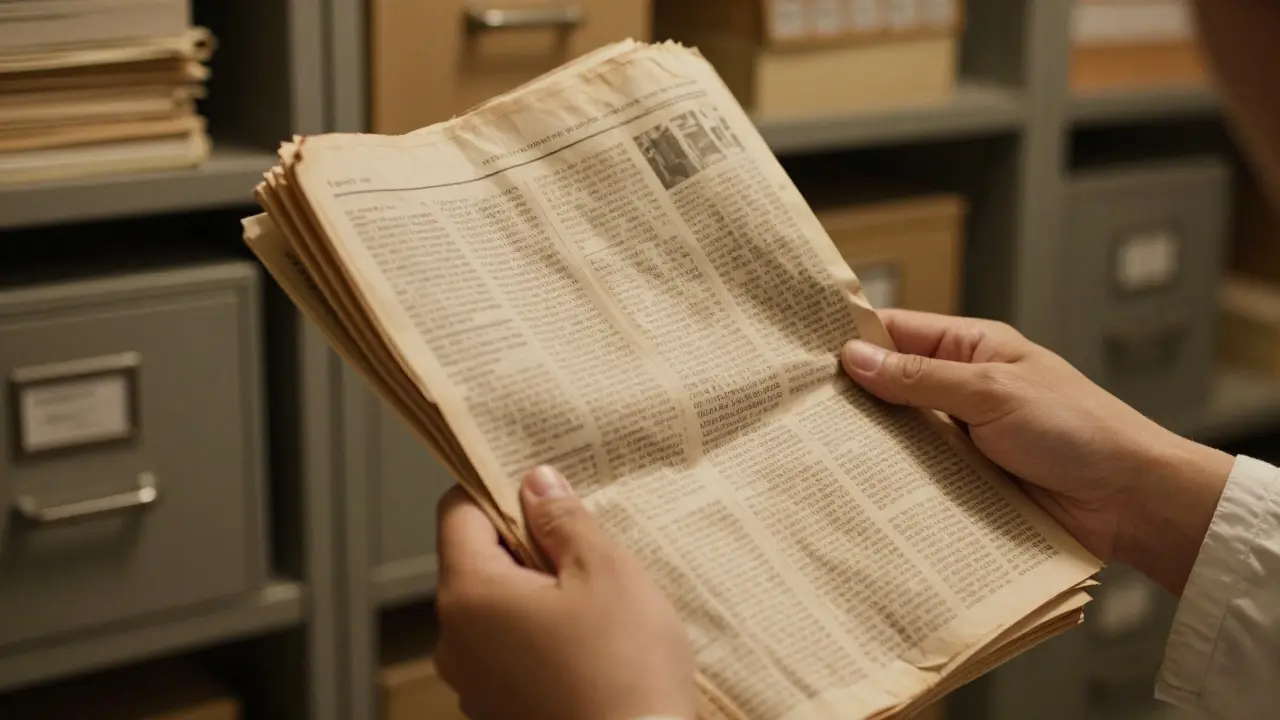
For decades, the most important arguments about cinema were trapped in yellowed newspaper clippings and fragile library boxes. If you wanted to know how Pauline Kael reacted to a specific 1970s blockbuster, you had to physically visit a university archive or hope a rare book was still in print. That reality is changing fast. Today, digitizing film criticism history is not just a tech project; it is a fundamental shift in how we understand cultural memory. By moving these texts into searchable, high-resolution digital formats, we are unlocking a massive dataset of human opinion that was previously invisible to the general public.
The Problem with Physical Clippings
Before the internet, preserving a critic’s voice was an act of physical labor. Editors at major papers like The New York Times or Variety would file reviews in carbon-copy folders. Over time, paper degrades. Ink fades. Pages tear. Worse, many smaller publications never filed their copies properly. This means entire eras of local or niche criticism have effectively vanished from the historical record.
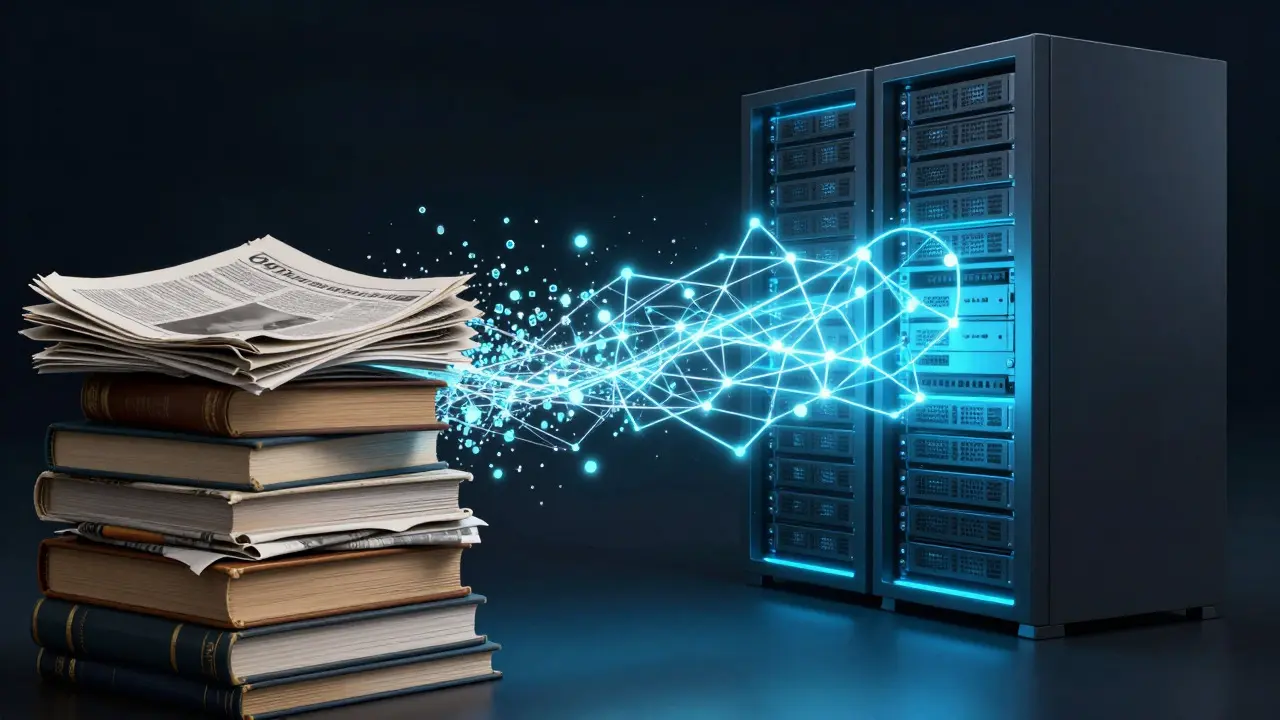
Digital archiving solves the decay problem but introduces new challenges. A scanned PDF is only as good as its metadata. If a scan lacks proper tagging for date, author, and subject, it becomes a useless blob of pixels. The goal of modern archival projects is not just to store images, but to create structured data that allows researchers to connect dots across decades. For example, linking a review from 1968 to the director’s later interviews requires a robust database structure, not just a folder of JPEGs.
Key Players in Digital Preservation
Several institutions have taken the lead in this effort. The Academy of Motion Picture Arts and Sciences has long preserved industry trade press, but their focus was often on business news rather than critical essays. More recently, academic libraries and independent non-profits have stepped in to fill the gaps. Projects focused on the systematic collection and digitization of periodical articles related to film studies are now prioritizing OCR (Optical Character Recognition) accuracy to make text fully searchable.
Independent critics also play a crucial role. Many veteran reviewers have begun uploading their personal archives to cloud-based repositories. These collections often include unpublished notes, correspondence with directors, and early drafts that never made it to print. This behind-the-scenes material offers a richer view of the critical process than the final published piece ever could.
How Technology Changes Research
When criticism is digital, it becomes data. This opens the door to computational analysis, or what scholars call "distant reading." Instead of reading one hundred reviews by hand, a researcher can use software to analyze ten thousand reviews for sentiment shifts over time. You can track how the word "cinematic" evolved from a technical term in the 1930s to a generic adjective today. You can map the geographic spread of praise for certain genres, seeing how regional tastes diverged before globalization homogenized them.
This approach doesn’t replace close reading, but it complements it. It helps identify patterns that are too large for the human eye to catch. For instance, data visualization tools can show a clear correlation between the rise of home video technology in the 1980s and a decline in attendance-focused language in reviews. Critics stopped talking about "going to the movies" and started talking about "watching the movie," a subtle linguistic shift that signals a massive change in audience behavior.
Challenges in Metadata and Access
Despite the benefits, significant hurdles remain. The biggest issue is standardization. One archive might tag a film by its release year, while another uses the production year. One might list a director under their birth name, while another uses their professional stage name. Without agreed-upon standards, cross-referencing becomes a nightmare. Organizations like IMDb provide unique identifiers for films and people, but integrating these IDs into archival systems is a complex technical task that many smaller projects lack the budget to handle.
Access rights are another major friction point. Unlike books, which enter the public domain after 70 years, newspaper copyrights can be tricky. Some publishers charge high fees for licensing scans, limiting who can access the material. Others require institutional logins, pushing casual fans away. The ideal model is open access, where anyone can view and cite the work, but achieving this requires either generous funding or a shift in publisher attitudes toward digital legacy.
Impact on Film Education
For students and educators, online archives are game-changers. In the past, teaching film history relied heavily on textbooks that summarized critical consensus. Now, professors can assign primary sources directly. A student studying the reception of Citizen Kane can read the original 1941 reviews side-by-side with modern retrospectives. They can see exactly how the film’s reputation was constructed, debated, and cemented over eighty years.
This direct access fosters critical thinking. Students learn that no single review is "the truth." They see the diversity of opinion within a single week of a film’s release. They encounter biases, both conscious and unconscious, in the language used by critics of different backgrounds. This exposure makes them more nuanced viewers and writers themselves, capable of situating their own opinions within a broader historical context.
Future Directions: AI and Curation
Looking ahead, artificial intelligence will likely play a bigger role in curation. Machine learning models can automatically suggest connections between unrelated articles, highlighting themes that humans might miss. Imagine an AI flagging that three separate critics from different countries all used similar metaphors to describe a particular director’s lighting style. This kind of pattern recognition could reveal hidden networks of influence in film discourse.
However, human curation remains essential. Algorithms can sort data, but they don’t understand context. A sarcastic review might be misclassified as positive if the sentiment analysis isn’t fine-tuned. Therefore, the future of digital archives lies in a hybrid model: automated processing for scale, combined with expert human oversight for accuracy and nuance. The goal is not to let computers decide what matters, but to help us find the things that matter faster.
| Feature | Physical Archives | Digital Archives |
|---|---|---|
| Searchability | Manual index lookup | Full-text search with OCR |
| Accessibility | Location-dependent | Global remote access |
| Data Analysis | Not feasible at scale | Enables computational analysis |
| Preservation Risk | High (fire, water, decay) | Moderate (format obsolescence) |
| Cost Structure | High storage costs | High initial digitization cost, low marginal cost |
Frequently Asked Questions
What is the main benefit of digitizing film criticism?
The primary benefit is accessibility and analytical potential. Digital formats allow global users to access rare materials instantly and enable researchers to perform large-scale data analysis on critical trends, something impossible with physical clippings.
How does OCR affect the quality of digital archives?
OCR (Optical Character Recognition) converts scanned images into editable text. High-quality OCR is crucial because it enables full-text search. Poor OCR results in missing words or errors, making the archive difficult to navigate and less useful for research.
Are all film reviews available online?
No. While major publications have extensive digital back-catalogs, many smaller newspapers, foreign journals, and private collections remain undigitized. Copyright restrictions and funding limitations prevent complete coverage, leaving gaps in the historical record.
How can students use these archives for research?
Students can use digital archives to access primary sources, compare contemporary reactions to films, and trace the evolution of critical language. This direct engagement with historical documents helps develop a deeper understanding of film culture and critical theory.
What role does AI play in managing these archives?
AI assists in automating tasks like tagging, categorization, and sentiment analysis. It can identify patterns across thousands of documents quickly. However, human experts are still needed to verify accuracy and provide contextual interpretation that algorithms might miss.