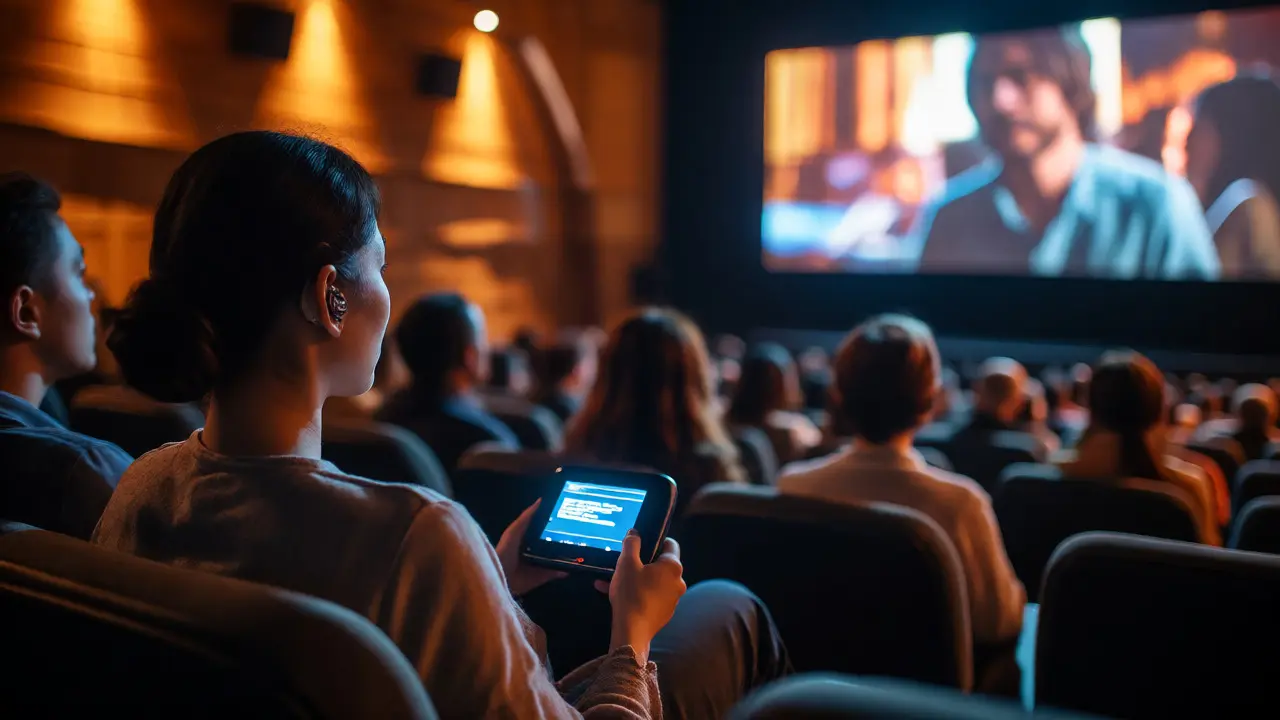
Imagine sitting in a dark theater, surrounded by hundreds of people laughing at a punchline you didn’t hear. You see the screen, but the audio is gone, or worse, it’s muffled behind thick walls. For millions of attendees with hearing impairments, this isn’t a hypothetical scenario-it’s their standard experience at many film festivals that fail to prioritize accessibility. It’s not just about missing a joke; it’s about being excluded from the cultural conversation happening right in front of you.
We often talk about diversity in casting or storytelling, but we rarely discuss the physical and sensory infrastructure required to actually watch these stories. Accessibility at film festivals goes beyond a wheelchair ramp at the entrance. It involves a complex web of technology, human interaction, and policy design. If you’re organizing an event, attending one, or just curious about how inclusive cinema works, understanding the mechanics of subtitles, captioning, and accessible Q&A sessions is crucial. Let’s break down what actually works, what fails, and why getting it right matters for everyone.
The Critical Difference Between Subtitles and Captions
People use these terms interchangeably, but they are fundamentally different tools serving different needs. Confusing them leads to bad planning and frustrated audiences. Subtitles are designed for viewers who can hear the audio but do not understand the language spoken on screen. They translate dialogue only. If a French character speaks, subtitles show English text. That’s it.
Captions, specifically Closed Captions (CC), are designed for viewers who cannot hear the audio at all. They include dialogue plus non-speech information like [door creaks], [upbeat jazz music], or [distant explosion]. For a deaf attendee, a subtitle-only screening is useless if the movie relies heavily on sound design. Imagine a horror film where the scariest moment is a sudden silence followed by a whisper. Without captions indicating the whisper, the scare falls flat.
| Feature | Subtitles | Closed Captions (CC) |
|---|---|---|
| Primary Audience | Hearing viewers needing translation | Deaf and Hard of Hearing (DHH) viewers |
| Includes Sound Effects? | No | Yes (e.g., [phone rings]) |
| Includes Speaker ID? | Rarely | Often (e.g., >> John: Hello) |
| Festival Utility | Essential for foreign films | Essential for inclusion compliance |
Festivals must offer both. Offering only subtitles excludes the DHH community. Offering only captions might annoy international guests who prefer clean translations without cluttered sound descriptions. The best practice? Offer both options via digital delivery systems so users can choose.
Digital Delivery Systems: Why Open Captions Aren’t Enough
In the old days, if a festival wanted to show captions, they burned them into the film print. This meant everyone saw them, whether they wanted to or not. Today, most theaters use Digital Cinema Packages (DCPs). This allows for flexible captioning methods, but it introduces new logistical hurdles.
Open Captions are projected onto the main screen alongside the image. Everyone sees them. While simple, this approach has downsides. Some hearing viewers find them distracting. More importantly, if the font size is too small or the color contrast is poor, even those who need them struggle to read them quickly during fast-paced dialogue.
The gold standard for modern festivals is digital captioning devices, such as handheld screens or tablet-based apps connected to the venue’s Wi-Fi. These devices sync with the movie’s timecode. Users pick up a device at the box office, enter a code, and see captions on a personal screen held in their lap. This keeps the main screen clean for general audiences while providing high-contrast, customizable text for those who need it.
However, relying solely on Wi-Fi is risky. What if the server crashes? Or if there are more devices than available bandwidth? Experienced festival tech directors always have a backup plan. Often, this means having a few open-caption screenings scheduled at specific times, ensuring that even if the tech fails, access remains.
Assistive Listening Devices and Audio Description
Not all barriers are visual. Many attendees are blind or have low vision. They don’t need text on a screen; they need to know what’s happening visually when no one is speaking. This is where Audio Description (AD) comes in. AD is a separate audio track that describes key visual elements-actions, characters, scene changes-during natural pauses in dialogue.
Think of a silent movie or a scene with intense visual symbolism but no dialogue. Without AD, a blind viewer misses half the story. Providing AD requires specialized equipment. Venues typically use infrared (IR) or FM transmission systems. Attendees borrow a headset and a receiver. The challenge? Hygiene and availability. During flu seasons or post-pandemic health consciousness, sharing headsets can be a deterrent. Modern solutions include Bluetooth-enabled receivers that pair with personal headphones, reducing contact points.
Another critical tool is the Assistive Listening Device (ALD). These amplify the movie’s audio directly to the user’s ear, bypassing ambient noise and room acoustics. For someone with mild hearing loss, this can make the difference between straining to hear and enjoying the film comfortably. Festivals should ensure ALDs are compatible with hearing aids, using telecoil (T-coil) loops where possible, which allow hearing aid users to switch to 'T' mode and receive the audio directly.
Making Q&A Sessions Accessible
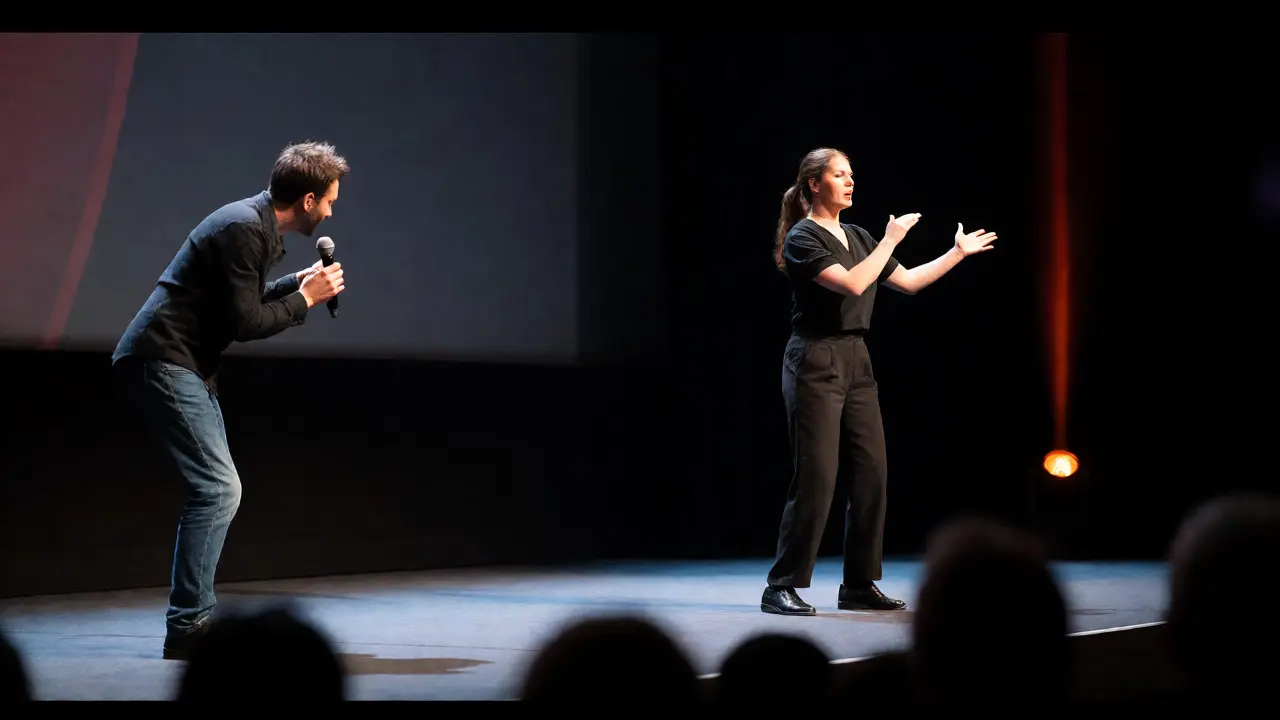
The film ends. The lights come up. The director walks out for a Q&A. For many attendees, this is where the exclusion becomes most acute. Standard microphone setups often fail DHH participants. If the moderator doesn’t repeat questions from the audience, a deaf person only hears the answer, losing the context entirely.
To fix this, festivals need to implement strict moderation protocols. Moderators must repeat every question before answering it. This seems obvious, yet it’s frequently forgotten in the heat of the moment. Additionally, professional sign language interpreters should be present on stage, lit clearly against a dark background. Not just any interpreter-a certified medical or legal interpreter who understands cinematic terminology. Interpreting "mise-en-scène" or "diegetic sound" requires skill.
For online or hybrid festivals, live captioning services (CART) are essential. CART providers transcribe speech in real-time. However, AI-generated live captions still struggle with accents, technical jargon, and overlapping speakers. Human CART providers remain the superior choice for accuracy, though they are more expensive. Budgeting for human transcription over automated bots shows a genuine commitment to quality inclusion.

The Hidden Barriers: Venue Layout and Communication
Technology alone doesn’t solve accessibility. Physical space and communication strategies play huge roles. Consider the layout of the theater. Are there designated seating areas for wheelchairs that also accommodate companion seats? Is the path to these seats free of obstacles like loose cables or temporary signage?
Communication before the event is equally vital. Your website should clearly state which screenings have captions, AD, or ALDs. Don’t bury this info in a PDF program guide. Use clear icons and searchable filters. When an attendee arrives, staff should be trained to explain how to use the devices. Nothing kills the vibe faster than handing someone a confusing remote control and walking away.
Also, consider neurodiversity. Loud noises, flashing lights, and crowded spaces can be overwhelming for autistic attendees. Sensory-friendly screenings, where volume is lowered and lights are dimmed rather than off, are becoming increasingly popular. These sessions allow people who might otherwise skip the festival to participate fully.
Building a Culture of Inclusion
Accessibility isn’t a checklist item you tick off once. It’s an ongoing process. Feedback loops are essential. After each festival, survey DHH and blind attendees. Ask them what worked and what didn’t. Did the captions lag? Was the interpreter visible? Were the bathrooms accessible?
Festivals that excel in accessibility often see broader community engagement. When you make events easier for people with disabilities, you also make them easier for older adults, non-native speakers, and anyone with temporary injuries. It’s the curb-cut effect: designing for the margins benefits everyone.
Ultimately, film is a shared experience. If your festival excludes a significant portion of the population because of technical oversights, you’re missing out on diverse perspectives and passionate fans. Investing in proper subtitling, captioning, and inclusive Q&A practices isn’t just ethical-it’s smart business.
What is the difference between open and closed captions?
Open captions are permanently displayed on the screen for everyone to see. Closed captions can be turned on or off by the viewer using a special decoder or device. Closed captions are preferred in mixed audiences because they don't distract hearing viewers who don't need them.
Do I need special headphones for Assistive Listening Devices?
It depends on the system. Infrared (IR) systems usually require specific IR receivers and headphones provided by the venue. FM systems may work with standard headphones or hearing aids with T-coils. Always check with the festival beforehand to see if you need to bring your own compatible headphones.
How do I request Audio Description for a specific film?
Most festivals list Audio Description (AD) availability in their schedule or app. Look for the AD icon next to the film title. You typically need to reserve a receiver at the box office before the screening starts. Arriving early is recommended to ensure devices are available.
Are AI-generated live captions accurate enough for Q&As?
AI captions have improved but still struggle with heavy accents, technical film terminology, and multiple speakers talking at once. For critical events like filmmaker Q&As, human-powered CART (Communication Access Realtime Translation) is significantly more reliable and respectful of the content's nuance.
Why are subtitles not enough for Deaf audiences?
Subtitles only translate spoken dialogue. They do not convey non-speech sounds like music, laughter, explosions, or tone of voice. Deaf audiences rely on Closed Captions, which include these auditory cues, to fully understand the emotional and narrative context of a film.




Comments(7)