LED Volume in Film Production: How Digital Stages Are Changing Cinematography
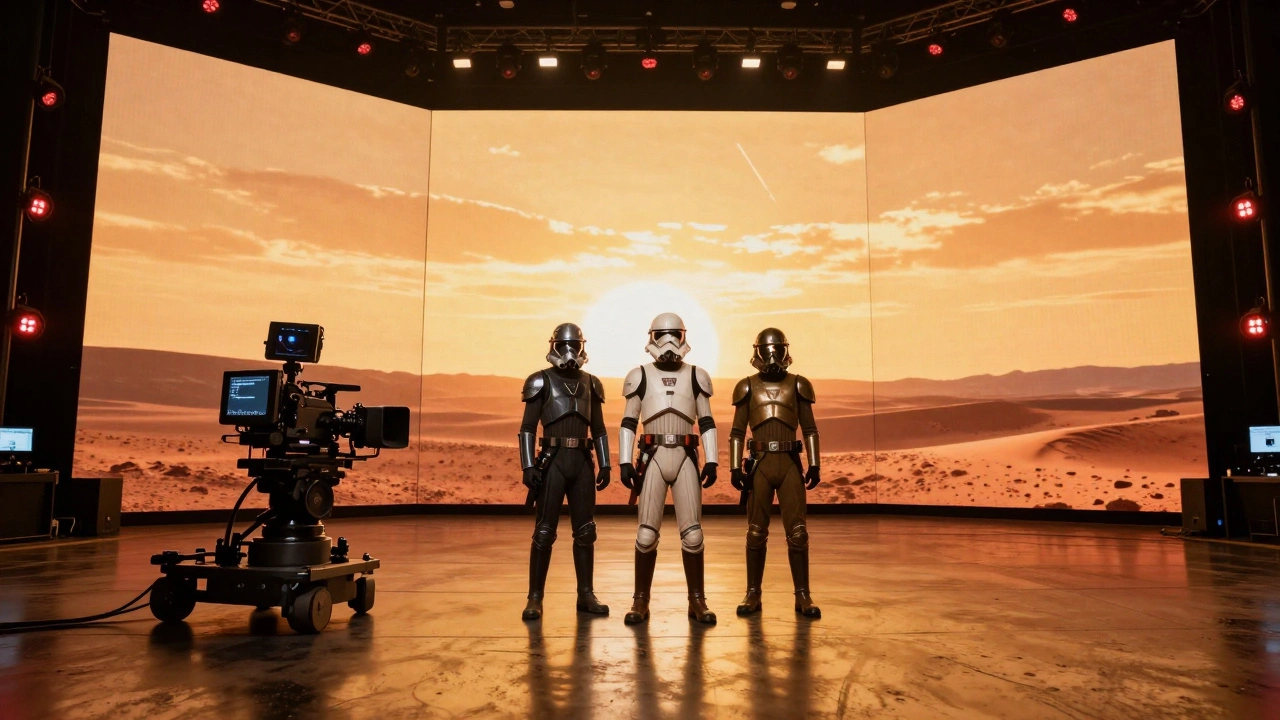
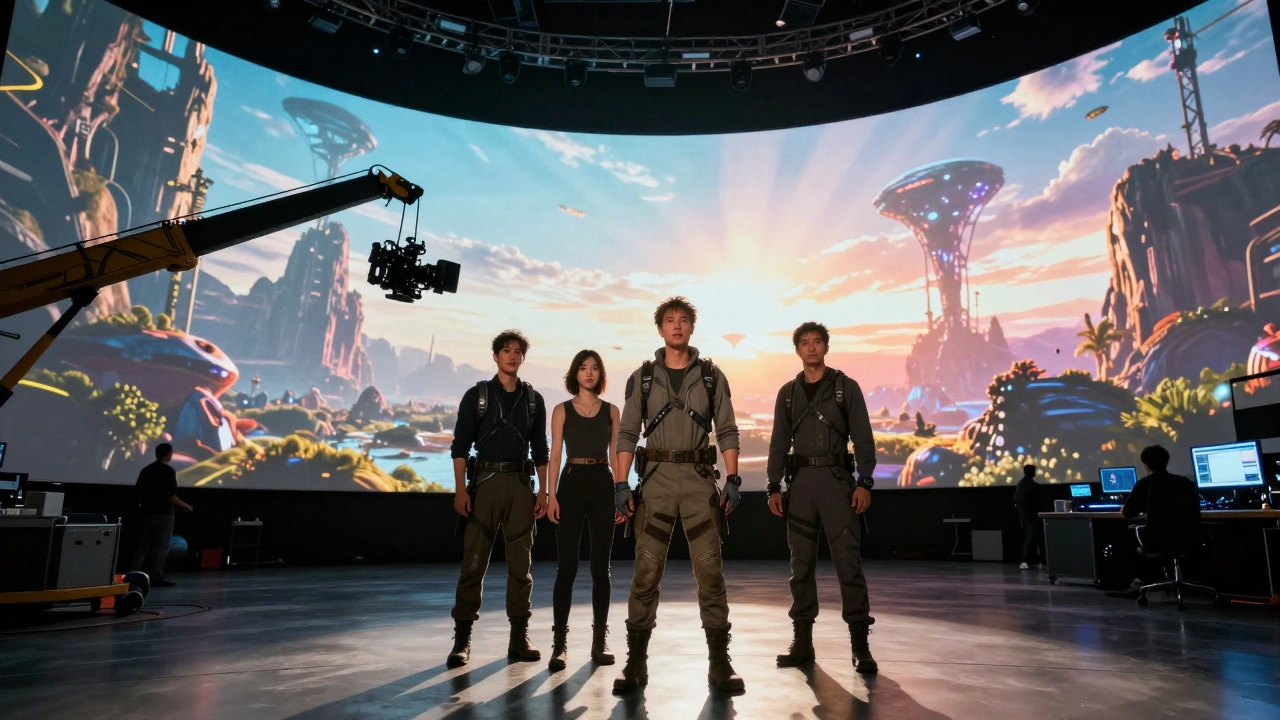
When you see a spaceship flying over a alien planet in a new movie, it’s probably not a green screen. It’s an LED volume, a massive, curved wall of high-resolution LED panels that display real-time digital environments during filming. Also known as virtual production stage, it lets actors perform inside a living, breathing world—no post-production guesswork needed. This isn’t sci-fi anymore. It’s the new normal on big-budget films and even indie projects that want to look like blockbusters without the cost of location shoots or CGI fixes.
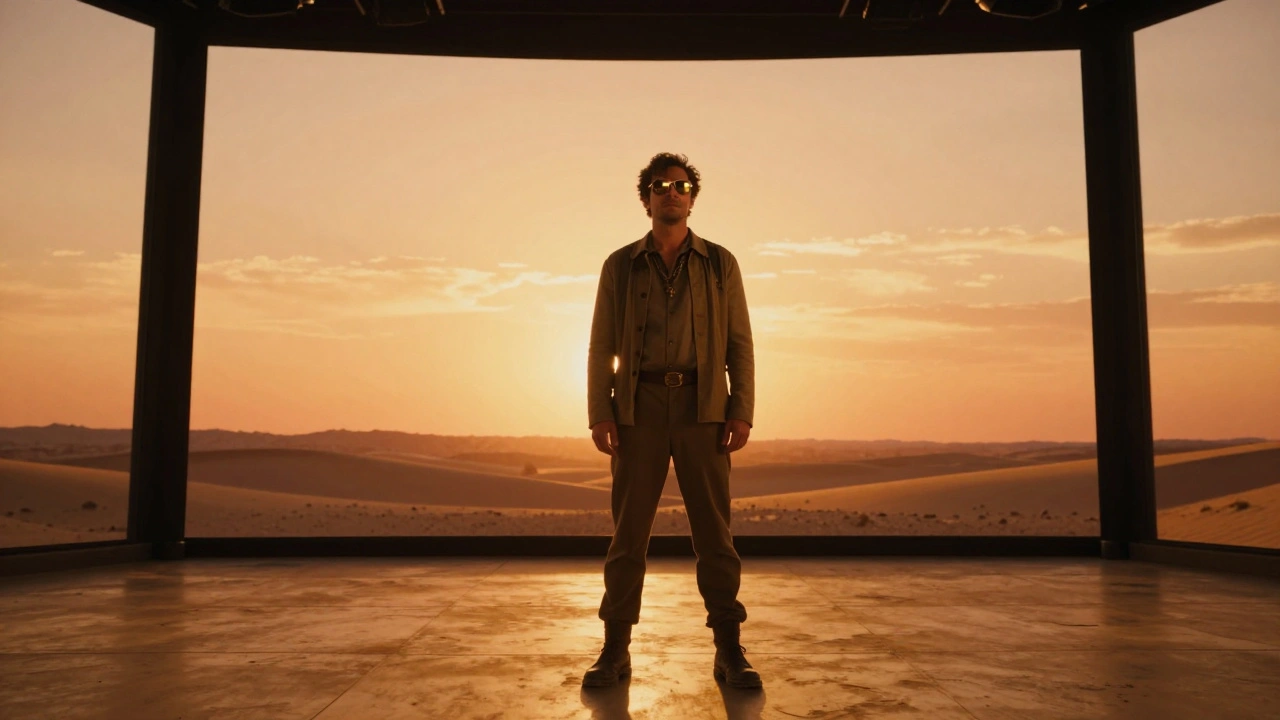
The LED volume isn’t just a screen. It’s a lighting tool, a background, and a camera tracker all in one. The panels glow with the exact colors and brightness of the scene being shot—sunrise over a desert, neon-lit city streets, or the inside of a spaceship. That means the actors’ faces catch real light, not flat studio lighting. No more matching shadows in post. No more green spill on costumes. The camera sees the world the way the audience will. This changes everything for cinematographers, production designers, and even actors who used to act to nothing but a pole and a tennis ball.
Behind every successful LED volume shoot is a team using virtual production, a workflow that combines real-time rendering engines like Unreal Engine with motion tracking and camera data to sync digital environments with physical camera movement. The camera’s position, lens angle, and focus are tracked in real time, so the background moves just like it would if you were actually there. That’s why shows like The Mandalorian could shoot entire episodes in a warehouse in Los Angeles and make you believe they were on a distant moon. It’s also why smaller studios are now leasing LED walls instead of flying crews to Iceland or Morocco.
And it’s not just about looks. LED volumes save time and money. You don’t need to wait for perfect weather. You don’t need permits for city streets. You can change the entire environment with a click—day to night, summer to winter, Earth to Mars. That flexibility is why even low-budget films are starting to use smaller, modular LED setups. It’s no longer a tool for only the biggest studios.
But it’s not magic. Setting up an LED volume requires serious tech know-how—understanding pixel pitch, refresh rates, and color calibration. You need skilled operators who can tweak lighting in real time. And if the content on the screens doesn’t match the camera’s perspective, the whole illusion breaks. That’s why so many filmmakers still use green screens for complex shots. But the trend is clear: LED volumes are becoming the default for scenes that used to require endless VFX.
What you’ll find in this collection are real stories from sets where LED volumes made the difference. From how a horror film used a digital storm to scare actors into real fear, to how a micro-budget indie saved thousands by swapping a location shoot for a 20-foot LED arc. You’ll see how lighting, camera movement, and even actor performance changed because the world around them was real—not imagined.