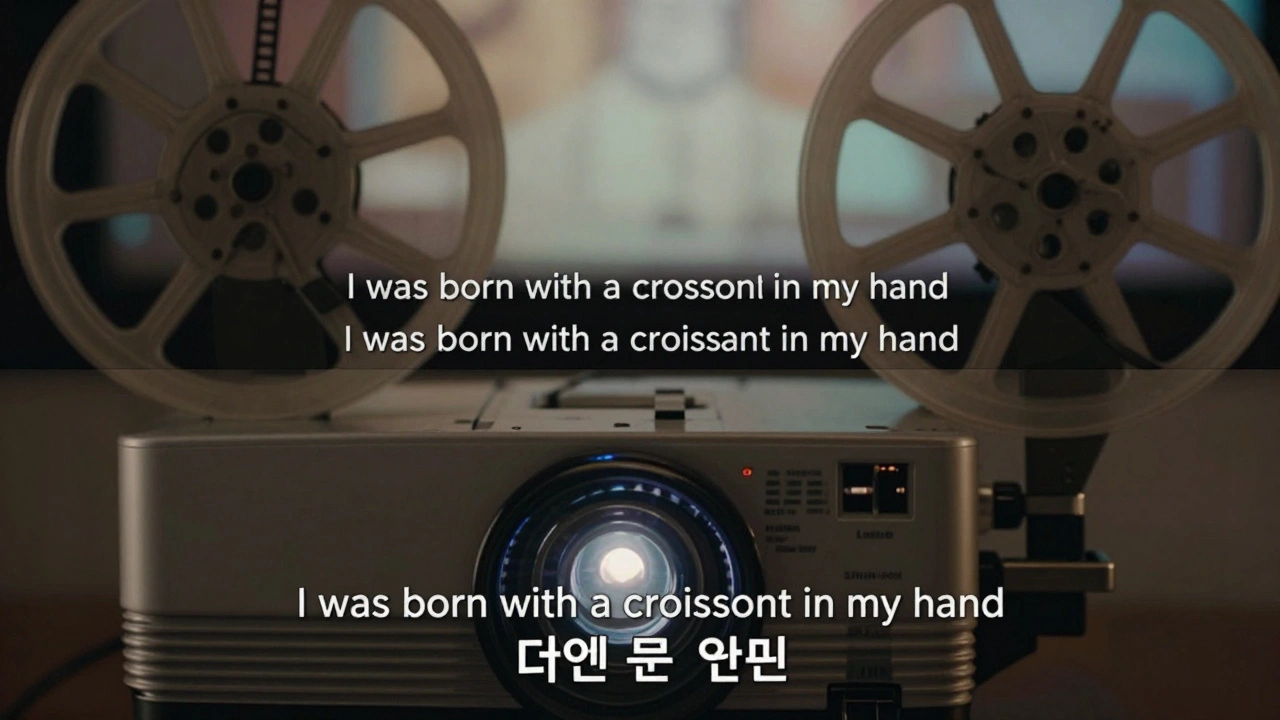
Subtitles: What They Are, Why They Matter, and How They Shape How We Watch Films
When you watch a movie with subtitles, text displayed on screen that translates or transcribes spoken dialogue. Also known as closed captions, they’re not just a tool for people who don’t speak the language—they’re a bridge between cultures, a lifeline for the deaf and hard of hearing, and sometimes, the only way a film finds its audience. A subtitle isn’t just a translation. It’s a decision: when to appear, how long to stay, whether to include laughter, music cues, or ambient sounds. Some films, like Parasite or Drive My Car, rely on subtitles to carry emotional weight. Without them, those moments lose their punch.
Behind every set of subtitles is a team—translators, timing specialists, and cultural adapters—who make sure the words on screen match the rhythm of the scene. It’s not about word-for-word accuracy. It’s about feeling. A joke in Japanese might need a completely different setup in English to land. A sigh in French might need a subtitle that says "(sighs)" to keep the mood. And for people who are deaf or hard of hearing, subtitles include more than dialogue—they describe sounds, music shifts, and even who’s speaking when it’s not clear. That’s why closed captions, a form of subtitle designed for accessibility, including non-dialogue audio cues are legally required in many countries. They’re not an afterthought. They’re part of the film’s design.
Subtitles also change how we watch. People use them to learn languages, to focus in noisy rooms, or just because they prefer reading. Streaming platforms have made subtitles the default for millions. And with global audiences now bigger than ever, studios don’t just add subtitles—they commission multiple versions, tweak timing for different dialects, and sometimes even re-edit scenes to fit subtitle length. This is why subtitle translation, the process of adapting dialogue for cultural and linguistic context is now a high-stakes craft. A bad subtitle can ruin a performance. A great one can make a foreign film feel like it was made for you.
What you’ll find below are real stories about how subtitles work in practice—from indie films shot on a budget to Oscar-winning international hits. You’ll see how filmmakers use them creatively, how crews fight to get them right, and how audiences rely on them more than ever. These aren’t just technical notes. They’re about connection. About making sure no one misses the moment.