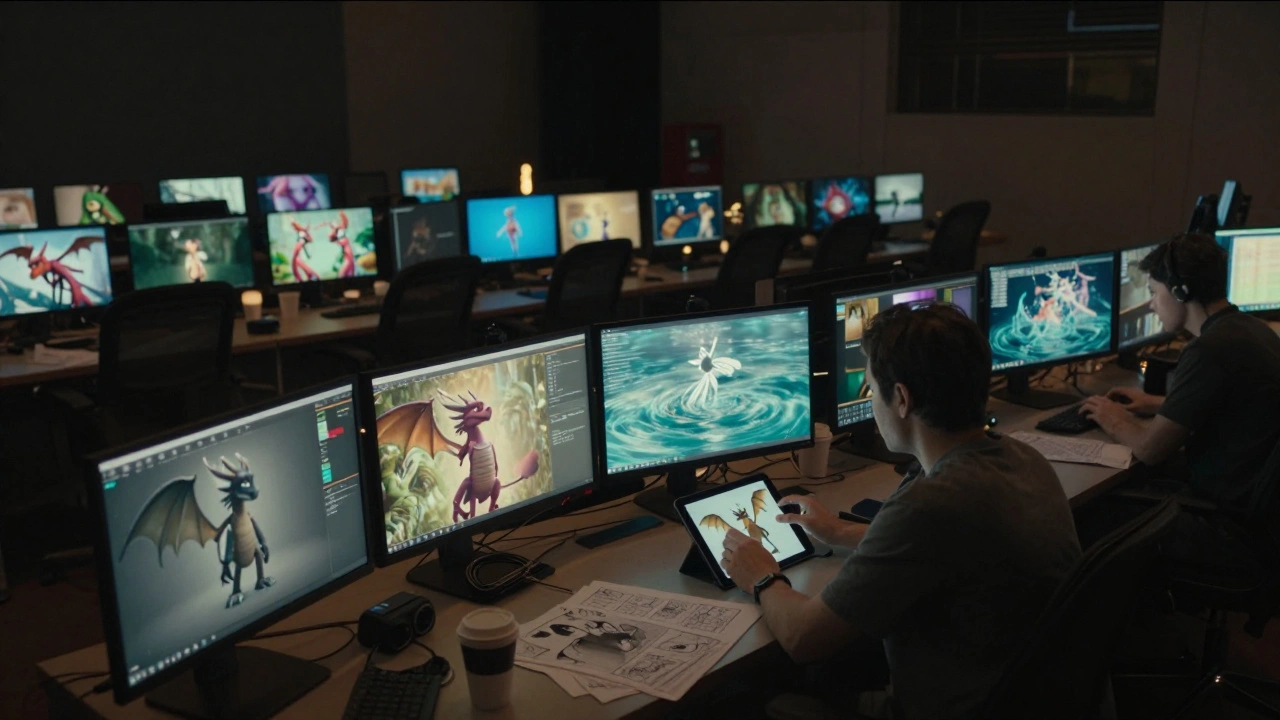
CGI Animation: How Digital Tools Are Reshaping Modern Film
When you think of CGI animation, digital animation created using computer-generated imagery to bring characters and worlds to life. Also known as computer-generated animation, it’s no longer just a fancy add-on—it’s the backbone of nearly every major animated film and a growing part of live-action storytelling. From the sweeping landscapes of Avatar to the tiny, expressive faces in Spider-Man: Into the Spider-Verse, CGI animation isn’t just about making things look real—it’s about making audiences feel something. It’s the tool that lets animators bend physics, stretch emotions, and build worlds that would be impossible to shoot with cameras and actors.
What makes CGI animation different from hand-drawn or stop-motion? It’s flexibility. You can animate a character’s eyelid twitch with pixel-perfect control, or simulate 10,000 flying dragons in one shot. But it’s not magic—it requires serious skill. Teams of artists, technical directors, and riggers work for months just to get a single character’s walk cycle right. And it’s not just for big studios anymore. Indie animators use affordable software like Blender and Krita to create award-winning shorts, proving you don’t need a billion-dollar budget to make stunning CGI. The rise of real-time rendering, like what’s used in virtual production, means animators can see their work move in real time, cutting down weeks of waiting and letting creativity flow faster.
CGI animation also connects deeply with other parts of filmmaking. It’s tied to visual effects, digital enhancements added to live-action footage to create impossible scenes, which is why so many live-action films now blend CGI characters into real environments. It’s also linked to digital animation, the broader category that includes both 2D and 3D techniques powered by software, and to film production, the entire process of making a movie, from script to screen. In Japan, studios like Studio Ghibli once resisted CGI, but now even they blend it with traditional art to meet global demand. Meanwhile, streaming platforms need more animated content than ever, and CGI lets them produce faster and cheaper than ever before.
But here’s the thing: great CGI doesn’t shout. The best work hides in plain sight. You don’t notice the digital fur on a talking fox—you just believe the fox is real. That’s the goal. And that’s why the posts below cover everything from how studios manage VFX workloads without burning out artists, to how indie animators get their shorts into festivals, to how Japanese studios are shifting from hand-drawn to digital. Whether you’re curious about the tech, the art, or the business behind it, you’ll find real insights here—not theory, not fluff, just what’s actually happening in the room where the magic gets made.