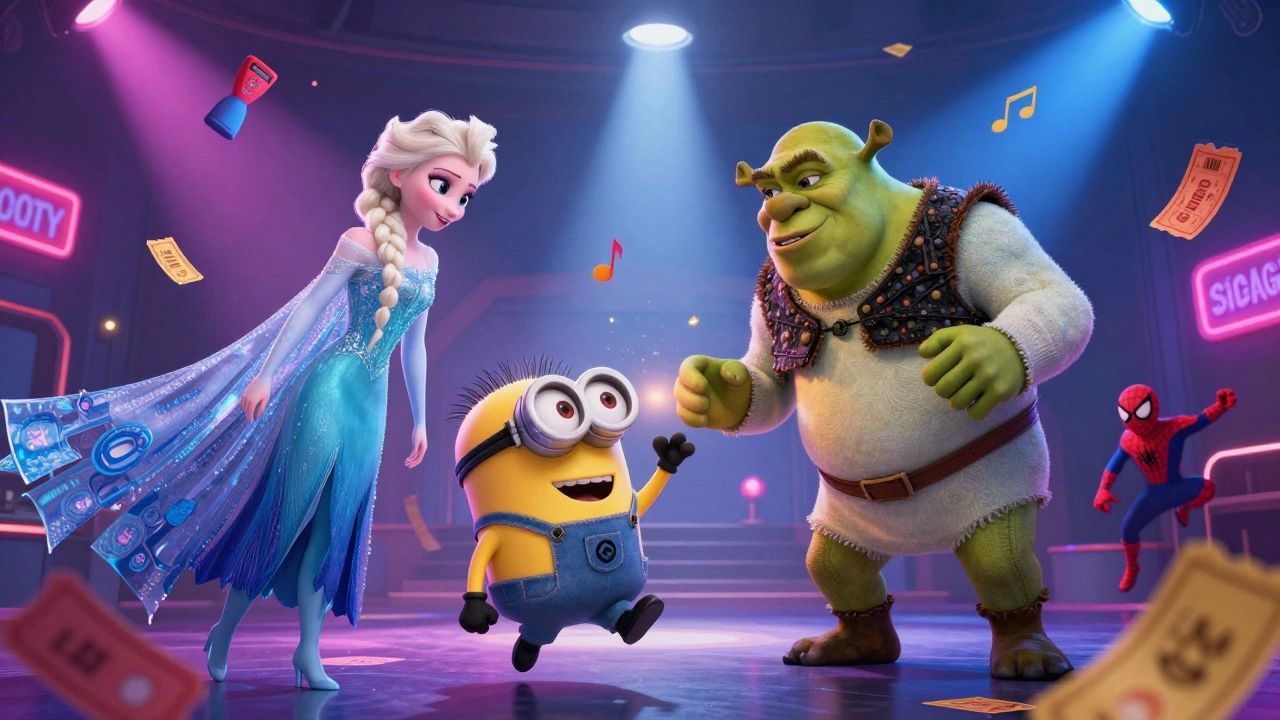
Animation Studios: How They Make Movies, Who Runs Them, and What They’re Doing Now
When you think of animation studios, companies that produce animated films using hand-drawn, 3D, or hybrid techniques to tell stories without live actors. Also known as cartoon studios, they’re the hidden engines behind some of the most emotionally powerful films ever made. These aren’t just places where artists draw characters—they’re complex creative factories blending storytelling, technology, and business to turn ideas into worlds you can believe in.
Behind every great animated movie is a team that includes Pixar, a landmark studio known for its emotional storytelling and cutting-edge 3D rendering, founded by Steve Jobs and now part of Disney, and Studio Ghibli, a Japanese studio famous for hand-drawn beauty, environmental themes, and quiet, human-centered narratives. Then there are the VFX studios, specialized teams that blend live-action footage with digital animation to create seamless, immersive scenes. These aren’t separate worlds—they’re deeply connected. A film like Hello Kitty’s 2025 release relies on the same pipeline that powers Spider-Verse or The Boy and the Heron: character design, lip sync, lighting, and timing—all built by people who understand how emotion moves through movement.
Today’s animation studios don’t just make kids’ movies. They’re building franchises from quiet, long-standing characters, crafting award-winning shorts for festivals, and pushing into new tech like real-time rendering and haptic feedback. Some still use pencils and paper. Others run on cloud-based render farms and AI-assisted inbetweening. The line between indie and blockbuster has blurred. A single animator in a garage can now make a short that gets picked up by Netflix, just like a studio with a hundred artists. What matters isn’t the size of the team—it’s the clarity of the vision and the precision of the execution.
You’ll find posts here that break down how studios handle lip sync to make characters sound real, how Japanese studios shifted from cel animation to CGI, and how tiny indie teams compete with giants by focusing on emotional connection over budget. You’ll see how production values on streaming platforms now match theaters, how festival submissions for animated shorts work, and why some character-based films outperform original stories. This isn’t a history lesson. It’s a live map of where animation is right now—who’s winning, who’s struggling, and what tools and techniques are actually moving the needle.