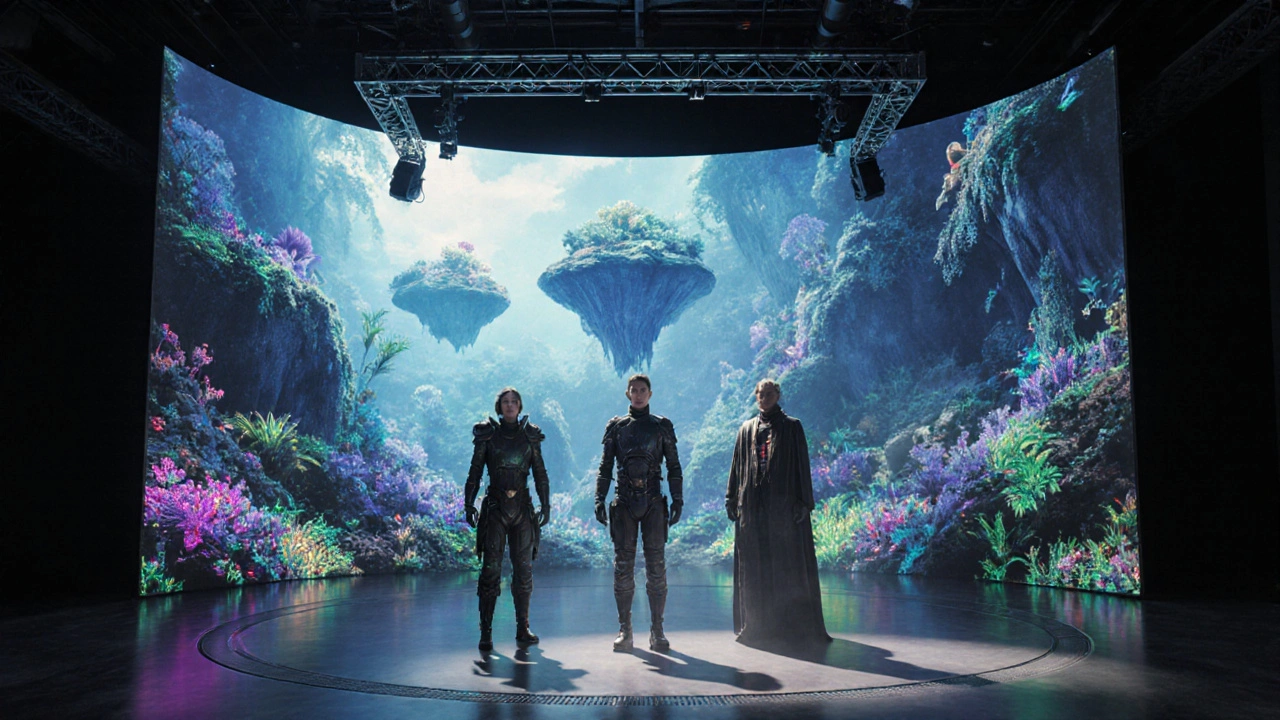
Virtual Sets: How Digital Environments Are Changing Film Production
When filmmakers use virtual sets, digital environments that replace physical sets in film production, often powered by real-time rendering and LED walls. Also known as volume filming, it allows directors to shoot scenes in a studio while seeing photorealistic backgrounds live on camera—no green screens, no post-production guesswork. This isn’t sci-fi anymore. It’s how shows like The Mandalorian were made, and it’s now being used in everything from indie films to big-budget blockbusters.
Virtual sets rely on three key pieces working together: LED walls, large, high-resolution screens that display dynamic backgrounds in real time, real-time rendering engines, software like Unreal Engine that generate visuals instantly based on camera movement, and motion tracking, systems that sync the camera’s position with the digital environment so lighting and perspective stay accurate. Together, they let actors react to environments that feel real, and cinematographers frame shots without waiting for VFX artists to add backgrounds later. This cuts weeks off post-production and saves millions on location shoots, travel, and physical set construction.
You don’t need a $100 million budget to use virtual sets anymore. Tools like Blender and open-source plugins now let small teams build simple virtual environments. A filmmaker in Georgia or Hungary can shoot a desert scene in a warehouse, using a single LED wall and a laptop. That’s why you’re seeing more indie films and streaming originals use this tech—it’s not just flashy, it’s practical. The same systems that power Marvel movies are now in the hands of microbudget creators who want control, speed, and creative freedom.
What you’ll find in the posts below isn’t just theory. It’s real-world examples: how VFX teams do final pixel checks on digital backgrounds, how open-source tools like Blender are making virtual sets accessible, and how production hubs in Canada and Thailand are building stages with LED walls to attract global shoots. You’ll also see how this tech connects to motion capture, streaming production, and even how film festivals are starting to showcase virtual production reels. This isn’t a trend—it’s the new normal. And if you’re making films today, you need to understand how it works.