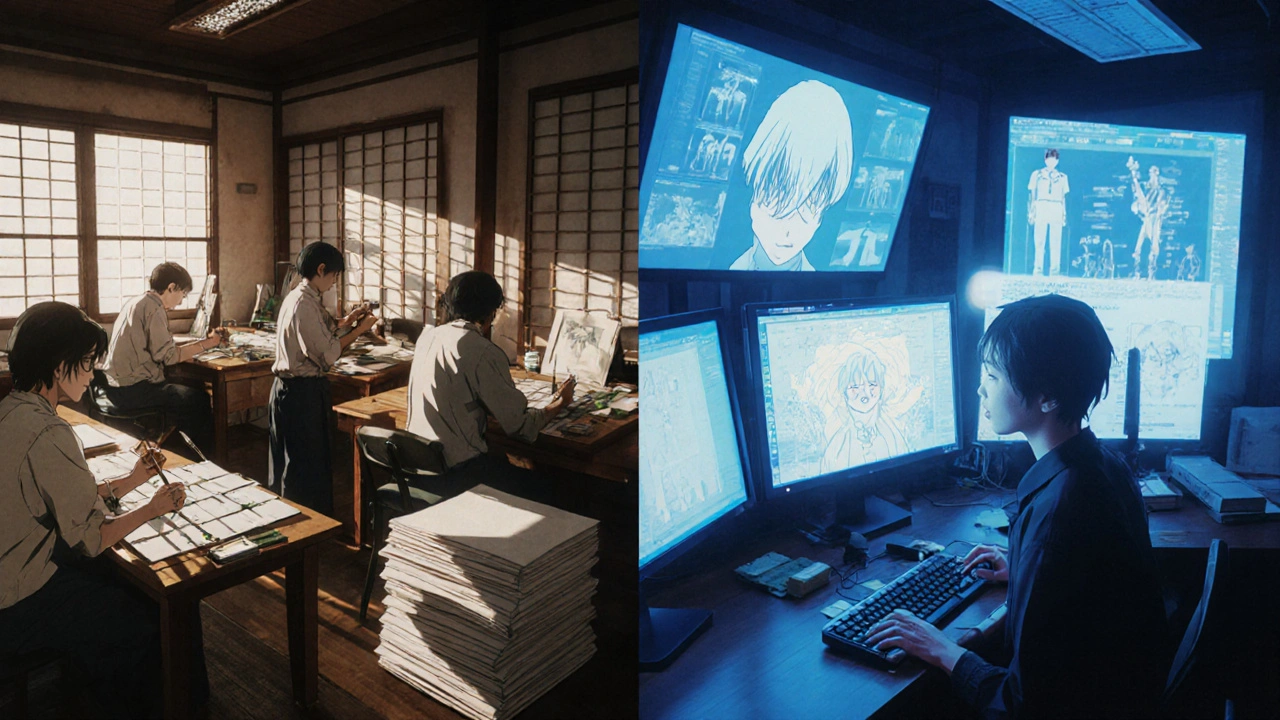
Traditional Anime: Classic Styles, Techniques, and Enduring Appeal
When we talk about traditional anime, a style of Japanese animation defined by hand-drawn frames, limited motion, and expressive line work that emerged in the mid-20th century. Also known as cel animation, it’s the foundation of everything from Astro Boy to Spirited Away—and it’s still alive in how studios approach storytelling today. Unlike modern CGI-heavy shows, traditional anime relies on artists drawing each key frame by hand, then filling in the in-betweens with pencil and ink. This method gives it a distinct texture—slight imperfections, smudged lines, and subtle shifts in weight—that digital tools often smooth out. It’s not just an old way of making cartoons. It’s a language of movement, emotion, and rhythm that still moves audiences decades later.
What makes hand-drawn animation, the core technique behind traditional anime, where each frame is individually illustrated by artists using paper, pencil, and ink so powerful? It’s the way it controls pacing. A single glance, a slow blink, a trembling hand—these moments aren’t just filler. They’re emotional anchors. Studio Ghibli films like My Neighbor Totoro use silence and stillness to build connection, while early Toei classics like Prince of Darkness used exaggerated motion to amplify drama. Even today, when studios want to evoke nostalgia or emotional depth, they go back to these methods. And it’s not just about looks—it’s about discipline. Animators working in this style had to master timing, weight, and expression without the safety net of auto-tweening or motion capture. That’s why so many modern animators still study old episodes: not to copy them, but to learn how to make movement feel real without relying on technology.
There’s also the cultural layer. Japanese animation, a broad term for animated works produced in Japan, often characterized by stylized visuals, complex narratives, and diverse genres didn’t just borrow from Western cartoons. It fused them with manga aesthetics, kabuki theater timing, and even Zen philosophy. The result? A form that could be silly one moment and devastating the next. You’ll see this in how characters move—sometimes stiff, sometimes fluid—depending on what the scene demands. That flexibility is what keeps traditional anime relevant. Even as studios adopt digital tools, many still hire artists trained in the old ways to preserve that soul.
What you’ll find in the posts below isn’t a history lesson. It’s a look at how these techniques live on—in how animators today approach lip sync, how indie filmmakers revive cel animation for short films, and why streaming platforms still invest in projects that look like they were drawn by hand. You’ll see how budget limits forced creative breakthroughs, how festivals still champion hand-drawn shorts, and why audiences keep choosing the imperfect over the polished. This isn’t about nostalgia. It’s about craft. And if you care about what makes animation feel alive, you’ll find something here that sticks with you long after the screen goes dark.